Lobuche Peak Climb 2026-27: 21-Day Expedition from Kathmandu

Lobuche Peak trek photo 1

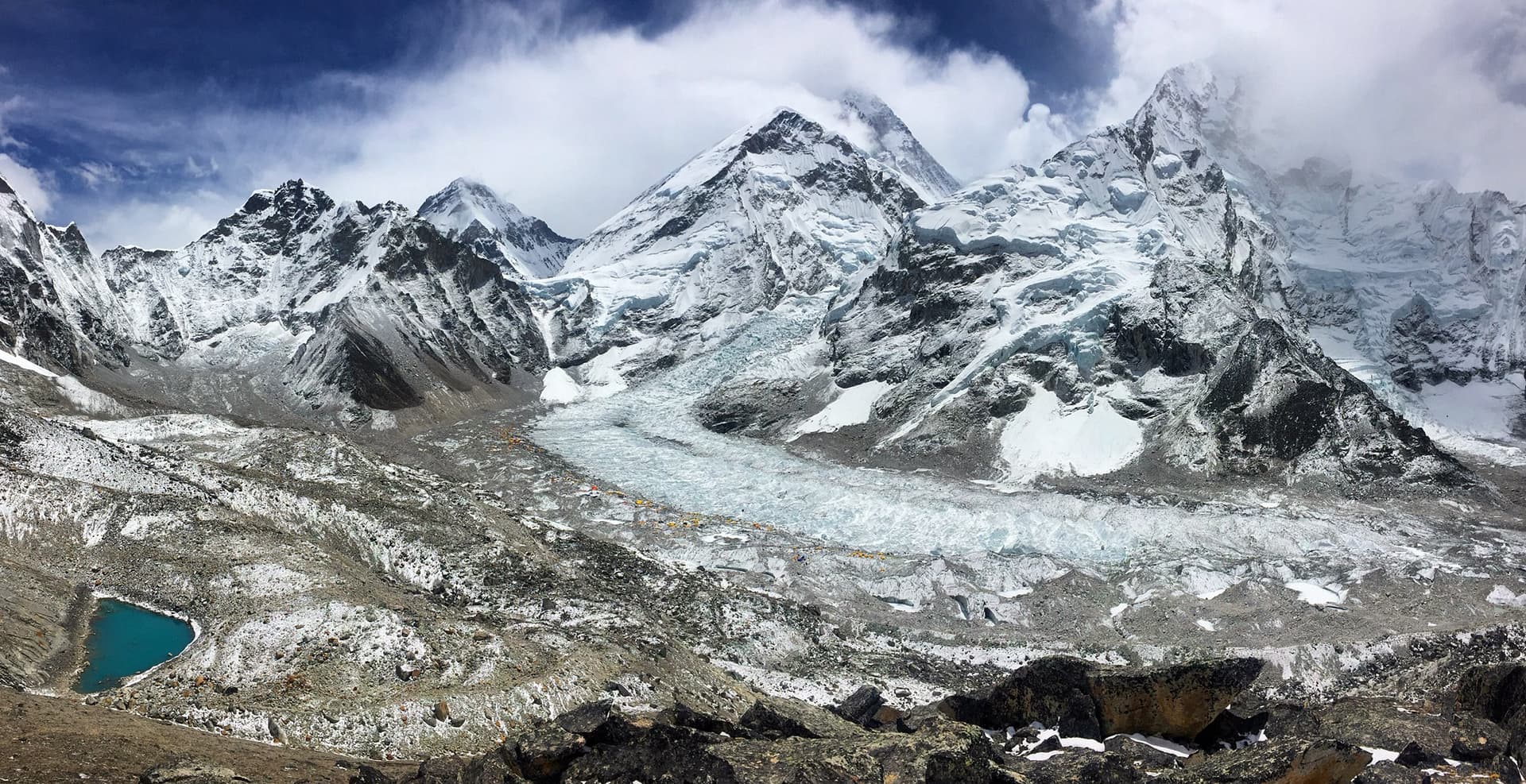
A 21-day expedition in Nepal that combines the Everest Base Camp trail with a climb of Lobuche Peak (6,119 m, about 20,075 ft), with acclimatisation days and a contingency day.

  • 4.7/52,600+ Google reviews
  • Since 199330+ years of Himalayan trekking
  • CertifiedBMC, AMC and WFR trek leaders
  • 1 : 8trekker-to-staff ratio
Check dates and book
Reserve your seat today with just ₹48,563
Check dates and bookNot sure yet? Talk to a trek advisor
Overview

Why the Lobuche Peak Trek is worth your time

Last reviewed

Lobuche Peak Trek at a glance

Duration
21 days, 20 nights
Highest point
About 20,075 ft at Lobuche Peak
Trekking distance
About 124 km in total
Difficulty
Difficult
Pickup
Kathmandu, by 1:00 PM
Trailhead
Lukla
Best time
March to May and September to November
Temperature
Changes with height and season. Days are mild and nights are cold at height.
Stay
1 night at a hotel, 1 night in tents
Meals
Vegetarian, Jain on request
Nearest airport
Tribhuvan International Airport, Kathmandu
Permits
Forest Department permits arranged by us

Lobuche Peak is a 21-day trek in the Khumbu region of Nepal. Day 1: Arrive in Kathmandu – 1,400m. Day 21: Kathmandu.

The trek is difficult, and your trek leader and local guides stay with the group.

What makes the Lobuche Peak Climb trek special

This trek takes you through the Nepal Himalaya. The route is known for Lobuche Peak at 6,119 m, Everest Base Camp trail, Acclimatisation built in and A contingency day. About 20,075 ft at Lobuche Peak. About 124 km in total on foot over 21 days.

Who this trek is for

Lobuche Peak is rated difficult. Over 21 days you cover 124 km on foot and reach 20,075 ft. Plan your energy for Day 2 (Fly to Lukla – Trek to Monjo – 2,850m): it takes about 8 hours. You do not need technical climbing skills.

The Lobuche Peak trek costs ₹185,000 per person plus 5% GST. The dates and seats below are live.

Trek highlights

1
Highlight 1 of 8

Lobuche Peak at 6,119 m

The summit day is a 6 to 7 hour round trip from the high camp at 5,200 m.
Itinerary

Lobuche Peak trek itinerary: day by day

This is a 21-day trek from Kathmandu and back. We spend 20 nights on the route: 1 night at a hotel, 1 night in tents. You walk about 124 km. Distances and times are approximate, and weather and your group's pace can change them.

Day 1: Arrive in Kathmandu – 1,400m

StayHotel, Kathmandu
Leader tip: Drink plenty of water, walk at your own pace and tell your trek leader if you feel unwell.

You arrive in Kathmandu and meet your trek leader and the group at the hotel. We go through the permits, the climbing gear and the plan for the next three weeks, and check that everything on the gear list is with you. Rest well, because tomorrow starts early with the flight to the mountains. Please reach the meeting point on time. Eat well, drink water and sleep early.

Day 2: Fly to Lukla – Trek to Monjo – 2,850m

TrekAbout 8.8 miles / 13 km (approx. 8 hours)
Leader tip: Drink plenty of water, walk at your own pace and tell your trek leader if you feel unwell.

We take the short flight to Lukla and walk down the Dudh Kosi valley through Phakding to Monjo, at the edge of Sagarmatha National Park. The trail crosses suspension bridges, passes prayer wheels and mani walls, and shows you the first views of the high peaks. It is an easy first day to settle into the walking rhythm. Flights depend on the weather, so we keep spare days in the plan.

Day 3: Namche Bazaar – 3,440m

TrekAbout 5 miles / 8 km (approx. 4 hours)
Leader tip: Drink plenty of water, walk at your own pace and tell your trek leader if you feel unwell.

We climb from Monjo to Namche Bazaar, the main Sherpa town of the Khumbu. The trail crosses the high suspension bridge near Larja and then climbs steeply through pine forest for about two hours. On a clear day you get your first view of Everest and Lhotse. Namche has bakeries, shops, an ATM and a market on Saturdays.

Day 4: Namche Bazaar – 3,440m

Leader tip: Drink plenty of water, walk at your own pace and tell your trek leader if you feel unwell.

We rest and acclimatise at Namche. Walk up to the Everest View Hotel area or to the museum viewpoint in the morning, and come back to sleep at the same height. Drink plenty of water and eat well. This day is the first step in the plan to climb high and sleep low.

Day 5: Namche Bazaar – 3,900m (Acclimatization Day)

Leader tip: Drink plenty of water, walk at your own pace and tell your trek leader if you feel unwell.

A second day in the Namche area gives your body more time to adjust before we gain altitude. You can visit the Sherpa museum, the monastery at Khumjung or just rest. Your trek leader checks everyone's oxygen level and health in the evening.

Day 6: Tengbouche – 3,900

TrekAbout 12 km (5 to 6 hours)
Leader tip: Drink plenty of water, walk at your own pace and tell your trek leader if you feel unwell.

We walk to Tengboche, with its famous monastery, and the trail runs through rhododendron forest above the Dudh Kosi. There are wide views of Ama Dablam, Everest, Lhotse and Nuptse. If time allows, join the evening prayers at the monastery, and remember to keep quiet and take off your shoes.

Day 7: Dingbouche – 4,900m (Acclimatization)

TrekAbout 7.5 miles / 12 km (5.5 to 6 hours)
Leader tip: Drink plenty of water, walk at your own pace and tell your trek leader if you feel unwell.

We walk higher through the Imja valley to Dingboche, a village of stone-walled fields. The trees have gone, and the landscape is open and wide, with Ama Dablam rising straight above the village. Walk slowly. This is where the height begins to be felt. This is a rest and acclimatisation day. You do not carry a heavy load.

Day 8: Dingbouche – 4,900m (Acclimatization Day)

Leader tip: Drink plenty of water, walk at your own pace and tell your trek leader if you feel unwell.

We rest and acclimatise at Dingboche. A short walk up the ridge behind the village gives you views of Island Peak and Makalu, and you come back down to sleep. Eat, drink and sleep well. Tell your trek leader about any headache or loss of appetite. This is a rest and acclimatisation day. You do not carry a heavy load.

Day 9: Lobuche – 4,940m

TrekAbout 7.5 miles (5 to 6 hours)
Leader tip: Drink plenty of water, walk at your own pace and tell your trek leader if you feel unwell.

We walk up the Khumbu valley to Lobuche, passing the memorial chortens for climbers who lost their lives on Everest. The ground is open and rocky with the Khumbu glacier on your right. The air is thin, and the nights are very cold, so keep your down jacket within reach.

Day 10: Gorak Shep 5,180m to Base camp 5,364m

TrekAbout 6.2 miles / 10 km (approx. 7 hours)
Leader tip: Drink plenty of water, walk at your own pace and tell your trek leader if you feel unwell.

We walk to Gorak Shep and on to Everest Base Camp at about 17,600 ft. The trail follows the moraine of the Khumbu glacier, and the camp itself sits on the ice. You will not see Everest from the base camp, but you see the Khumbu Icefall and the tents of the expeditions. After the walk, we return to Gorak Shep for the night.

Day 11: Kala Patthar 5,645 to Lobuche 4,925

Leader tip: Drink plenty of water, walk at your own pace and tell your trek leader if you feel unwell.

We climb Kala Patthar early in the morning for the best view of Everest, Nuptse and Lhotse, and then walk down to Lobuche. The climb is steep and cold in the dark, and the sunrise on the peaks is the reward. Dress warmly and carry a headlamp.

Day 12: Lobuche Base Camp – 4,900m

StayLakeside campsite at 4,900m
Leader tip: Drink plenty of water, walk at your own pace and tell your trek leader if you feel unwell.

We walk from Lobuche to the Lobuche East base camp, where the team sets up camp for the climb. The days ahead include a briefing and a skills session on the use of the harness, jumar, crampons and ice axe. The camp is at a very high altitude, so rest and eat well.

Day 13: Lobuche High Camp – 5,200m

Leader tip: Drink plenty of water, walk at your own pace and tell your trek leader if you feel unwell.

We climb from base camp to the high camp at about 17,000 ft, carrying your climbing gear and personal kit. The route is steep with loose rock and some scrambling, and the camp sits on a narrow ridge. Your guide checks everyone's equipment and the summit plan for tomorrow.

Day 14: Lobuche Peak Summit – 6,119m

Leader tip: Drink plenty of water, walk at your own pace and tell your trek leader if you feel unwell.

Summit day. We start in the middle of the night from the high camp, with headlamps, harness and crampons, and climb the snow and ice ridge to the top of Lobuche East (about 20,000 ft). The last section is steep, and the weather decides everything. Your guide sets the turn-around time and will turn the group back if conditions are poor. From the top you see Everest, Lhotse, Nuptse and Ama Dablam.

Day 15: Lobuche Peak Summit – 6,119m

Leader tip: Drink plenty of water, walk at your own pace and tell your trek leader if you feel unwell.

This day is kept as a reserve for the summit attempt. If bad weather or a late start moves the summit to this day, we use it. If the group has already summited, we rest at the high camp or begin the descent.

Day 16: Pheriche – 4,200m

Leader tip: Drink plenty of water, walk at your own pace and tell your trek leader if you feel unwell.

We descend from the Lobuche area to Pheriche, a village in the Khumbu valley. The air feels thicker with every hour, and most trekkers sleep better at this height. Take care on the loose rock on the way down.

Day 17: Tengbouche – 3,900m

Leader tip: Drink plenty of water, walk at your own pace and tell your trek leader if you feel unwell.

We walk back down to Tengboche, retracing the trail through Pangboche. The forest returns, and the monastery and the views of Ama Dablam welcome you on the way. The day is long, but easy on the lungs.

Day 18: Namche Bazaar – 3,440m

Leader tip: Drink plenty of water, walk at your own pace and tell your trek leader if you feel unwell.

We walk down to Namche Bazaar, the last proper town of the trek. You can shop for souvenirs, enjoy a hot shower and a bakery treat, and celebrate with the group. The trail down is steep, so use your poles.

Day 19: Lukla – 2,850m

Leader tip: Drink plenty of water, walk at your own pace and tell your trek leader if you feel unwell.

We walk from Namche down to Lukla, the last day on the trail. It is a long day with some climbs on the way, and you are walking through the same villages you passed on your way up. We spend the evening with the crew for a farewell dinner.

Day 20: Fly to Kathmandu – 1400m

Leader tip: Drink plenty of water, walk at your own pace and tell your trek leader if you feel unwell.

We fly from Lukla back to Kathmandu, and transfer to the hotel. Early flights are best, because the weather in the mountains turns by midday. The rest of the day is free for rest or shopping in Thamel. Keep your camera ready.

Day 21: Kathmandu

Leader tip: Drink plenty of water, walk at your own pace and tell your trek leader if you feel unwell.

The trek ends and we transfer you to the airport for your flight home. Please keep a spare day before your onward travel in case of flight delays at Lukla.

Ready for the Lobuche Peak Trek?₹1,85,000 per person + GST. Pick your date and reserve your spot.

Lobuche Peak Trek dates

Pick a month, then a start date. Seats update live from our booking system.

Loading live dates...
Need help choosing a date?Talk to a Trekup India trek advisor: +91 80623 58605
Trek cost

Lobuche Peak Trek cost, inclusions and exclusions

The Lobuche Peak trek costs ₹185,000 per person plus 5% GST. The price covers your stay, meals, forest permits, camping and our trek team.

What is included in the Lobuche Peak Trek cost

  • 1 night at a hotel, 1 night in tents, in sharing rooms and tents
  • Meals from evening tea and snacks on Day 1 to the last meal listed on Day 21. All meals are pure vegetarian, and we cook Jain meals without onion and garlic on request
  • Forest Department camping and trekking permits. We handle the paperwork, and you give us a copy of your photo ID
  • Trek leader, local guides and support staff
  • Dome tents, sleeping bags, mattresses, kitchen, dining and toilet tents
  • Safety equipment: oxygen cylinders, first aid kit, BP machine, oximeters and walkie-talkies
  • Porters and mules to carry the group equipment
  • A trek coordinator who helps you prepare before the trek and calls you after it
  • A completion certificate
  • Sagarmatha National Park permit and the Lobuche Peak climbing permit, arranged by us
  • Group climbing equipment: ropes, ice axes, crampons and harnesses
  • Return flights between Ramechhap or Kathmandu and Lukla

What is not included

  • 5% GST on the trek price
  • Travel to Kathmandu and back home from Kathmandu
  • Meals and stays that are not listed under inclusions
  • Travel insurance (optional, about ₹38 per person per day)
  • Personal expenses, laundry, phone calls, battery charging and bottled water
  • Personal medicines and personal trekking gear. You can rent gear from us
  • Tips for the crew, which are your choice
  • Extra costs caused by things outside our control, such as landslides, snowfall or road blocks
  • Personal climbing gear such as boots, gloves and clothing, which you bring or rent
  • Flight delays and extra nights because of weather. Please keep 2 to 3 buffer days
₹1,85,000 per person + 5% GST. Check dates

Optional add-ons

Add these while booking. Prices are per person.

  • Travel Insurance

    Travel Insurance

    Optional cover for medical problems and unexpected events during the trek. We recommend it for every trekker, because rescue from the mountains can be costly. Please read the policy to see exactly what it covers and what it does not.

    ₹22.50
  • Single Tent Occupancy

    Single Tent Occupancy

    You get a tent to yourself on the nights we camp. In guesthouses, rooms are shared. A private room there depends on availability and costs extra, so ask your trek coordinator.

    On request
Need trekking gear?Rent jackets, shoes, poles and more from Trekup India instead of buying.
Rent trekking gear
Cancellation and refunds

Lobuche Peak trek cancellation and refund policy

Plans change. This is how cancellations, date changes and refunds work for your booking, in short. The full policy has every detail.

Lobuche Peak Trek cancellation: what you get back
When you cancelDeductedYou get back
21 days or more before the start10%90% as a Trek Voucher
15 to 20 days before30%70% as a Trek Voucher
7 to 14 days before50%50% as a Trek Voucher
1 to 6 days before100%No voucher
On the trek day or a no-show100%No voucher
  • If you cancel, the money comes back as a Trek Voucher valid for 12 months, not as cash. You can use it on any India trek, tour or yatra run by us.
  • If we cancel for a reason in our control, for example the group does not reach the minimum of 6 trekkers, you get a cash refund of the amount you paid.
  • The first date change is free if you ask on the website at least 10 days before the start date. Each later change costs 10% of the invoice amount.
  • If a route closure, severe weather, an official order or a medical problem stops your trek after it has started, you can apply for the Free Trek Completion Policy within 14 days.
  • Refunds go back to the original payment method in 7 to 10 working days.

Read the full cancellation and refund policy

Stay and food

Stay and food on the Lobuche Peak Trek: where you sleep and what you eat

On this trek you sleep in the stays listed below and eat vegetarian meals with Jain options on request. Tap a tab to see the details.

Where you stay

Stay on the Lobuche Peak Trek: Trekup India properties, rooms and facilities

1 night at a hotel, 1 night in tents.

Our staysYour stay on this trek is at a property we own and run.

Your Lobuche Peak trek has 2 kinds of stay: 1 night at a hotel, 1 night in tents. We keep rooms and tents shared in small groups.

Where you sleep on this trek

Hotel

1 night. Sharing rooms with beds and blankets. Hot water, charging and attached washrooms depend on the property and the local supply.

Campsite

1 night. Twin or triple sharing dome tents, with a sleeping bag and a mattress for each trekker.

Luggage

Leave your extra luggage at the base and carry only your trekking essentials.

Your stays at a glance

Stay facilities for the Lobuche Peak Trek
FacilityDetails
Hotel1 night
Campsite1 night
ElectricityAvailable in towns, subject to local supply. None on the trail
Mobile networkWeak in towns, poor or absent on the trail

Why this mix of stays works on Lobuche Peak

Facilities vary by property. Please read the stay section before you book.

Trekker reviews

What trekkers say about the Lobuche Peak Trek

Watch and read what trekkers say about the Lobuche Peak Trek with Trekup India, from the trail and camps to the trek team.

    Best time

    Best time to do the Lobuche Peak Trek

    The best time to do the Lobuche Peak Climb trek is March, April, May, September, October and November. About 20,075 ft at Lobuche Peak. Days are usually 10°C to 18°C at lower altitudes and nights drop to about -5°C to 5°C in the high villages.

    JanWinter
    FebWinter
    MarSpring
    AprSpring
    MaySpring
    JunMonsoon
    JulMonsoon
    AugMonsoon
    SepMonsoon
    OctAutumn
    NovAutumn
    DecWinter
    Winter (Dec - Feb)Spring (Mar - May)Monsoon (Jun - Sep)Autumn (Oct - Nov)

    December to February

    Cold, with snow at height and very clear days. Nights are very cold in the high villages. We do not usually run the Lobuche Peak Climb trek in these months. At 20,075 ft the upper trail of Lobuche Peak is not safe in these months, so we do not schedule batches then.

    March to April

    March to May is the main season, with rhododendrons in bloom and long clear days. We run the Lobuche Peak Climb trek in these months. With the high point at 20,075 ft, the 21-day Lobuche Peak itinerary runs most smoothly in this window.

    May to June

    Monsoon begins in June. Rain and cloud hide the views and the trail is slippery. We run the Lobuche Peak Climb trek in May only. Batches in these months follow the full 21-day plan to 20,075 ft.

    July to August

    Heavy rain and leeches on the lower trails, and flights can be delayed. We do not usually run the Lobuche Peak Climb trek in these months. We keep Lobuche Peak closed in these months because the climb to 20,075 ft is not safe.

    September to November

    October and November are the best months, with clear skies and sharp mountain views. We run the Lobuche Peak Climb trek in these months. Batches in these months follow the full 21-day plan to 20,075 ft.

    Travel guide

    Travel guide for the Lobuche Peak Trek: how to reach and local culture

    How to reach Lukla, the start of the trek, from Kathmandu, Delhi and other cities, and the village culture you will see on the way. Tap a button to open each guide.

    How to reach

    How to reach Lukla from Kathmandu

    Plan it in three steps: reach Kathmandu, travel with us to Lukla, then head home from Kathmandu after the trek.

    1. Your city
    2. KathmanduPickup point
    3. LuklaTrek starts here
    4. KathmanduBack after the trek
    1

    Step 1: Reach Kathmandu

    Get to Kathmandu the day before, so you are at Kathmandu on time. Pickup is by 1:00 PM.

    BY AIR

    Fly to Kathmandu

    Tribhuvan International Airport has direct flights from Delhi and other Indian cities.

    Main way to reach
    BY ROAD

    By road via the border

    Land routes through the Indian border are possible but long. Check the current entry rules.

    Long road journey
    2

    Step 2: Kathmandu to Lukla with Trekup India

    Our vehicle travels to Lukla.

    Pickup point
    Kathmandu
    Pickup time
    by 1:00 PM
    Drive
    see the day-by-day plan
    1. KathmanduPickup point
    2. LuklaRoad head. The walk starts here.
    3

    Step 3: Lukla back to Kathmandu

    On Day 21 you drive back to Kathmandu.

    Back at
    Kathmandu
    Expected time
    Evening
    When
    Day 21

    Plan your onward travel: Book your onward travel for the next day, because mountain roads can run late.

    Tip: Reach Kathmandu a day early.

    Lobuche Peak Trek from your city

    Lobuche Peak Trek from Delhi

    Delhi to Kathmandu is a short international flight, about 1.5 to 2 hours. Indian citizens need a valid photo ID, and other nationalities need a passport and visa. Check the current entry rules before you book. On Day 21 you are back in Kathmandu in the evening, so book your return for the next morning.

    Lobuche Peak Trek from Mumbai, Bangalore and other cities

    Tribhuvan International Airport in Kathmandu is the main airport. Flight timings change by season, so check before you book. On Day 21 book your onward travel for the next day.

    Packing list

    Lobuche Peak Trek packing list: what we provide and what you carry

    The Lobuche Peak Trek packing list in two parts: the camping gear and safety kit Trekup India provides, and the clothing and personal items you carry. Boots, jackets and poles can be rented.

    Included in your trek cost

    Provided by Trekup India

    You do not need to bring or buy these. We carry them to camp and set them up.

    • Sleeping bags and mattresses

      For every night in camp.

    • Stay

      1 night at a hotel, 1 night in tents.

    • Kitchen, dining and toilet tents

      Separate tents for cooking, dining and toilets.

    • Camping tables and stools

      A seat and a table at meal and tea breaks.

    • Meals and hot drinks

      Vegetarian breakfast, lunch, evening snacks and dinner. Jain meals on request.

    • Safety kit

      First aid, oxygen cylinders, stretchers, BP machine, oximeters and walkie-talkies.

    • Porters and mules for group gear

      They carry the group equipment. You carry your own rucksack (backpack offloading is an optional add-on).

    Swipe or tap the arrows
    You pack these

    Trekking essentials you carry

    Pack light and pack right. Everything below goes in your rucksack.

    Footwear

    • Waterproof, ankle-high trekking boots with good grip, well broken in
    • 4 to 5 pairs of trekking socks, including 2 woollen pairs
    • Camp shoes or sandals for the tent

    Clothing layers

    • 2 to 3 moisture-wicking t-shirts
    • 2 thermal base layers (top and bottom)
    • Fleece jacket and a heavy down or insulated jacket
    • Waterproof, windproof shell jacket and rain pants
    • Quick-dry trekking pants

    Head, hands and eyes

    • Woollen cap or balaclava
    • Sun hat or buff
    • Inner gloves and 2 pairs of waterproof outer gloves
    • UV-protection sunglasses, because snow glare is strong
    • Sunscreen and lip balm

    Gear and bags

    • 2 trekking poles
    • 50 to 60 L rucksack and a 20 to 30 L daypack for the long day
    • 2 insulated 1 L water bottles
    • Headlamp with spare batteries, for the early start on summit day
    • Power bank, because cold drains batteries fast and there is no charging on the trail
    • Quick-dry towel, toiletries and your personal first aid kit and medicines

    Documents and cash

    • Original government photo ID (Aadhaar, voter ID or driving licence; passport and visa for foreign nationals)
    • 2 photocopies of your ID
    • Signed medical certificate and undertaking form
    • Cash, because there is no ATM on the trail. Withdraw it before you reach the road head

    Need boots or a jacket? You can rent gear from us. Book at least 7 days before your trek, because last-minute rentals are not confirmed. Rent gear from us

    Safety

    Lobuche Peak trek safety: altitude, weather and emergency plan

    Lobuche Peak is a difficult trek. This is how we plan it for safety, and what happens if someone feels unwell.

    1

    Climb in steps

    We gain height in steps, and we plan the camps so that you sleep lower than the day's highest point whenever the route allows. The highest point is Lobuche Peak at about 20,075 ft. We walk slowly, rest often and your trek leader checks everyone's health each day.

    2

    Stay warm and hydrated

    Drink 3 to 4 litres of water a day, avoid alcohol and keep dry layers ready for the night. Put on your warm layers before you feel cold.

    3

    A trained team and the right kit

    Trek leaders are AMC or BMC certified and trained in first aid and search and rescue. The team carries oxygen cylinders, a first aid kit, stretchers, a BP machine, oximeters and radios.

    How to read your body

    Mild

    Mild altitude sickness

    Headache, nausea, tiredness or poor sleep.

    What to do: Stop climbing, rest, drink water and tell your trek leader. Do not go higher until you feel better.

    Serious

    Severe altitude sickness

    Loss of balance, confusion or breathlessness even at rest.

    What to do: Tell your trek leader at once. The person is taken down. Descent is the main treatment.

    If someone is unwell: what happens

    1. Go downThe leader stops the group, checks the person and takes them down the trail towards the road head. The team carries stretchers and oxygen.
    2. Where the hospitals areThe nearest health posts are in the larger villages along the route. Advanced care is in Pokhara or Kathmandu. In Nepal, the police line is 100 and ambulances are 102. Your trek leader arranges the transfer. We strongly recommend travel insurance that covers evacuation.
    3. Phones and reportingMobile network is weak in towns and poor or absent on the trail, so trek leaders use radios. Police: 112. Keep your family informed of our office number before you go.
    4. Travel insuranceTravel insurance that covers high-altitude emergencies is strongly recommended.

    The team carries

    Oxygen cylindersFirst aid kitStretchersBP machineOximetersWalkie-talkiesMicrospikes and gaiters
    Our safety protocols

    What safety looks like at Trekup India

    Safety is not an add-on at Trekup India. It is built into the way we plan, prepare and operate every trek in the Himalayas, Nepal and beyond.

    Pre-trek safety

    We provide complete guidance on itinerary, terrain, weather, health, fitness and essential gear to ensure trekkers are fully prepared.

    Experienced trek leaders

    Our trek leaders bring tons of experience and are certified with BMC, AMC and Wilderness First Responder (WFR) courses.

    Trekker-to-staff ratio

    Our trekker-to-staff ratio (1:8) is among the best in the industry so that every participant receives ample support and attention.

    Medical and emergency preparedness

    Every trek is supported by well-placed medical and emergency-response protocols designed for the challenges of remote mountain environments.

    Altitude and acclimatisation

    Our itineraries are based on scientifically backed acclimatisation schedules, allowing trekkers to gain altitude progressively.

    Weather and trail monitoring

    Every trek is planned with rigorous trail monitoring, weather considerations, risk evaluation and ongoing climatic patterns.

    GPS and communication

    Technology strengthens our presence in the mountains. We use GPS devices, satellite phones and walkie-talkies on every trek.

    Quality equipment and camps

    We prioritise quality gear, carefully managed camping infrastructure and field-tested equipment built to withstand difficult conditions.

    Trained support team

    From logistics and operations to route support and emergency response, our team works efficiently and professionally.

    Difficulty

    How difficult is the Lobuche Peak trek?

    The Lobuche Peak Trek is rated difficult. Here is how each day feels, how much you walk, and who should think twice before booking.

    Trekup India rating: Difficult. Our scale runs from Easy to Extreme.

    We rate Lobuche Peak as difficult.

    What makes it hard

    Plan your energy for Day 2 (Fly to Lukla – Trek to Monjo – 2,850m): it takes about 8 hours. The highest point is Lobuche Peak at about 20,075 ft.

    What makes it doable

    The group climbs in steps, a trek leader and local guides stay with the group, and we carry oxygen and a first aid kit.

    Who it suits

    Fit trekkers, including first-timers who have trained.

    The effort day by day

    These are the walking times and altitudes for each day, taken from our itinerary.

    • Day 2: Fly to Lukla – Trek to Monjo – 2,850m. Walk: About 8.8 miles / 13 km (approx. 8 hours).
    • Day 3: Namche Bazaar – 3,440m. Walk: About 5 miles / 8 km (approx. 4 hours).
    • Day 6: Tengbouche – 3,900. Walk: About 12 km (5 to 6 hours).
    • Day 7: Dingbouche – 4,900m (Acclimatization). Walk: About 7.5 miles / 12 km (5.5 to 6 hours).
    • Day 9: Lobuche – 4,940m. Walk: About 7.5 miles (5 to 6 hours).
    • Day 10: Gorak Shep 5,180m to Base camp 5,364m. Walk: About 6.2 miles / 10 km (approx. 7 hours).

    How to prepare for Lobuche Peak Climb

    Start training at least six to eight weeks before the trek.

    What helps you on the trail

    Every batch has a trek leader and local guides, so the group does not move faster than its slowest member. Kathmandu has the main hospitals, and some villages on the popular routes have small health posts. Serious cases are taken to Kathmandu, which is why travel insurance that covers evacuation is important for all Nepal treks. The emergency number for the Nepal Police is 100.

    Day-by-day effort on the Lobuche Peak Trek
    DayRouteDistanceTimeAltitude
    Day 2Fly to Lukla – Trek to Monjo – 2,850m13 km8 hours-
    Day 3Namche Bazaar – 3,440m8 km4 hours-
    Day 6Tengbouche – 3,90012 km5 to 6 hours-
    Day 7Dingbouche – 4,900m (Acclimatization)12 km5.5 to 6 hours-
    Day 9Lobuche – 4,940m-5 to 6 hours-
    Day 10Gorak Shep 5,180m to Base camp 5,364m10 km7 hours-

    Who should avoid the Lobuche Peak Trek

    A 21-day trek that reaches 20,075 ft is not right for everyone. Tell us in writing about any medical condition when you book Lobuche Peak, avoid the trek if you have breathing problems or knee pain, and speak to your doctor if any of these apply:

    • Breathing problems, or a lung condition such as asthma that is not well managed
    • Knee pain or a knee injury
    • A heart condition or high blood pressure that is not under control
    • Pregnancy
    • A recent surgery, fracture or serious injury
    • A history of severe altitude sickness

    Tell your trek leader about any regular medicines on Day 1 and carry enough for 21 days. Everyone signs a waiver form before Lobuche Peak starts.

    Age, children and solo travellers

    Minimum age
    Above 8 years, if the child is fit and has trained
    Maximum age
    65 years. If you are fit and your doctor agrees
    Children
    A parent or guardian must make the booking or sign a consent for any trekker under 18. Children aged 9 to 14 get a discount under our discount policy. The trek leader’s decision on safety is final.
    Solo travellers and women
    Solo trekkers join a fixed-date group. Tents are shared by two people, and a single tent occupancy add-on can be booked. A trek runs with a minimum group of six, and you should always stay with the group on the trail.
    Fitness guide

    Lobuche Peak trek fitness requirement and training plan

    Lobuche Peak is rated difficult. You do not need to be an athlete, but you do need steady stamina. Train for 12 weeks before you go.

    Fitness requirement

    Difficult trek

    Run or jog
    5km
    Or faster
    35min
    • Complete a basic mountaineering course
    • Complete a recent high-altitude trek
    • Submit the medical certificate and undertaking form

    Your training plan for the Lobuche Peak trek: 12 weeks

    Train 4 to 5 days a week for 12 weeks. Start earlier if you are new to regular exercise.

    1. 1Weeks 1 to 2

      Build the base

      Walk 2 to 3 km a day at an easy pace, 4 to 5 days a week. Practise deep breathing every day.

    2. 2Weeks 3 to 5

      Add distance and jogging

      Grow your daily walk to 60 minutes. Add jog and walk intervals and climb stairs twice a week.

    3. 3Weeks 6 to 8

      Add strength and load

      Do squats, lunges and planks twice a week. Walk uphill or climb stairs with a backpack, starting at 5% of your body weight and building to 10%.

    4. 4Weeks 9 to 12

      Reach the target

      Run 5 km in 30 to 35 minutes and do one long walk of 90 minutes with your loaded backpack. Rest well in the last week.

    ✓
    Trek-ready check

    By the end of the plan you can run 5 km in 30 to 35 minutes and walk uphill for 90 minutes with a loaded backpack.

    File 01 · Why Trekup India

    See why trekkers choose Trekup India

    Our family has led Himalayan treks since 1993. The second generation carried the work forward and renamed it Trekup India in February 2016. Today we run treks across India and abroad, with trained leaders, safety gear and a personal coordinator for every booking.

    Video: How we keep every trek safeSafety · 4:54How we keep every trek safe
    Our promise

    Book with confidence

    • Trek leaders certified in BMC, AMC and Wilderness First Responder courses, with a first aid kit and pulse oximeter in every group
    • Emergency oxygen on higher routes and a written emergency plan, so help is organised before you need it
    • Clear pricing: inclusions, exclusions and add-ons are listed in full on every trek page, and our Free Trek Policy applies if a trek is cut short

    Safety

    first on every trek: trained leaders and emergency plans

    30+

    years in the Himalaya, since 1993

    600,000+

    trekkers guided since 1993

    4.7 ★

    Google rating from 2,610 reviews

    You bring

    • Photo ID
    • Warm layers and boots
    • A little training

    We handle

    • Transport and permits
    • Tents and meals
    • Safety and your coordinator
    FAQ

    Lobuche Peak Trek: frequently asked questions

    Answers to the most common questions about the Lobuche Peak Trek: cost, dates, fitness, packing, safety, stay and booking.

    How do I book the Lobuche Peak trek?

    Booking takes a few minutes: select the 21-day Lobuche Peak batch you want, pay the advance and you are in. Your trek coordinator will contact you with packing and pickup details for Kathmandu, by 1:00 PM.

    How many days is the Lobuche Peak trek?

    Lobuche Peak is a 21-day itinerary with 20 nights on the way. You cover about 124 km on foot, and the highest point is 20,075 ft. The longest day is Day 2 (Fly to Lukla – Trek to Monjo – 2,850m), at about 8 hours.

    How much does the Lobuche Peak trek cost?

    The Lobuche Peak trek is ₹185,000 per person plus 5% GST for 21 days. The price covers your stay (1 night at a hotel, 1 night in tents), meals, permits, the trek team and safety kit. Check the inclusions and exclusions on this page to see what you pay for separately.

    Is the Lobuche Peak trek difficult?

    Lobuche Peak is rated difficult. The longest walk, on Day 2, takes about 8 hours. Training for the weeks before the trek helps a lot.

    What is the best time to do the Lobuche Peak trek?

    We run the Lobuche Peak trek in March to May and September to November. Your trek coordinator will confirm what is open for your dates.

    How high is the Lobuche Peak trek?

    The highest point on the Lobuche Peak trek is about 20,075 ft at Lobuche Peak.

    Where is the Lobuche Peak trek located?

    Lobuche Peak is in the Khumbu region of Nepal. The walk starts at Lukla and the group meets at Kathmandu, by 1:00 PM.

    Is transport included on the Lobuche Peak trek?

    Please check with your trek coordinator whether road transport is included for your dates.

    Will there be snow on the Lobuche Peak trek?

    Snow on Lobuche Peak depends on the month and the year. The route rises to 20,075 ft, so snow is likely near the top in the colder months and can linger on the highest ground early in the season. We cannot promise snow on any date.

    Who can do the Lobuche Peak trek?

    Fit first-time Himalayan trekkers can do it if they train beforehand. Tell us in writing about any medical condition when you book. Talk to your doctor if you have breathing problems, knee pain, a heart condition, high blood pressure or a history of severe altitude sickness.

    Do I need a permit for the Lobuche Peak trek?

    Yes. Lobuche Peak needs forest and trekking permits. We arrange them, and you only give us a copy of your photo ID before the 21-day trek.

    Is there mobile network and an ATM on the Lobuche Peak trek?

    Mobile network is patchy on Lobuche Peak: expect it near Lukla and little or none higher up. Withdraw cash before you reach Lukla, because ATMs are rare, and share our office number and your trek leader's number with your family.

    What happens if someone falls ill on the trek?

    Your trek leader checks you every day on Lobuche Peak, and if symptoms worsen you are taken down. We carry oxygen, a first aid kit and stretchers, which matters on a route that rises to 20,075 ft. We strongly recommend travel insurance that covers evacuation.

    What is the day-by-day plan for the Lobuche Peak Climb trek?

    The Lobuche Peak trek takes 21 days: Day 1: Arrive in Kathmandu – 1,400m. Day 2: Fly to Lukla – Trek to Monjo – 2,850m. Day 3: Namche Bazaar – 3,440m. Day 4: Namche Bazaar – 3,440m. Day 5: Namche Bazaar – 3,900m (Acclimatization Day). Day 6: Tengbouche – 3,900. Day 7: Dingbouche – 4,900m (Acclimatization). Day 8: Dingbouche – 4,900m (Acclimatization Day). Day 9: Lobuche – 4,940m. Day 10: Gorak Shep 5,180m to Base camp 5,364m. Day 11: Kala Patthar 5,645 to Lobuche 4,925. Day 12: Lobuche Base Camp – 4,900m. Day 13: Lobuche High Camp – 5,200m. Day 14: Lobuche Peak Summit – 6,119m. Day 15: Lobuche Peak Summit – 6,119m. Day 16: Pheriche – 4,200m. Day 17: Tengbouche – 3,900m. Day 18: Namche Bazaar – 3,440m. Day 19: Lukla – 2,850m. Day 20: Fly to Kathmandu – 1400m. Day 21: Kathmandu.

    What will I see on the Lobuche Peak Climb trek?

    You walk through the Nepal Himalaya. The lower trails pass through forests of rhododendron, oak, pine and bamboo, and the higher ones open into rock, ice and glacier. You may see the Himalayan tahr, musk deer, langur and colourful birds such as the Himalayan monal, the national bird of Nepal. The snow leopard lives in the high valleys but is almost never seen. The highlights are Lobuche Peak at 6,119 m, Everest Base Camp trail, Acclimatisation built in.

    How cold does it get on the Lobuche Peak Climb trek?

    On Lobuche Peak, nights are colder than days at every camp. Days are usually mild and nights are cold, and the upper camps are coldest, so layer your clothes.

    Is the Lobuche Peak Climb trek good for beginners?

    Lobuche Peak is rated difficult. It is a demanding trek, so we recommend it for people who have done at least one Himalayan trek or trained very well. Over 21 days you reach 20,075 ft, so call us on +91 80623 58605 if you are unsure and we will tell you honestly.

    What if the weather is bad on the Lobuche Peak Climb trek?

    If heavy rain, snow or a landslide affects Lobuche Peak, the trek leader may delay the start, hold the group at camp, change the route or turn back. With 21 days on the trail we keep a buffer, but please keep a spare day after the trek.

    How should I train for the Lobuche Peak Climb trek?

    Start six to eight weeks before Lobuche Peak. Practise walks of about 8 hours with a loaded daypack, since Day 2 is the longest. The highest point is 20,075 ft, so add steady uphill and stair work.

    What is the Lobuche Peak Climb trek distance and walking time?

    Lobuche Peak covers about 124 km over 21 days. Walking days run from a short walk to about 8 hours on Day 2, and the itinerary lists the distance and time for each day.

    Can I do the Lobuche Peak Climb trek in a private or customised batch?

    Yes. We run private and customised Lobuche Peak batches on your dates for families, couples and groups. Tell us your group size on +91 80623 58605 and we will share a quote.

    Can I join the Lobuche Peak Climb trek solo?

    Yes. Many people join Lobuche Peak alone and become part of a group on Day 1 at Kathmandu, by 1:00 PM. Tents or rooms are shared with trekkers of the same gender, and the trek leader and local guides stay with the group.

    Is the Lobuche Peak Climb trek safe for women?

    Yes. Women trek with us every season, including solo travellers, and the 21-day Lobuche Peak batches have a trek leader and local guides with the group throughout. Tents and rooms are shared with the same gender.

    Can I trek during my periods on the Lobuche Peak Climb trek?

    Yes, many women do. On a 21-day trek like Lobuche Peak, carry enough of your own products and a few zip-lock bags and carry all used items back, because nothing can be left on the trail. Tell your trek leader if you feel unwell.

    Can I rent or buy trekking gear for the Lobuche Peak Climb trek?

    Many trekkers rent or buy part of their kit. For Lobuche Peak, ask your coordinator which items (jackets, poles, gloves, sleeping gear) are available near Lukla, and bring your own broken-in trekking shoes.

    How do I charge my phone and camera on the Lobuche Peak Climb trek?

    There is no electricity at the campsites on Lobuche Peak. For 21 days carry a fully charged power bank, keep your phone in airplane mode and keep batteries inside your jacket at night, because cold drains them fast.

    Should I tip the guides and support team on the Lobuche Peak Climb trek?

    Tipping on Lobuche Peak is optional. If you wish to thank the guides, cooks and helpers at the end of the 21-day trek, give it as a group through your trek leader.

    What is the daily routine on the Lobuche Peak Climb trek?

    A typical Lobuche Peak day starts with a hot drink and breakfast, and walking begins around 7 to 8 AM. Day 2 is the longest, so expect an earlier start then. Lunch is on the trail or at camp, then tea, a briefing and an early dinner.

    How do I choose between the Lobuche Peak Climb trek and other treks?

    Compare the difficulty (difficult), the highest point (20,075 ft) and the length (21 days) of Lobuche Peak with other treks, then call our advisors on +91 80623 58605 with your experience and dates and we will suggest the best match.

    What is the cancellation and refund policy for the Lobuche Peak Climb trek?

    Cancellation and refund terms for Lobuche Peak depend on how many days before your start date you cancel. They are in the cancellation section of this page, so please read them before you book.

    Sources and further reading for the Lobuche Peak Trek

    Official pages for the facts on this page that change over time, such as train timings and weather. Always confirm the current details before you travel.

    Nanda Rawat
    Meet the expert behind this guide
    Operations Manager

    Nanda Rawat is Operations Manager at Trekup India. He holds a Master's degree in Tourism and Hospitality and has more than 16 years of experience in adventure travel, including Himalayan expeditions. He is trained in first aid by the Indian Mountaineering Foundation and has contributed to ATOAI. He plans the routes, camps, safety systems and trek leader teams for our treks in Uttarakhand, Himachal Pradesh, Ladakh, Kashmir, Sikkim and Nepal. Write to him at: nanda@trekupindia.com

    How We Created This Guide
    1. Route and day plan: Our team plans each route, camp and day-by-day schedule from our own treks on the trail, with enough rest and acclimatisation days built in.
    2. Safety and acclimatisation: Our trek leaders are trained in first aid and rescue, and every group carries oxygen, a first aid kit and pulse oximeters to check how your body is coping with altitude.
    3. Gear, food and Leave No Trace: We use weather-resistant tents and sleeping gear suited to each trail, serve fresh pure vegetarian meals (Jain on request), carry our waste off the mountain and work with local guides and cooks.
    4. Clear costs: Every trek page lists what is included and what is not, along with permits, GST and optional add-ons, so you know what you are paying for before you book.
    CallWhatsApp

    Ready for the Lobuche Peak Trek?

    Reserve your spot online, or talk to a trek advisor first.

    Lobuche Peak Trek₹1,85,000 per person + 5% GST · Reserve your seat with ₹48,563
    Check dates and book