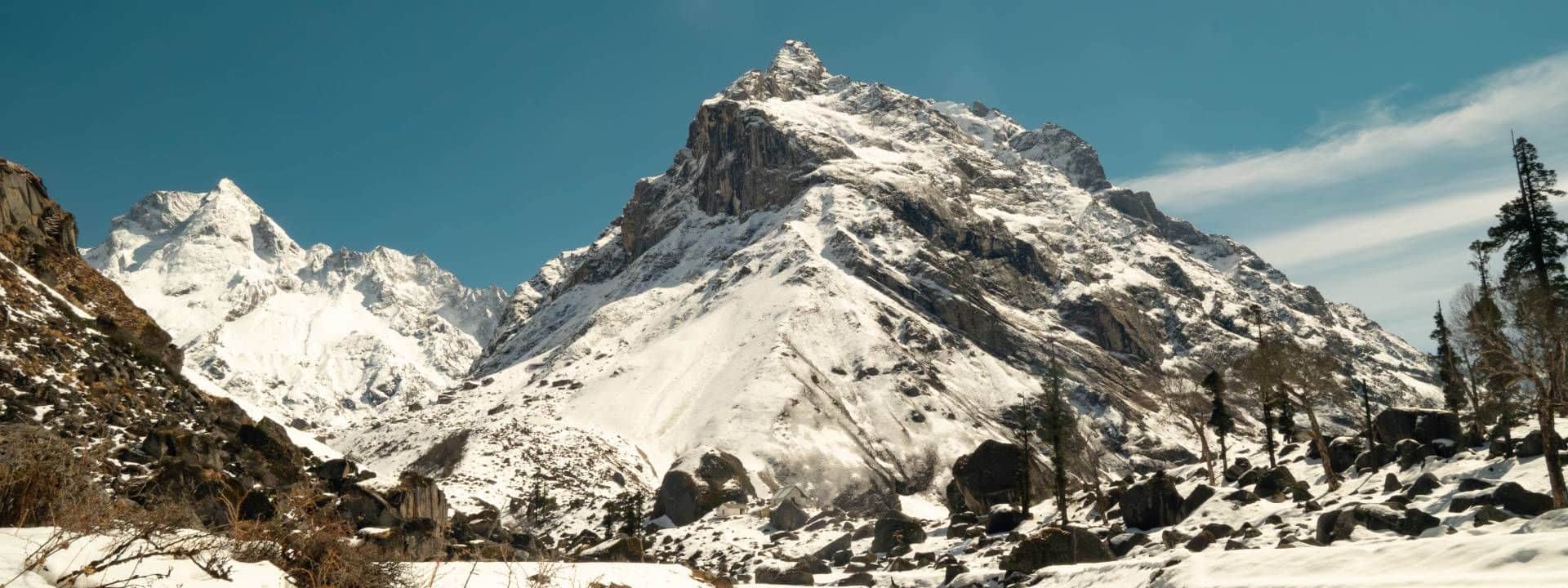
A Himalayan trek is much more than reaching a summit. It is about walking through remote valleys, crossing rivers, climbing snowy trails, breathing thin mountain air, and trusting the people who are leading you in the mountains.
At Trekup India, we understand that when someone books a trek with us, they are not only choosing an adventure — they are placing their trust in our team.
And we take that responsibility very seriously.
For more than 23 years, Trekup India has been organizing Himalayan treks, expeditions, school programs, family adventures, and outdoor journeys across Uttarakhand, Himachal Pradesh, Kashmir, Ladakh, and several other mountain regions. Over the years, we have worked with thousands of trekkers from different age groups and experience levels.
That belief shapes every safety decision we make on the mountain.

Our Safety Philosophy
The Himalayas are beautiful, but they are also unpredictable. Weather can change suddenly, trails can become difficult within minutes, and high altitude affects every individual differently. This is why we never treat trekking casually.
At Trekup India, safety is not limited to carrying a first-aid kit or appointing a trek leader. It is a complete system that starts long before the trek begins and continues until every trekker safely returns home.
Our safety approach focuses on:
- Prevention before emergencies happen
- Early detection of health issues
- Proper acclimatization
- Technically trained mountain staff
- Reliable emergency response systems
- Personal attention to every trekker
Because in the mountains, small decisions make a very big difference.
Experienced & Professionally Trained Mountain Team

A trek is only as safe as the people leading it. At Trekup India, our trek leaders, guides, and technical staff are trained to handle real mountain situations - not just manage groups.
Many of our team members are professionally trained from institutes such as:
- Nehru Institute of Mountaineering
- Indian Mountaineering Foundation
- Hanifl Centre for Outdoor Education
Our mountain teams undergo training in:
- Wilderness First Aid
- CPR & Emergency Response
- Advanced Wilderness Emergency Medicine
- Portable Altitude Chamber Handling
- High Altitude Safety
- Snow & Technical Terrain Management
- Environmental Awareness & Responsible Trekking
But beyond certifications, what truly matters is mountain experience. Many of our guides have spent years working in the Himalayas and understand mountain behavior, terrain conditions, weather patterns, and high-altitude challenges extremely well.
When situations become difficult on the mountain, experience matters more than anything.
Pre - Trek Safety Preparation
Safety starts before the trek even begins.
Before every trek, trekkers receive detailed guidance regarding:
- Physical fitness preparation
- Trek difficulty level
- Weather conditions
- Required equipment
- Clothing recommendations
- High-altitude awareness
- Trek discipline and safety rules
We strongly encourage trekkers to prepare physically before joining any Himalayan trek. Cardio fitness, stamina, hydration habits, and mental preparedness all play a major role in ensuring a safe trekking experience.
If a trekker has any existing medical condition, we recommend consulting a doctor before the trek and informing our team in advance.
For us, knowing a trekker’s medical condition beforehand is extremely important because prevention is always better than emergency treatment in remote mountains.
Acclimatization & High Altitude Safety

High altitude is one of the biggest challenges in Himalayan trekking. Even physically fit people can face altitude related issues, which is why acclimatization is taken very seriously at Trekup India.
We carefully design itineraries to allow the body enough time to adapt to increasing altitude. Our teams constantly monitor trekkers for signs of:
- Acute Mountain Sickness (AMS)
- Breathing discomfort
- Severe fatigue
- Headache or nausea
- Low oxygen saturation levels
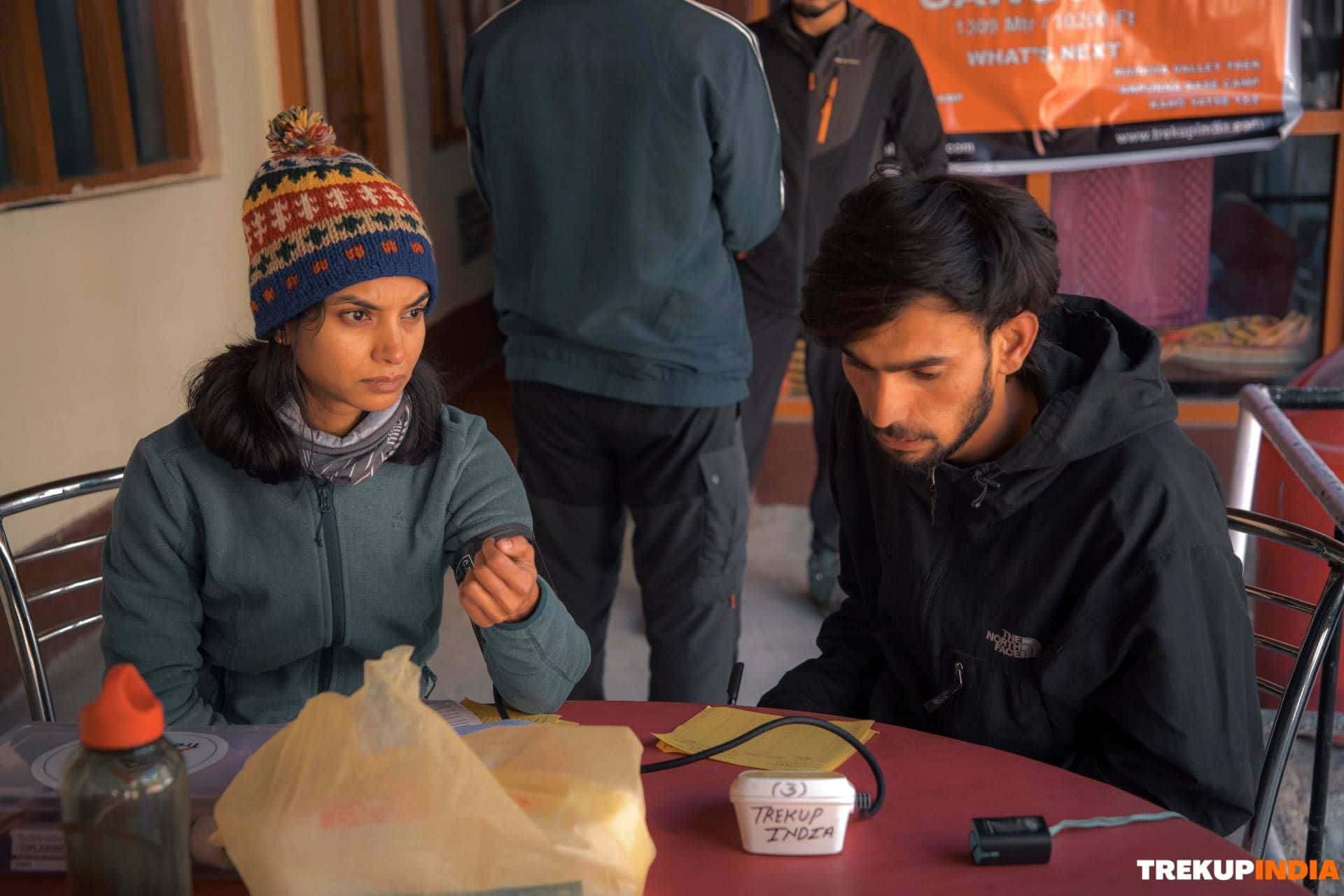
Every day during the trek, our trek leaders regularly check:
- Oxygen saturation (SpO2)
- Pulse rate
- Overall physical condition
We use pulse oximeters to identify problems early before they become serious.
If any trekker shows symptoms of altitude sickness, our team immediately takes action, which may include:
- Rest and observation
- Hydration and recovery support
- Medication if required
- Controlled descent to lower altitude
- Emergency evacuation in severe cases
Sometimes trekkers are advised not to continue further for safety reasons.
And honestly, we believe that is the right decision.
Because no mountain is more important than someone’s life.
Medical Preparedness On Every Trek
Every Trekup India trek carries a complete mountain first-aid medical kit designed specifically for Himalayan conditions.
Depending on the trek altitude and difficulty, our teams also carry:
- Emergency oxygen cylinders
- Portable altitude chamber (Gamow Bag)
- High-altitude emergency medicines
- Stretchers on selected treks
- Thermal emergency support equipment
Our teams are trained not only to carry this equipment but also to use it properly during real emergencies.
Medical preparedness is something we never compromise on.
Technical Safety On Snow & Difficult Terrain


Snow trekking and high-altitude terrain require additional technical precautions.
Over the years, Trekup India has introduced multiple safety practices that have become increasingly common across the trekking industry today.
For snow and technical sections, we use:
- Microspikes for snow grip
- Safety ropes wherever required
- Technical support teams on difficult slopes
- Snow movement control techniques
- Experienced mountain staff for route safety
We continuously evaluate terrain conditions, snowfall, weather, and trail safety before allowing trekkers to move through risky sections. Safety always comes before speed.
Communication Systems In Remote Mountains
One of the biggest challenges in the Himalayas is the lack of mobile network connectivity.
To maintain coordination in remote areas, our teams use radio communication systems during treks. This helps different team members stay connected even in regions where phones stop working completely.
Along with this, we maintain:
- Local rescue coordination support
- Emergency contact systems
- Weather monitoring updates
- Route safety assessments
- Evacuation planning protocols
In mountain environments, quick communication can make a critical difference during emergencies.
Emergency Response & Evacuation Protocol
Despite all precautions, mountain environments can still be unpredictable. That is why we maintain structured emergency response systems.
In case of medical emergencies, our teams are trained to:
- Stabilize the trekker immediately
- Assess the seriousness of the condition
- Coordinate emergency descent if required
- Arrange evacuation support
- Connect with nearby medical facilities and rescue teams
Depending on the terrain and severity of the situation, evacuation may happen through:
- Immediate descent support
- Local rescue teams
- Vehicle evacuation
- Helicopter evacuation (where available and weather permits)
Our priority in every emergency situation is simple: Respond quickly, stay calm, and prioritize the trekker’s safety above everything else.
Small Group Attention & Trek Monitoring
We strongly believe that good safety is not possible without personal attention.
During the trek, our leaders continuously monitor trekkers for:
- Energy levels
- Fatigue
- Hydration
- Walking pace
- Breathing difficulty
- Physical and mental condition
Whether someone is trekking for the first time or has previous mountain experience, our teams ensure that every trekker feels supported throughout the journey. No one should feel ignored in the mountains.
Responsible Trekking & Environmental Safety
Mountain safety is also connected to responsible trekking practices.
Our teams actively encourage:
- Responsible waste management
- Respect for mountain ecosystems
- Controlled campsite behavior
- Sustainable trekking practices
- Awareness about Himalayan conservation
Because protecting the mountains is equally important for future trekkers and local communities.
What We Expect From Trekkers
Safety in the Himalayas is always a shared responsibility.
We expect every trekker to:
- Prepare physically before the trek
- Follow trek leader instructions carefully
- Inform us honestly about medical conditions
- Maintain discipline during the trek
- Stay hydrated and eat properly
- Respect mountain weather and safety decisions
Sometimes weather or health conditions may force route changes or summit cancellations.
While these decisions may feel disappointing in the moment, they are always taken with safety as the highest priority.
Why Trekkers Trust Trekup India
Trekkers choose Trekup India because we combine mountain experience, technical preparedness, and genuine human care.
Over the years, we have built trust through:
- 23+ years of Himalayan experience
- Professionally trained mountain teams
- Strong high-altitude safety systems
- Reliable emergency preparedness
- Technical expertise on snow terrain
- Personalized attention during treks
- Responsible trekking practices
- Honest safety-first decision making
The Himalayas are powerful, raw, and unpredictable. No company can control the mountains. But what we can control is how responsibly we prepare for them. And that is exactly what we promise at Trekup India. When you trek with us, you are not just joining a group departure. You are trekking with a team that genuinely cares about your journey, your experience, and most importantly - your safe return home.
About the Author: Trekking Expertise You Can Trust

Director & Founder
With over 12 years of experience in the Himalayas, he has summited multiple 6000–7000 meter peaks and led more than 200 expeditions across iconic routes like Bali Pass, Buran Ghati, Rupin Pass, Pin Bhabha, Stok Kangri, and Black Peak. His deep mountain experience and leadership make him a trusted name in Himalayan trekking. Write to him at: preetam@trekupindia.com