Kedarkantha Trek
The Ultimate Winter Wonderland: Where the silence of Shiva resides
Trek Overview
Quick Facts
Max Altitude
12,500 ft (3,810 m)
Trek Duration
4 Night / 5 Days
Trekking Distance
23km (Approx.)
Difficulty Level
Easy to Moderate
Start / End Point
Sankri, Uttarakhand
Nearest Airport
Jolly Grant Airport, Dehradun
Best Season
October to April
Accommodation
A night in hotel room & during trek in dome styled tent
Meals
Breakfast, lunch, evening snacks and dinner
Permits Required
Forest Department & Trekking permit
Temperature
Day: 8°C to 15°C / Night: -5°C to -10°C
Snow
Dec - Feb (high chances)
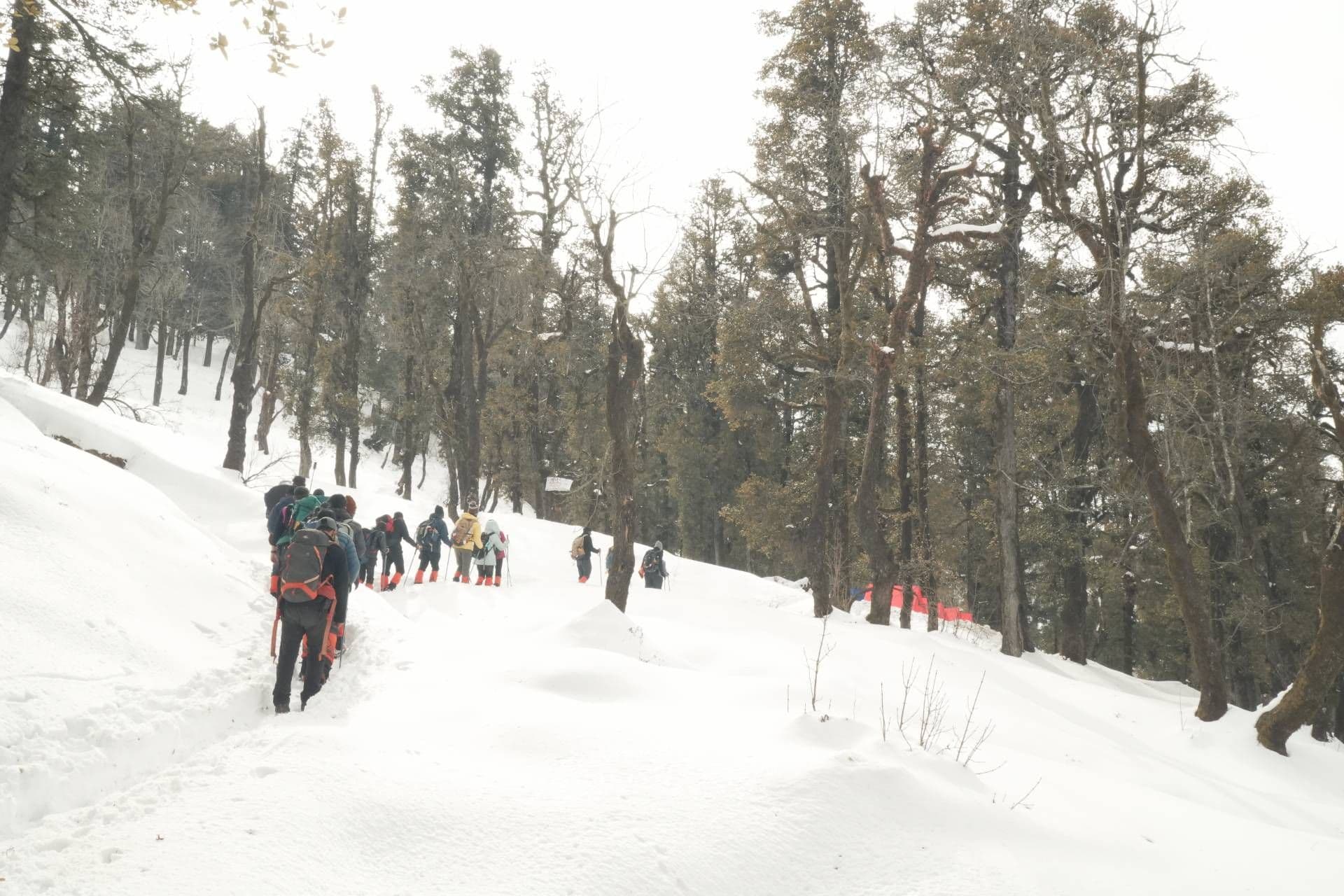
Kedarkantha Trek is one of the most well-known winter treks throughout the Indian Himalayas. It takes trekkers to a 12,500 ft summit through a snow-covered forest as well as a frozen high altitude lake along with open alpine meadows All without the need for prior climbing experience. Beginning in an alpine village in Sankri in Uttarakhand the five-day trek is a stunning combination of 360-degree Himalayan views and an easy difficulty degree, making this one of the most suitable alternatives for new trekkers and experienced hikers.
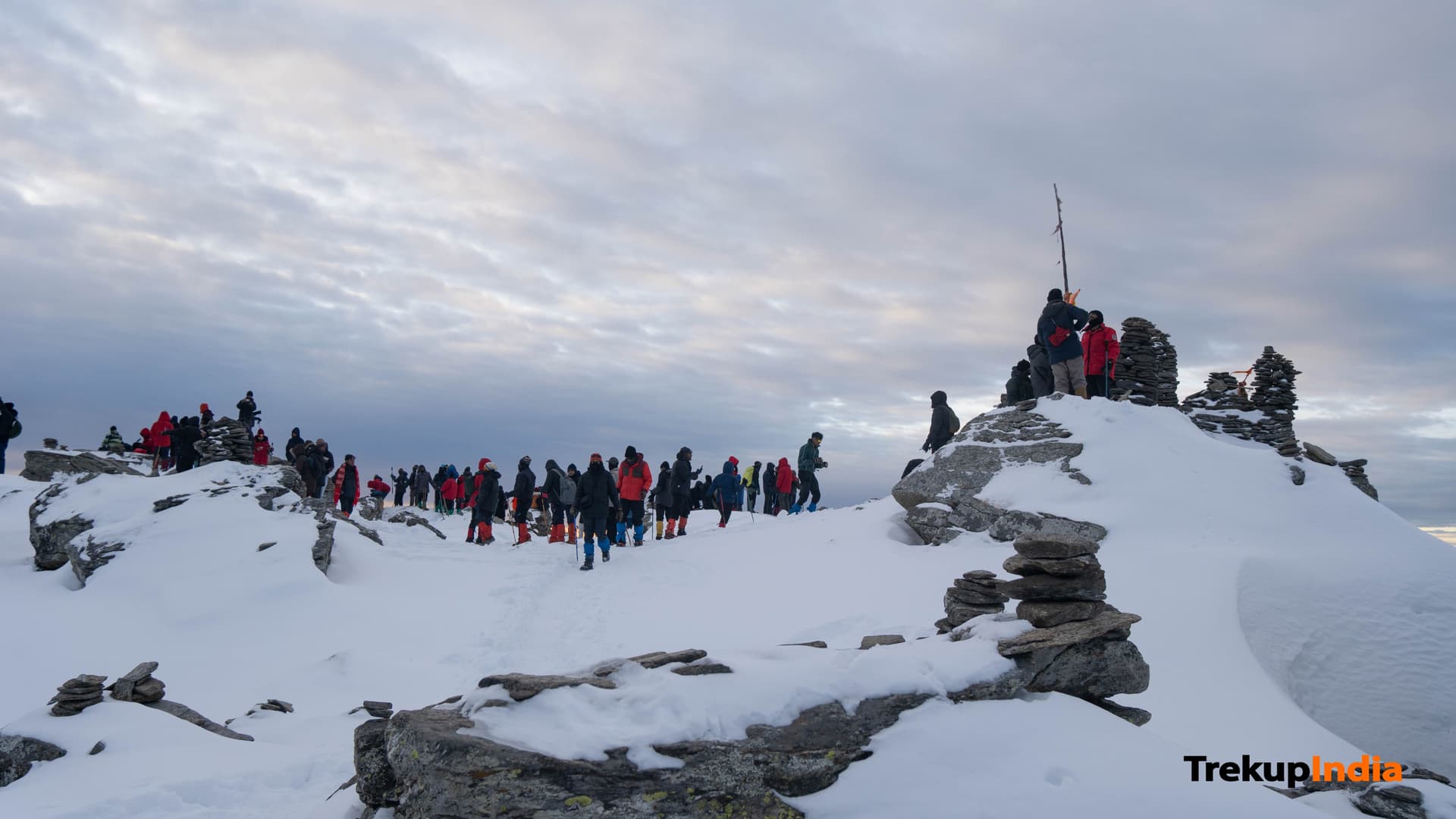
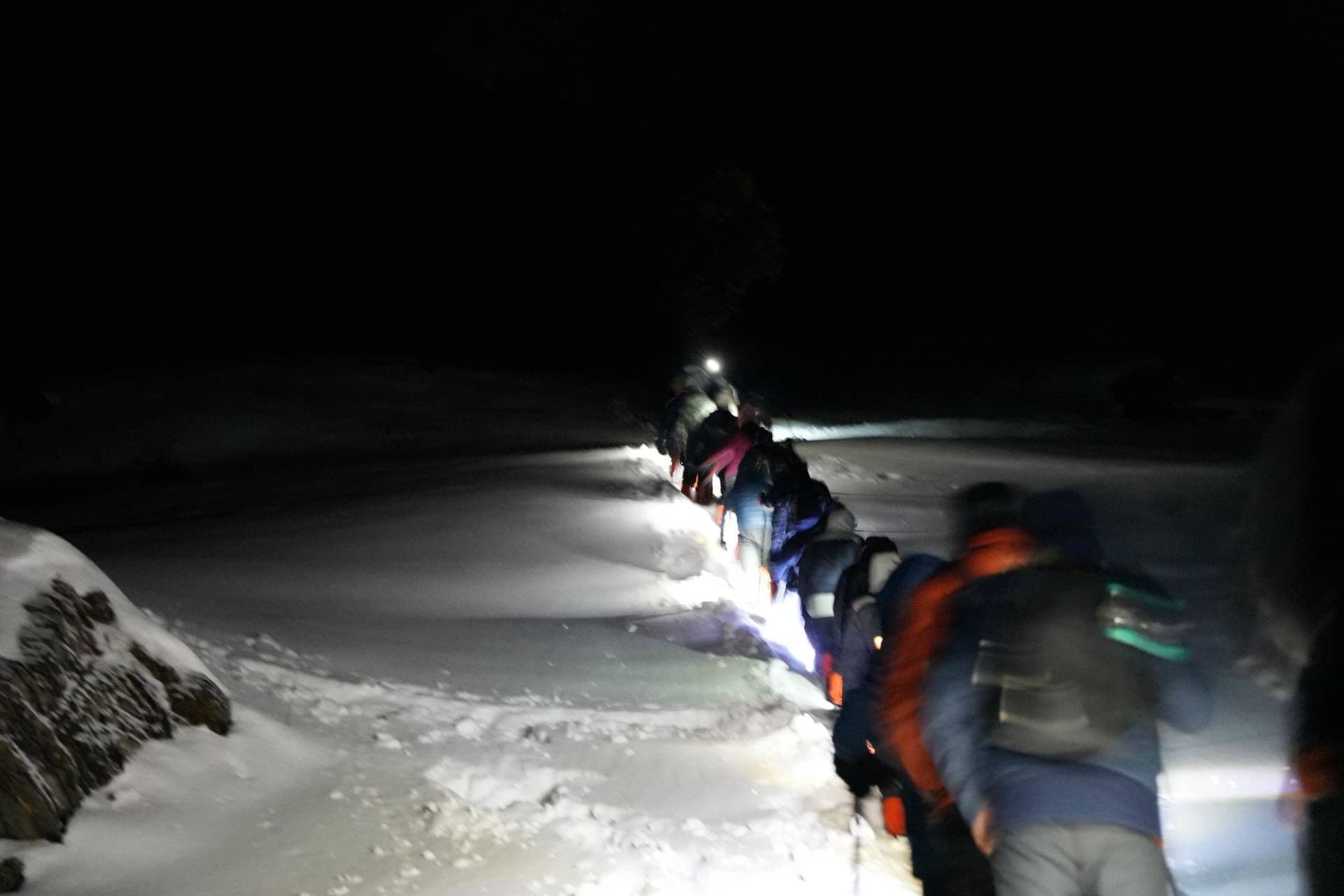
When you tie on your boots in Sankri at the beginning, the trail is a quiet snow-covered pine forest as it opens to the frozen vastness in Juda Ka Talab. The real test is on summit day which is when trekkers begin their journey early in the morning under headlamp lighting, navigating the steep covered in snow ridge to reach the summit at the time that the sun rises above Swargarohini and Bandarpoonch -- rewarding each step with the panoramic 360 degree Himalayan panorama and an unforgettable feeling of achievement.
Why the Kedarkantha Trek Is So Special
1. Narnia-Like Scenic Beauty
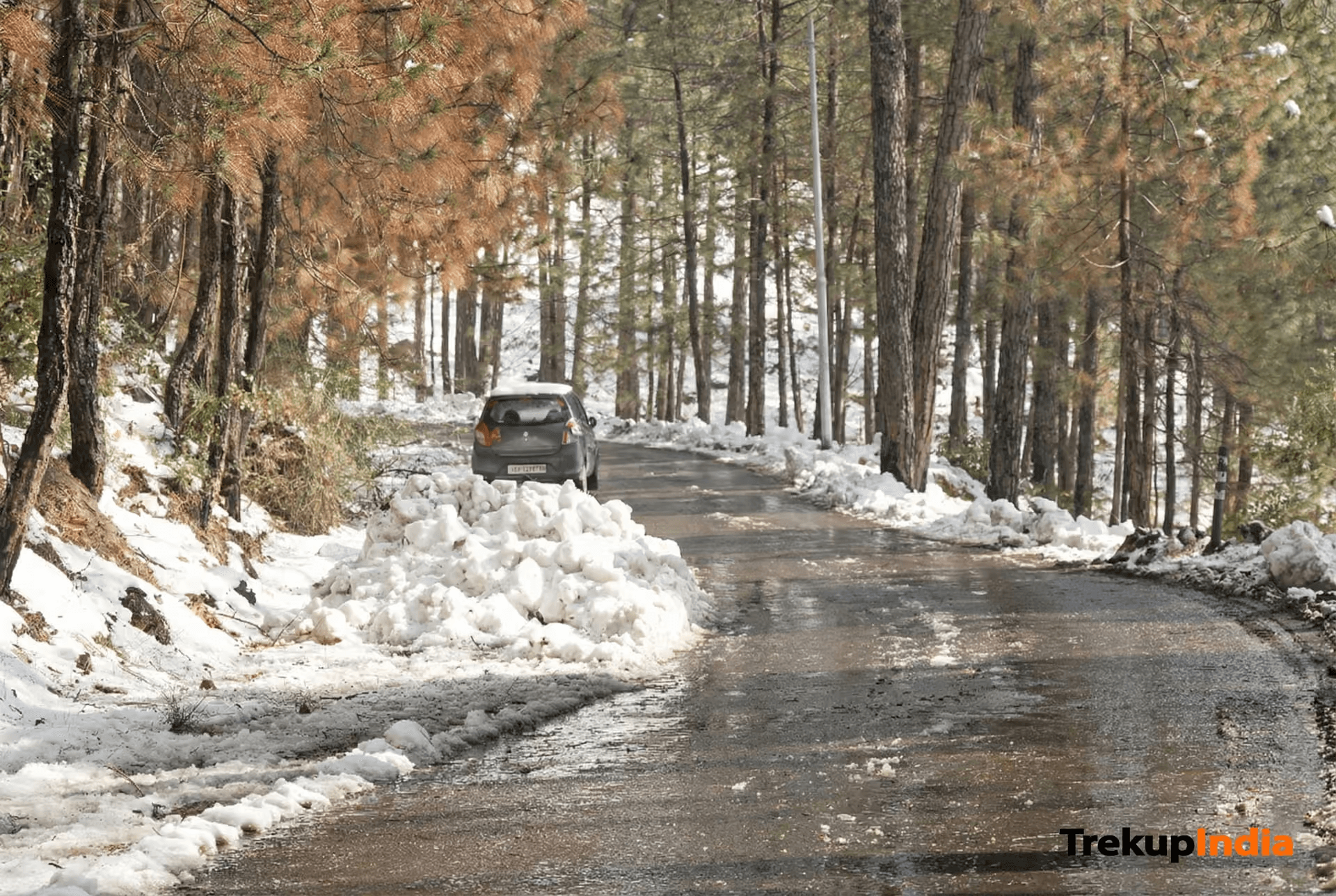
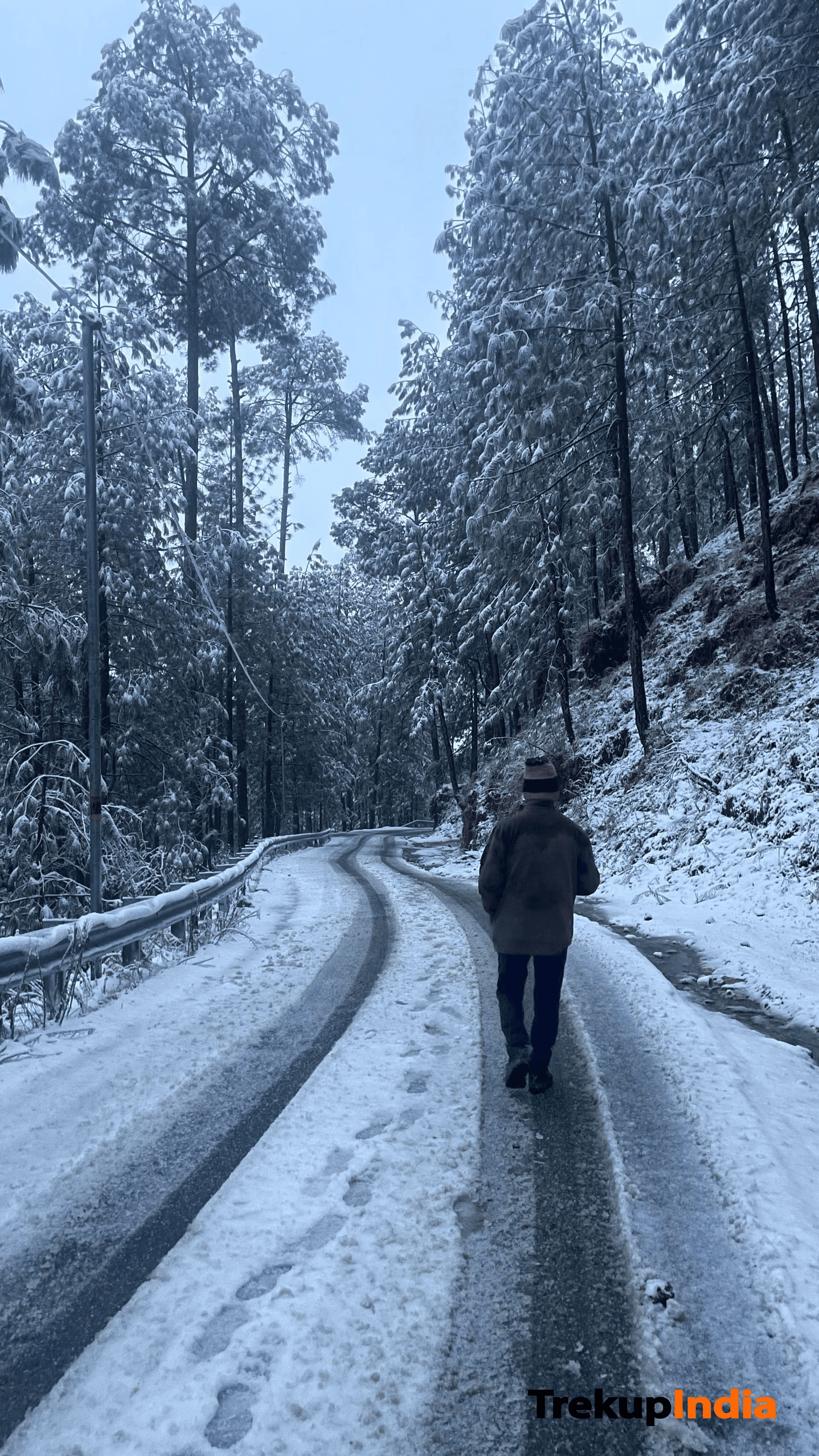
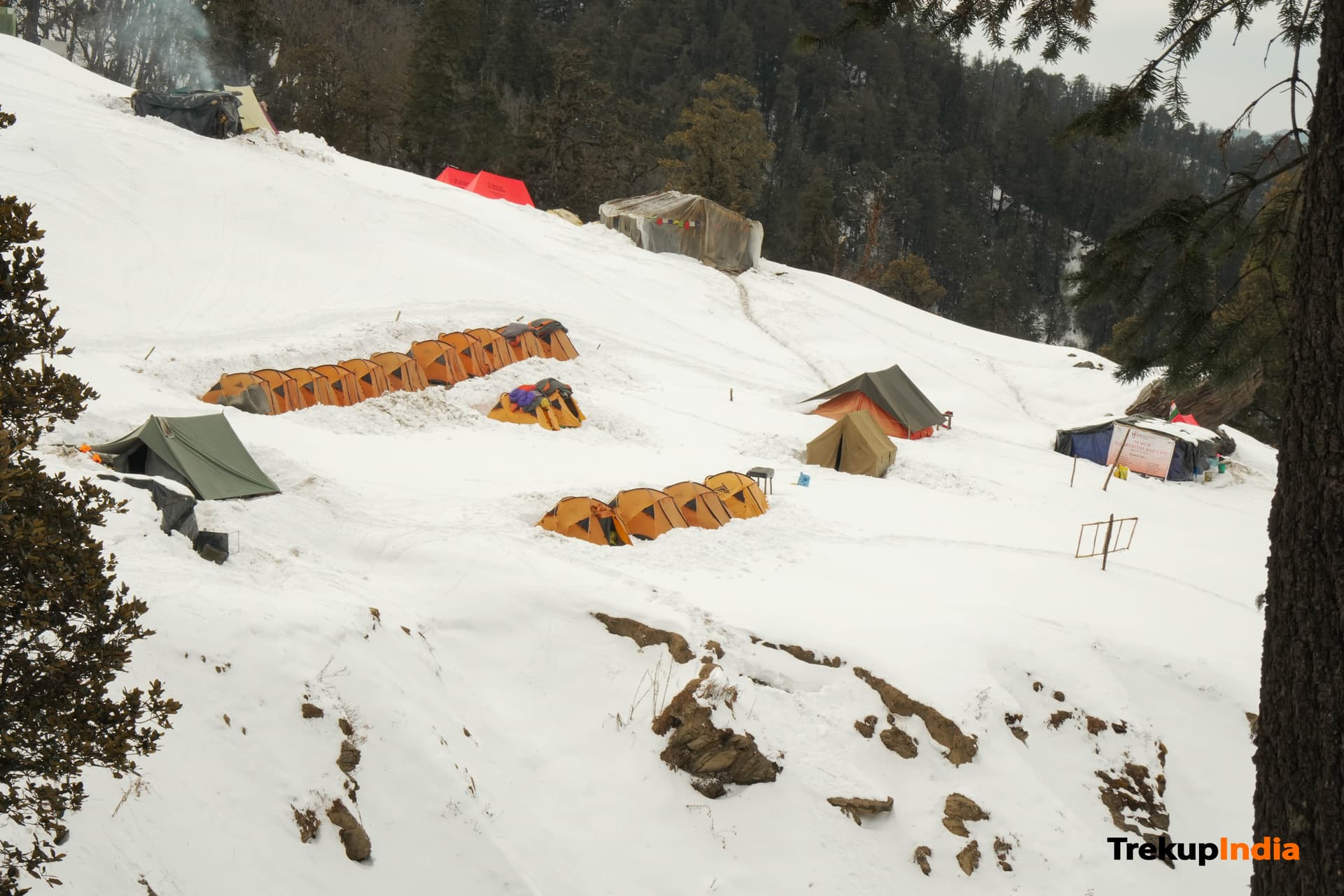
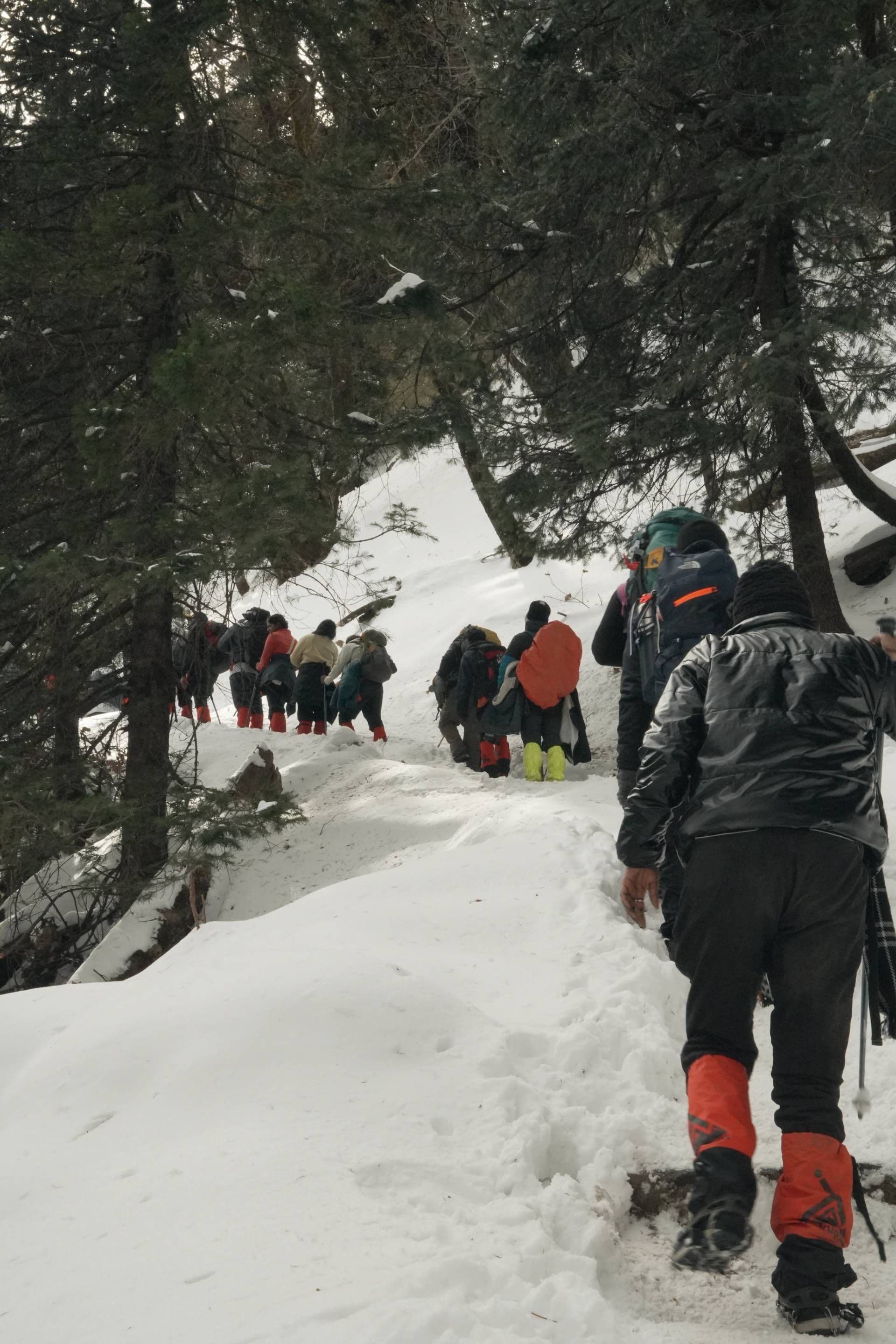
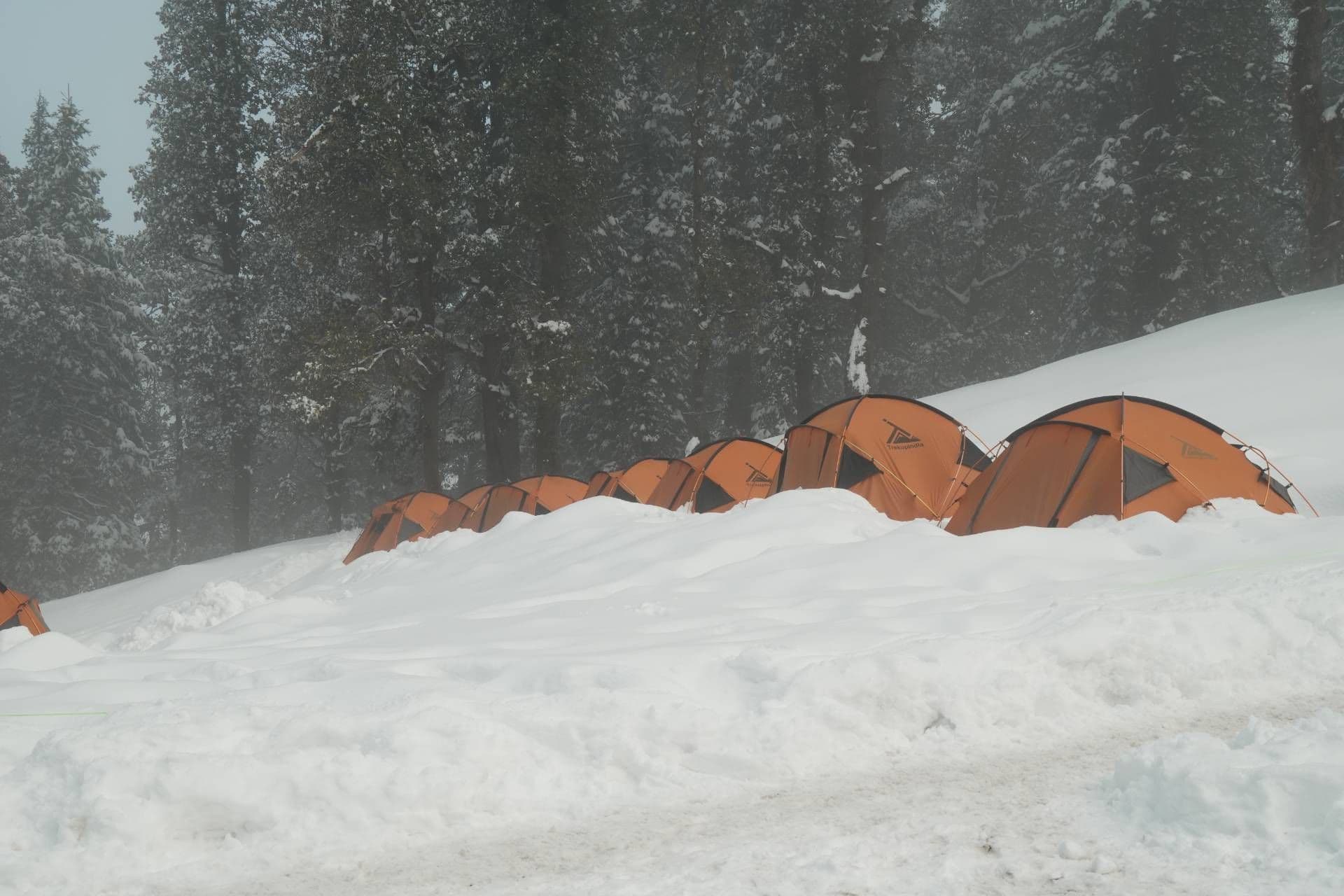
The first stretch of the trek traversing Govind Wildlife Sanctuary feels like being in the pages of a winter fairytale. Snow-covered branches create white tunnels over while sunlight swoops across the swaying ice crystals floating in the still air. At 11,000 feet the dense forest is transformed into vast alpine meadows (bugyals) under a vast blue sky, marking one the most dramatic transitions on the trek.
2. Wildlife Sanctuary Immersion
The route traverses the center of Govind Wildlife Sanctuary, a protected forest that is home to the authentic Himalayan wildlife. Be alert for the vibrantly hued Himalayan Monal, Uttarakhand's state bird, and indications for Red Fox -- adding an element of natural wonder for your trek beyond the beauty of the landscape.
3. Juda Ka Talab: The Frozen Lake
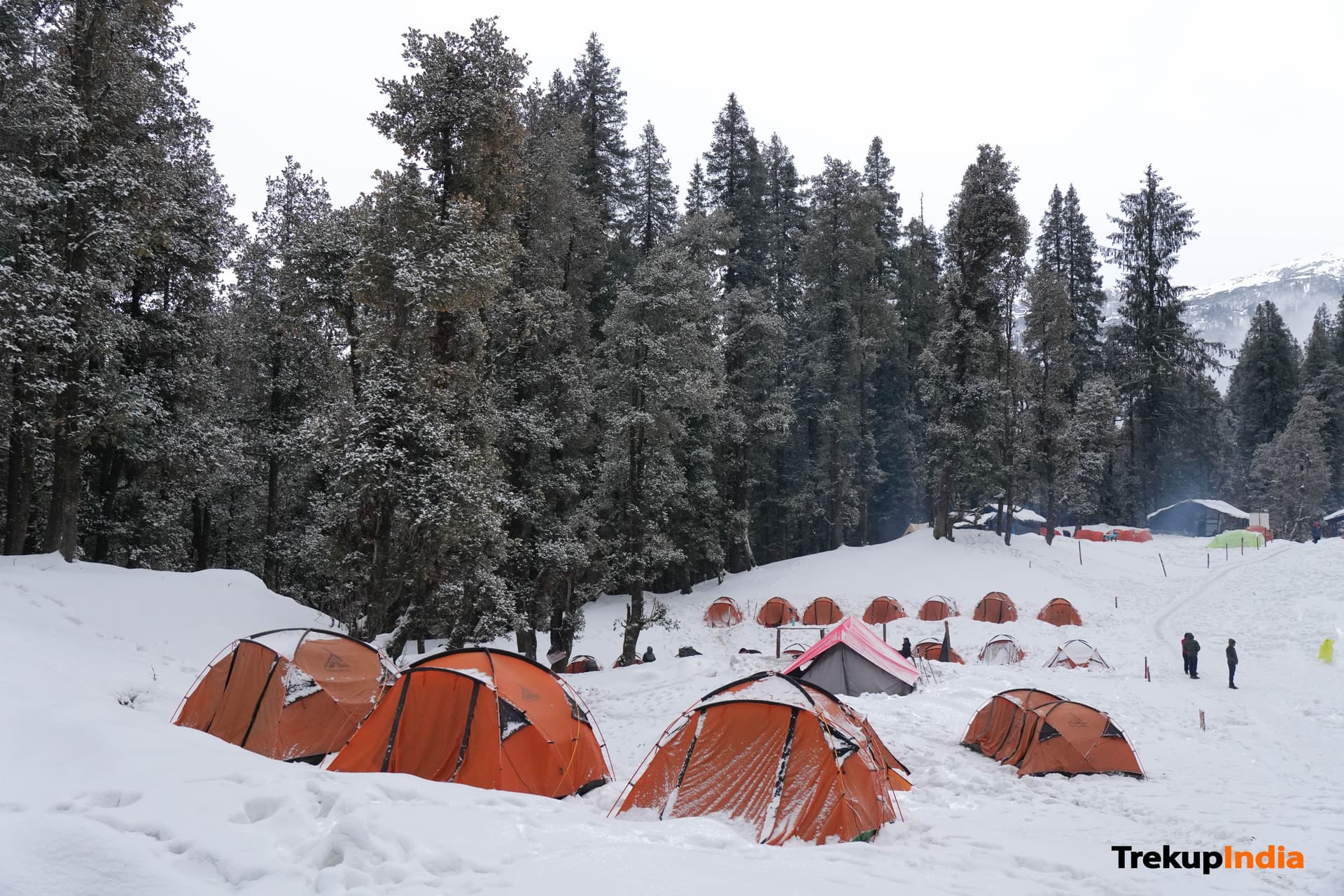
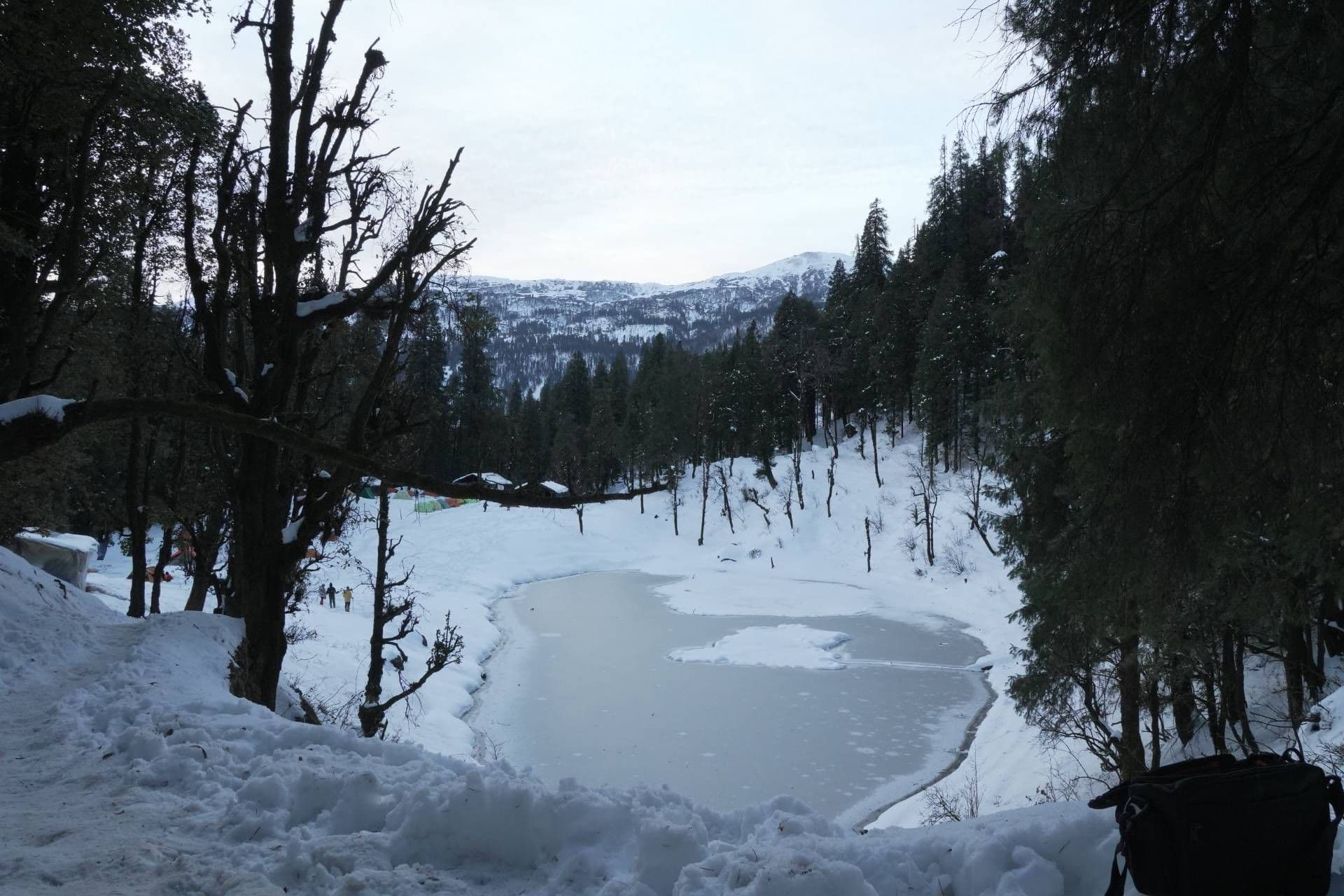
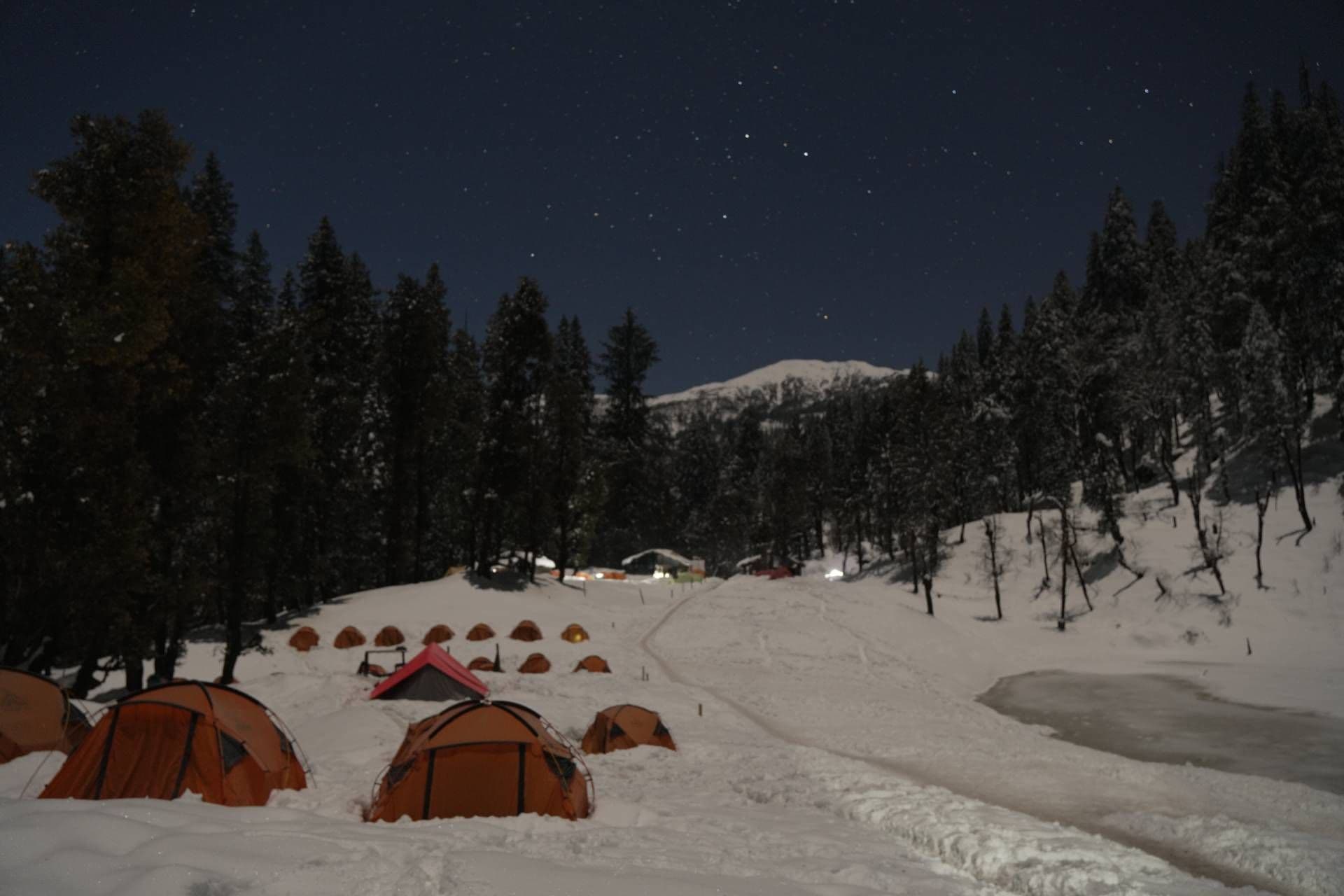
The lake is situated at a height of more than 9,000 feet within a natural amphitheater surrounded by tall pines, Juda Talab is a solid frozen lake that is safe during winter for a walk. The contrast of the lake's light glacier-like shoreline and the deep pines that surround it makes it an extremely photographed locations during the trek -and camping in the vicinity in the clear, night sky is something trekkers often recall even after their trip is over.
4. The True Summit Experience
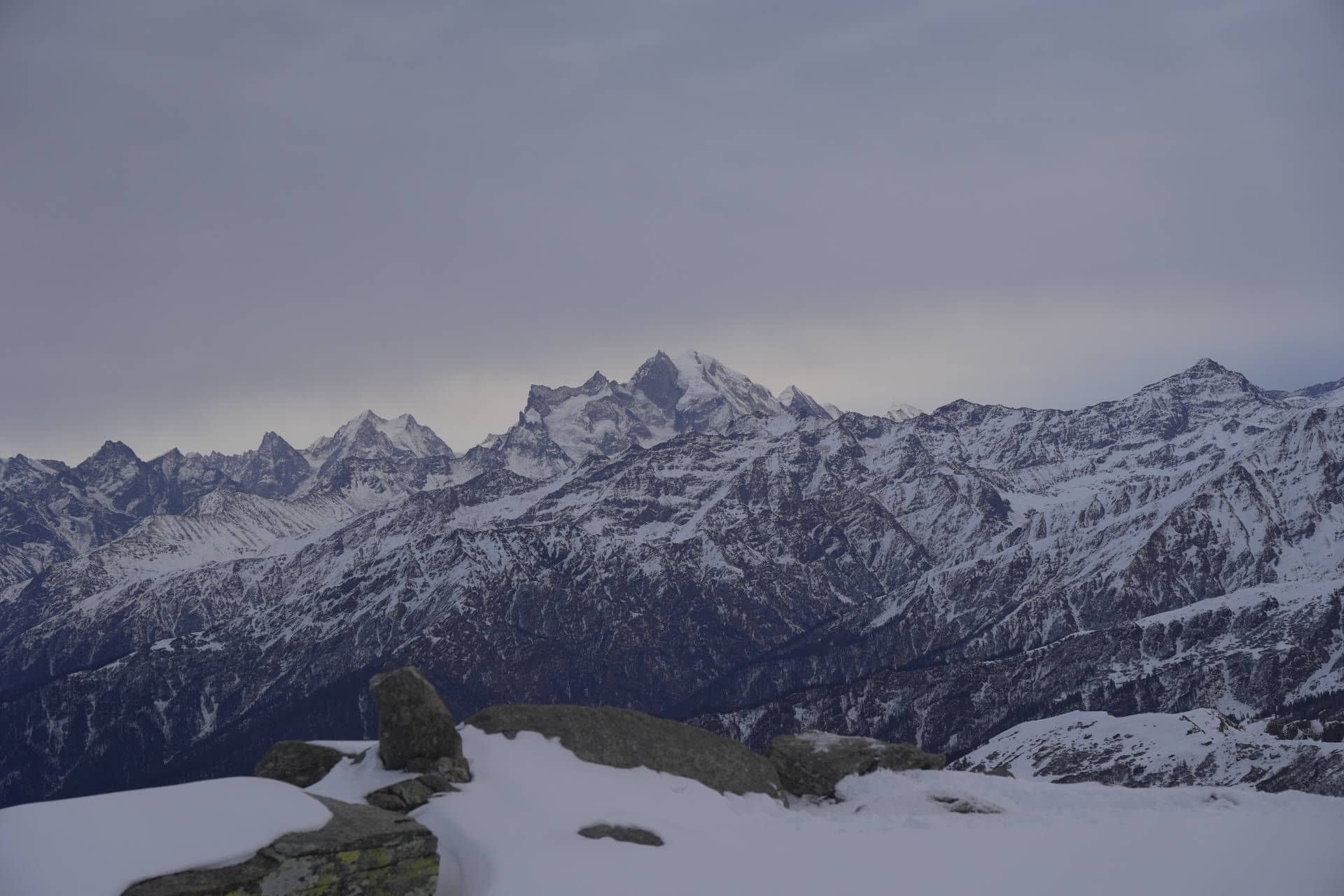
Kedarkantha's freestanding triangular peak provides a 360-degree unobstructed perspective in all directionsan uncommon feature in Himalayan summits. From the summit three of the most famous mountains are visible: Swargarohini, Bandarpoonch, and Kalanag (Black Peak) The three peaks make the summit seem like an unnatural viewpoint located in the middle in the mountains.
5. Chromatic Sunrise and Sunset Views
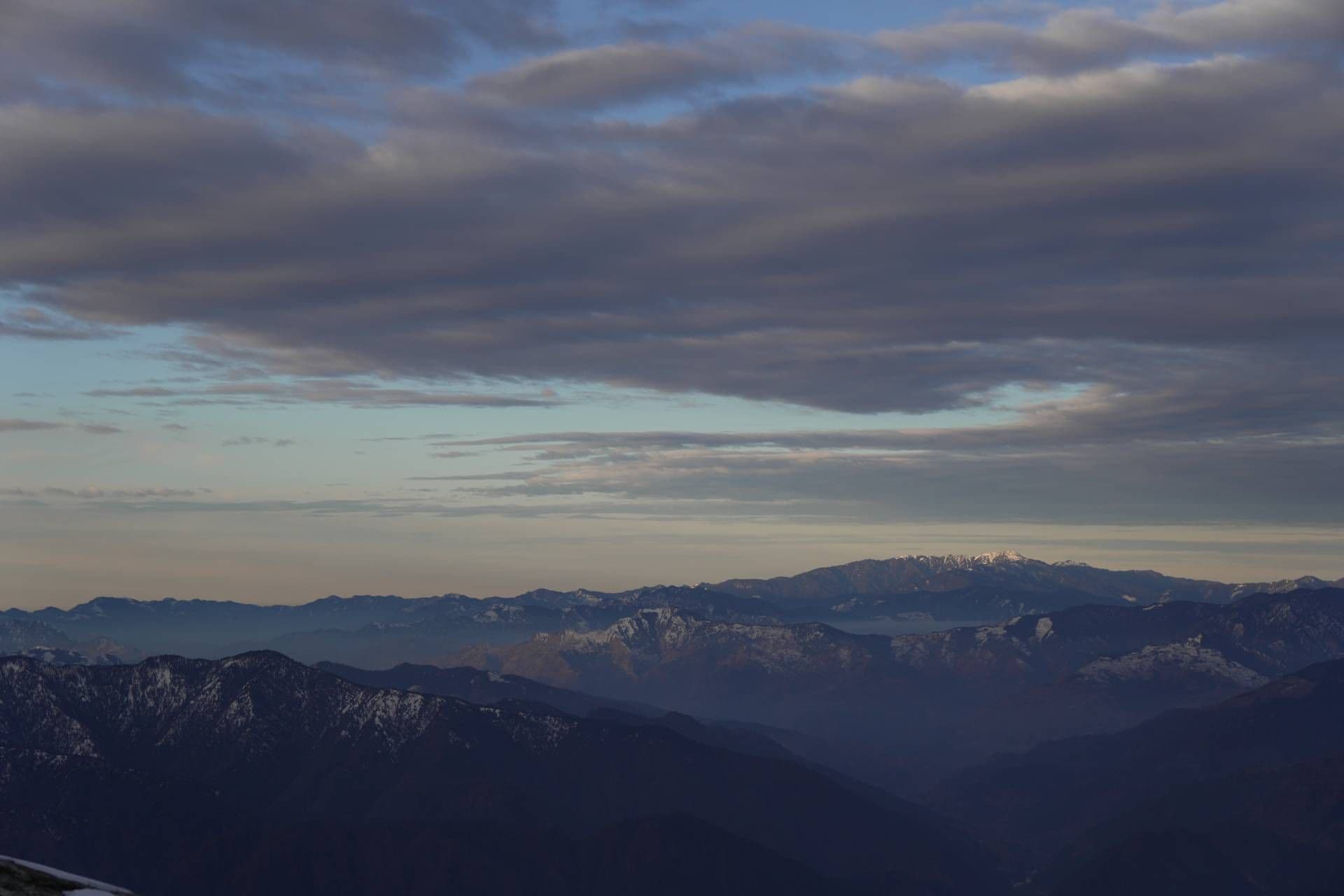
- sunrise: Beginning at 3 am, the skies changes between deep blue and silver, as trekkers close to the summit. The first light hits distant glaciers which turn the frozen summits that comprise Swargarohini and Bandarpoonch in a bright orange-red.
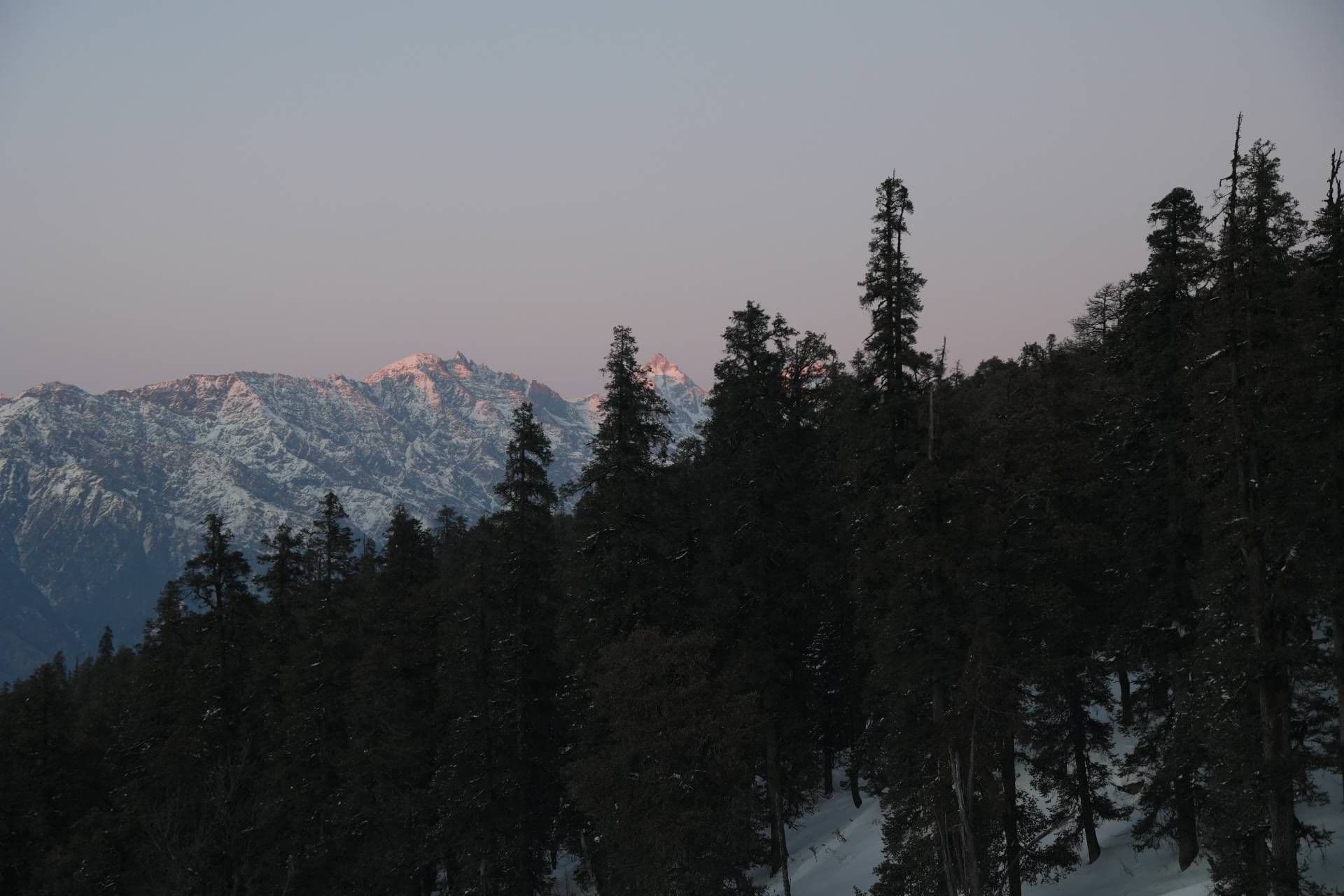
- Sunset Starting from the 11250 feet base camp, snow-covered slopes transform into soft purple and pink shades as dusk approaches, usually when it is clear nights by an unobstructed perspective of the Milky Way.
Trek Highlights
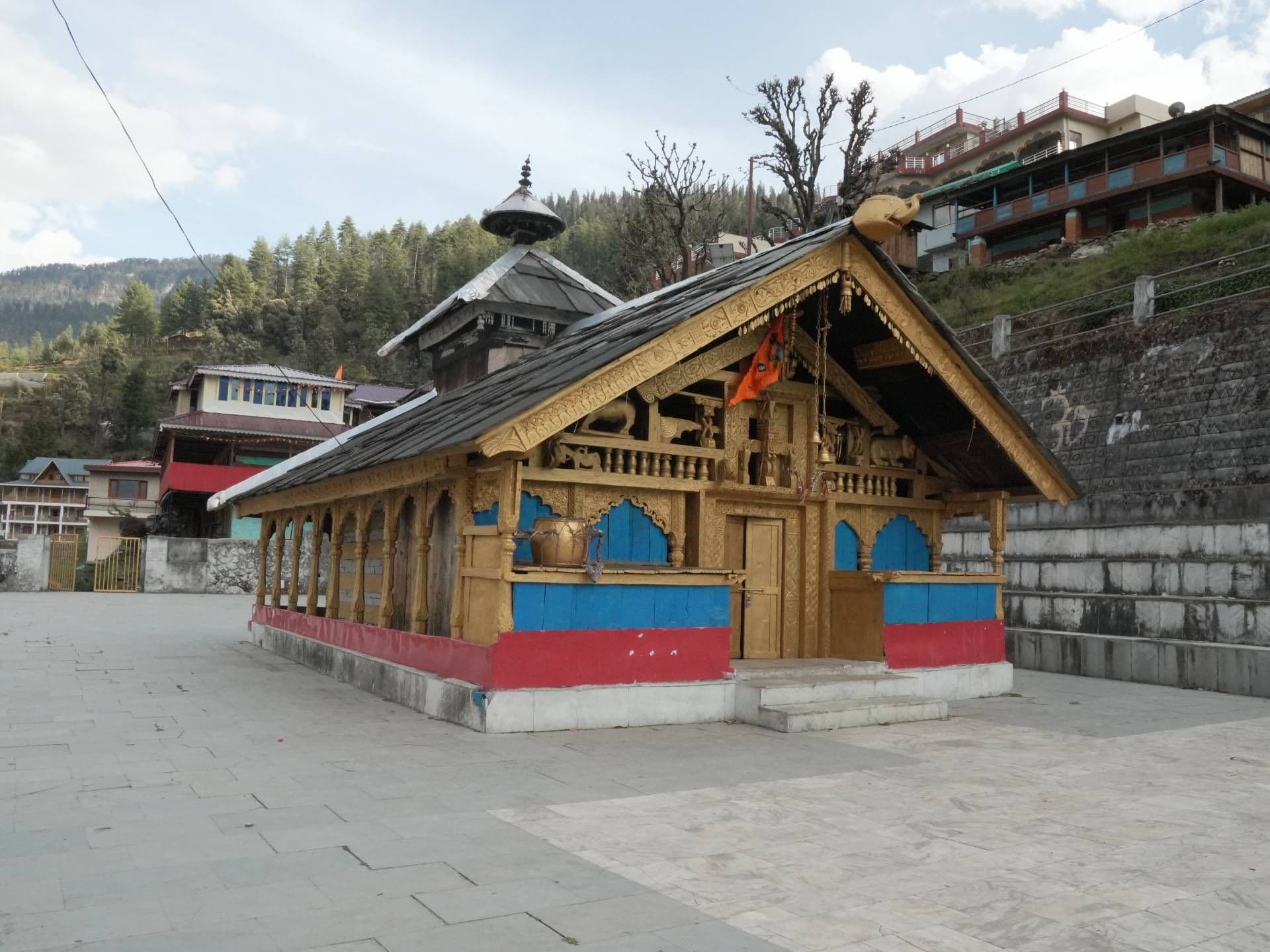
Village Life & Local Culture
- Experience the warmth of Himalayan villages and discover the rich local culture along the Kedarkantha Trek.
- Explore the authentic culture and traditional village life of Uttarakhand during the Kedarkantha Trek, offering a glimpse into the local communities, traditions, and peaceful Himalayan lifestyle.
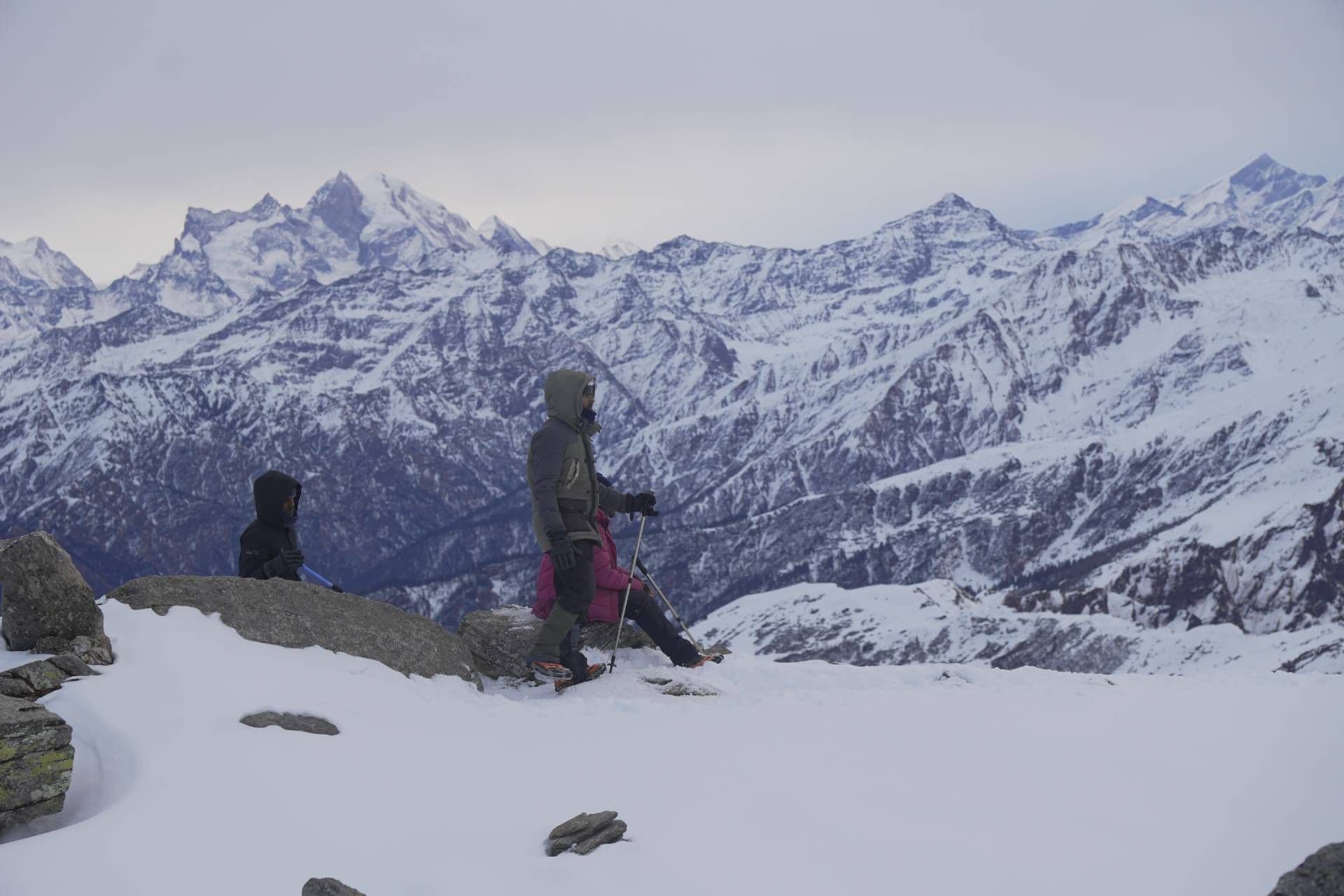
Summit Experience
- Reach at High Peak: At 12,500 ft. high (3,810 m), the summit of this trek is the highest point of the trek and provides the thrill of reaching a high Himalayan peak without having to be an expert rock climber; therefore, it is the best first summit.
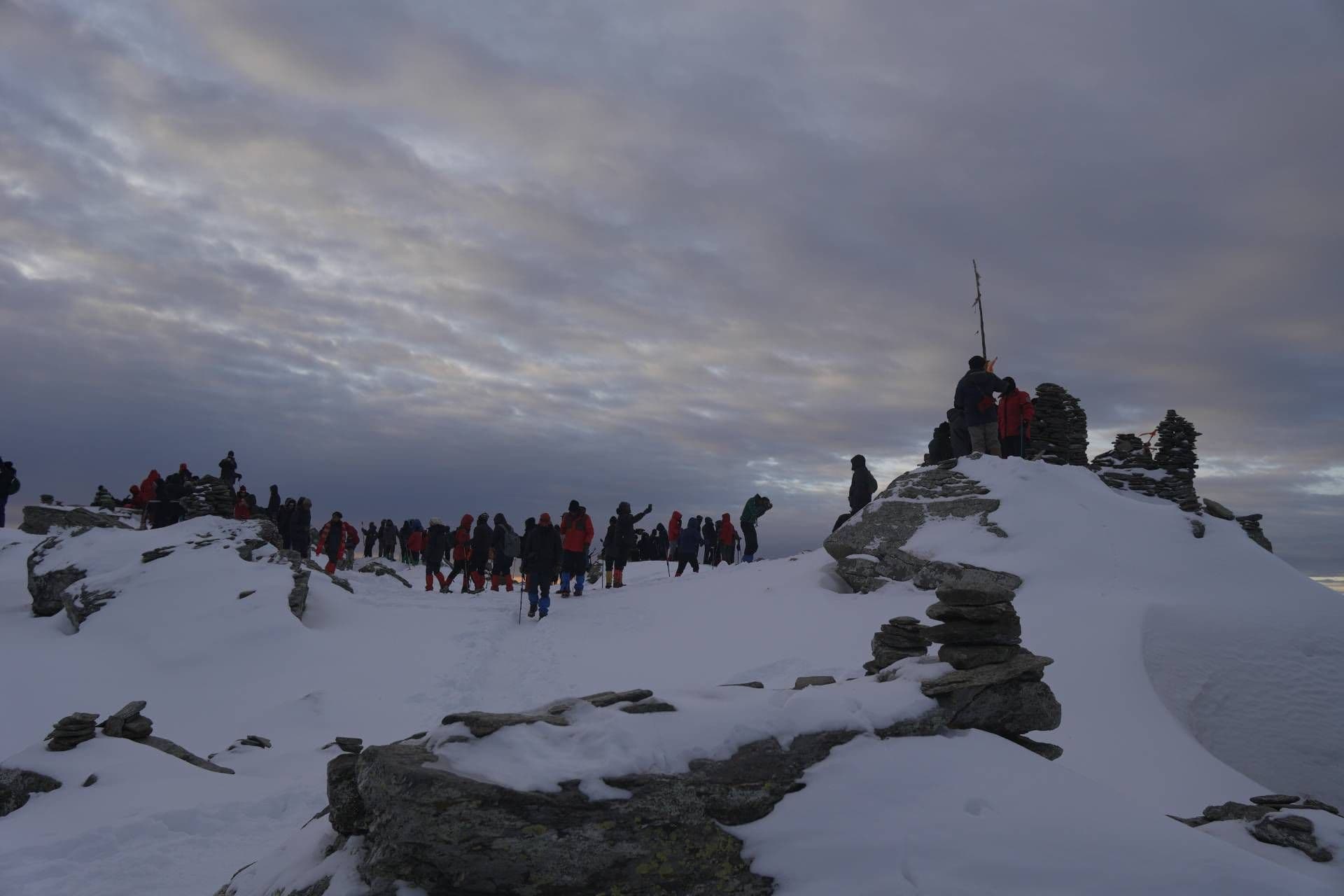
- A View from the Top: When you reach the top of this trek, you will have a complete, unobstructed and panoramic view of massive peaks, including the Swargarohini, the Bandarpoonch and the Black Peak.
- Sunrise at the Summit: When you leave the camp early to trek to the summit, you will arrive just in time to witness the spectacular Golden Sunrise, illuminating the peaks below in fiery red.
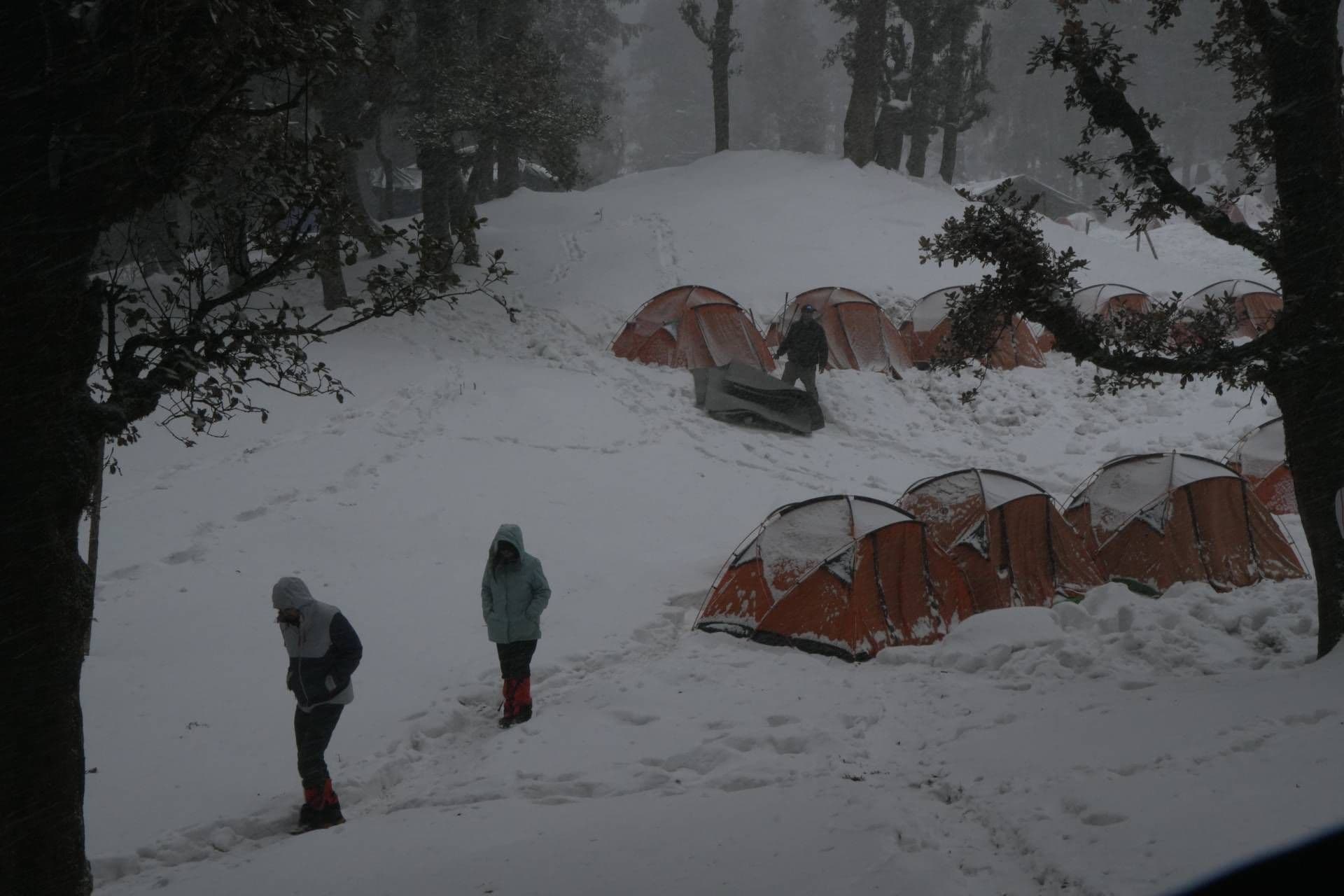
Best Season & Seasonal Beauty
- Dec - Mar (Winter): A Great Time to trek. Snow covers the landscape creating a winter wonderland. The temperature is extremely cold, people have a hard time finding others, and the bright and crisp views of the mountains are spectacular, especially after a new snowfall. Most of the high passes will be closed.
- Mar - May (Spring): This time of year sees blooming wildflowers, especially the vibrant rhododendron flowers. Spring days have moderate weather and are great for trekking with the snow melt giving you access to trails that were previously too high to trek on. The visual clarity during this period is generally excellent, although you'll start to notice haze developing toward the end of May.
- Jun - Aug (Summer & Monsoon): The wet season of the summer & monsoons is an excellent time to trek in areas of Ladakh & Spiti, which are rain-shadow areas, where almost no rainfalls & the sun shines bright. However, during most other places, visibility is low due continuous rain, cloud and fog.
- Sept - Nov (Autumn): After the monsoon clears the atmosphere, the mountains offer the best visual clarity. The skies in autumn are crystal clear and allow for panoramic views of the peaks like no other, as well as being the best time for trekking because of the most stable weather, dry trails, and moderate temperatures.
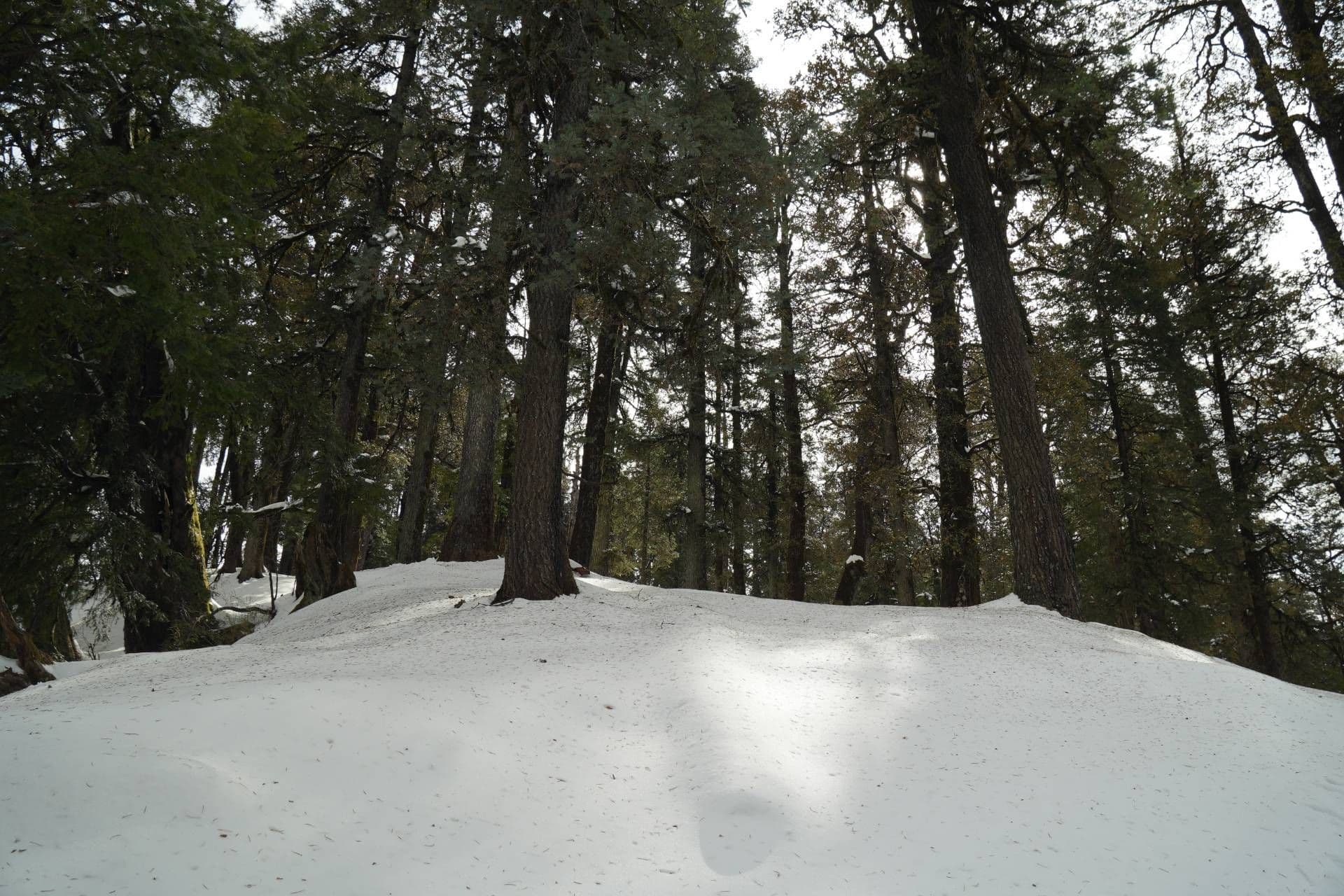
Flora & Fauna
- Floral Diversity: Low elevation (the mixed forests) are mixed forests of Oak and Pine. Intermediate elevations (mid-altitude) are coniferous forests dominated by Deodar Cedar and Silver Fir trees. The beautiful Rhododendron flowers, known in this region as Buransh, can be seen between March and May. Above the treeline are vast expanses of high-elevation grasslands, known as Bugyals, which support unique grasses and many of the region's medicinal herbs and plants.
- Fauna Diversity: The sanctuary's wildlife is not commonly seen by humans but has a great deal of biodiversity that is represented well by the birds of the Himalayas especially the iridescent Himalayan Monal (Lophophorus impejanus), the state bird of Uttarakhand and numerous large raptors. The mammals include many important and protected animals, including the highly elusive Musk Deer, which is a critically protected species and the Snow Leopard. Other mammals found in the sanctuary are the Himalayan Black Bear, Bharal or Blue Sheep, and Himalayan Langurs.
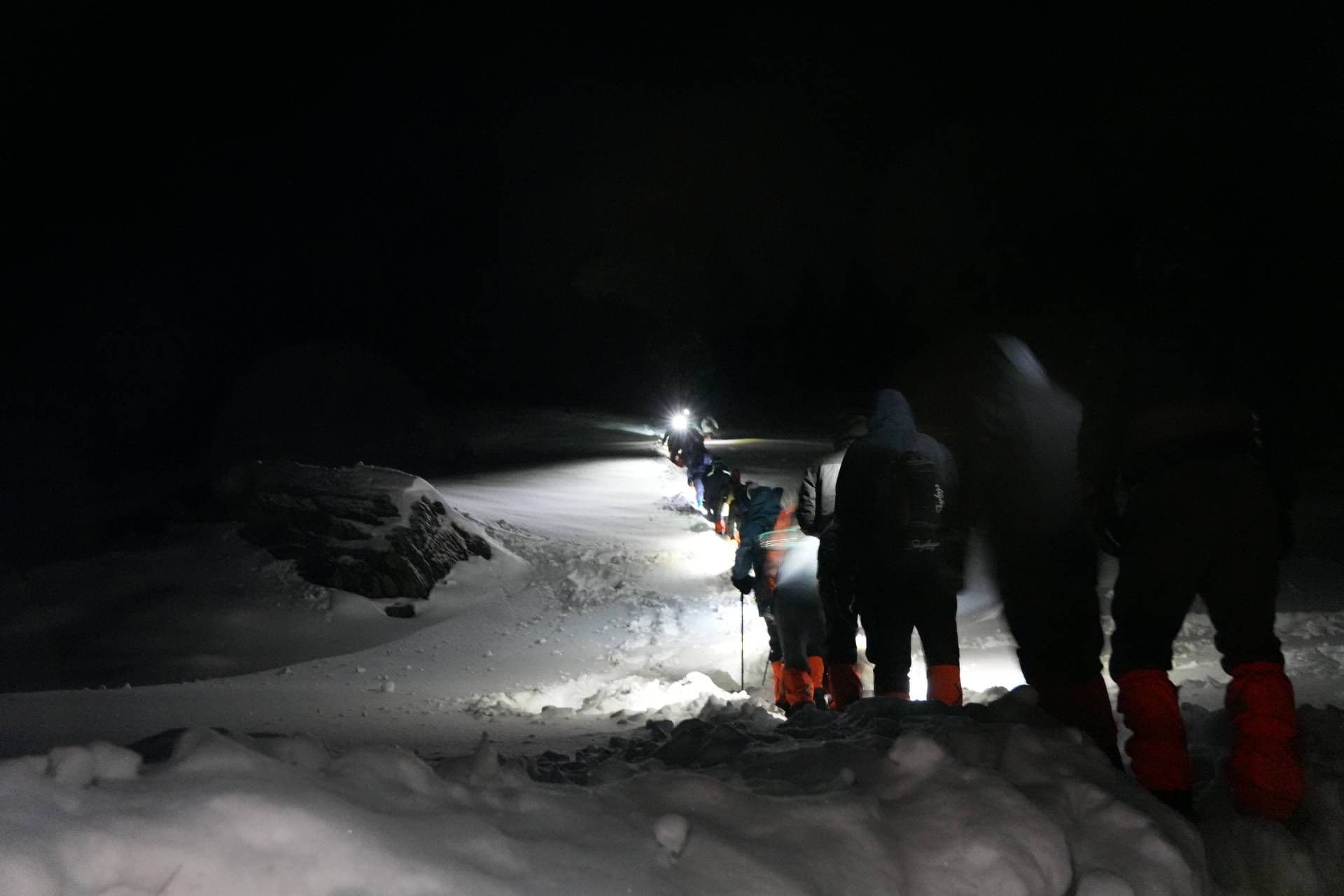
Adventure and Difficulty Level
- Low Entry Barrier: The Kedarkantha trek has a low barrier of entry and is rated easy to moderate, making it a great option for those who are physically fit but don’t have any previous high altitude trekking experience. The trek itself is mostly gradual slopes that are well-marked trails, so even if you are not an experienced mountain climber, you will be able to appreciate the rewards of trekking in the Himalayas.
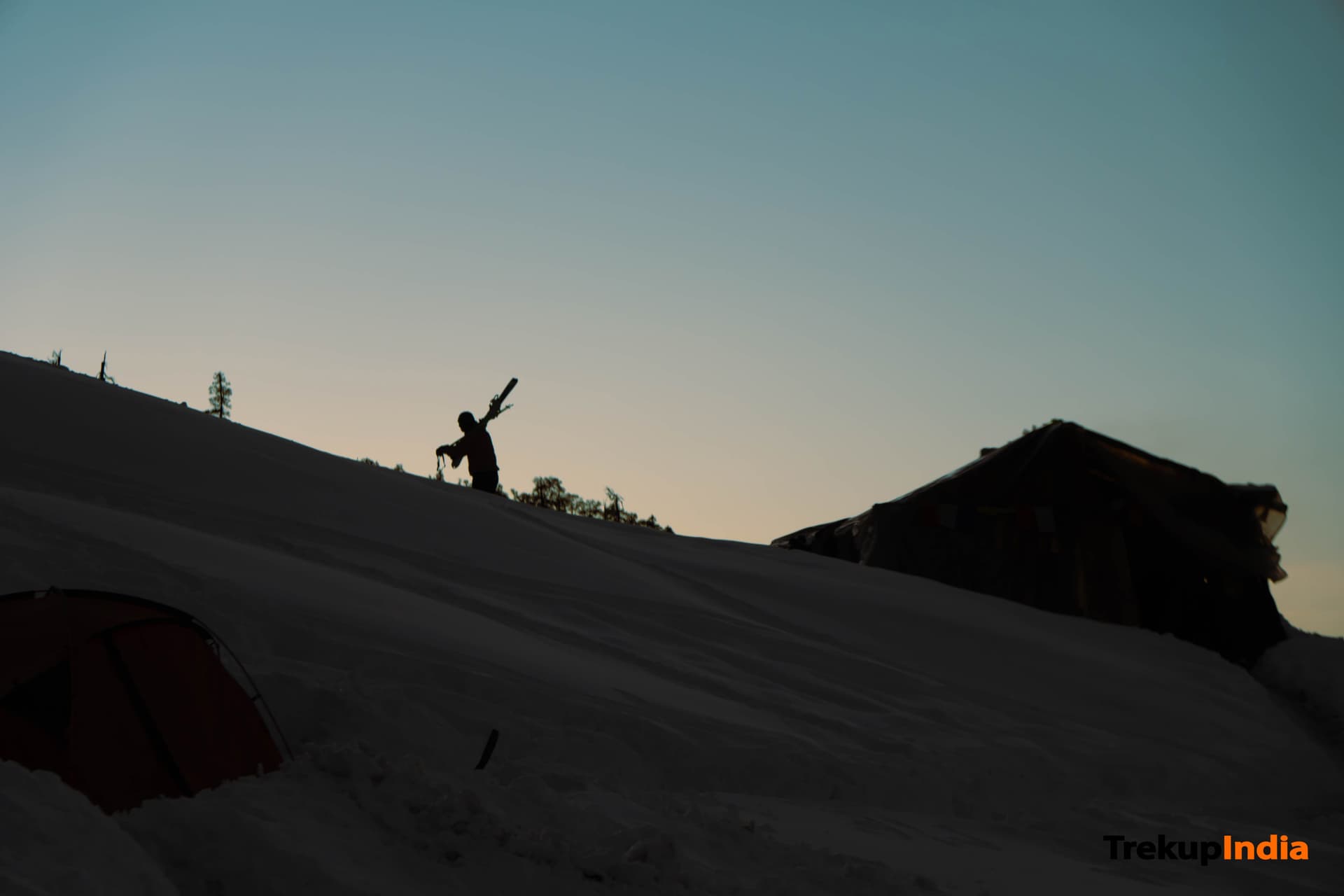
Unique Experiences
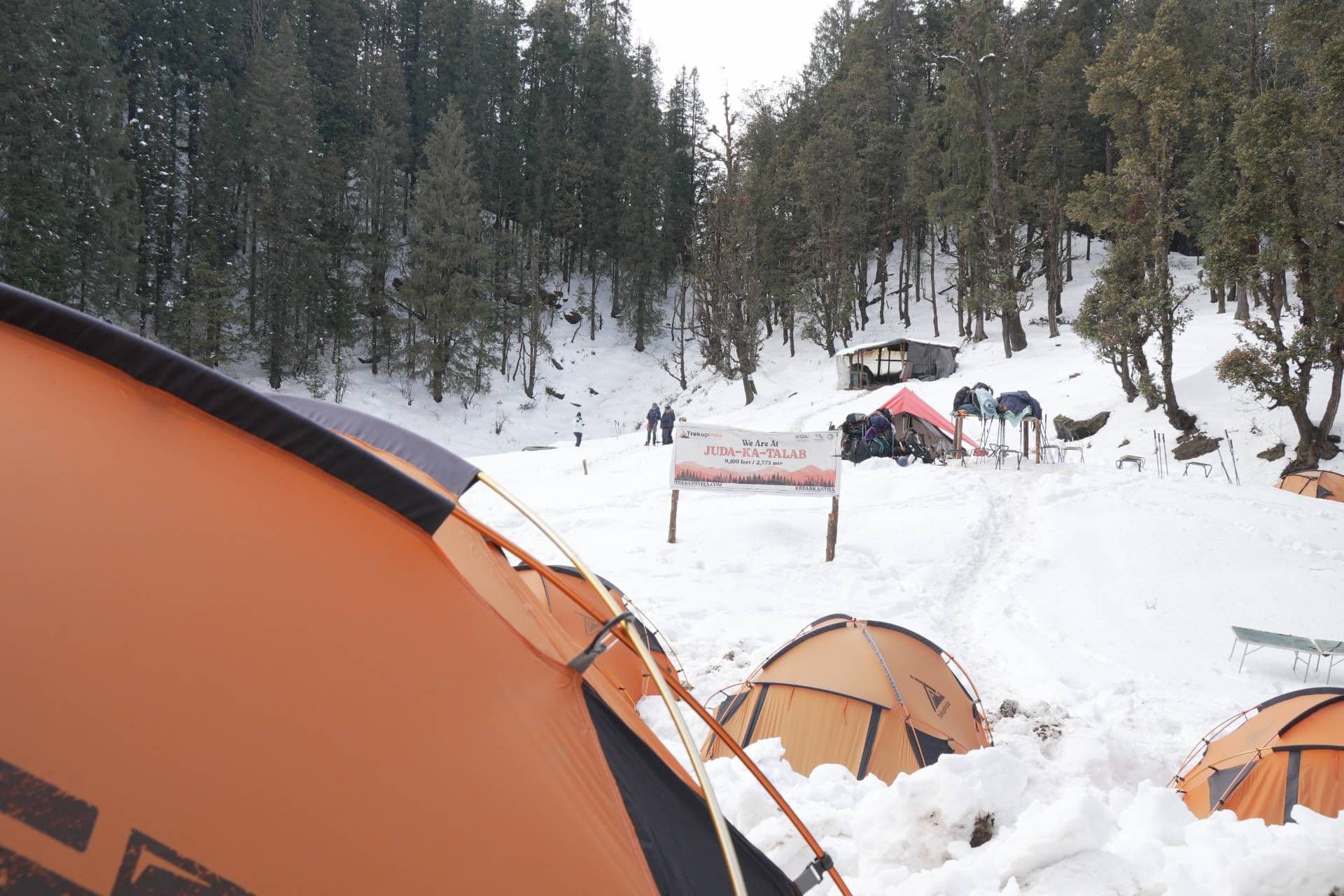
- The Ice Camp: Camping next to the totally frozen Juda Ka Talab in the winter is a very unique experience and one that many people want to have. In the winter, this location becomes an oversized working natural ice rink.
- True Expedition Feel: The need to leave on a pre-dawn summit attempt creates an intense sense of reality of what it's like to be on a large expedition, but on a safely controlled scale.
Kedarkantha Trek Itinerary, Route Map & Elevation Chart
This section covers day by day distance, terrain and elevation information for the Kedarkantha Trek from Sankri to its summit and back again. A trek map displays campsites and forest sections along the route while an elevation chart highlights daily altitude gain/loss to assist you with planning pace and acclimatization strategies.
Best time for Kedarkantha Trek: Season by season guide
The best time to do the Kedarkantha trek depends on what type of experience you want to have. For the most winter wonderland experience, with lots of heavy snowy trails, frozen lakes, and some of the most intense trekking conditions, December to February is the best option to trek. Be prepared for really cold temperatures by packing yourself with the best waterproof gear. However, if you're looking for stable weather, comfortable temperatures, and great views of the Himalayas October and November (Fall) are the months to go; the air will be crisp, dry, and clear! If you want an easier trek through a lively, lush, green environment, then May and June (Summer) are ideal; these months are great for beginners, families, and people who want the easiest trail conditions.
Kedarkantha Trek: Month by Month Breakdown:-
Advice by our Expert Team-
Our Expert trek leaders and trek guides are well known about the trekking trails with the adverse weather conditions at higher altitudes and they know how to deal if any uncertainty arises. They have years of experience in trekking adventure so on this, they will suggest or guide you with some advice.
1. Prioritize Acclimatization: Stable weather in the spring and autumn makes it easier but never rush to the trek. There is a chance of AMS problems occurring due to dry cold so be prepared, take precautionary measures with yourself.
2. Proper Layering: Temperature fluctuates instantly, especially on the higher altitude, so layering should be proper (base, mid and outer) is critical for managing sweat and preventing the cold.
3. Premium Boots: Make sure your boots are long lasting and well broken or used before your trek starts. The risk of foot injury and blister from the new boot can end your trek journey
4. Hydration: It's advisable to drink 3 to 4LT/day. Because of high elevation and exertion, you need constant intake of fluids to overcome the effects from AMS.
5. Pace Yourself: Walk at a comfortable pace using what is called the mountaineers shuffle. This will conserve your energy and help you manage your breathing.
6. Protect Against UV Rays: Use High-Quality UV Sunglasses (Cat 3 or Cat 4) to protect your eyes from snow blindness, and use high SPF Sunscreen on your skin to protect it from sun damage.
7. Healthy Consumption: Food should consist of small amounts consumed frequently and contain a lot of nutritious ingredients and minerals. This will provide you with the sustained energy needed for trekking at high altitudes.
8. Safety: Pay attention to what your body is telling you when you are feeling AMS Symptoms. Should you believe you might be suffering from AMS, report it immediately and prepare to descend. Descending is the quickest treatment you can receive.
How to Plan Your Travel for Kedarkantha Trek
Are you excited to start your adventure for Kedarkantha Trek? The travel journey starts from Dehradun where all the trekkers reach & move towards Sankri. In this section we will guide you how to plan & proceed your travel journey for Kedarkantha trek. From your home town to pickup point Dehradun, we guide you with all the necessary means of transport for a smooth and adventurous journey. You can opt various means of transport like flight, train & bus to reach your pickup point at Dehradun.
Modes of transport To Reach Dehradun (The base pickup City)
There are various means of transport to reach at your pickup point via flight, train & bus with variation in timings. All the flights, trains & buses have different arrival & departure times. So plan your travel journey according to the list mentioned below. We have the information about the timings of arrival & departure of flights, trains and buses for your convenience.
1. By Flight (Fastest Means)
The Jolly grant Airport is located 30 km away from the pickup point. There are scheduled, nonstop flights from all major metro cities such as Delhi (DEL), Mumbai (BOM), and Bangalore (BLR) etc. These airlines offer direct flights from multiple cities. The timings are subject to change and will vary day by day. You can book your flight one day prior to your travel journey.
Suggestions: Please make sure to arrive early, if you have enough time for your journey you can rent a room at an affordable price in nearby Prince Chowk, Dehradun.
2. By Train (Dependable Means)
The railway station of Dehradun is very close approximately 500-600 Meters from the pickup point. You can cover the distance by walking to the pickup point. The best train services for overnight travel from Delhi (New Delhi Railway Station) to Dehradun:
| Train Name | Train Code | Departure Time | Arrival Time | Duration |
|---|---|---|---|---|
Dehradun Satabdi Express | 12017 | 6:45 AM | 12:55 PM | 6 hour 10 minutes |
Nanda Devi AC SF Express | 12402 | 11:50 PM | 5:45 AM | 5 hour 55 minutes |
Suggestions: Ensure to book AC's or Sleeper seats in advance of your travel during peak winter season.
3. By Bus (Affordable Option)
The ISBT of Dehradun is 5.7 km away from the Prince Chowk, Dehradun. Buses are well air-conditioned like Volvo, Sleeper, and Non-AC buses with departures mainly from Delhi, Jaipur, Mumbai, Bangalore and other cities. The timings are subject to change and will vary day by day.
Buses from ISBT Kashmiri gate Delhi to Dehradun runs on a frequent basis starting from early midnight 12:00 and taking (5-7 hrs) to reach Dehradun through Redbus, MakeMyTrip, Goibibo and other UTC buses. Now the timings are quite short because there is an open highway which might take 1-2 hrs short as compared to the normal route. After reaching the ISBT Dehradun, you have many options like auto, cab or tempo to reach Prince Chowk, Dehradun.
Suggestions: Consider using an overnight air-conditioned Volvo/AC sleeper bus service to reach early morning (5.00am to 6:00am).
How to reach trek base Sankri from pickup point Dehradun
From Dehradun, it is approximately 205 Km and takes 9 -10 hours by road. While travelling from Dehradun to Sankri you will cross Kempty fall - Mussoorie, we will halt here for around 30 minutes for breakfast, after Mussoorie you will drive along river Yamuna till Naugaon. After Naugaon we will reach Derika - Purola where we will halt for Lunch with a scenic Purola valley view. After having lunch you will head towards Sankri. On the way we will cross Mori and from Mori drive will be along the Tons river.
Means of transport from Base city Dehradun to Campsite Sankri
1. Trekup India Vehicle: If you book with the Trekup India, transportation depends on the number of trekkers according to their size, vehicles will differ like tempo traveller, bolero, Innova or mini bus. Our cab picks you from Prince Chowk, Dehradun & drops you at Basecamp Sankri safely. Our vehicles are well maintained & hygienic for your travel journey.
Here are the pickup details from the base city Dehradun (If you opt our transport facility):
- Pickup Point: Prince Chowk (Near Railway Station, Dehradun)
- Pickup Time: 6:30 AM
- Drop Location on Last Day: Prince Chowk (Near Railway Station, Dehradun)
- Drop Time for Last Day: 9:00 PM - 11:00 PM (expected)
2. Public Transport Bus: You can opt for a public transport bus early in the morning to reach base camp Sankri on time for the next day's trek. But make sure you are particular with the bus time in the morning as there are very limited buses between 5:30 AM to 7:30 AM. There is no bus after this so try to pick a bus early from Dehradun.
3. Private Taxi/Cab: If you miss your bus from Dehradun, another way to reach Sankri is by taxi/cab. You can book a taxi/cab on a sharing basis with a shared price. But make sure that your timing is matched with the taxi timing as the number of taxis are very limited in the morning and generally operated early in the early morning from 5:00 AM onwards.
Tips for Mountain Drive
Whenever you are planning to trek on the mountains, health plays a crucial role. Your main motive on any trek is to be physically and mentally healthy. Here are all the important travel suggestions that you are going to face on your travel journey.
- Motion Sickness: Take medication Dimenhydrinate (prescribed by doctor) - 30 minutes before your journey starts and make sure to sit in the front seat of the taxi.
- Punctuality: Being a wise person, always be on the time whether you are on the camp site or on the trek.
- In hand Case: Have an adequate amount of cash because you never find any ATM at a nearby location.
- Proper Hydration: Always take the water and fruits throughout your travel to avoid dehydration & other health related issues.
- Charge: Make sure that all electronics / power banks are fully charged before being stuck in a long taxi ride, as there are not many charging stations available on the route.
- Check luggage: always make sure to check your luggage when you are on the trek or during the trek.
Day 2 - Day 5 (The Trek Days)
After reaching the basecamp Sankri on day 1, its time to move towards the trek which starts from day 2, trekking from base camp Sankri to Juda ka Talab with a trek distance of 4 Km completed in 2.5hrs - 3hrs after that there are some activities & hot meal for all the trekkers. On day 3 from Juda Ka Talab to Kedarkantha Base Camp distance of 4km in 2.5hrs - 3hrs, then on day 4 Kedarkantha Basecamp to the Summit distance of 6km covered in 4hrs-7hrs spending some time at the Summit after completing the summit moving forward to Hargaon which takes around 1hr-2hrs. On day 5, finally moving to the Basecamp Sankri from Hargaon by covering a distance of 6km and on the same day after having breakfast, proceed to the dropping point Prince Chowk, Dehradun at 9:00 to 11:00 PM expected.
Planning Your Return Journey from Sankri to Dehradun
Once you have completed the Kedarkantha trek, returning should be overwhelming with good memories, pictures and new friends on the trek. Our Trekup India vehicle will pick you from the base camp Sankri and leave you at the dropping point Prince Chowk, Dehradun. If you have already opted for transport with us.
| Element | Timing | Proactive planning |
|---|---|---|
Breakfast | 6:30 AM - 7:30 AM | 6:30 AM- 7:30 AM - This is the ideal time to get some breakfast at Hargaon location. |
Departure | 11:30 AM - 12:30 PM | Departing early means you have no delays to reach Dehradun. Your guide must confirm the taxi departure time in the morning or a night before. |
Arrival in Dehradun | 09:00 PM – 11:00 PM (Expected) | After covering the beautiful trek, it's time to go back with good memories. Our taxi is going to leave you at the dropping location (Prince Chowk), Dehradun. |
Suggestions: Book your return transport after 11.00 P.M & for security you should also keep a buffer of 1-2 hours for your return journey in case there might be delayed due to traffic, land slides or vehicle breakdown.
Return From Dehradun to your Hometown
We have mentioned details of various means of transport like flight, train and bus with the estimated timings, so book accordingly with your preferred time. Below mentioned data helps you to choose and book for your return journey.
Note: The timings are subject to change and will vary day by day. Also the mentioned timing is written in 24 hours format.
By Flight / By Train
There are a number of flights and trains departing from Delhi to various designated cities on time. On the whole, you can book your flight or train from Delhi as there are many availability of flights and trains directly to your hometown.
Suggestion: Try to travel by bus to Delhi and in Delhi you can further book your train/ flight to your hometown.
By Bus
Here is the list of buses departing from Dehradun to Delhi with their departure and estimated arrival timings. Make sure you book your further travel after reaching Delhi according to the below mentioned time.
| Bus Name | Destination | Departure Time | Arrival Time |
|---|---|---|---|
Gola Bus Service | Delhi | 00:00 | 05:40 |
Intercity Smart Bus | Delhi | 23:00 | 04:45 |
ZingBus Plus | Delhi | 23:30 | 05:10 |
NueGo | Delhi | 23:30 | 05:55 |
Safety Aspects and Emergency Exit for Kedarkantha Trek
1. Understanding Trek Safety
Your trek leaders and trek guide have years of experience in getting you to the summit but most importantly back to safety. Trekking at high-altitude requires a huge amount of respect for the mountains and therefore there is a correct, safe way of doing things throughout, especially on a moderately challenging trek like Kedarkantha. This responsibility starts with full understanding of Acute Mountain Sickness (AMS) prevention, a strict adherence to the gradual ascent plan, and absolute understanding of emergency procedures. Your ability to follow safety procedures will determine the success and enjoyment of the trek.
2. Acute Mountain Sickness (AMS)
Altitude sickness (Acute Mountain Sickness or AMS) is the result of the body being unable to adapt lower levels of oxygen pressure (*hypoxia*) at high altitudes (usually over 8,000 feet). The risk is that untreated AMS will progress to High Altitude Encephalopathy (HACE) or High Altitude Pulmonary Edema (HAPE) if the person keeps trekking higher in a state of unequipped acclimatization.
Important Symptoms of the Acute Mountain Sickness (AMS):
Mild AMS:
- Headaches are the most significant and common sign.
- Nauseous feeling, lack of desire to eat, and general tiredness.
- Poor sleep (insomnia).
Severe AMS (HACE warnings):
- Difficulty balancing and trekking straight (unable to walk a straight line - "heel-to-toe" test).
- On-going severe headache that can't be helped with medication.
- Confusion or some alteration in understanding.
Severe AMS (HAPE warnings):
- Unable to breathe without feeling short of breath.
- Persistent cough with wet/sputum or sometimes pinkish-tinted frothy mucus.
- Excessive tiredness and feeling of heavy pressure in the chest area.
Precautionary Measures of AMS
1. Ascent Gradual
- The 5-day itinerary from Sankri to Juda ka Talab to Kedarkantha Base has been set up to allow for acclimatisation. You are advised not to skip camps and rush up the mountain.
- The principle of Trekking High and Staying Low at the Base Camp helps you get acclimatised.
2. Hydration and Nutrition
- You need to drink 3-4 litres of water every day. If you become dehydrated, it will only make any AMS (Acute Mountain Sickness) symptoms worse.
- You should continue to drink a lot of water, even when you don't feel thirsty. At the campsite, you will also be provided with a high-carbohydrate diet which will give you the energy to acclimatise.
- Do not drink alcohol or caffeine.
3. Pacing and Movement
- Use the Trekker's Shuffle to keep a slow and consistent pace. Do not waste energy on speed and frequent stops.
- Use trekking poles to maintain your balance and to absorb some of the pressure on your joints when doing the long descent on day four.
- Always try to remain in sight of your friends and the guide when out trekking.
4. Medication
- Talk to your Doctor regarding the use of Diamox (Acetazolamide) to help alleviate AMS.
- Discuss starting this medication one or two days before reaching altitude if it is prescribed over a prescription.
- Remember to carry any personal prescription medications and basic pain relief (for example Ibuprofen) in your day pack.
3. Emergency Response and Evacuation
The Emergency Response System for Kedarkantha Trek is a descent-first emergency response system for the high-altitude risk of AMS (Acute Mountain Sickness) and extremely cold winter weather. The trail follows 12,500 ft and cannot be accessed by any vehicles, and therefore the system uses a multi-stage evacuation procedure. This involves stabilisation at the location with portable oxygen. Transportation down to the road-head at Sankri is done using either a mule or a stretcher. At this point four-wheel drive (4x4) vehicles transport those in need of medical assistance to Purola or Dehradun. Critical incidents requiring helicopter transport/evacuation are coordinated through the SDRF (State Disaster Response Force). This survival network relies on cooperative effort by qualified guides, local message runners, and the services of the Sankri community.
Action Plans: High Altitude Emergency
1. Immediate Action: If any member shows signs of moderate altitude sickness (e.g., a very bad headache, vomiting, and loss of coordination), stop immediately and let the Trek Leader inform. First, supply the member with oxygen (if available) and start going downhill. The guide's decision on whether or how far down to go, is final.
2. Evacuation Plan: Evacuate downwards to Sankri. A casualty will be assisted/carried on a stretcher by the trekking group's support team to the village, and then to the vehicle from there.
3. Medical Support: The nearest major medical service provider is the Community Health Centre (CHC) at Purola, or hospitals in Dehradun, which may take 6-10 hours to access from Sankri, therefore a rapid descent is crucial.
4. Communication: The trail beyond Sankri has no mobile network access. All communications must be done over the Trek Leader’s satellite phone/radio, so do not count on your personal telephone for emergency communications.
4. Trekkers Responsibility for the Trek
1. Personal Health and Honesty:
- Report Symptoms: You must report any illness symptoms to your trek leader or guide as soon as they occur. Symptoms include headache, nausea or any other uncharacteristically extreme fatigue. Do not attempt to conceal these symptoms so that the group will not be held up due to your illness symptoms.
- Fitness: You are responsible for preparing yourself physically for the trek and ensuring that you have consulted with your physician regarding the effects of altitude, vaccinations you may require, and the proper medications you may require as a result of altitude treks.
- Hydration: You are responsible for consuming your daily requirements of water (3-4 litres). Expect and do not wait for your guide to remind you to hydrate, as you are responsible for doing so.
2. Gear & Equipment:
- Mandate kit: Ensure you have the appropriate gear and equipment for the trek; this includes wearing clothes that are appropriate for the weather; layers for cold; and using well broken-in boots.
- Headlamp Readiness: You should carry an operational head lamp, and charge it before the trek. You should also carry extra batteries and keep sensitive electronic equipment and batteries warm to prevent them from draining due to cold conditions.
- Personal First Aid Kit: It's a good idea for you to carry a small personal first aid kit with you. Basic supplies should include band-aids, blister treatment, antiseptic, and any prescription medications.
3. Conduct on the Trek:
- Follow Instructions: Follow the trek leaders instructions regarding pace, route, camp protocols and the use of safety equipment such as microspikes or trekking poles.
- Maintain group integrity: To maintain group integrity, do not travel solo on any trail or trek; always stay in sight of the group and be with the designated guide.
- Leave no trace: To reduce environmental impact, you must properly dispose of any non-biodegradable items (plastic packaging, drink bottles, etc.) and not pollute local water sources. Remember to respect the natural environment by respecting the plants and animals found in the area.
4. Teamwork & Respect
- Respect Local Cultures: Be conscious of the customs, way of life, and religious sites of the people who live near the trails and do not interfere with their lives.
- Support Other Trek Participants: Encourage other trekkers by giving them advice when necessary. Notify a guide if you think a teammate is in distress or danger. A team that cares for each other is a safer team.
5. Emergency Exit of the Kedarkantha Trek
Although the Kedarkantha trek is considered moderate in difficulty, it does carry an increased risk for altitude exposure due to the high altitude of approximately 12,500 feet. The emergency response plan is based on rapid descent in controlled fashion as this is the only way to treat severe forms of Acute Mountain Sickness (AMS). The only definitive emergency exit point is a 4,850-foot vertical descent to the trailhead located at Sankri at an elevation of approximately 6,400 feet where ground transportation can be arranged to a proper hospital in Dehradun which involves an additional road journey of 8 to 10 hours. Therefore, the planning of safety measures must include the fact that the hospital located in Sankri is limited to basic medical care.
Major Emergency Exit Links –
An Emergency Exit for the Kedarkantha trek has a defined safety chain of transition from an isolated trail system to local Emergency Public Safety resources (Police and Hospitals), occurring during the critical descent down to Sankri.
1. Primary evacuation point - Sankri Village
Sankri at approximately 6,400 feet above sea level is the gateway to Public Service for Police, Hospitals and the start of any official rescue attempts.
- Evacuation Phase: About a 4-6 hour descent (Self-evacuated) will occur from 11,250 feet to Sankri, where use of the Police/Hospital network will not be possible and will be able to be accessed by a vehicle.
- Transfer Phase: Upon arrival into Sankri, the patient will be placed into a pre-arranged vehicle which will create the formal activation of the Safety Chain for Public Service.
2. Hospital and Medical Exit Plan
All medical plans are designed around the extended transport of the Patient to Critical Care in order to achieve an optimal outcome for the Patient. Local Emergency Services are minimal and cannot provide adequate care.
- Government Hospital (Jakhol): Emergency Area is approximately 8 km from the scene: Providing limited emergency stabilization services and unsuited for critical care.
- Community Health Centre (Purola) (approx 23 km): Initial delivery point for continued stabilization and transfer-related documentation to proceed to the next course of action. 1-2 hours to transport from the scene to the hospital.
- Definitive Care Related to Severe Emergencies: For severe emergencies, (such as HACE, HAPE, and Major Trauma) the location for definitive care is a Multi-Speciality Hospital located in Dehradun approximately 200 kilometres away.
3. Police Station & Official Protocol
The Police Network is responsible for ensuring legal compliance and overseeing all Search/Rescue Coordination and Accident Documentation.
- Reporting & Documentation: The nearest Official Police Post, typically located within the Purola Tehsil, is the point where the Trekking Agency is required to report all accidents, deaths, and missing trekkers. The jurisdiction of the Police is essential to establishing any Official Process, including issuing an FIR and providing the Death Certificate.
- Search & Rescue (SAR) Coordination: In instances where a trekker cannot be found or contacted, the Local Police Department utilises the District Emergency Operations Centre (DEOC) located in Uttarkashi (Send Urgent Requests to DEOC via 1077) to coordinate anything beyond just locating those listed as missing; the Local Police Department may also involve SDRF (State Disaster Response Force) Teams, as well as request Military and/or Air Support, if available.
- Role on the Trail: One crucial distinction to be aware of is that for all practical purposes, the Local Police Department does not inspect the Trail nor does it provide 24-hour rescue support to injured trekkers on the Mountain; their primary function is Administrative and they provide SAR Coordination after the incident has occurred and has been reported, via a trekking agency from Sankri.
The Essential Packing List For Kedarkantha
Packing Philosophy: Prepare for Extreme
1.Strategic & Non-Negotiable Gear list for the Trek
1. Major gears: The frontline of protection
| Item | Specification |
|---|---|
Waterproof, Ankle-Height Trekking Boots | High-quality boots with stiff rubber soles; must be fully broken in with deep aggressive grip |
Trekking Poles (2 Pairs) | Stability on snow/ice, reduces knee impact descending; use both to distribute pack weight |
Waterproof Gloves (2 pairs) | Shell pair kept dry for waterproof handling; inner liner for warmth |
High-Grade SPF Sunscreen and Lip Balm | Reapply to face, neck, and ears every 2 hours on snow |
Sunglasses | Highest protection against snow blindness; never remove while on snow |
2. Clothing: The layering system
Headwear
| Item | Specification |
|---|---|
Warm Beanie / Balaclava | Thick wool or fleece, full ear coverage |
Wide Sun Hat or Buff | Protects face, neck, and scalp from high-altitude UV |
Upper Body
| Item | Specification |
|---|---|
Moisture-Wicking T-Shirts (2) | Synthetic or thin Merino wool; avoid cotton |
Thermal Base Layer (1) | Mid-weight Merino wool or synthetic long-sleeve top |
Fleece Jacket (1) | Mid-to-heavy weight (200-300 GSM); best warmth-to-weight ratio |
Insulated Puffer Jacket (1) | Down or synthetic, rated 0°C and below |
Waterproof & Windproof Jacket (1) | Shell material with taped seams |
Lower Body
| Item | Specification |
|---|---|
Quick-Dry Trekking Pants (2) | Synthetic, lightweight, stretchable/convertible |
Thermal Base Layer (1) | Mid-weight thermal bottoms |
Waterproof Rain Pants (1) | Lightweight, packable shell pants |
For Feet
| Item | Specification |
|---|---|
Trekking Socks (4-5 pairs) | Wool or synthetic blend; 1-2 extra-thick pairs for nights |
Camp Shoes | Lightweight sneakers, sandals, or slippers for camp |
3. Equipment & Essentials
Backpacks
| Item | Specification |
|---|---|
Main Rucksack (50-60 L) | For porter carry; good posture frame and hip belt required |
Daypack (20-30 L) | For summit day only- water, layers, snacks, camera, gloves |
Hydration
| Item | Specification |
|---|---|
Insulated Water Bottles (2x 1L) | No hydration bladders - the tube will freeze |
Hydration Tablets/ORS | Replaces electrolytes lost at high altitude |
Safety & Navigation
| Item | Specification |
|---|---|
Headlamp with extra batteries | Essential for early morning pass crossing |
Basic First-Aid Kit | Plasters, Band-Aids, antiseptic, pain medication, personal meds |
Personal
| Item | Specification |
|---|---|
Personal Toiletries | Toothbrush, toothpaste, biodegradable soap, toilet paper (pack out!), hand sanitizer |
Quick Dry Towel | Water absorbent, lightweight, small size |
Power Bank | No charging points available on the trek |
4. Essential Documents
| Item | Specification |
|---|---|
Government-issued Photo ID | Indians: Aadhar/Voter ID/Driving License. Foreigners: Passport + Indian Visa |
ID Copies | 2 copies, for forest authorities and permits |
Medical Certificate & Undertaking Form | MBBS-signed fitness confirmation, usually provided by Trekup India - click here to download |
Cash | No ATMs available on the trail |
2.Important tips by the trek leader (from their experience)
Pack Light Guidelines
| Rule | Description |
|---|---|
Three Second Rule | If you can't immediately think of a reason to pack it, don't |
Layer Duplication Rule | No more than two of the same heavy layer |
Multi-Use Only | Every item should serve at least two functions |
Luxury Item Rule (The Worth-It Extras)
| Item | Description |
|---|---|
Comfort Item | One small non-essential (book, small pillow) |
Camp Footwear | Flip-flops, Crocs, or down booties for evenings |
Leave No Trace (LNT)
| Rule | Description |
|---|---|
Carry Everything Out | Nothing buried or burned - especially plastic, foil, batteries |
Stay on the Trail | Prevents soil erosion and environmental damage |
Kedarkantha Trek Cost Inclusions and Exclusions
Total Trek Cost -₹5,499 per person + 5% GST (Mandatory)
Pricing defines the value and experience you receive for your trek. As a structured high-altitude trek operator, Trekup India provides full transparency on cost and amenities. Inclusions cover every service, logistical support, group equipment, and permit needed for a safe, fully supported trek. Exclusions cover expenses tied to personal choice (like a personal porter), contingency items (like insurance), or mandated fees outside the package price (like GST).
1 - Pre-Trek Support by Experienced Trek Coordinators
This is a special component of Trekup India, where a personalized trek coordinator is assigned to each trekker and who makes your preparation easy before coming on a trek, all your doubts, queries, myths are clarified, and you are mentally and physically guided to ensure that you come fully fit for your adventure. Every aspect from what to carry, what exercises need to be done, and how to prepare yourself for the trek, all will be guided by Trekup India’s Experienced Trek Coordinators.
2 - What is included during the trek
The offered cost covers all major essentials that are mandatory for a successful Adventure, such as accommodation, meal, permit, team of experts, trek equipment, safety gears and mules / potters support. We provide you all the services that are involved in the trek. Below find specifics.
Transportation: Pick up from Dehradun to Sankri and return back from Sankri to Dehradun is included in the trek cost by the means of Trekup India vehicle.
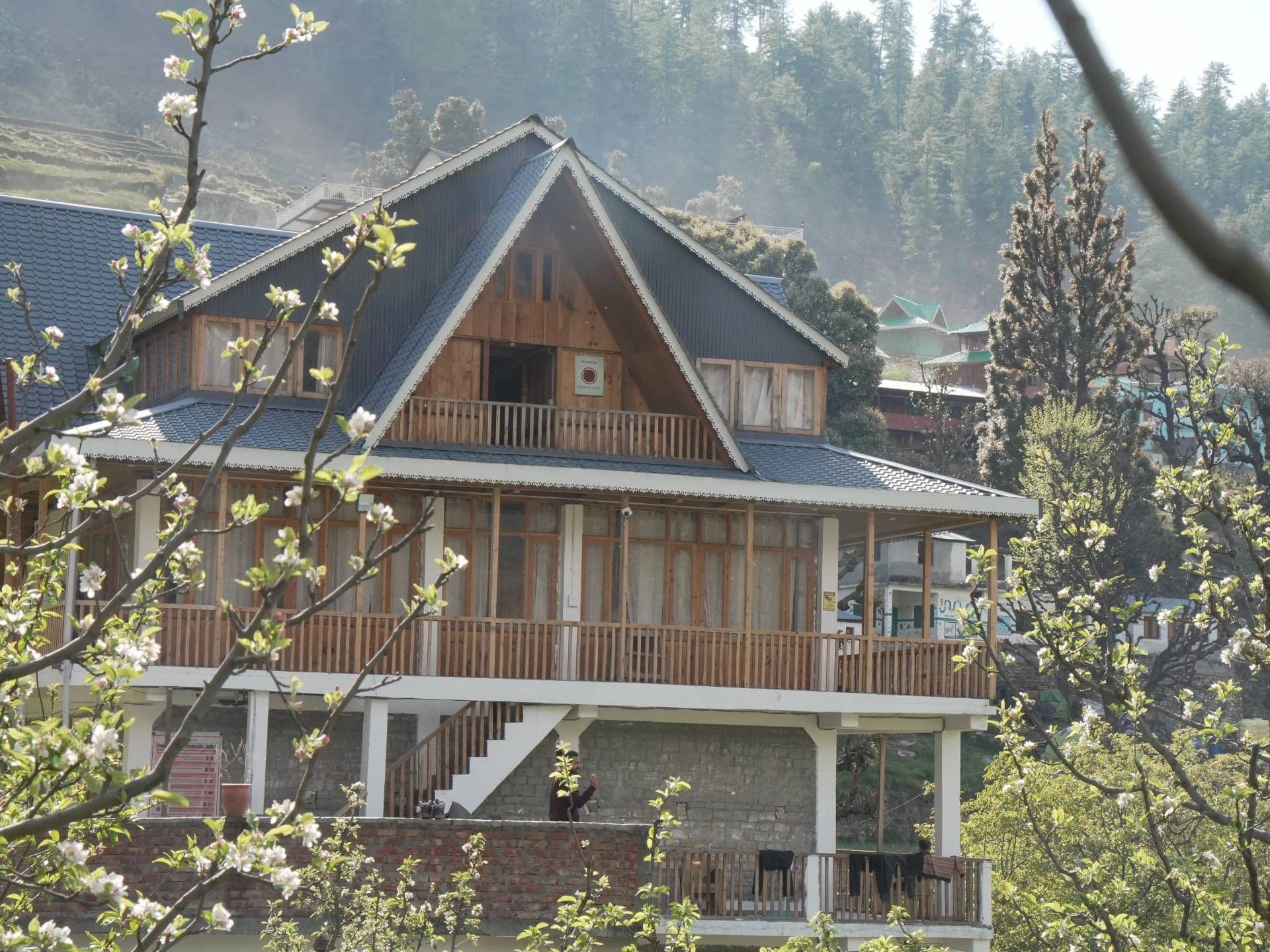
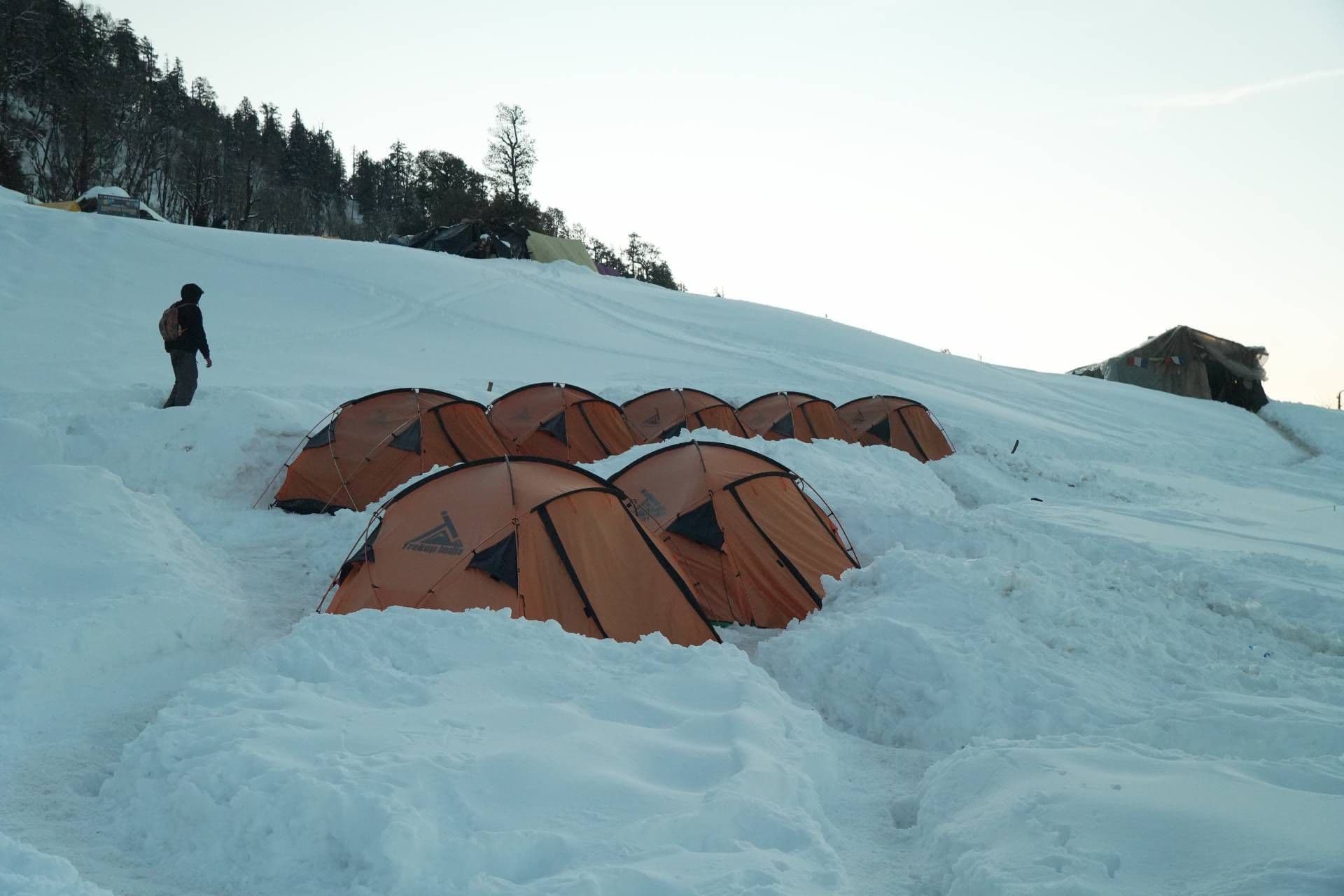
Accommodation: 1 Nights accommodation in Sankari village at Trekup India’s self owned property, one of the Deluxe property of the region, accommodation will be provided on sharing basis. 3 Nights accommodation in Dome style customised tents of Trekup India.
Meal: Your meals with Trekup India starts with evening tea & snacks on day 01 in Sankri and ends with Breakfast on Day 05 in Juda / Hargaon campsite. All meals provided by Trekup India involve pure vegetarian and nutritious meals. We offer you breakfast, lunch, tea, snacks and dinners. The meals are freshly cooked and non repeated with delicious sweet dishes each night.
Food Preferences for Jains: A large percentage of our trekkers belong to the Jain community, therefore we understand their concern very well. When we have Jain trekkers on our treks, we will create special, custom made meals without garlic and onion. We cook these separately from other foods prepared by us, maintaining the same great quality, taste, and hygiene.
Special Occasions Celebration : Whether it is a birthday, anniversary, group summit, or another event, we enjoy celebrating all these occasions with you by presenting you with a cake that is freshly prepared for your special moment. Trekup India will ensure that every special moment you have here is never forgotten; in fact, it will become an extra special moment.
Permit: All camping and Trekking Permits from Forest Department, full assistance in documentation and formalities will be given by the team Trekup India.
Team of Experts & Professionals:
- Trek Leaders: Qualified and Experienced Trek Leaders to lead your group when on Trek. Trekup India Trek Leaders are AMC, BMC certified and trained for immediate First Aid with search & rescue Course.
- Assistant Trek Leaders: They are superwise under the Trek Leader guidance focussing on the safety, logistics and trekkers engagement.
- Local Guides: Experienced local guide familiar with region & routes. They understand the way of conduct better, especially being locals.
- Support Staff: A team of high altitude including mountain chefs and Helpers to prepare and provide you healthy and freshly cooked meals on your trek.
Trek Equipment: Trekup India provided high quality of trekking equipments for your adventure, all equipments provided on the trek is 100% customised by Trekup India, any equipments provided is tested on high altitude by our mountain experts and thereafter qualified for use of our trekkers, each fabric and designed are carefully chosen.
- Dome Style Trekking Tents: The sleeping tent we provide is 6.5 by 6.5 ft. in size giving extra comfort for your sleep in the high altitude.
- Sleeping Bags: To provide you warmth, comfort and cozy sleeping.
- Sleeping Mattresses: Warm Form mattresses are provided inside your dome tents.
- Kitchen tent: A designated area at the campsite where all the cooking staff prepare all the meals.
- Dining tents: A large common area where all the meals are ready to be served. It is the social space for enjoying meals together.
- Toilet tents: These are the private space away from the main campsite area to avoid smell and maintain hygiene. We have two separate toilets for male and female.
- Camp Chair/ Table: Portable stools and tables are provided at your campsite.
- Cooking & Service Utensils: All the necessary cooking and serving utensils.
Safety Gears: Trekup India stands proud itself that all our Treks and adventures operated since 1993 are without any single casualty as we take safety of our trekkers and staff on high priority, following are some of the gears that are included in your trek cost.
- Oxygen Cylinders
- First Aid and Medicine
- Stretchers
- BP Machine to regulate your blood pressure
- Oximeters to regulate your oxygen flow
- Health cards to measure your daily BP and Oxygen reading
- Walkies Talkies for Immediate communication
- Micro Spikes
- Gaiters
- Other Safety Equipment such as Helmets, Rops, Ice Axe, Carabiners much more as per technicality of a Trek.
Porters / Mules Support: Porters / Mules are provided to carry your common trekking gear, rations, trekking equipment and other supplies.
3 - Post-trek Assistance
This section implies with the following -
- Trek Feedback and improvement advice call from your Trek Coordinators.
- How to overcome Trek injuries and settle to normal life.
- Advice and suggestions for Next Adventure Trek.
Completion Certificate: It is the best way to recognize someone’s adventure journey with a certificate. A well recognized certificate (IMF, ATOAI & Uttarakhand tourism development board) approved is provided to the trekker by two ways:
- Reached at Summit: we are giving certificates of summiteer to those trekkers who have completed their trek at the Summit.
- Incomplete Summit: we also provide our certificate for those who have not reached the final summit due to medical reasons but they are part of the trek.
Kedarkantha Trek Difficulty: An Honest & Detailed Guide
Most of the people will find the Kedarkantha trek a reasonable challenge, and it does require a bit of work on your part if you choose to do it; however, you won’t require any technical trekking experience. Initially, it is quite steep, and therefore, your initial ascent will be hard. After you reach the first campsite, your ascent becomes progressively easier. However, during the last day of trekking, approximately one to two hours from reaching the summit, you will encounter some sections along the path with significant snow and ice. Therefore, you must wear appropriate trekking boots to prevent injury from slipping. On the last day of trekking (upwards) that you will experience the amount of spirit among the fellow trekkers, and the mutual support provided to one another will allow you all to finish the trek successfully, with an added sense of pride and accomplishment at having reached your goal of summiting the Kedarkantha mountain.
Kedarkantha Trek Difficulty: A Factor-by-Factor Analysis
Trekking to Kedarkantha is not a simple task; however, your trek's success will rely upon your ability to properly prepare for what you will encounter. Below is what you can expect to experience in each of the following areas.
1. Terrain - High-altitude geological features
- The Trail: You will trek through various geological features from dense old-growth forests of pine trees, open pastures of alpine vegetation, to finally arriving at the rocky ridge leading you up to the summit of Kedarkantha.
- The Challenge: While this is considered a beginner's trek, there are portions of the trek where you may be challenged at the beginner level. The last 1.5 km up to the summit is a very steep incline, ranging between 40° and 60° in gradients. During the winter months, this area of the trail can be a great deal of ice and snow, and as such will require much of your mental focus.
- Honest Opinion: Most of the trek up to Kedarkantha offers beautiful views and scenery, but the final ascent to the summit is going to challenge you both physically and mentally in ways that are not usually a part of beginner treks. Trekking down from the summit can be much harder than trekking up to it. You would be wise to use micro spikes to provide you with additional traction on the ice and snow.
2. Altitude - The Invisible Enemy
- The Stats: You will be starting from an elevation of 1,950m (Sankri) and trek to an elevation of 3,810m (12,500ft).
- The Challenge: At an elevation of 12,500 ft, the oxygen levels are approximately 60%-70% lower than at sea level; therefore, as you ascend, your backpack will feel at least twice as heavy, and a short ten-minute trek will be physically exhausting.
- Honest Opinion: The gradual incline will prevent most trekkers from experiencing a serious case of Acute Mountain Sickness, but it is not uncommon for most trekkers to find themselves out of breath once they reach the summit. When you reach the base camp, you may have headaches, cramps, and fatigue as part of your initiation into high-altitude trekking.
3. Weather: An Unpredictable Thing of Beauty
- The Conditions: During winter, temperature will drop below zero. During spring/fall (shoulder seasons), daytime temperature may be in the mid-50s (15C), but night-time temperature will be close to the freezing point.
- The Challenge: Weather in the Himalayas can change rapidly. You may start with a clear blue sky one minute, but experience a whiteout blizzard by midday. During that time, all of your marker signs may become covered by snow, and navigation may be impossible.
- Honest Opinion: The ski season is by far the most beautiful but also the most difficult. If you do not have adequate gear to handle bone-rattling cold while sleeping in tents, the trek could easily become an incredible experience to a miserable one before you even reach your destination.
4. Length and Isolation: The Mental Aspect
- The Stats: You will likely trek 20 kilometers back and forth over a period of 4 or 5 days.
- The Challenge: You will find yourself deep within the Govind Wildlife Sanctuary. Once you cross the Juda Ka Talab, you will not have access to your cell phone, electricity, and you will have no way of leaving without driving for 10 hours from Dehradun to Sankri an hour away from the start of your trek.
- Honest Opinion: We honestly believe that the biggest challenge is not necessary for the physical distance. Your friends in the group become your main source of support. If you are prepared to spend 4 days without a warm shower and a phone signal, the satisfaction of standing on the summit will be worth it.
So, is the Kedarkantha Trek Difficult? The Honest Verdict
The Kedarkantha Trek has been assigned the Easy to Moderate category, which makes it a great first trek for those with basic fitness levels. On the trek, the average daily distances are not that long and the paths are established. However, the reason for the moderate difficulty rating is due to the continuous elevation gain throughout the trek, the elevation of the summit at 12,500 feet above sea level, and the extremely low temperatures that can reach -15°C during winter. The highest level of difficulty on this trek comes from the push to the summit during which you will need to leave at 3:00 am and ascend the steep sloped and icy inclines (40° – 60° slopes) before sunrise. There are no technical trekking skills required for this trek; proper winter equipment and a positive attitude are all that you will need to successfully complete this trek if you are healthy.
1. Beginner-friendly Myth vs. Reality.
Labeling Kedarkantha as easy would imply that all the other larger Himalayan Peaks like Roopkund and Bali Pass are so much harder. So to someone from sea-level cities, this would be an incredible feat. A 12,500 foot ascent where the air is noticeably thinner and takes far more effort than if you were at home is an enormous undertaking. If you have not exercised for this trek, the gradual incline feels like it is going straight up and your heart will be elevated from the first hour onward.
2. The Summit Push - The Real Test.
During the first three days of this trek, it actually gets harder once you begin your trek at 3 AM when the weather is at its coldest temperature. You will be faced with steep inclines in total darkness and the only thing you will see will be the light coming off of your breath as it turns into ice crystals within the frigid air. For the entire three days leading up to the summit, your mind will be just as taxed as your body. Staying focused is essential so that you don’t fall off a thin layer of ice or get bogged down in deep snow, and relying on your trekking partners to keep themselves safe is imperative for successful completion of the summit.
Who is this Trek Really for?
The Kedarkantha Trek is suited to specific types of trekking adventure and isn’t suited to everyone, but to these three groups of people:
1. The First Time Summiteer:
This is for those who desire to achieve their first significant high-altitude summit without performing technical mountain trekking skills. It provides a true mountain experience with base camps, frozen trails, and a summit of 12,500 ft. that is both challenging and attainable for beginner trekkers.
2. The Fitness Enthusiast:
This is for those with a certain level of endurance already established. If you enjoy pushing yourself up a steep incline while still remaining focused enough to maintain your footing on the ice, you will find this trek to be gratifying instead of tedious.
3. The Minimalist Adventurer:
This is for the individual who values fellowship over luxurious comforts. If you are open to being cold, living in tents, and spending time with strangers around a campfire, this trek is for you.
Verdict:
The Kedarkantha treks are designed for mentally strong beginner trekkers — those who value the natural splendor of the Himalayas over hotel luxuries.
Honest Comparison with other treks
1. Kedarkantha versus Brahmatal
If you want the excitement of reaching a summit, or to be in a busy social environment during your trek, then Kedarkantha is the clear choice. Conversely, if you have an interest in solitude and frozen lakes (Bekaltal/Brahmatal) as a goal during your trek, then choose Brahmatal. The trek through Brahmatal will require slightly more physical exertion, yet will also provide you with a greater sense of intimacy with the mountains on your trekking.
2. Kedarkantha versus Chandrashila
Chandrashila can be considered a much shorter/easier trek due to the fact that the majority of the trek is on a paved path leading to the Tungnath Temple. This could be a great weekend trek, while the trek through Kedarkantha is a more authentic expedition when trekking with guides, and the experience is passed on to others over several days of camping and trekking up snow-covered ridges.
3. Kedarkantha versus Sandakphu
Sandakphu is classified as a teahouse trek, therefore a teahouse trek has a completely different sensation to it. Sandakphu offers some of the most spectacular views, including Mt. Everest lacks the sense of mutual understanding and rough experience of camping in the deep snow that creates the overall experience of Kedarkantha.
Verdict:
Kedarkantha is recommended for the balance of the overall winter experience: it has more snow than Chandrashila, is more of a social experience than Brahmatal, and feels more adventurous than Sandakphu. The Kedarkantha experience is the gold standard for individuals seeking to take their trekking to the next level.
Final Advice: Prepare to succeed
Your physical and equipment preparation is the most important factor in achieving your summit success. The following two sections outline your success planning that will yield successful results when preparing for your Kedarkantha trek.
1. Physical Preparation: Engine Building
To be successful on your Kedarkantha trek, you must focus on developing both endurance and lung capacity, not speed. Here are some guidelines for physical preparation leading up to your trek:
- Cardio is Key: Start your physical training at least 3 to 4 weeks prior to your trek. Aim to run a minimum of 5 km in 30 to 35 minutes. This builds your cardiovascular fitness and will help you acclimatize to the thinner air at 12,500 feet.
- Leg Strength: The trail to the summit is one continuous uphill trek. Incorporating squats, lunges and stair climbing into your leg strength training will give you the muscle memory to trek steep inclines without fatiguing.
- Breathing Technique: Incorporate a breathing pattern when trekking. Inhale through your nose and exhale through your mouth. This simple habit will help alleviate summit breathlessness, allow you to maintain a steady pace and ensure you meet up with your group for the final push to the summit.
2. Gear Preparation: Your Lifeline
In the Himalayas, your gear is your protection from the elements. If your gear fails or malfunctions during your trek, it will be a battle of life or death.
- Proper Layering: When trekking on mountain, it is important to layer your clothing. The best method for layering is to use three layers of clothing: a moisture-wicking base layer, an insulating mid layer (fleece or down), and an outer layer that is windproof and waterproof. By utilizing these three layers, you can regulate your temperature throughout your trek, as your body temperature will fluctuate due to the physical exertion of trekking.
- Footwear and traction: They are key components of a successful mountain trek. Your boots should be sturdy and waterproof, and have deep lugs to provide a good grip on the terrain you will be trekking. In addition, you will need to wear high-quality micro-spikes or crampons to maintain your traction on the icy summit ridge.
- The smallest essentials: It should not be overlooked when planning for a mountain trek. These essentials include sunscreen with a high SPF rating, lip balm, and a reliable headlamp with extra batteries. The summit push is typically completed in complete darkness, making it essential to carry sufficient light with you, as it will help you safely complete your trek.
Verdict:
As a final piece of advice, the mountain will reward those who are prepared. The feeling of sharing the bond with your trekking team upon reaching the summit will be even more rewarding because everyone contributed to the success of the trek.
Fitness Required & Preparation Guide For The Kedarkantha Trek
- Training Plan (8- 12 Weeks)
- Cardiovascular Training
- Strength Training
- Breathing Exercises
- Meditation
- Weekly based workout activity
- Gear Preparation for the trek
- Physiological adjustments on the trek
1. Training Plan: 8 - 12 Weeks
A structured 8–12 week training plan designed to build stamina, strength, and endurance for a safe and successful trek.
- To build your cardiovascular stamina
- To strengthen your muscle group
- To prevent from the injury
- To cope up with the breathing problems
- To keep you focus with calm during the trek
2. Cardiovascular Training
Exercises focused on improving stamina, heart health, and endurance to prepare your body for long trekking days.
- Goal: Walk regularly at least 2-3 km per day, gradually increase your distance day by day.
- Specification: There are many things that you can do to prepare for trekking, and walking with a backpack on the trail represents the most direct stimulation of the different types of actions (movement) that will occur on a trek.
- Focus Shift: While the primary focus of the walking must be the distance (km), the focus should actually shift to Time on Feet (walking). Once you reach a point of comfortably walking continuously for 2-3 km you must move into a mode of challenge and attempt to walk continuously for 60-90 minutes.
- Benefits: Consistent walking allows your ligaments, tendons and joints to withstand the cumulative stresses of walking for 5-8 hours at a time, thereby reducing your chances of developing overuse injuries when trekking.
- Goal: Jogging and running are another form of endurance exercise, so start slowly building up your tolerance by gradually increasing the number of steps you take each time you jog/run, as well as building up a morning routine.
- Trek Elaboration: Running/jogging is an effective way to quickly increase your body's ability to take in oxygen; the Higher Rate of Oxygen Consumption (VO2 Max).
- Specificity: Include increments of grades on your routes, as running/hiking up a hill assists in developing your climbing muscles and running down a hill develops the eccentric strength of the knee and quad muscles to minimise the impact when descending.
- Goal: Cycling is an excellent low-impact method that develops strength and builds leg endurance, while producing minimal impact on the joints.
- Specification: Cycling is a great way to develop strength as you can pedal in high-resistance (high tension) for short segments of time that will replicate the power you will require in your legs when trekking up steep hills.
- Trek Focus: Cycling can also serve as a form of active recovery (increased circulation through light pedalling to reduce lactic acid build-up) after heavy strength training and / or hiking days.
- Goal: Walking with a weighted backpack (made of heavy material such as sand, rocks or concrete blocks) is critical to simulate a proper load and endurance preparation.
- Trek Specification: You should begin this method of training with a light bag (5-10% of your bodyweight) for 1-2 months before adding additional weight until you reach a maximum of 15% of your bodyweight by the end of your training period.
- Integration: Integrate these walking workouts into hilly or uneven terrain with your hiking boots and hiking poles. Training your core and stabilizer muscles (agility) about the changes in your centre of gravity allows your heart to adapt to the increased demands placed on it from an elevated level of circulatory demand. It allows your body to maintain balance.
- Main Benefit: The Burpee significantly increases your heart rate in a short period of time, which is an important component of building anaerobic capacity, as well as developing explosive power in the lower legs for steep, difficult hills during long-distance trekking.
- Muscles Used: The Burpee exercises nearly all of the major muscle groups, including: quads, hamstrings, glutes, chest, shoulders, triceps, and core.
- Key Tip: To avoid hip sagging and to help with protecting your lower back, maintain a flat back and engage your core when kicking back into the plank position.
3. Strength Training
Exercises aimed at building leg, core, and upper-body strength to handle steep climbs, descents, and carrying a backpack during the trek.
- Begin standing with feet shoulder-width apart, with toes pointed slightly outward.
- Lower down with your body by bending your knees and bending at the hips by pushing your hips back, all while keeping your back as straight as you can.
- Lower down as far as you can, ideally until your thighs are even with the ground, then to a height that is comfortable for you.
- Push through your heels, and back to the standing position.
- Begin standing upright, with feet hip-width apart, and hands at your sides or on your hips.
- Step forward with one foot, lowering your body until there is a 90-degree angle between your front thigh and your lower leg, and a 90-degree angle between your back leg and lower back thigh.
- Push through the heel of your front foot to elevate your body back to standing position while lowering your back knee closer to the forms as much as possible.
- Start on your elbows and toes, making a straight line from head to heels
- Tighten your core and hold
- Continue to breathe, while not sagging/arching your back.
- Sit on the ground with your knees bent, and feet flat.
- Lean back just a little so your core is engaged.
- With hands together, twist your torso to one arm's side, and then to the opposite side.
- Repeat to the desired rep scheme.
4. Breathing Exercises
Techniques to improve lung capacity, oxygen intake, and breath control for better performance at high altitudes.
5. Meditation
Practices to enhance mental focus, calmness, and resilience, helping you stay relaxed and positive throughout the trek.
- Focusing: The practice of focusing your attention on one specific object (e.g. a mantra, a candle, the breath) For example, when the mind wanders, you gently guide it back to the focus.
- Open Monitor Meditation (Mindfulness): The act of being non-judgmental toward whatever comes into your awareness, whether it is internal (thoughts, emotions, sensations) or external (images, sounds).
- Lower Stress Levels: Meditation helps reduce cortisol, the stress hormone, and can help alleviate anxiety symptoms.
- Stronger Focus Ability: By practicing meditation, we strengthen the neural pathways that allow us to remain focused and flexible cognitively.
- Greater Emotional Regulation: Through practicing meditation, people develop the ability to become aware of and recognize their emotions before acting on them, providing greater emotional stability.
- Better Physical Health: Practicing meditation helps decrease or increase blood pressure, heart rate, and improve quality of sleep.
6. Week Based Workout Activity
A structured, week-by-week workout routine designed to gradually improve fitness, strength, and endurance in preparation for the trek.
| Day | Workout Focus | Week 1 Target | Week 2 Target | Week 3 Target | Week 4 Target |
|---|---|---|---|---|---|
| Long Endurance | Sustained hiking or walking with a good grip of boots. | 90 minutes | 100 minutes | 110 minutes | 120 minutes |
| Moderate Cardio | Walking, light jogging and cycling by maintaining steady pace where walking is possible | 30 minutes | 35 minutes | 40 minutes | 45 minutes |
| Intensity | Stairs, treadmill on incline or hill repeat | 20 minutes | 25 minutes | 30 minutes | 35 minutes |
| Day | Workout Focus | Week 5 Target | Week 6 Target | Week 7 Target | Week 8 Target |
|---|---|---|---|---|---|
| Long Endurance | Start carrying ¼ target pack weight | 2.5 hours | 3 hours | 3.5 hours | 4 hours |
| Moderate Cardio | Performing exercise at higher speed than before | 50 minutes | 55 minutes | 60 minutes | 60 minutes |
| Intensity | Increase the intensity of your repeats or steepness of incline | 40 minutes | 45 minutes | 50 minutes | 60 minutes |
| Day | Workout Focus | Week 9 Target | Week 10 Target | Week 11 Target | Week 12 Target |
|---|---|---|---|---|---|
| Long Endurance | Carry ½ target pack weight. Target daily trek duration | 4.5 hours | 5 hours | 6 hours | 5 hours |
| Long Endurance | Back to back sessions. This session is done on day 2 of fatigue. | 3 hours | 3.5 hours | 4 hours | 5 hours |
| Intensity | Maintain intensity but reduce volume slightly to allow recovery | 45 minutes | 45 minutes | 40 minutes | Rest or 20 minutes light walk |
7. Gear Preparation for the trek
Planning and organizing all essential gear in advance to ensure comfort, safety, and readiness throughout the trek.
- Trekking Boots: Good-quality trekking boots (mid- or high-cut) not only protect the feet from the environment but also provide stability to the ankle and prevent rolling when walking on uneven terrain. Good-quality trekking boots are made with waterproof membranes (Gore-Tex, for example) to keep feet dry if they come into contact with moisture from the environment.
- Trekking Socks: Trekking socks serve a dual purpose as insulation and the intermediary between your foot and the boot. Synthetics and Merino wool are the preferred materials because they wick moisture away from the skin and keep your feet dry.
- Fit: A frequent mistake is loading the weight on the shoulders. Correctly fitted backpacks are designed so that most (70-80%) of the weight is carried on the hips with a hip belt and this helps to distribute the load and stress to the larger, stronger muscles of the legs and hips. You will need to learn how to adjust the sternum strap (for shoulder stabilization) and load lifters (straps on top of the shoulder straps) as you train to achieve the most efficient balance while walking.
- Packing: Heavier items should be placed as close to the back as possible, centred between the two shoulder blades to maintain your natural centre of gravity while carrying the backpack. Bulky, lighter weight items that will not be used during the day should be stored in the bottom storage (sleeping bag compartment). Strategic packing increases stability when walking, reducing the chance of muscle strain and unstable gait, especially on steep terrain.
- Base Layer: A base layer is used primarily to transport moisture. When you sweat, a base layer moves sweat away from your body and into the air for evaporation. If you wear cotton, your cotton base will absorb moisture, which rapidly decreases your core temperature when you stop exercising because it traps the moisture against your body and creates a "chill factor."
- Mid Layer: The mid-layer forms an insulating air gap around your core. This layer can be made of lightweight and quick-drying fleece, or synthetic or down-filled puffy jackets. When you stop for a short break, you can easily add or remove this layer to help maintain core temperature without stopping for an extended time.
- Outer Layer: The protective outer layer is essential. It should be made of a high-quality, breathable waterproof and windproof shell. The key feature of the outer layer is the ability to let internal vapour (sweat) out of the shell while preventing external moisture (rain or wind) from entering.
- Height Adjustment: When using trekking poles and adjusting them for height, the elbows should be up at a right angle (90 degrees) when the tip of the pole is on the ground next to the foot. When climbing uphill, the trekking poles should be slightly shorter to provide a better uphill climbing position. When going downhill, the trekking poles should be slightly longer to give you more reach and to provide additional braking ability. Mastering the skill of getting the height adjustment correct is essential for any activity.
- Head and Neck: Approximately 30% of body heat is expelled through the head; thus, the best (and quickest) way to warm the entire body is with a beanie or hat. A neck gaiter or Buff (which can be pulled over the nose and mouth, thereby warming cold air before being inhaled and provides a compact storage size) has a better fit than a traditional scarf.
- Gloves and Hand Warmers: It is often observed that your hands and feet are the first to be affected by exposure to cold temperatures; therefore, wearing waterproof gloves on the outside will help protect your hands from the cold.
- Medical Check: Consult your doctor especially when you are going on a trek at high altitudes. Discuss medication like Diamox for altitude sickness prevention.
- Dental Check-up: Get any necessary dental work done, a toothache on the trail is miserable.
- Vaccination: Ensure all the standard vaccinations are up to date.
- First Aid Kit: Prepare a medical kit on your personal behalf which includes all the important medication that is required in the trek.
- Blister Treatment: Compeer, moleskin and medical tape.
- Pain Relief: Anti-inflammatory or paracetamol.
- Stomach/Bowel: Anti-diarrhoea medication and broad spectrum antibiotic (prescribed by doctor).
8. Physiological Adjustment on the trek
The body’s gradual adaptation to altitude, terrain, and physical exertion to maintain health and performance during the trek.
- Actionable Insight: Be aware of any early warning signs/symptoms that you may be experiencing, such as a constant headache, nausea, general fatigue, or appetite suppression. These are the first indicators of AMS.
- Rule for Descent: If symptoms are worsening while resting, then you must descend immediately! Do not ascend when your symptoms decline.
- Actionable Insight: Aim to drink 3 to 5 litres of fluids/day (i.e., water, soup, tea). Keeping well-hydrated in keeping the blood fluid, which facilitates efficient circulation for transporting of the limited amount of oxygen available for use during times of extreme exertion/motion (i.e., physical activity).
- Hydration Reminder: Check the colour of your urine. If it is very dark yellow; or orange, then you know you are dehydrated! If the colour of your urine is light yellow or clear, then you are well-hydrated.
- The Reason It Works: If you start off trekking too hard your body will enter into an anaerobic state or doesn't have enough oxygen to perform aerobic work. As a result, limited amounts of energy glycogen stores quickly, and fatigue sets very quickly. Trekking at a slow and steady rhythm allows your body to conserve oxygen and continue to burn fat for fuel, therefore giving you eight hours of walking ease rather than collapsing after two hours.
- The Reason It Works: By focusing on the external rewards of beautiful views along with the unique culture of your surroundings, you redirect your brain away from focusing on the discomfort of physical exertion. The physical challenge is just one small part of your whole experience; the real reward is the memory that you are creating and taking with you.
Frequently Asked Questions About Kedarkantha Trek
The offload price for the whole trek is ₹1,680 per bag with a limit of 10 Kg per bag.
It is an easy to moderate level trek for the beginners with a reasonable level of fitness.
The best time to trek is December to February for snow lovers creating a winter wonderland along the trails of Kedarkantha.
The recommended trek duration is 4 Night & 5 Days for proper acclimatization throughout the trek journey.
It is located in the Govind Wildlife Sanctuary in the Uttarkashi district of Uttarakhand and the trek starts from the village Sankri.
Local Culture & Attractions on the Kedarkantha Trek
The Kedarkantha Trek is located in the Uttarkashi district of Uttarakhand in Govind Pashu Vihar National Park, is a place where the high-altitude treks meet the traditional Garhwali culture. The trek has strong spiritual significance because of its association with Lord Shiva (the name of the mountain means "the throat of Shiva"). Throughout the course of the trek, Bawar community members, the people living at the base of Kedarkantha, offer cultural immersion through direct interaction. Trekkers have the opportunity to see wood construction in the region, taste local mountain food, and learn more about the religion and customs of the localities of the region. Through these experiences, the trip becomes more than just a physical challenge; it is an exploration of life in the Himalayas.
Nearby Villages and Communities
The trek starts and finishes in the scenic villages that are used as the base camps for the trek which allow trekkers to experience the authentic local life and architecture.
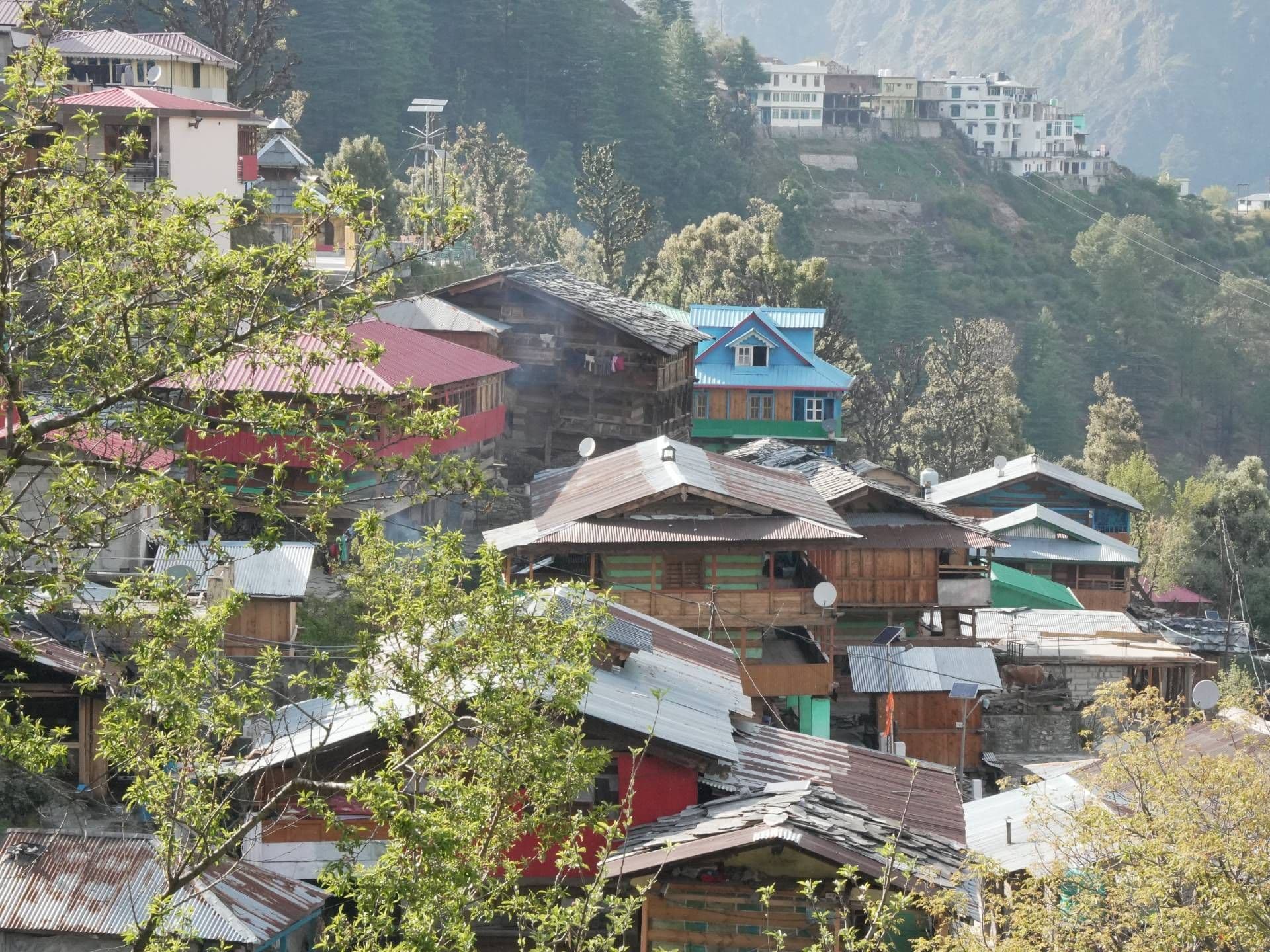
- Sankri Village (Base Camp): Sankri is the primary base for the Kedarkantha Trek and is the starting point for numerous other treks including Har Ki Dun. Sankri has traditional wooden and stone houses (many of which were built in the Himachali style). There are a lot of homestays in Sankri so trekkers have direct contact with people from the area.The villagers in Sankri are known for their warmth and friendliness. Certain villagers work as local guides and porters for the trekkers, providing further support for the local economy through trekking.
- Hargaon Village: Hargaon is a common campsite on the way down the mountain. It has open meadows and many traditional wooden houses. It is a beautiful, serene place to experience the lifestyle of rural residents.
- The Bawar Community: The Bawar Community is made up of the people who live in the area around the Tons River Valley. They have very distinct cultural practices and way of life that is based on living off the land in the mountains (as opposed to down in the valleys). The food they eat is traditional Garhwali food that has been passed down through generations, and make them quite unique.
Temple, Monasteries & Sacred Sites
In addition to the Bawar community, there are also many temples and other sacred sites located in the mountains. Many of these sites are connected to the ancient Hindu mythologies.
- Kedarkantha Summit Temple: On the summit of Kedarkantha (12,500 feet), you will find a small symbolic temple dedicated to Lord Shiva, Goddess Parvati, and Lord Ganesha. The temple is usually identifiable by the presence of several tridents. Many of the trekkers who come to Kedarkantha make a stop at this temple in order to pay their respects.
- Juda ka Talab (The Sacred Lake): At a high elevation, this lake is a key point along the way for trekkers and also an important aspect of local folklore. It is regarded as a sacred body of water.
- Duryodhan Temple in Osla: Osla is a village located near the Kedarkantha track but isn't located right on the path. Osla is also the entrance to Har Ki Dun and Osla contains a unique ancient wooden temple that is dedicated to the Duryodhan from the Mahabharata, which illustrates the variety of local religious beliefs in the area.
- General Shrines: Apart from these temples and shrines, there are also a number of other smaller, antiquated temples and shrines that line the trails and villages. This reflects the strong spiritual qualities associated with the Garhwal Himalayas.
Festivals and Traditions
Local culture is filled with festive celebrations and traditions. Most likely, unless you plan your trek to coincide with these celebrations, you won't see any of these festivals.
- Local Festivals: In addition to traditional Hindu festivities, the village community recalls various local fairs centred on agriculture, local god or goddess, and the four seasons. Members of these community groups frequently share their respective cultures through song, skit, and dance; many of these stories relate to the mythology of Lord Shiva.
- Garhwali Hospitality: An integral aspect of Garhwali culture is their hospitality to guests. Trekkers at Sankri can experience this hospitality through homestays and authentic Garhwali cooking.
Local Folklore and Stories
Long before the present era, the legends regarding the mountain's name and places to visit provided a mystique to one's trek.
- Lord Shiva's Meditation: The literal translation of Kedarkantha is Lord Shiva’s Throat (Kedara = Shiva; Kantha = Throat). According to the legend, when there was a risk to the Pandavas who had been searching for forgiveness after the Mahabharata War, Shiva chose this peak as the location for his deep meditation. Legend states that during his deep meditation at this location, Lord Shiva was interrupted by a charging bull (or the sound of a cow), and moved his shrine to the current site of Kedarnath.
- Myth of Juda ka Talab: This beautiful lake was created when Lord Shiva was resting in this area & he allowed his matted hair (Juda) to fall off of his head and the water droplets formed the pond which is then known as the Juda Ka Talab.
Cultural Awareness and Travel Responsibility
When you trek in the Indian Himalayas, you have a responsibility to take care of the environment as well as the culture of the people who live there.
- Treat Sacred Places with Respect: You should treat all temples, shrines, and sacred sites (like Juda ka Talab) with respect. If you wish to take photographs of the local people, please ask first. Also, don't take photographs in a place of worship unless you have been granted permission.
- Follow the Leave No Trace (LNT) Principles: You must adhere strictly to the LNT principles. Carry all non-bio-degradable waste (i.e., plastic, wrappers) with you when you leave. You should camp in designated areas, and you should not disturb natural (freshwater) sources of water.
- Support the Local Economy: When trekking in the Himalayas, it's important to stay in local homestays in Sankri, hire local guides and porters, and purchase local crafts and food, to help support the local mountain communities and to encourage the continuation of their traditional lifestyle.
- Dress Appropriately: When visiting a village or place of worship, it's a good idea to dress modestly in order to show respect for their culture.
- Interaction with the Local People: You should engage with the local people respectfully, try to learn a few phrases in their language (Hindi or Garhwali), and don't impose on them any customs or ideas from urban life.
The Kedarkantha trek should be viewed as not just a snowy adventure, but also a cultural and spiritual journey that leads to the core of Garhwal region. If one wishes to have a better trekking experience and be a part of preserving the natural and cultural heritage of the Kedarkantha area, one must approach their trek with open-mindedness and an awareness of the needs of the local population.
Why Trek with Trekup India?
Our Unique Promise to Trekkers
Trekup India has the expertise and flexibility to tailor your adventure based trekking experience. Whether you are with your friends, family, colleague or being a solo we will provide you customised trekking experience according to your style and fitness level. Trekup India has completed 30 years above with the Adventure Tourism Industry for its commitments and trust. We have been delivering outstanding treks, expeditions, and outdoor programs in the Himalayas since day one. We operate in Uttarakhand, Himachal Pradesh, Jammu Kashmir, Ladakh, West Bengal, Sikkim, Nepal, Bhutan and South Africa with over 75 documented treks in the higher altitude of Himalayas. We are known for our professionalism, safety, and endless passion for the mountains. Below we have mentioned why to choose us, so have a look and be our next trekker for high altitude treks.
- Unmatched safety and medical preparedness.
- Deep local knowledge and experience longevity.
- Superior trek quality and trekker comfort.
- Commitments to responsible tourism.
1. Unmatched safety and medical preparedness
- Certified Leader: The organization provides complete safety and medical response capacity through its specific performance standard which requires all trek leaders to complete Wilderness First Aid and CPR training together with High-Altitude Emergency Management courses from NIM and IMF.
- Proactive health monitoring: The organization developed health tracking methods through their development of Pulse Oximeter systems which enable daily tracking of oxygen saturation and pulse rates through Health Card distribution to trekkers who must wear safety equipment during their activities.
- Emergency Infrastructure: The organization demonstrates its capacity to handle emergencies through its provision of first aid kits, oxygen cylinders and stretchers which they carry during high-altitude treks as evidence of their emergency response plans.
2. Deep local knowledge and experience longevity
- Durability: The business has operated for more than 30 years because its operations began in 1993 and it now serves as one of the Himalayan region's oldest trekking companies.
- Local Team: Many of the trek leaders and staff have been born and raised in the high-altitude, remote villages (e.g. Sankri), who have a unique, personal experience of the trails, weather patterns and mountain survival capabilities.
- Proven Credibility: The company has established its credibility through recognition from both Uttarakhand Tourism Board government agencies and Indian Mountaineering Foundation association memberships.
3. Superior trek quality and trekker comfort
- High-quality equipment: The organization delivers superior trek experiences which maximize both trek quality and trekker comfort. The organization delivers advanced seasonal equipment which includes 4 season tents and sleeping bags that protect trekkers from temperatures down to 14°F.
- Delicious healthy food: Our main motive is to provide you with good vegetarian food that is cooked at high altitude and freshly provided to trekkers, with an experienced chef able to cater to individual requests and prepare celebration stuff, like cakes, at altitude.
- Small group sizes: They always aim for smaller, well-disciplined groups, which enable the leader to focus on every trekker icon that is monitored acclimatization.
4. Commitments to responsible tourism
- Community support: They encourage local guides and support staff, benefiting from the community they guide and the culture that it enables.
- Environmental responsibility: They promote "Leave No Trace" principles and initiatives like "Save The Trail" for strict waste management, including recycling and composting, for the purpose of preserving the fragile Himalayan environment.
When you choose Trekup India, you select a company which provides safety endorsement through its experienced staff who deliver high-quality trekking services in accordance with their mountain expertise. The entire trek experience at Trekup India begins with our dedication to delivering high-quality services which maintain your safety throughout the entire trekking.
Why You Can Trust Us
Selecting a reputable company is one of the most important steps to ensure a successful, enjoyable, and safe trekking experience. To build your total trust in us, we have developed a comprehensive understanding of the four fundamental components of trust in the trekking industry that is: legally accountable, operationally excellent, satisfied customers and financially ethical. Our registered and recognized standing, our proven history of successful treks, and our excellent ratings are all factors of trust you can depend on so that you may enjoy your trek with complete peace of mind, while we take care of your safety and satisfaction every step of the way.
1. Registered and Recognized: A registration and recognition serve to show that we are a stable and trustworthy organisation and we operate under the legal guidelines and safety standards of our respective domains. In addition, you will have legal safeguards against unlicensed or unsafe tour operators.
2. Successful Treks: You can be confident we are competent operators with a proven track record of success. We have been operating since 1993, and our extensive experience has resulted in becoming one of the world's leading logistical, risk management and emergency response specialists in extreme mountain environments.
3. Good Ratings: The organization uses external assessments together with superior client evaluations to measure its performance because these two assessment methods function as its performance measurement system. The documented materials confirm our guides' professional proficiency together with our ability to deliver exceptional trekking services throughout different periods.
4. Transparent Pricing: Our cost breakdown system enables us to provide complete pricing information which prevents any possibility of hidden charges while we establish financial responsibility for our expenditures. All administrative shortcuts have been eliminated from your trek experience because we use your funds to implement essential safety measures and deliver our top-tier services.
Meet the Expert Behind the Above Insights

Preetam Singh Rawat
Director & Founder
How We Created This Guide?
1. Medical Safety Protocols: We worked with high-altitude medicine specialists to create a comprehensive system of medical safety protocols, including emergency response plans and acclimatization schedules for our high-altitude treks.
2. Testing Logistics & Gear: The success of a high-altitude trek is dependent on the quality of gear used. When we created this planning guide, we included only tested, reliable gear, such as weather resistant tents and calorie-rich nutrition meals.
3. Environmental Responsibility & Planning: The trail uses strict Leave No Trace environmental policies and waste management practices. The environmental impact assessment which we conduct before our trek will help us protect the untouched natural landscape for upcoming trekkers.
4. Transparent Costing: Our transparent costing works as a complete solution which demonstrates our commitment to transparent cost information because it shows all of our expenses in detailed form. We include all expenses which consist of permits and insurance costs and fair wages for our local employees.
Why This Content Exists?
1. To Mitigate Risks and Provide Safety: Trekking is a physically risky event, and this guide is meant to assure you that your safety is not left up to chance. By providing details of our on-the-ground research and medical protocols, we can demonstrate that all routes have been stress-tested.
2. To Create Total Financial Transparency: Many times within the trekking industry there are extreme cases of sticker shock from things like hidden permits, equipment charges, or unanticipated tipping. This guide creates price integrity.
3. Verified by Global Trekker’s: This content was created to demonstrate we have external validation of our performance and move the discussion from we say that we are good to our clients and our independent trekkers say we are good, making an important differentiation for those selecting a trekking partner.
4. Ethical and Environmental Concern: Today’s voices of modern trekkers are being heard more loudly than ever and they are aware of their footprint. By outlining our Leave No Trace principles and our partnership with local communities, we provide a moral compass for the trekker, ensuring your trek contributes to the conservation of wilderness instead of its degradation.