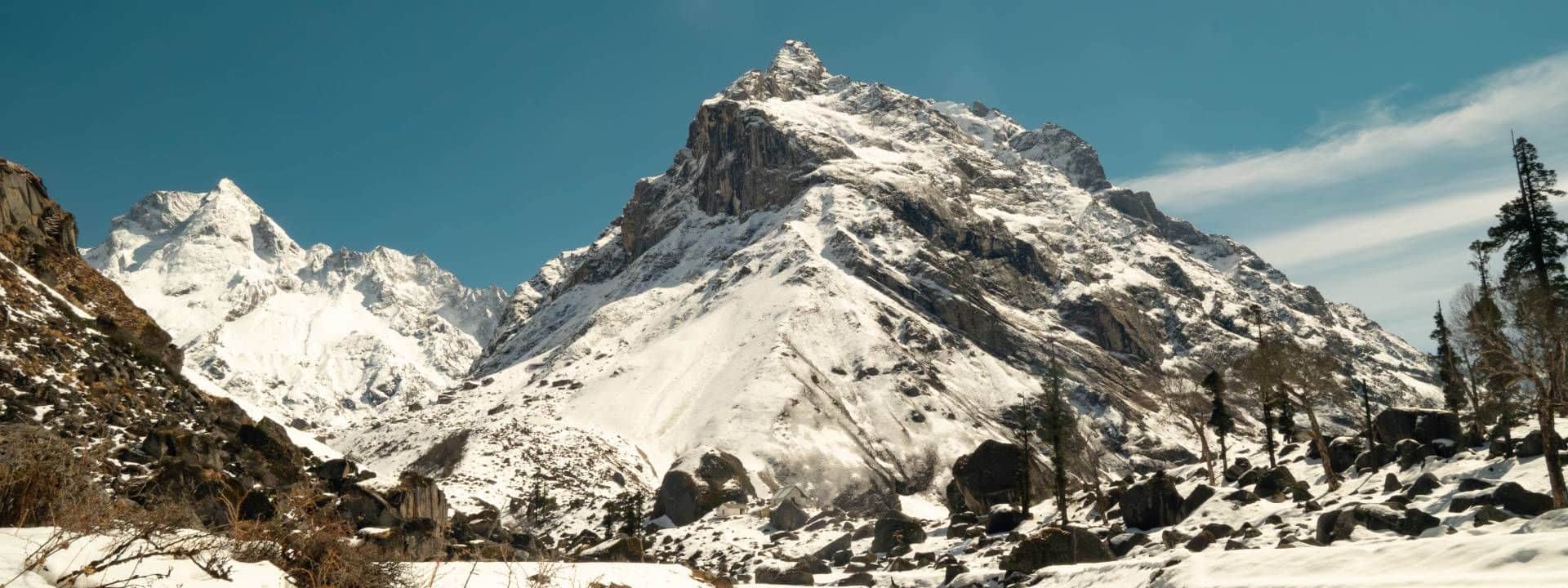
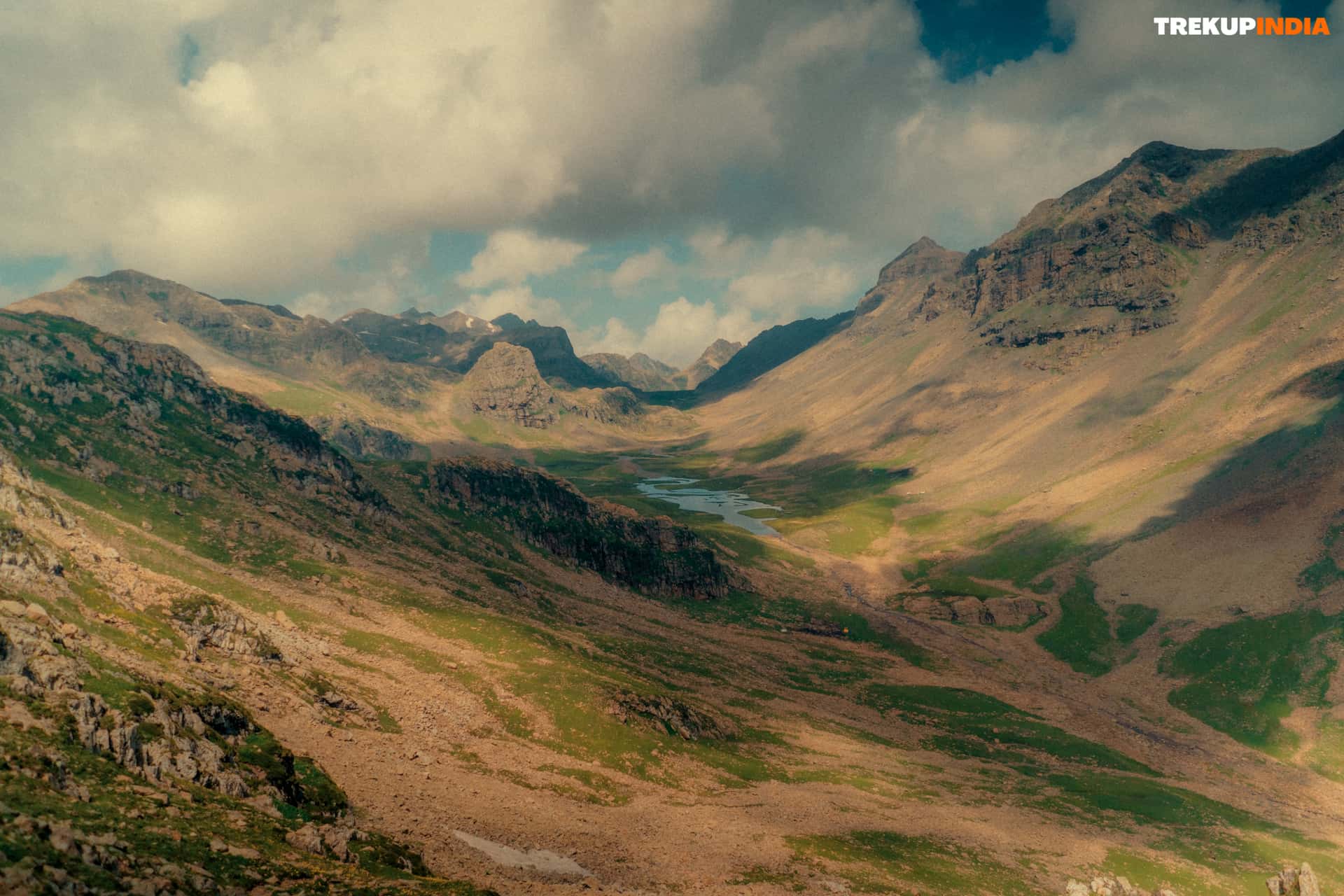
The trek has gained significant popularity in recent years, with its reputation rivalling that of the renowned Kashmir Great Lakes trek. To help you prepare for the adventure, I’ll provide an overview of the challenging aspects of the trek, including high altitudes and long distances. This way, you’ll better understand what to expect and can adequately prepare yourself for the journey.
The difficulty level of Tarsar Marsar is relatively low compared to other Himalayan treks.
1. Daily Trekking Distance
The distance you traverse daily on this Himalayan trek is relatively short, averaging 5 km daily. However, the first and last days of the trek require longer distances to be covered, making them exceptions to the otherwise moderate daily distances.
The initial day of the Tarsar Marsar trek involves a 10 km hike from Aru to Lidderwat, a relatively easy stretch with a minimal elevation gain of 1,000 feet. The trail follows the picturesque Lidder River and offers a pleasant walking experience.
In contrast, the final day’s descent from Homwas to Aru is more challenging, covering 13 km and a significant drop of 4,000 feet. This steep descent can be strenuous on the knees, so it’s essential to be physically prepared and use two trekking poles to assist with the descent.
2. Slow Increase in Elevation
The climb is slow and steady, starting gently from the beginning and continuing in the same manner until the end. You will ascend about 1,000 to 1,500 feet daily, which is a moderate gain in altitude. The ascent is smooth, not putting too much strain on your legs and allowing for a relaxed pace. Despite reaching a total altitude of 13,000 feet, there is no need for concern regarding the elevation.
Apart from these, the rest of the trek is manageable, with a few tricky sections requiring attention.
3. Descent From Tarsar Pass
From the Tarsar Pass, the trail presents a moderate challenge as you make your way down the loose scree. Be cautious to maintain your footing, as slipping is a possible hazard. Take your time and tread carefully to ensure a safe descent.
4. Challenging boulder section after Meadows
Beyond the picturesque Jagmargi Meadows, ablaze with colourful flowers in August, lies a challenging boulder section. The large rocks are characteristic of the Kashmir terrain at this elevation and are interspersed with small gaps. Navigating this portion requires careful footwork and attention to detail.
It’s essential to be very careful during rainy conditions because the rocks can become slippery. Rest assured that the Trekup India team will always be around to assist you in finding stable footing, selecting the appropriate stones to step on, and safely guiding you through that area.
5. Crossing From Sundarsar to Marsar
The challenging part of the trek occurs when traversing from Sundarsar to Marsar. Sundarsar is a stunning lake where you can camp and relax for a day. To reach Marsar from Sundarsar, you must circle the lake, passing through a col nestled between low mountains. This col is the passage to the other side, leading you to Marsar Lake, approximately half a kilometre away. Climbing to the col can be tricky, especially in June when snow may make it slippery. It is crucial to navigate this section carefully, equipped with two trekking poles and sturdy trekking shoes and guided by our experienced trek leaders, who will assist you throughout the journey.
About the Author: Trekking Expertise You Can Trust

Director & Founder
With over 12 years of experience in the Himalayas, he has summited multiple 6000–7000 meter peaks and led more than 200 expeditions across iconic routes like Bali Pass, Buran Ghati, Rupin Pass, Pin Bhabha, Stok Kangri, and Black Peak. His deep mountain experience and leadership make him a trusted name in Himalayan trekking. Write to him at: preetam@trekupindia.com