Day 1: Dehradun to Gangotri by Road
DriveAbout 236 km (approx. 9 hrs)
Leader tip: Drink plenty of water and rest in the evening.
We drive about 236 km (approx. 9 hrs). The road from Dehradun passes Chamba, Uttarkashi and Harsil and reaches Gangotri.

Browse by region, month or category, and read the full day-by-day plan before you decide.
See open batches on the trek page, or call or WhatsApp us and we will help you choose.
We guide you on fitness, packing and acclimatisation. Our trek leaders take care of the mountain.
Last reviewed
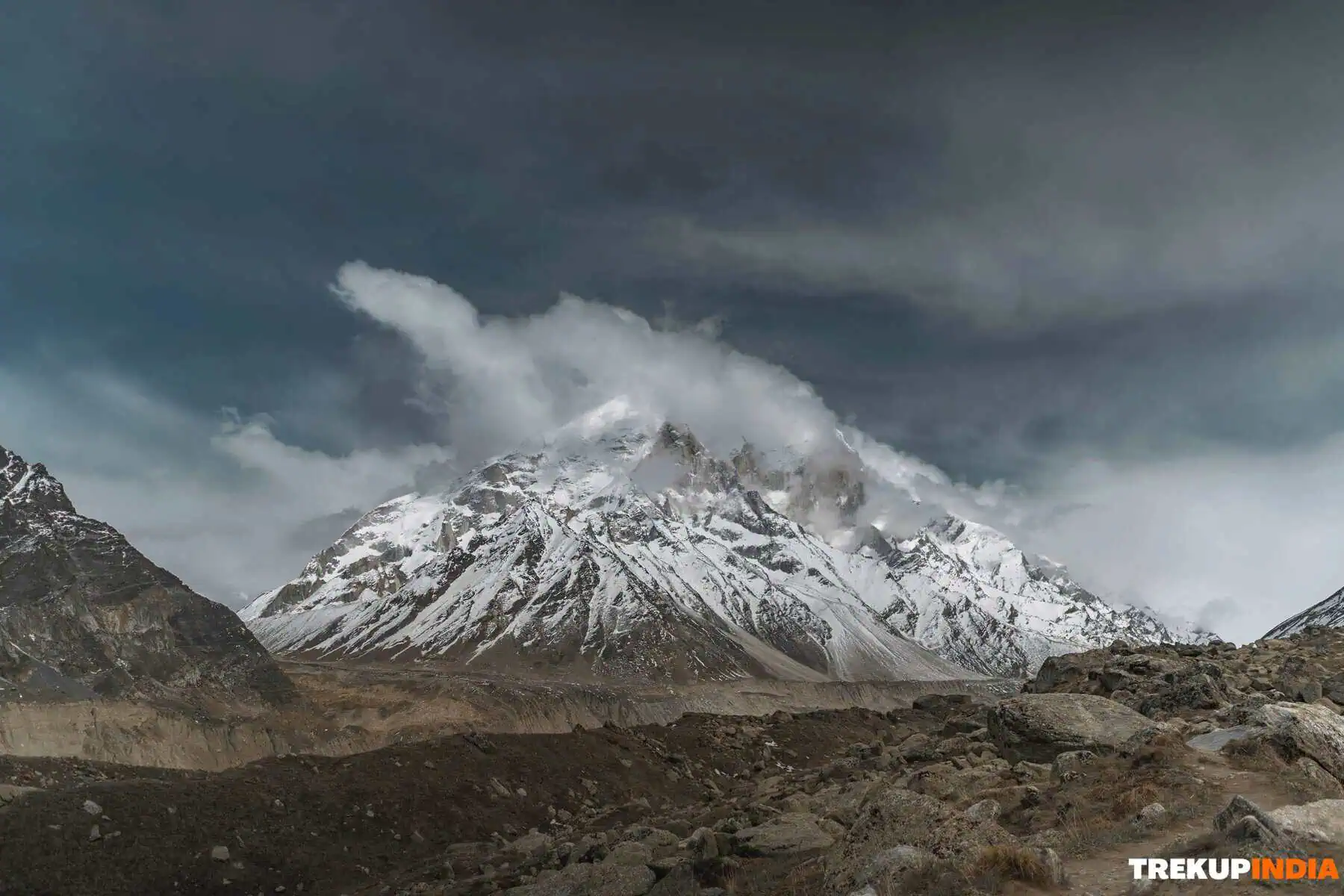
Vasuki Tal is an 8-day trek in Uttarkashi district, Uttarakhand. We drive from Dehradun to Gangotri on Day 1 and rest on Day 2. On Day 3 we walk to Bhojbasa through Chirbasa, and on Day 4 we reach Tapovan through Gaumukh. On Day 5 we cross to Nandanvan, and on Day 6 we walk to Vasuki Tal (about 13,570 ft) and back. On Day 7 we walk to Chirbasa, and on Day 8 we reach Gangotri and drive to Dehradun.
You walk about 66 km, and several days are long. Part of the route crosses the Gangotri glacier.
We rate it difficult. It suits experienced trekkers.
This trek takes you through the Garhwal Himalaya of Uttarakhand. The route is known for Vasuki Tal at about 13,570 ft, Gaumukh and Tapovan, Nandanvan and A rest day at Gangotri. About 13,570 ft at Vasuki Tal. About 66 km in total on foot over 8 days.
Vasuki Tal is rated difficult. Over 8 days you cover 66 km on foot and reach 13,570 ft. The longest walk is Day 6 (Nandanvan to Vasuki Tal and then back to Nandanvan by Trek), at about 8 hours on the trail. You do not need technical climbing skills.
The Vasuki Tal trek costs ₹28,450 per person plus 5% GST. The dates and seats below are live.
This is a 8-day trek from Dehradun and back. We spend 7 nights on the route: 2 nights at a guesthouse, 5 nights in tents. You walk about 66 km. Distances and times are approximate, and weather and your group's pace can change them.
We drive about 236 km (approx. 9 hrs). The road from Dehradun passes Chamba, Uttarkashi and Harsil and reaches Gangotri.
A rest day to adjust to the height. No long walking today.
After an early breakfast we start walking. Today's walk is about 14 km (approx. 7 hrs). We walk along the Bhagirathi valley through Chirbasa to Bhojbasa.
After an early breakfast we start walking. Today's walk is about 13 km (approx. 6 hrs). We cross the glacier snout at Gaumukh and climb to Tapovan.
Today's walk is about 7 km (approx. 4 hrs). We cross the Gangotri glacier to Nandanvan.
Today's walk is about 12 km (approx. 8 hrs). We walk to Vasuki Tal and back to Nandanvan.
Today's walk is about 11 km (approx. 5 hrs). We walk back to Chirbasa.
We drive about 9 km trek (approx. 4 hrs) / 236 km drive (approx. 9 hrs). We walk to Gangotri and drive to Dehradun.
The Vasuki Tal trek costs ₹28,450 per person plus 5% GST. The price covers your stay, meals, forest permits, camping and our trek team.
Add these while booking. Prices are per person.
Plans change. This is how cancellations, date changes and refunds work for your booking, in short. The full policy has every detail.
| When you cancel | Deducted | You get back |
|---|---|---|
| 21 days or more before the start | 10% | 90% as a Trek Voucher |
| 15 to 20 days before | 30% | 70% as a Trek Voucher |
| 7 to 14 days before | 50% | 50% as a Trek Voucher |
| 1 to 6 days before | 100% | No voucher |
| On the trek day or a no-show | 100% | No voucher |
On this trek you sleep in the stays listed below and eat vegetarian meals with Jain options on request. Tap a tab to see the details.
2 nights at a guesthouse, 5 nights in tents.
Our staysYour stay on this trek is at a property we own and run.
Your Vasuki Tal trek has 2 kinds of stay: 2 nights at a guesthouse, 5 nights in tents. We keep rooms and tents shared in small groups.
2 nights. Sharing rooms with beds and blankets. Hot water, charging and attached washrooms depend on the property and the local supply.
5 nights. Twin or triple sharing dome tents, with a sleeping bag and a mattress for each trekker.
Leave your extra luggage at the base and carry only your trekking essentials.
| Facility | Details |
|---|---|
| Guesthouse | 2 nights |
| Campsite | 5 nights |
| Electricity | Available in towns, subject to local supply. None on the trail |
| Mobile network | Weak in towns, poor or absent on the trail |
Facilities vary by property. Please read the stay section before you book.
A hot meal after a long day on the trail makes a real difference. This is how meals work on Trekup India treks: what the kitchen team does, what a normal day of food looks like, what the menu can include and how to tell us about dietary needs before you travel.
Cooking in the mountains is not like cooking at home. Space is limited, the weather changes fast and everything has to be carried in. Our team plans meals around the route, the campsite facilities, the weather and what trekkers need to keep walking.
Our ground team arranges the ingredients, cooking equipment and supplies for each trek, so meals can be prepared at the campsites. Where practical, we buy supplies locally.
Depending on the trek, the menu and what is available, you may also get treats such as momos, pasta, pakoras and halwa.
Staying hydrated matters more at altitude. Drinking-water arrangements depend on the facilities and local conditions on each trek. Where suitable facilities are available, water is boiled, filtered or treated with an appropriate purification method.
Carry your own reusable water bottle and follow your trek leader's instructions on which water is safe to drink.
Summit day often starts early, sometimes before sunrise, when it is very cold and the weather can change quickly. Where it is possible, the team plans hot tea or a light snack before you start.
Weather, terrain or safety reasons can sometimes make this impossible. The safety of trekkers and the ground team always comes first.
Birthday or anniversary on the trail, or a summit worth celebrating? Depending on the trek and what can be arranged, a birthday cake or a small group celebration can be organised on request. Mention it when you book.
Menus mix familiar comfort food with lighter, energy-rich options that suit the physical demands of trekking.
The day starts with tea, coffee or another hot drink. Breakfast can include poha, paratha, upma, porridge or bread. A proper breakfast helps you get through the day's walk.
Depending on the route, lunch is served at the campsite or packed for the trail. Typical options are roti, rice, dal, seasonal vegetables and sandwiches.
After you reach camp there is tea, coffee or soup with a snack such as popcorn, pakoras, noodles or momos. This is usually when the group sits together and talks about the day.
Dinner is a warm, filling meal after a hard day: dal, rice, roti, seasonal vegetables, salad and sometimes a dessert.
Timings and menus change with the itinerary, altitude, weather and the day's walking schedule. The first and last day of a trek can differ, so check the inclusions on this page for exactly which meals are covered.
Tell us about dietary needs before you travel, not at the trailhead, so the operations team can check what is possible for your trek.
Jain trekkers can ask for meals without onion and garlic. Please tell us in advance so the team can check what can be arranged on your trek.
Share your requirements before departure and we will confirm what is possible for the specific trek.
If you have a food allergy, lactose intolerance or any other restriction, tell us before you book or well before departure. Special diets depend on the trek location, the kitchen set-up and the ingredients we can get. Remote mountain kitchens cannot always guarantee against cross-contamination, so please raise a serious allergy before booking.
From these options, selected dishes are served each day. A meal usually has four dishes, and menus are rotated to add variety. The list is indicative: not every dish is served on every trek.
Children need regular meals, snacks and plenty of fluids to stay energetic. On treks that children join, meal planning may include:
We also consider portion size and spice level so that meals suit younger trekkers.
Trekking needs energy, endurance and good recovery. Meals are planned to balance carbohydrates, protein, fats and vegetables.
We also plan around the walking schedule. Heavier meals suit the times when you can rest and digest. Lighter, easy-to-eat food suits the hours when you are walking.
Leave only footprints. Take back your waste.
Good food works together with experienced trek leaders, planned logistics and comfortable camps to make a trek enjoyable. If you have a question about meals on a particular trek, ask before you book.
Watch and read what trekkers say about the Vasuki Tal Trek with Trekup India, from the trail and camps to the trek team.
The best time to do the Vasuki Tal trek is March, April, May, June, July, August, September and October. About 13,570 ft at Vasuki Tal. Days are usually 10°C to 20°C on the lower trail, and nights drop to about 0°C to 5°C at the higher camps, and below zero in winter and early spring.
Cold and snowy above 8,000 ft, with clear skies and the sharpest views. Nights are well below freezing at the high camps. We do not usually run the Vasuki Tal trek in these months. At 13,570 ft the upper trail of Vasuki Tal is not safe in these months, so we do not schedule batches then.
Snow melts from the lower trails, rhododendrons bloom in the forest and the days warm up. Higher ground can still hold snow. We run the Vasuki Tal trek in these months. This is the window when the route from Gangotri, about 10,200 ft up to 13,570 ft is most walkable.
Warm days, clear mornings and green meadows. Afternoon cloud is common, so we start early. We run the Vasuki Tal trek in these months. We keep Vasuki Tal closed in these months because the climb to 13,570 ft is not safe.
Heavy rain and cloud. Landslides can block roads and the trail is slippery, though the meadows are in full flower. We run the Vasuki Tal trek in these months. We keep Vasuki Tal closed in these months because the climb to 13,570 ft is not safe.
The clearest weather of the year, with crisp air, sharp mountain views and cold nights. We run the Vasuki Tal trek in September, October only. We keep Vasuki Tal closed in these months because the climb to 13,570 ft is not safe.
How to reach Gangotri, the start of the trek, from Dehradun, Delhi and other cities, and the village culture you will see on the way. Tap a button to open each guide.
Plan it in three steps: reach Dehradun, travel with us to Gangotri, then head home from Dehradun after the trek.
Get to Dehradun the day before, so you are at Prince Chowk on time. Pickup is at 6:30 AM.
Jolly Grant Airport, Dehradun is about 30 km from the pickup point. Flights come from Delhi, Mumbai and Bangalore. Flight timings change by season, so check before you book.
About 30 km from pickupDehradun railway station is 500 to 600 metres from Prince Chowk. The Dehradun Shatabdi (12017) runs daily from New Delhi in about 6 hours 10 minutes. Check IRCTC for the current timings of overnight trains.
500 to 600 m from pickupISBT Dehradun is about 5.7 km from Prince Chowk. Overnight buses from Delhi (Kashmiri Gate) take about 5 to 7 hours. Arrive the day before and book a room near Prince Chowk.
About 5.7 km from pickupOur vehicle travels to Gangotri.
On Day 8 you drive back to Dehradun.
Plan your onward travel: Book your onward travel for the next day, because mountain roads can run late.
Delhi to Dehradun is about 268 km by road. Take a train or an overnight or evening bus, and arrive in Dehradun the day before the trek. Check IRCTC for current train timings, because schedules change.
Book a room near Prince Chowk so you can reach the pickup point on time. On Day 8 you are back in Dehradun in the evening, so book your return for the next morning.
Fly into Jolly Grant Airport in Dehradun. Flight timings change by season, so check before you book. Land the day before the trek and stay near Prince Chowk. On Day 8 book your onward travel for the next day.
Gangotri is one of the four Char Dham shrines.
Gaumukh is the source of the Bhagirathi, which becomes the Ganga at Devprayag.
Please respect the temple, keep your voice low, do not litter, and ask before taking photos of people.
The lower trails run through oak, rhododendron and deodar forest, and the higher slopes open into alpine meadows with wildflowers in the monsoon and early autumn.
Birdwatchers often see the Himalayan monal, the state bird of Uttarakhand, along with koklass pheasant, Himalayan griffon and barbet.
Langurs are common in the forest.
Larger animals such as the Himalayan black bear and the musk deer live in these forests, but they keep away from people and are rarely seen.
Our trek leaders, guides and cooks know this part of the mountains well, and wherever possible we hire local people and buy local supplies.
The Vasuki Tal Trek packing list in two parts: the camping gear and safety kit Trekup India provides, and the clothing and personal items you carry. Boots, jackets and poles can be rented.
You do not need to bring or buy these. We carry them to camp and set them up.
For every night in camp.
2 nights at a guesthouse, 5 nights in tents.
Separate tents for cooking, dining and toilets.
A seat and a table at meal and tea breaks.
Vegetarian breakfast, lunch, evening snacks and dinner. Jain meals on request.
First aid, oxygen cylinders, stretchers, BP machine, oximeters and walkie-talkies.
They carry the group equipment. You carry your own rucksack (backpack offloading is an optional add-on).
Pack light and pack right. Everything below goes in your rucksack.
Need boots or a jacket? You can rent gear from us. Book at least 7 days before your trek, because last-minute rentals are not confirmed. Rent gear from us
Vasuki Tal is a difficult trek. This is how we plan it for safety, and what happens if someone feels unwell.
Gangotri is at about 10,200 ft. Day 2 is a rest day. You then climb gradually through Bhojbasa and Tapovan to Nandanvan. We walk slowly, and the leader checks everyone's health each day.
Drink 3 to 4 litres of water a day, avoid alcohol and keep dry layers ready for the night. Put on your warm layers before you feel cold.
Trek leaders are AMC or BMC certified and trained in first aid and search and rescue. The team carries oxygen cylinders, a first aid kit, stretchers, a BP machine, oximeters and radios.
Headache, nausea, tiredness or poor sleep.
What to do: Stop climbing, rest, drink water and tell your trek leader. Do not go higher until you feel better.
Loss of balance, confusion or breathlessness even at rest.
What to do: Tell your trek leader at once. The person is taken down. Descent is the main treatment.
Safety is not an add-on at Trekup India. It is built into the way we plan, prepare and operate every trek in the Himalayas, Nepal and beyond.
We provide complete guidance on itinerary, terrain, weather, health, fitness and essential gear to ensure trekkers are fully prepared.
Our trek leaders bring tons of experience and are certified with BMC, AMC and Wilderness First Responder (WFR) courses.
Our trekker-to-staff ratio (1:8) is among the best in the industry so that every participant receives ample support and attention.
Every trek is supported by well-placed medical and emergency-response protocols designed for the challenges of remote mountain environments.
Our itineraries are based on scientifically backed acclimatisation schedules, allowing trekkers to gain altitude progressively.
Every trek is planned with rigorous trail monitoring, weather considerations, risk evaluation and ongoing climatic patterns.
Technology strengthens our presence in the mountains. We use GPS devices, satellite phones and walkie-talkies on every trek.
We prioritise quality gear, carefully managed camping infrastructure and field-tested equipment built to withstand difficult conditions.
From logistics and operations to route support and emergency response, our team works efficiently and professionally.
The Vasuki Tal Trek is rated moderate to difficult. Here is how each day feels, how much you walk, and who should think twice before booking.
Trekup India rating: Moderate to Difficult. Our scale runs from Easy to Extreme.
We rate Vasuki Tal as difficult.
The longest walk is Day 6 (Nandanvan to Vasuki Tal and then back to Nandanvan by Trek), at about 8 hours on the trail. The highest point is Vasuki Tal at about 13,570 ft.
The group climbs in steps, a trek leader and local guides stay with the group, and we carry oxygen and a first aid kit.
Fit trekkers, including first-timers who have trained.
These are the walking times and altitudes for each day, taken from our itinerary.
Start training at least six to eight weeks before the trek.
Every batch has a trek leader and local guides, so the group does not move faster than its slowest member. The nearest big hospitals are in Dehradun and Rishikesh (AIIMS Rishikesh). On the road we pass district hospitals and health centres, and your trek leader knows the nearest one for each day. The state emergency numbers are 112 and the ambulance service is 108.
| Day | Route | Distance | Time | Altitude |
|---|---|---|---|---|
| Day 1 | Dehradun to Gangotri by Road | 236 km | 9 hrs | - |
| Day 3 | Gangotri to Bhojbasa via Chirbasa by Trek | 14 km | 7 hrs | - |
| Day 4 | Bhojbasa to Tapovan via Gaumukh by Trek | 13 km | 6 hrs | - |
| Day 5 | Tapovan to Nandanvan by Trek | 7 km | 4 hrs | - |
| Day 6 | Nandanvan to Vasuki Tal and then back to Nandanvan by Trek | 12 km | 8 hrs | - |
| Day 7 | Nandanvan to Chirbasa by Trek | 11 km | 5 hrs | - |
| Day 8 | Chirbasa to Gangotri by Trek and from Gangotri to Dehradun by Road | 9 km | 4 hrs | - |
Vasuki Tal takes you up to 13,570 ft over 8 days, so tell us in writing when you book about any medical condition that may affect your fitness. We advise you not to take this trek if you have breathing problems or knee pain. Talk to your doctor before you book if any of these apply to you:
If you take regular medicines, carry enough for all 8 days and tell your trek leader on Day 1. Every trekker also signs a waiver form before the trek.
Vasuki Tal is rated difficult. You do not need to be an athlete, but you do need steady stamina. Train for 12 weeks before you go.
Difficult trek
Train 4 to 5 days a week for 12 weeks. Start earlier if you are new to regular exercise.
Walk 2 to 3 km a day at an easy pace, 4 to 5 days a week. Practise deep breathing every day.
Grow your daily walk to 60 minutes. Add jog and walk intervals and climb stairs twice a week.
Do squats, lunges and planks twice a week. Walk uphill or climb stairs with a backpack, starting at 5% of your body weight and building to 10%.
Run 5 km in 30 to 35 minutes and do one long walk of 90 minutes with your loaded backpack. Rest well in the last week.
By the end of the plan you can run 5 km in 30 to 35 minutes and walk uphill for 90 minutes with a loaded backpack.
Our family has led Himalayan treks since 1993. The second generation carried the work forward and renamed it Trekup India in February 2016. Today we run treks across India and abroad, with trained leaders, safety gear and a personal coordinator for every booking.
 Safety · 4:54How we keep every trek safe
 Camp life · 3:53Campsites at Trekup India
 Operations · 3:13The People Behind Your Trek
 Why Us · 4:33Why You Should Choose Trekup India? | India's Oldest and Safest Trekking Organisation
Safety
first on every trek: trained leaders and emergency plans
30+
years in the Himalaya, since 1993
600,000+
trekkers guided since 1993
4.7 ★
Google rating from 2,610 reviews
Answers to the most common questions about the Vasuki Tal Trek: cost, dates, fitness, packing, safety, stay and booking.
Pick a batch in the dates section, tap Book and pay the advance to hold your place on the Vasuki Tal trek (₹28,450 per person plus 5% GST). A dedicated trek coordinator then calls you and stays in touch until you are back.
Vasuki Tal is a 8-day itinerary with 7 nights on the way. You cover about 66 km on foot, and the highest point is 13,570 ft. The longest day is Day 6 (Nandanvan to Vasuki Tal and then back to Nandanvan by Trek), at about 8 hours.
The Vasuki Tal trek is ₹28,450 per person plus 5% GST for 8 days. The price covers your stay (2 nights at a guesthouse, 5 nights in tents), meals, permits, the trek team and safety kit. Check the inclusions and exclusions on this page to see what you pay for separately.
Vasuki Tal is rated difficult. The longest walk, on Day 6, takes about 8 hours. Training for the weeks before the trek helps a lot.
We run the Vasuki Tal trek in March to October. Your trek coordinator will confirm what is open for your dates.
The highest point on the Vasuki Tal trek is about 13,570 ft at Vasuki Tal.
Vasuki Tal is in Uttarkashi district, Uttarakhand. The walk starts at Gangotri, about 10,200 ft and the group meets at Prince Chowk, Dehradun, 6:30 AM.
Please check with your trek coordinator whether road transport is included for your dates.
Snow on Vasuki Tal depends on the month and the year. The route rises to 13,570 ft, so snow is likely near the top in the colder months and can linger on the highest ground early in the season. We cannot promise snow on any date.
Fit first-time Himalayan trekkers can do it if they train beforehand. Tell us in writing about any medical condition when you book. Talk to your doctor if you have breathing problems, knee pain, a heart condition, high blood pressure or a history of severe altitude sickness.
Yes. Vasuki Tal needs forest and trekking permits. We arrange them, and you only give us a copy of your photo ID before the 8-day trek.
Mobile network is patchy on Vasuki Tal: expect it near Gangotri, about 10,200 ft and little or none higher up. Withdraw cash before you reach Gangotri, about 10,200 ft, because ATMs are rare, and share our office number and your trek leader's number with your family.
Your trek leader checks you every day on Vasuki Tal, and if symptoms worsen you are taken down. We carry oxygen, a first aid kit and stretchers, which matters on a route that rises to 13,570 ft. We strongly recommend travel insurance that covers evacuation.
The Vasuki Tal trek takes 8 days: Day 1: Dehradun to Gangotri by Road. Day 2: Rest Day at Gangotri. Day 3: Gangotri to Bhojbasa via Chirbasa by Trek. Day 4: Bhojbasa to Tapovan via Gaumukh by Trek. Day 5: Tapovan to Nandanvan by Trek. Day 6: Nandanvan to Vasuki Tal and then back to Nandanvan by Trek. Day 7: Nandanvan to Chirbasa by Trek. Day 8: Chirbasa to Gangotri by Trek.
You walk through the Garhwal Himalaya of Uttarakhand. The lower trails run through oak, rhododendron and deodar forest, and the higher slopes open into alpine meadows with wildflowers in the monsoon and early autumn. Birdwatchers often see the Himalayan monal, the state bird of Uttarakhand, along with koklass pheasant, Himalayan griffon and barbet. Langurs are common in the forest. Larger animals such as the Himalayan black bear and the musk deer live in these forests, but they keep away from people and are rarely seen. The highlights are Vasuki Tal at about 13,570 ft, Gaumukh and Tapovan, Nandanvan.
On Vasuki Tal, nights are colder than days at every camp. Days are usually mild and nights are cold, and the upper camps are coldest, so layer your clothes.
Vasuki Tal is rated difficult. It is a demanding trek, so we recommend it for people who have done at least one Himalayan trek or trained very well. Over 8 days you reach 13,570 ft, so call us on +91 80623 58605 if you are unsure and we will tell you honestly.
If heavy rain, snow or a landslide affects Vasuki Tal, the trek leader may delay the start, hold the group at camp, change the route or turn back. With 8 days on the trail we keep a buffer, but please keep a spare day after the trek.
Start six to eight weeks before Vasuki Tal. Practise walks of about 8 hours with a loaded daypack, since Day 6 is the longest. The highest point is 13,570 ft, so add steady uphill and stair work.
Vasuki Tal covers about 66 km over 8 days. Walking days run from a short walk to about 8 hours on Day 6, and the itinerary lists the distance and time for each day.
Yes. We run private and customised Vasuki Tal batches on your dates for families, couples and groups. Tell us your group size on +91 80623 58605 and we will share a quote.
Yes. Many people join Vasuki Tal alone and become part of a group on Day 1 at Prince Chowk, Dehradun, 6:30 AM. Tents or rooms are shared with trekkers of the same gender, and the trek leader and local guides stay with the group.
Yes. Women trek with us every season, including solo travellers, and the 8-day Vasuki Tal batches have a trek leader and local guides with the group throughout. Tents and rooms are shared with the same gender.
Yes, many women do. On a 8-day trek like Vasuki Tal, carry enough of your own products and a few zip-lock bags and carry all used items back, because nothing can be left on the trail. Tell your trek leader if you feel unwell.
Many trekkers rent or buy part of their kit. For Vasuki Tal, ask your coordinator which items (jackets, poles, gloves, sleeping gear) are available near Gangotri, about 10,200 ft, and bring your own broken-in trekking shoes.
There is no electricity at the campsites on Vasuki Tal. For 8 days carry a fully charged power bank, keep your phone in airplane mode and keep batteries inside your jacket at night, because cold drains them fast.
Tipping on Vasuki Tal is optional. If you wish to thank the guides, cooks and helpers at the end of the 8-day trek, give it as a group through your trek leader.
A typical Vasuki Tal day starts with a hot drink and breakfast, and walking begins around 7 to 8 AM. Day 6 is the longest, so expect an earlier start then. Lunch is on the trail or at camp, then tea, a briefing and an early dinner.
Compare the difficulty (difficult), the highest point (13,570 ft) and the length (8 days) of Vasuki Tal with other treks, then call our advisors on +91 80623 58605 with your experience and dates and we will suggest the best match.
Cancellation and refund terms for Vasuki Tal depend on how many days before your start date you cancel. They are in the cancellation section of this page, so please read them before you book.
Official pages for the facts on this page that change over time, such as train timings and weather. Always confirm the current details before you travel.
Nanda Rawat is Operations Manager at Trekup India. He holds a Master's degree in Tourism and Hospitality and has more than 16 years of experience in adventure travel, including Himalayan expeditions. He is trained in first aid by the Indian Mountaineering Foundation and has contributed to ATOAI. He plans the routes, camps, safety systems and trek leader teams for our treks in Uttarakhand, Himachal Pradesh, Ladakh, Kashmir, Sikkim and Nepal. Write to him at: nanda@trekupindia.com
Reserve your spot online, or talk to a trek advisor first.