It is a challenge to trek through the Indian wilderness whether across the Himalayas or and the Western Ghats, or central Indian forests -- requires more than just stamina and excitement. Knowing trek markers as well as trail markers is a crucial ability to navigate which is often the determining factor in the extent to which the trek is safe, efficient and enjoyable.
We at TrekUp India, we have frequently seen trekkers fatigue themselves or waste valuable time due to their inability to recognize trail markers in the right way. Understanding how to speak the "language that is the trail" permits trekkers to easily navigate through meadows, forests, snowfields, and other rocky terrain without stress.
Why Trek Signs Matter in India
Contrary to many international trekking destinations that use uniform markings, Indian trails vary greatly in the way they are designated.
- The most popular Himalayan treks might have official signs
- Rural or remote routes frequently depend on Cairns (stacked stone) or markers left by shepherds
- In dense forests, ribbons, cloth or other subtle indicators from nature.
It is vital to know these markers due to:
- Security: Reduces the risk of confusion in snow, fog or forest areas, as well as open meadows
- Effectiveness: Staying on the right trail helps save time and energy
- Environment Protection Helps to prevent damage to delicate ecosystems by taking them off-route
For India, trail literacy is an essential trekking capability, and not a supplementary one.
Common Trek Markers Found in Indian Wilderness
1. Painted Marks on Rocks & Trees
They represent the majority of popular trail indicators along the most popular routes.
- Usually, the paint is red, white blue, or yellow
- The use of stripes or arrows indicates the direction in which you should go.
- The faded or crossed marks could be a sign of a junction or turn-off
Practical Tips:After you have spotted one marker with paint Always pause to identify next marker. next marker before proceeding. This helps ensure continuity in the route.
2. Cairns (Stacked Stones)
Cairns are used extensively for:
- High-altitude Himalayan terrain
- Barren landscapes
- Crossings of rivers and sections covered in snow
They are constructed by shepherds, guides, or experienced walkers to mark the safest route.
Practical TIP:If multiple cairns are visible, choose the most popular and often employed line because it typically is the safest way to go.
3. Ribbons, Cloth, or Flags
Common in:
- Dense forests
- Temporary routes
- High meadows
These are typically:
- Cloth strips tacked to branches
- Prayer flags are used to mark commonly-used pathways
- Temporary ribbons are placed by trekking teams
Essential RuleDon't remove or shift these markers. They're crucial, not just to you, but also for the trekkers who follow your.
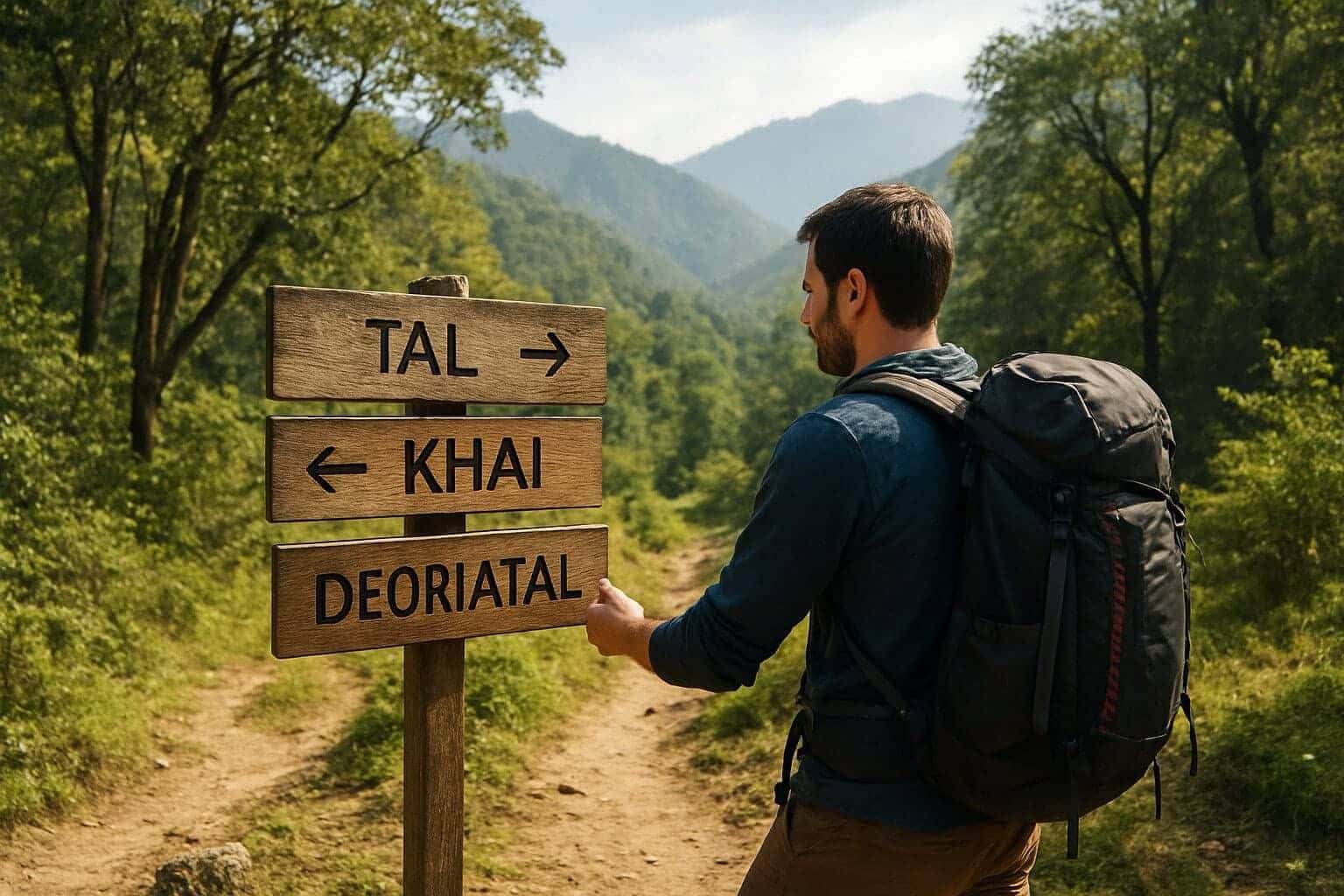
4. Trek Signboards
Installed by:
- Forest departments
- Local authorities
- Trekking organisations
Most often, you will find them typically at:
- Trailheads
- Campsites
- Major junctions
These could comprise:
- Arrows for direction
- The distance to villages or camps
- Route names
Practical TIP: Mentally take note of information on the signboard - it could be extremely useful in the event that you have to go back your steps.
5. Natural Cues Used as Trail Indicators
If formal markers are not present the natural world provides guidelines:
- The trodden dirt and soiled grass frequently signify established paths
- Shepherd trails are safe in alpine regions.
- Streams generally flow towards settlements and valleys
- The direction of the sun (east-west) assists with orientation basics
Warning: Natural clues should not substitute markers, maps as well as GPS tools.
Practical Advice for Reading Trek Markers Safely
- Always glance both in the direction of forward and reverse--markers may disappear when retracing
- Do not blindly follow groups, they could have a different plan
- Make sure to stop at junctions and check markers prior to committing
- Mix trail signage along with offline maps as well as GPS apps.
- If markers are completely gone you should take a break and reassess the situation instead of making a guess.
Confidence is based on confirmation, not a presumption.
Trek Leader Review
Reviewed by Sunil Rawat - Trek Leader, TrekUp India
This article was read by Sunil Rawat, who has years of experience managing treks throughout the Indian Himalayas and forests routes as well as the remote terrain of alpine. The information provided in this article is based on real-world navigation challenges with regard to fog, snow as well as faded trails along with mixed use pastoral routes encountered in TrekUp India operations.
Conclusion
The ability to read trek markers and signs in the wilderness of India is not just a naivety skill, but an essential safety technique. From marks painted on trees and rocks to stone cairns, as well as subtle natural signals, each marker is essential in guiding trekkers through difficult terrain.
At Trekup India, we have observed how those who are able to recognize and appreciate these signs travel more efficiently, reduce energy consumption and stay clear of unnecessary risk. When paired with modern technology such as offline GPS apps and other traditional trail markers can be used to create an efficient navigation system.
Be respectful of the markings. Pay attention. Combine your knowledge with the latest technology.When you take note of your ears to what trail tells you, let the mountain will guide you in the right direction.
About the Author: Trekking Expertise You Can Trust

Director & Founder
With over 12 years of experience in the Himalayas, he has summited multiple 6000–7000 meter peaks and led more than 200 expeditions across iconic routes like Bali Pass, Buran Ghati, Rupin Pass, Pin Bhabha, Stok Kangri, and Black Peak. His deep mountain experience and leadership make him a trusted name in Himalayan trekking. Write to him at: preetam@trekupindia.com