If you trek for long enough in India, whether within the Himalayas, or in the Western Ghats, you will eventually traverse under blue skies that will turn gray without warning. In one moment, you're enjoying the steady beat on the trail then the next, you begin to feel the first cold drops on your shoulders. In the mountains, rain seldom requires permission.
In trekUp India we've watched this play out numerous times. The trekkers who deal with rain the best aren't necessarily those who wear the most luxurious equipment, but the ones who respond calmly, adapt quickly, and continue to move efficiently. A sudden downpour doesn't need to ruin your trek if you're prepared.
This is a practical, tried-and-true guide to handle unexpected rain in a safe and comfortable manner.
1. Keep Rain Gear Within Immediate Reach
The most frequent mistake made by trekkers is putting rain gear too deep in the backpack. When you get to the end of your hike to unpack and look for it, you're already soaked.
- Place your rain jacket or your poncho inside the top pocket or in the outer compartment
- Be aware of exactly where it is without even looking
Human Truth:That 30-second delay is often the deciding factor in whether your day is damp or totally miserable.
2. Put the Backpack Rain Cover On Immediately
When rain starts to fall be sure to protect your backpack. Even light rain can seep in quickly.
- Always make sure you have a rain cover prior to your trek
- Apply it when you see the first indication of rain but not until it becomes heavier
Extra safety tip:Line the interior the backpack using either a dry or garbage bag. This is a great way to save the sleeping bag, extra clothing, and electronic devices when rain makes its way into.
3. Adjust Your Footwear Strategy
Wet trails can change everything under your feet.
- Laces should be tightened to stop sliding into shoes.
- Change into the synthetic, or quickly-dry, socks (cotton remains wet and can cause blisters)
- Make sure to air out your shoes every time you have a break
On certain Western Ghats monsoon treks, experienced trek leaders may even recommend open trekking sandals with good grip for stream crossings--counter-intuitive, but far safer than waterlogged boots.
4. Protect Electronics and Essentials Like Your Lifeline Depends on It
Rain is a method to locate electronic gadgets.
Store them items in sealed ziplock bags, dry pouches:
- Phone
- Maps and permits
- First-aid kit
- Power banks
Many experienced trekkers add silica gel bags inside electronic pouches that help absorb moisture. A small thing, huge reward.
5. Stay Warm to Avoid Hypothermia
A combination of wind, rain and altitude can cause body temperature to drop rapidly, even in summer.
Layer carefully:
- Moisture-wicking base layer
- Mid-layer insulation (fleece or thermal)
- Waterproof outer shell
In TrekUp India, we insist on a single principal:Always have at minimum a completely dry set of clothing that is sealed and unworn regardless of the time of year.
6. Slow Down--Stability Matters More Than Speed
Regular trails are transformed by rain into slippery zones.
- Shorten your stride
- Make use of trekking poles to help balance
- Be on the lookout for moss-covered rocks as well as slopes that are muddy.
The majority of rain-related injuries don't occur due to extreme weather conditions, they occur when trekkers attempt to keep their normal pace.
7. Create Temporary Shelter if Needed
Sometimes the rain pours down fast enough that advancing isn't a good idea.
If you're caught in a severe downpour:
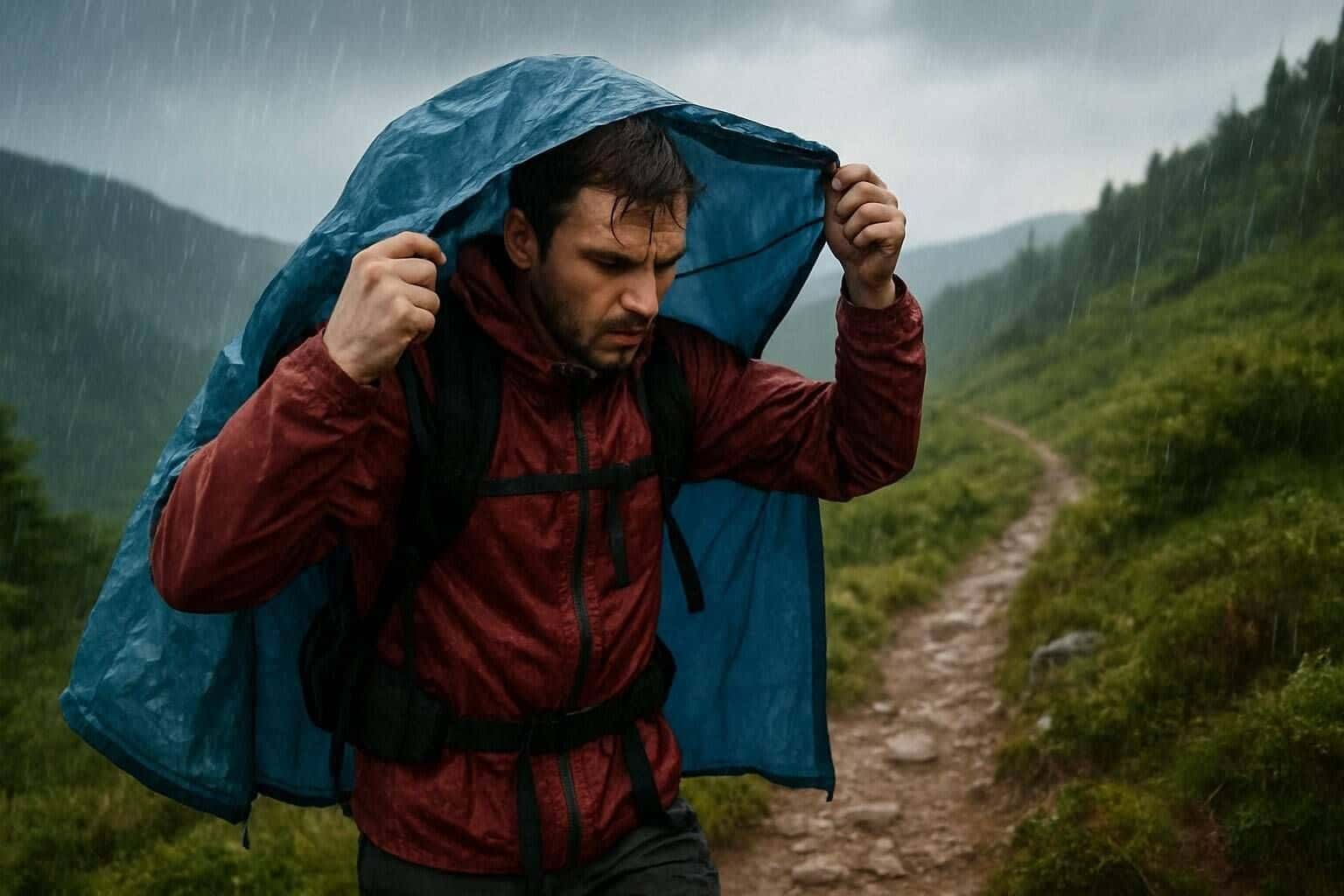
- Make use of a poncho, or tarp on top of trees or rocks
- Do not sit directly on wet ground. Instead, use your mat or backpack
- Beware of the riverbeds, steep slopes and landslide-prone zones
Afraid of rainy days is typically the best choice that isn't a failure.
8. After the Rain: Reassess Before Moving On
After the rain has stopped:
- Make sure you check socks, shoes and the layers
- Check for trail modifications like landslides or slush. waterways that have swollen
- Be on the lookout to look out for leeches in the forested areas
Rain alters the trail. Consider it as a new section, not as a continuation of the previous.
Conclusion
Rain during an trek can test your patience in preparation, mental strength, and even the mind. But it also shows that the mountain in completely different way. Mist sweeping through the pine forests, waterfalls appearing to be alive and the gentle hum of rain falling on leaves are all experiences that you won't easily forget.
At TrekUp India We are of the belief that rain shouldn't diminish your enthusiasm, but increase your awareness. By making calm adjustments, sensible gear selection, and a keen eye for the unpredictable conditions, trekking in sudden rain can be not only feasible, but also deeply memorable.
The mountains are where adaption is the key to survival. It's often the place where the most memorable stories start.
About the Author: Trekking Expertise You Can Trust

Operations Manager
Nanda Rawat holds a Master’s degree in Tourism & Hospitality and brings over 16 years of experience in adventure and leisure travel. He has led multiple Himalayan expeditions, contributed to ATOAI, and is trained in first aid by the Indian Mountaineering Foundation. A strong supporter of sustainable and ethical tourism, he plays a key role at Trekup India. Write to him at: nanda@trekupindia.com