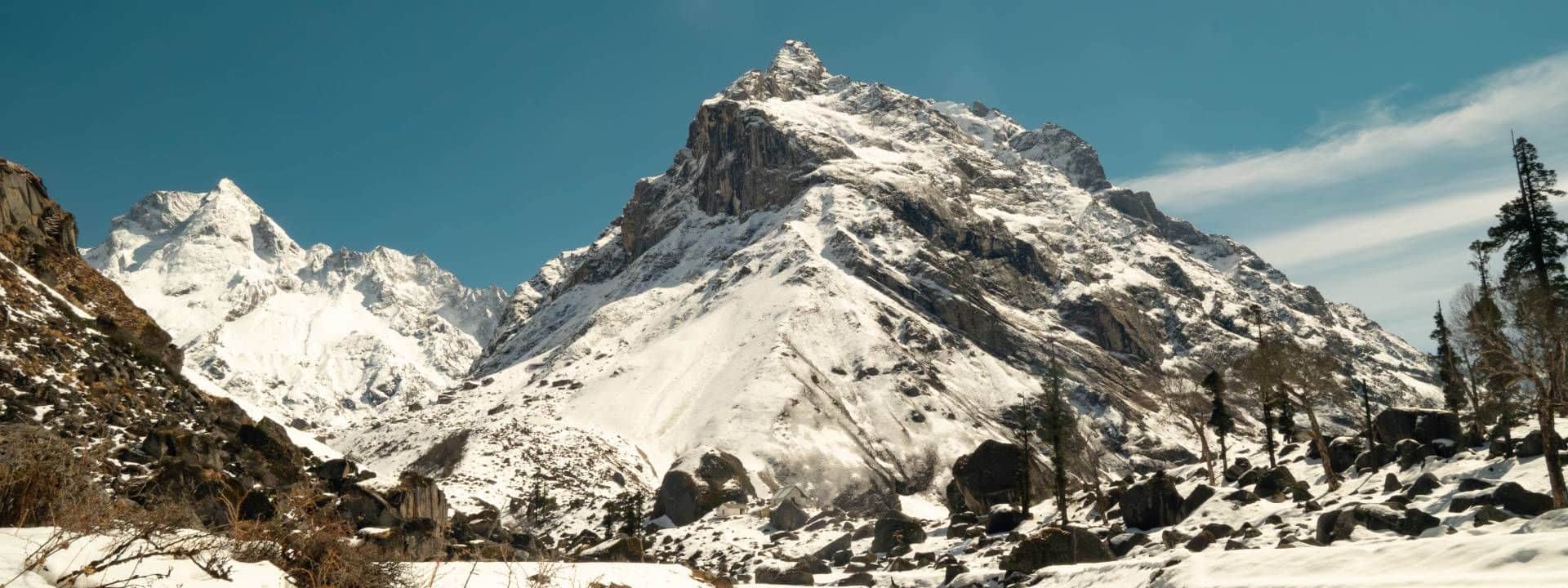
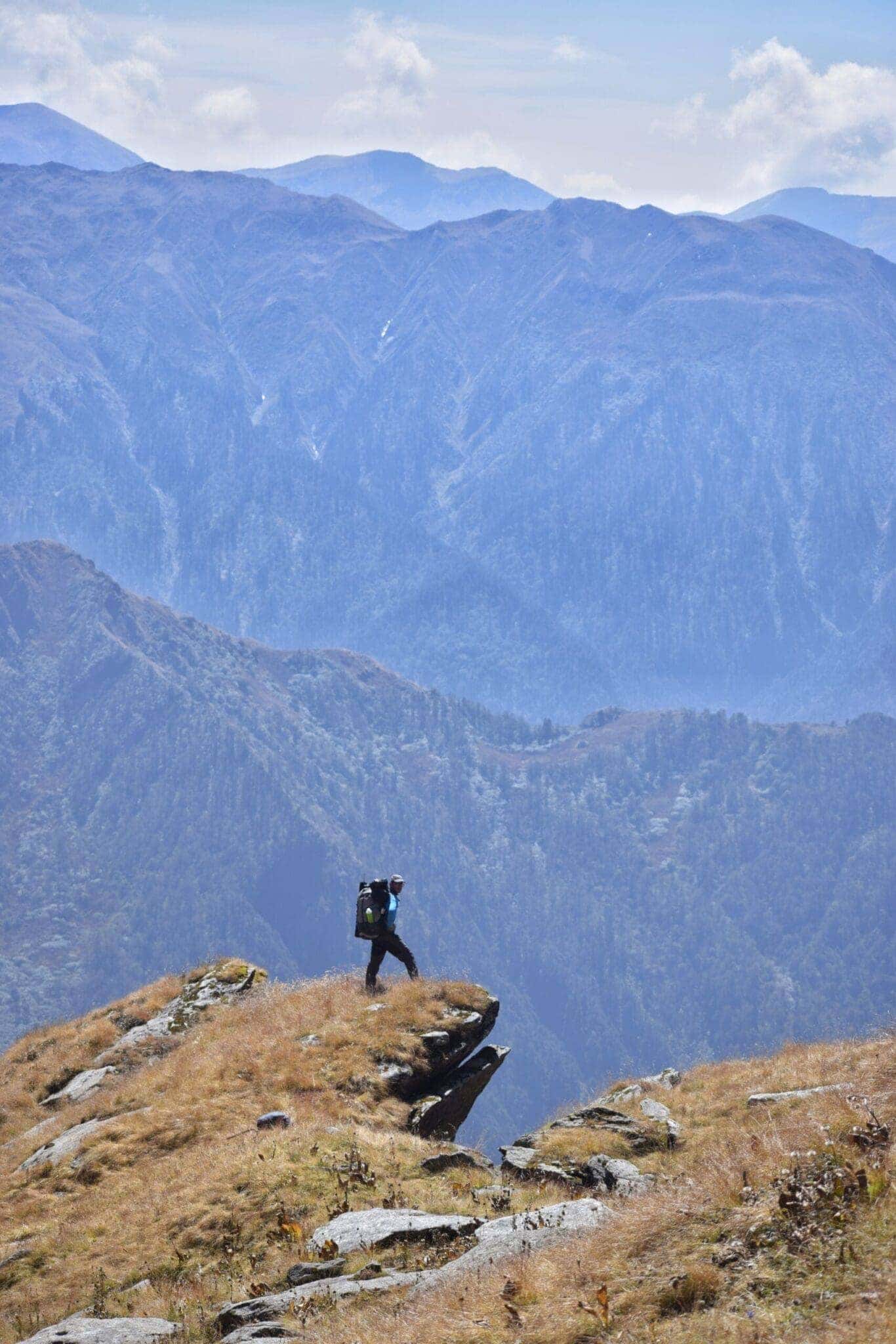
The autumnal time in the Har Ki Dun valley reveals its most beautiful state. This time of year offers the chance to take in breathtaking scenery without having to endure the more harsh winter temperatures when snow-capped peaks form stunning backdrops against vibrant red chaulai plants which flourish throughout. When the snow starts melting towards the end of April Har Ki Dun sheds its winter coat and reveals the stunning and raw landscape in which the Supin river flows through with renewed clarity, forming stunning light and shadow between the pine trees that sparkle in the golden glow of pine needles while our mules stroll peacefully by.
Har Ki Dun Trek in Uttarakhand's Garhwal Himalayas is particularly enjoyable in the autumn months usually from late September until early November. Once the monsoon season has ended the landscape becomes unbelievable, with stunning images of Swargarohini, Black Peak, and Bandarpoonch against a vivid blue sky. In addition, bronze and golden shades that adorn the oak, maple and walnut trees begin their transformation into magnificent views to behold. Great for nature lovers and photographers alike, the trekking conditions in Nepal provide perfect trekking conditions: pleasant temperatures in the day, cool evenings well-maintained trails, free of leeches and monsoon residue creating the perfect trekking conditions. Osla and Gangad villages add another layer of attraction, where visitors can observe local life including harvest celebrations, as well as traditional celebrations as communities prepare for winter. The autumn season truly reveals the Valley of the Gods' glittering beauty.
Why Trek Har Ki Dun in Autumn?
Breathtaking Mountain Vistas
Following monsoon rains and the fall season, autumn brings a refreshing crispness to the air, allowing us to see breathtaking mountain views for the first time. Swargarohini, Black Peak (Kala Nag) and Bandarpoonch are stunningly visible against a stunning blue background providing us with breathtaking views often obscured by a summer clouds or monsoon veil during other seasons.
Witness the Golden Forests
When the seasons change, the oak, walnut, and maple trees change their colors from gold to bronze to golden-bronze shades offering beautiful landscapes along every path in the valley, awash in autumn leaves that light up every path and offer photographers endless photo opportunities - perfect locations for photographers that love nature! This setting offers excellent photographic opportunities and is an absolute delight for those who love nature.
Pleasant Environment
The temperatures during the day are perfect for hiking. Even though nighttime temperatures can be cooler from October onwards, the absence of snow or rain will ensure that the trek is dry and dry; this prevents leeches and other dangers resulting from heavy monsoon rains that can infiltrate the trail and supplying fresh mountain air instead.
Witness Local Life
The fall season is also a season for exploring the culture in remote Himalayan villages like Osla and Gangad. There, you can witness the people who are prepping for winter with harvesting, observing small festivals, or taking part in traditional ceremonies, giving an opportunity to gain an understanding of the culture of mountain communities.
About the Author: Trekking Expertise You Can Trust

Director & Founder
With over 12 years of experience in the Himalayas, he has summited multiple 6000–7000 meter peaks and led more than 200 expeditions across iconic routes like Bali Pass, Buran Ghati, Rupin Pass, Pin Bhabha, Stok Kangri, and Black Peak. His deep mountain experience and leadership make him a trusted name in Himalayan trekking. Write to him at: preetam@trekupindia.com