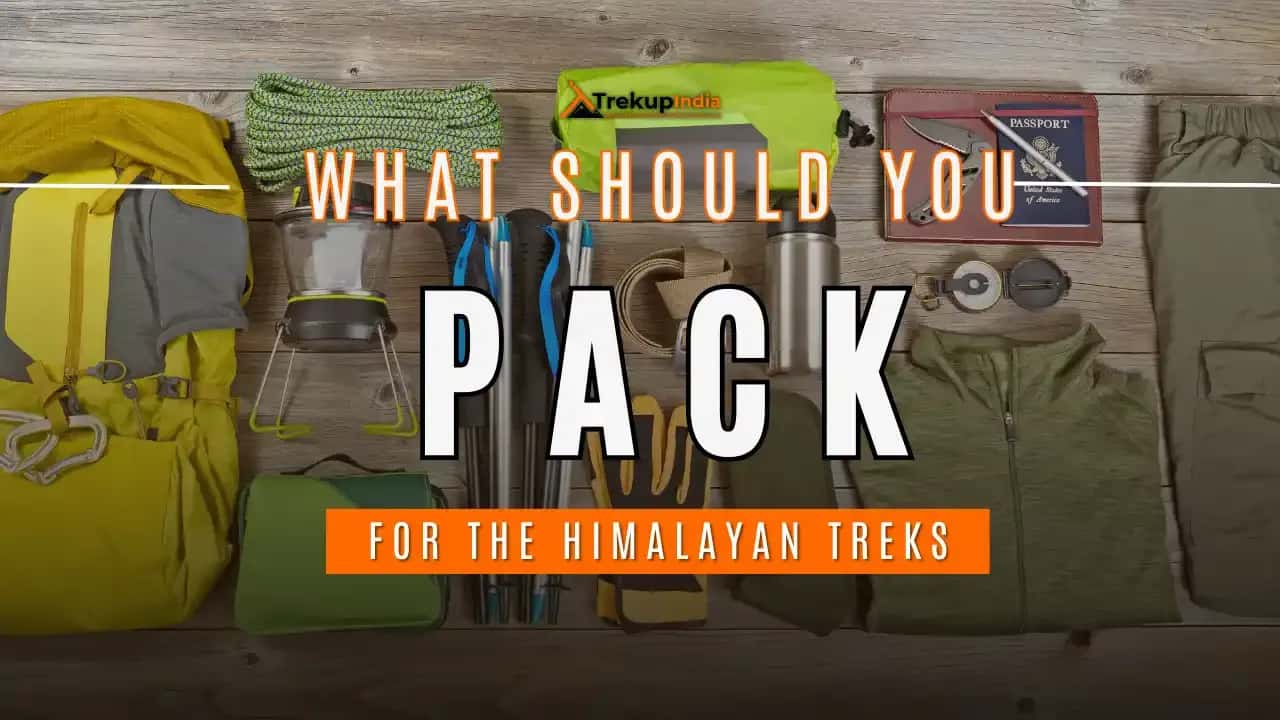
Being an Trekking & Adventure travel company, we get many questions from our trekkers and most common question that arises is what to carry or what should we pack for the trek? Sometime it becomes difficult to explain in details and therefore below we have prepared the detailed packing list, helpful for all trekkers coming to the Himalayas. Whenever we go on trek or start packing things one should remember the packing pattern i.e. either you start from head to foot or foot to head, this way there will be rare chance that you will forget the items to pack, so go step by step.
1. Backpack
Make sure your backpack should be comfortable neither too big nor to small and for a week trek 60-70 liters of backpack should be enough to hold all your belongings. Ensure that your backpack has good hip & Shoulder support and pockets should be accessible quickly.
2. Daypack
All trekkers should keep in mind that daypack is very important, this will be a great help to you while on trek, also every single day you won’t be carrying you backpack therefore for day excursion , shorter hikers, sightseeing you can carry your stuff in it.
3. Footwear
Trekking shoes: Preferably water proof, high ankle support.
Walking / Hiking sandals: This can be used off trek i.e. in the morning and evening hours, basically to get your feet rest from heavy boots, sometime used for crossing streams and rivers, it’s more comfortable and safe than crossing barefoot or wetting your boots.
Sneakers (Optional): For normal driving days or can use around the camp
Socks (3-4 Pairs) – Make sure to choose material wisely, it should be quick drying, warm and comfortable.
4. Clothing’s
Hiking / trekking jacket: Carry good quality layer jackets
Hiking pants: Check some kind of long nylon blend, light and quick drying pants. Warm covers ups like fleece-lined tracksuit pants or ski pant.
Undergarments as per your habitual requirement
T-Shirts and Shorts (3-4 Warm comfortable)
Ordinary Shirt / T-shirt – Just in case everything gets wet this will help for roaming around.
Long Sleeve shirt – can be used as a base layer on colder days
Socks – at least 4-5 pairs
Leggings – Can be used specially chilling morning and evening , to keep your body warm
Thermals – get 2 pairs of thermals, this will be great need a body to keep it warm.
Buff / Balaclava – This is a must to carry to cover your neck and this item is an ideal solution to keep your neck / throat warm.
Beanie Cap- Very helpful item for colder and windy days should carry 1, also sometime when its freezing cold you can use it a night as well.
Hiking Hat- this will basically help during the day time specially from the sun rays, make sure it has a strip so that wind does not below is far from your headJ..
Gloves – 01 pair will be enough to keep your hand warm and nice.
5. Rain wears
Rain Coat and Pant – Carry a pair of it to protect you from the rain OR
Rain Poncho – during long rains, the waterproof jackets starts leaking but poncho does get work in keeping you dry, so choose accordingly.
Rain covers: Some small water proof to cover your backpack and daypack as well for your gadgets.
6. Gadgets and Electronic
Trekking Poles
Mobile phone
Camera
Spare batteries for phone and camera, powerbank
Light weight flash light or headlight
Plastic or waterproof ziplock bags for camera
Music system / Bluetooth
Plug/converter for electrical items
Sunglasses
1 liter water bottle
Journal with pen would be good idea to keep your notes.
Some book of your interest for ideal time
Get into habit of keeping Map and guide book of the region.
7. Hygiene & Personal toiletry
Sunscreen with UV protection
1 or 2 small quick-drying towels
Toilet paper/tissues/wet-wipes
Toothbrush/toothpaste/ mouth freshener
Deodorant / Talcum powder
Shampoo
Lip-gloss/salve
Sanitary pads/tampons (For female traveler)
Bio gradable Soap
Nail clipper
Your other personal items that you use on daily basis
8. Personal First aid Kit and Energy
Below are some common medicine generally required / used during your adventure trip, however please consult your doctors prior.
Antiseptic towel or water syringe (to clean the wound)
Butterfly bandage for small cut
Sterile gauze pad and bandages (Both cotton and elastic for larger wounds).
Latex gloves used when its wound bleeds
Medicine for Diarrhea (Upset stomach)
Medicine for cold, flue / fever headache
Some pain killers
ORS pouches
Quick pain relief spray (External use)
Any personal medicine prescribed by your doctor
Dimox / Similar for high altitude sickness
Bug Repellent
Carry some nutria / energy bars and drinks (non-alcoholic)
Note: Kindly consult your doctor before purchasing or taking any medicine.
Important note: You can check on our website, what you can rent & buy from us and what you need to get from your home town, make your bagpack easy not heavy.
With over 12 years of experience in the Himalayas, Preetam has summited multiple 6000 - 7000 meter peaks and led more than 200 expeditions across iconic routes like Bali Pass, Buran Ghati, Rupin Pass, Pin Bhabha, Stok Kangri, and Black Peak. His deep mountain experience and leadership make him a trusted name in Himalayan trekking.
Write to him at: preetam@trekupindia.com
Best Ongoing & Upcoming Treks For 2026
Discover the most exciting ongoing and upcoming treks for 2026, handpicked for their scenic beauty, adventure, and trekking conditions. From snow-covered winter trails to vibrant spring and summer routes, this collection helps you choose the perfect Himalayan adventure based on season, difficulty, and experience level.