
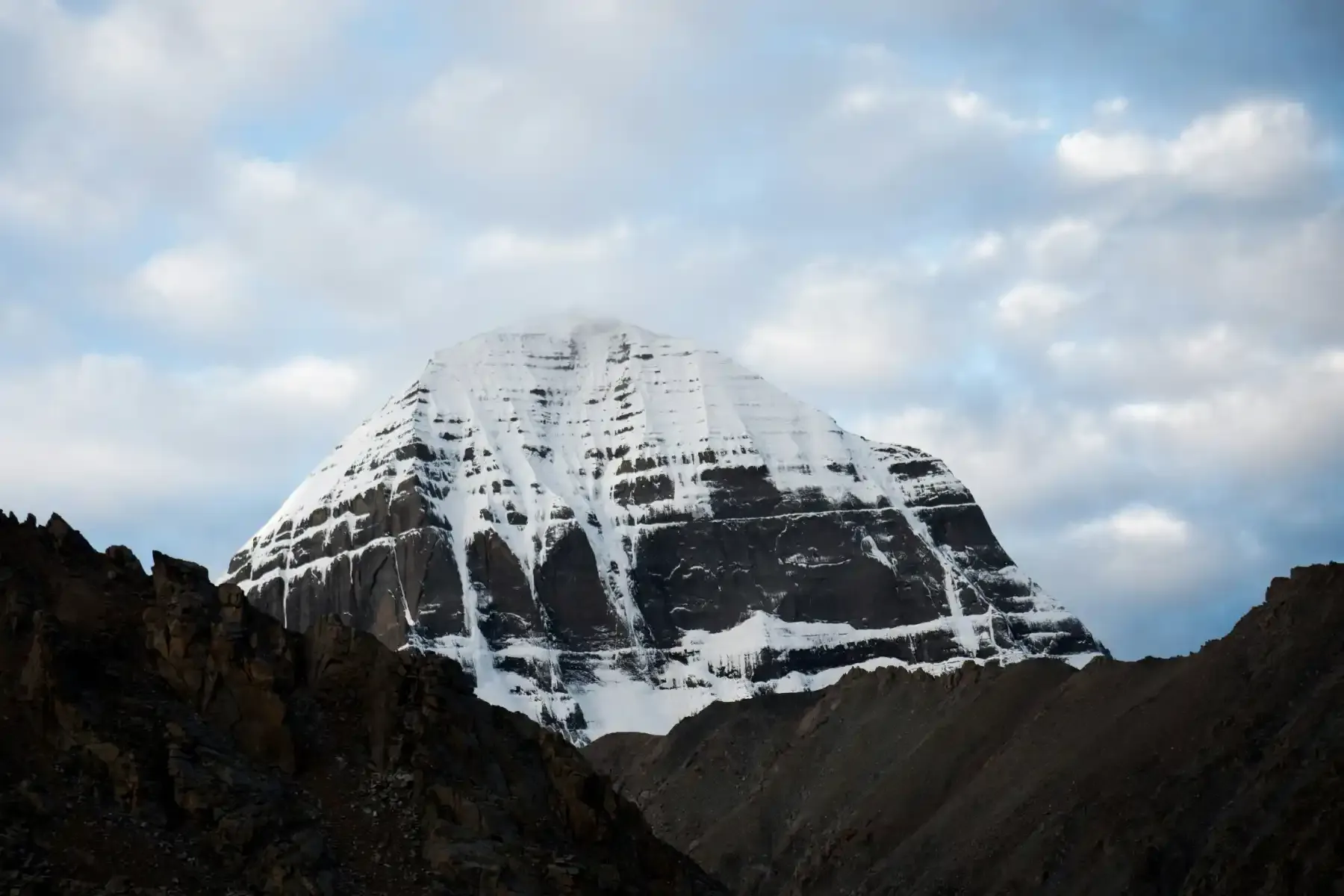
Kailash Mansarovar Trek
Conquering the Abode of Shiva in the forbidden peak at 18,500 ft.
Trek Overview
Quick Facts
Maximum Altitude
18,500 ft.
Trek Duration
12 Night / 13 Days
Trek Distance
50 Km
Difficulty Level
Moderate to difficult
Start/End Point
Kathmandu
Nearest Airport
Tribhuvan International Airport, Kathmandu
Best Season
April - June / Sep - Oct
Accommodation
In hotel or in guesthouse
Meals
Breakfast, lunch & dinner
Permits
Road, travel, temple & monasteries
Temperature
10°C to 18°C (day) ; - 5°C to - 15°C (night)
Snow
November to April
Kailash Mansarovar Yatra (also spelled Kailasa Mansarovar or Mount Kailash Yatra) is a pilgrimage to Mount Kailasha (6656m) and Lake Manasarovar (4590m) in western Tibet. Pilgrims trek to this part of Tibet to perform a kora (a type of circumambulation) around Mount Kailash and to take a dip in Lake Manasarovar. The source of four major Asian rivers: the Indus, Brahmaputra, Sutlej, and Karnali, Mount Kailash is considered the Axis Mundi or center of the universe by four different religions. Hindus believe Lord Shiva resides here; Buddhists believe Demchok, the most important deity, resides here; Jainists believe it's the site of the first Tirthankara's ultimate liberation; and Bonpos believe it's the center of spiritual power. Physically demanding due to altitude and terrain, an acclimatization period or gradual introduction to high altitude conditions is required prior attempting to cross the Dolma La Pass at its peak (5636m/18,491ft). This will have additional significance because it marks the Year of the Horse, one of the twelve-year Tibetan calendrical cycles. It is believed that performing only one full kora around Mount Kailash will provide one individual with the equivalent of 13 koras' worth of merit. Access to Mount Kailash (Kailash Mansarovar) is tightly controlled with all trekkers needing both a Tibet Travel Permit and a Chinese Group Visa. There are three main points of entry into Tibet for the pilgrimage: from India via paliuk Road, where you will enter Tibet through Lipulekh Pass; from Sikkim via Nathula Pass; or overland from Nepal via Kyirong/Kerung (and from Chinese Checkpoint at Kyirong on or after the beginning of May until the end of September).
Why is the Kailash Mansarovar Trek so special?
The Kailash Mansarovar Trek is said to be significant because it lies within a realm of the natural world where mountain landscapes, ancient mystical practices and spiritual devotion are uniquely blended together. Unlike other treks to summits, trekking to Kailash Mansarovar involves circling the mountain rather than ascending straight to the summit.
1.The Axis Mundi (Cosmic Pillar): Mount Kailash is commonly referred to as the Axis Mundi, the Cosmic Axis, and/or the center of the universe.
- Alignment with Geography: The four sides of Mount Kailash are orientated approximately perfectly to each of the 4 cardinal points (N/S/E/W) so as to create an enormous natural compass and/or pyramid.
- Alignment with Global Coordinates: The distance from Mount Kailash to the North Pole is approximately 6,666 km; the distance from Mount Kailash to the South Pole is approximately 13,332 km. These two distances have been used by people, including researchers from Russia, as support for a theory that the mountain is an ancient, man-made energy source as opposed to a natural formation.
2. The Enigma of Time and Aging: One of the more common myths among trekkers and residents alike, is that time is faster than anywhere else, when spent close to the mountain.
- Observations of Biology: Many who trekked and comprised the three-day kora (circumambulation) noticed that their hair and nails grow considerably quicker than they would elsewhere, during this time.
- Speculation by Scientists: There are multiple theories on why this happens, however unproven; many believe that the area's magnetic properties or high-energy vortex’s may be a factor in the biological aging process, thus contributing to the otherworldly aspect of the area.
3. The Hydrological Vertex of Asia: The Kailash-Mansarovar region of the Himalayas is considered the hydrological vertex of Asia, where four major rivers originate from its four sides and are the lifeblood of over 1.5 billion people.
- Indus River (North): The Lion River, which flows through Ladakh in Northern India and Pakistan is the basis of the Indus Valley civilization and modern agriculture in Pakistan.
- Brahmaputra River (East): The Horse River starts on the Tibetan plateau, flows through Tibet as the Yarlung Tsangpo, and then flows south to provide water to the plains of Assam and Bangladesh.
- Sutlej River (West): The Elephant River is the main source of power for Northern India, providing water to the Bhakra-Nangal dam and irrigating the Punjab and Rajasthan.
- Karnali/Ganges River (South): The Peacock River, the longest river in Nepal, is the largest tributary of the Ganges and provides the primary source of water for the densely populated Indo-Gangetic plain.
4. The Duality of the Two Lakes: At these two famous high-altitude mountain lakes, located within just a few kilometers of each other, you can clearly see the contrasts between these two bodies of water, with the different ways in which they impact the pilgrim on their trek journey, representing the duality of water. This duality of water is key to the pilgrim's experience of harmony.
- Lake Mansarovar (the Mind of God): This freshwater lake (4,590 m), which is an almost perfect circle of water, contains a bright energy like the sun. In Buddhist culture, it represents the mother or feminine aspect of wisdom. Pilgrims may participate in a snan (ritual bathing) or a holy dip to purify the layers of Karma relating to their present life and to their past life.
- Rakshas Tal (the shadow of the ego): This lake is a saltwater body, which has very little life in it. The water appears to be dark and/or choppy most of the time. It represents the ego or the shadow self, and the other half of the yin and yang, or the balancing of Light with Dark.
5. Testing Moksha (Dolma La Rebirth): The Dolma La Pass 5,635 m is the high point of a trek both in height and physical exhaustion considered the threshold of transformation in a circuit. In addition to marking an actual (and likely significant) point of transformation, as people passed through Dolma La, their old selves died.
- The Symbolic Death: When pilgrims arrive at the Dolma La Pass (Trei) and ascended the steep incline to the Dolma La Pass (Trei), they can stop and leave either their own ground (with a piece of clothing), or a lock of hair (typically from a relative), to represent their death and the release of all worldly attachments.
- The Goddess of Compassion (Buddhism): Dolma La (the Bodhisattva Tara) is said to have led them through the threshold to reach the summit. Upon reaching the top of Dolma La, the view is filled with thousands of fluttering prayer flags as a symbol for the liberation of the soul.
- Rebirth: Upon descending from the Dolma La and returning to Darchen, pilgrims traditionally believed each one is a completely new person; altogether spiritually cleansed by the trek journey and humbled by their experience.
Trek Highlights
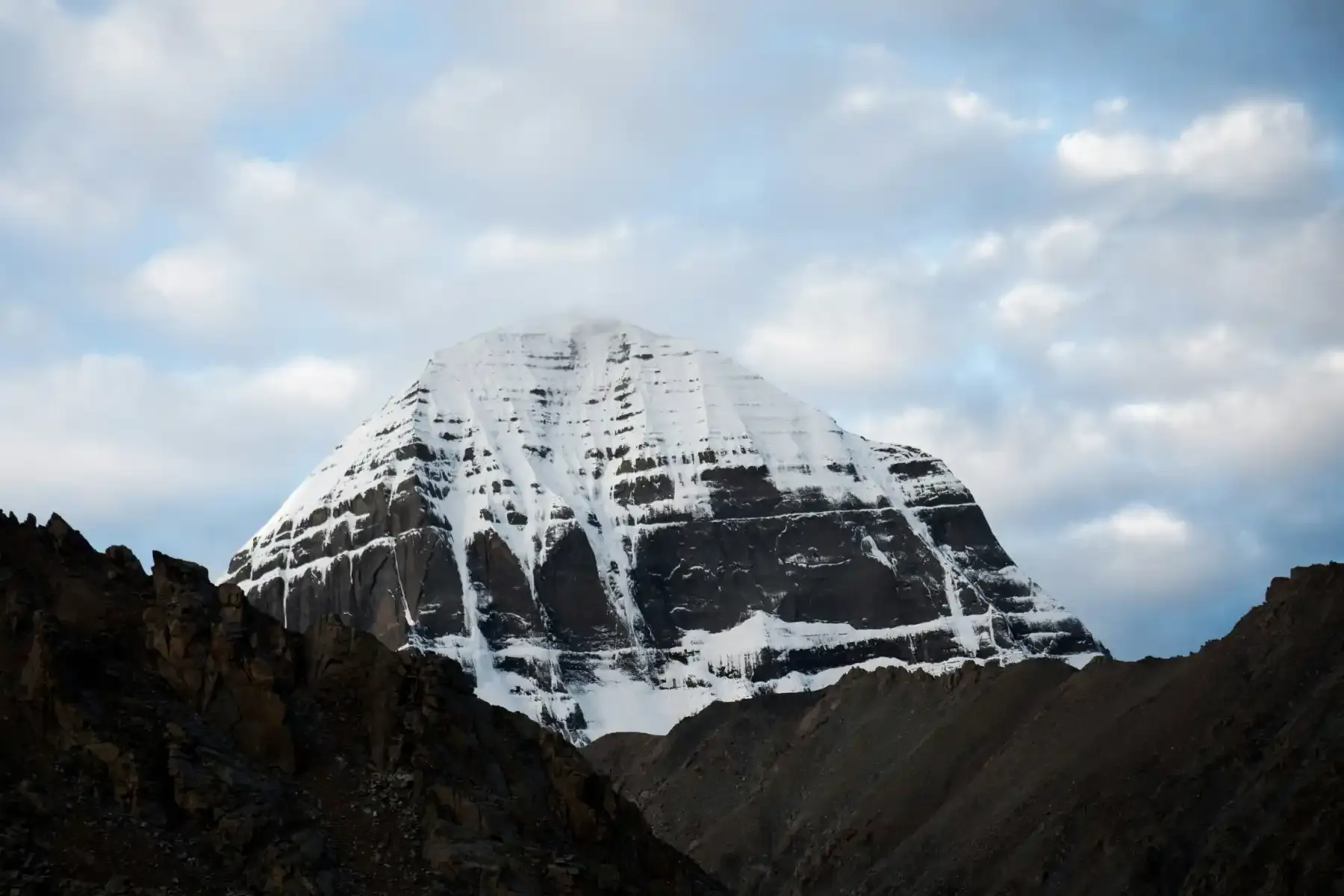
Unique Experiences
To guide you through an understanding of the 13 - Fold Merit (Year of the Horse), the Tibetan Year of the Fire Horse is a once in a decade event and will produce 13 Kora's if you complete an entire 50 km Kora during that time. (Kora is a circuit)
- The Duality of the Two Lakes: The fresh water Lake Mansarovar (Sun/Light) and the salt water Rakshas Tal (Moon/Ego) are located on either side of the narrow Isthmus of Jiu. When standing between them, you can physically feel the shift in energy, or the difference of divine and demonic water.
- The Self-Death Ceremony at Shiva Tsal: Before ascending to the summit at the 5,636 m Dolma La Pass, you will pass by a plateau filled with naked bodies. Many pilgrims have a ritual of dying of their old selves (identity) and leaving something behind to allow for spiritual new birth when arriving at the summit.
- The Descent into Gauri Kund: At the Dolma La Pass you will descend to Gauri Kund (5407 m), or the Lake of Compassion, that is jade green. After the long and difficult ascent with lower oxygen levels when you first see the emerald lake you will feel an immediate increase of spiritual lightness and relief from journeying so far.
Adventure and Difficulty Level
The Kailash Mansarovar Trek is not a trekking expedition but an incredibly strenuous trek physically and mentally due to its consistently high altitude and sustained elevation that exceeds 14,760 feet (4,500 m).
- A grade 5 trek: It is opposed to most other treks in the Himalayas, where you first ascend, then quickly descend to a lower base, involves continuous progression above 14,760 feet (4,500 m) over a period of several days, exerting pressure on the cardiovascular system and requiring excellent fitness levels.
- The Dolma La Pass is at 18,491 ft: The pass is where the trek and journey become most difficult. At around 18,491 feet (5,636 m), you have to ascend steeply into an oxygen-poor area, with air containing approximately 50% of the oxygen available at sea level. Climatic conditions are highly variable, making it possible to experience all types of weather within one hour (sun, wind, or snowstorm) over a distance of approximately ten miles.
- A Battle for Breath: The distance of every 5 steps at elevation (14,760 feet (4,500 m) is the equivalent of a marathon. The experience is in the meditative movement as you push beyond the will of your body to stop through determination alone as you move from one step to another on the jagged, ice/rock-laden terrain of the North Face.
Flora & Fauna
Encompassing both an extremely high elevation and low oxygen density, the Kailash Mansarovar region constitutes both a high altitude sanctuary for rare species that can withstand harsh conditions and have deep spiritual meaning.
- The Sacred Hamsa (Bar-headed Geese): Known as the world's highest-flying bird, Bar-headed Geese can migrate across the Himalayas during their annual cycle. In Hindu/Buddhist mythology, the Hamsas (Bar-headed Geese) represent the enlightened and spiritually discerning; witnessing the flight of these magnificent birds as they glide over Lake Mansarovar is viewed as an auspicious sign of one's purity.
- Plateau Survivors (The Barkha Plains): The great Tibetan plateau is home to the Kyang (Tibetan wild ass) known for its rich chestnut coloured coat and the Bharal (Blue Sheep) that can blend into the rocky terrain of the Kora so well; both of these species rely upon the unique geographical features of this site for their ability to survive as species on this sacred ground.
- Brahma Kamal (Lotus of the Gods): The rare Brahma Kamal flower grows only in the freezing crevices of rocks within approximately 5,636 meters above sea level in the Dolma La Pass and survives through the development of its own greenhouse structure. The flower received its name after Creator Brahma; and it is believed to bloom only for those who have been spiritually called by the mountain.
- High Altitude Sentinels: Watch for the Himalayan Marmots sunning themselves in the sun on the rocks and the massive Lammergeiers (Bearded Vultures) soaring over North Face Mountain reminding you of the abundant natural entertainment that awaits you in this sacred wilderness.
Cultural & Village Life
- Darchen – Where It All Begins: You can find a variety of cultures in the small village of Darchen, which is filled with pilgrims from India wearing large outerwear, nomads from Tibet dressed in long, heavy coats made of sheepskin, and trekkers from all around the world, who share cups of tea and prepare for their trek.
- Pilgrims Who Prostrate Themselves as Devotion: One of the most powerful things to see is the many pilgrims who prostrate themselves during their entire journey. They lay down on their stomachs, place their hands on the earth and stand up, repeating this process for the whole 50 kilometers. They will take roughly four weeks to complete a journey that most of us will take only as long as three days.
- Milarepa's Cave: On you will find the 11th century meditation cave of Milarepa, located within a modern monastery called the Zutulpuk Gompa (Cave of Miracles).
Best Season & Seasonal Beauty
- The Sagadawa Full Moon: It will be the most desirable peak period to be in the area. The full moon will occur on or around May/June, which is when Buddha was born, became enlightened and died; and is when the giant pole of Tarboche is raised straightly upright; there will be a symbolic representation of the year's prosperity as a result of the pole remaining straight throughout the coming year, indicating continued peace on Earth.
- Mirror Effect Autumn: The autumn months of September/October are good months to see the beauty of the reflections of Kailash on Lake Mansarovar's surface in the morning as there will have been enough rain and the air will be fresh, thus allowing for excellent reflections of all surrounding mountains. The peak of Kailash is reflected perfectly in this mountain mirror.
Summit Experience
Mount Kailash is considered to be a very important mountain by nearly two billion people who regard it as a holy place and hence, the summit has never been reached by the foot of a human being. Therefore, the summit experience is something that is about being attracted from the outside and experiencing the mountain in an observational or spiritual way. The summit is an achieved experience by the person in that they are spiritually/a spiritually attained person.
- Charan Sparsh (Touching the Feet): If you are trekking to visit the base of the North Face, then you can do this from Diraphuk (4,890m). While there, it's easy to understand why trekkers describe standing under the 2,000 m vertical wall of ice and rock as an experience of humility that humbly aligns with our shared existence; this is where I can hear/feel the heart beat of the earth.
- Nandi Inner Kora: If you have been allowed to enter the Inner Kora, you will have the opportunity to do a Kora circling Nandi Parvat and be able to see the Kailash Staircase, which consists of natural horizontal steps of earth that are all aligned from the base and appear to have a purposeful pattern of some kind leading up to god.
Scenic Beauty & Landscapes
The trek moves from the lush green, deep gorges of the Kyirong or Karnali valleys to the dramatic earth meeting sky scapes of the dry and other worldly Tibetan Plateau high desert area.
- Kailash's Four Faces: As you make your way around Mount Kailash you will see all four sides of it. Each of the sides has its own composition of minerals Kailash: The South side has lapis lazuli, West side rubies, and North is gold, the East side is crystal.
- The Other-Worldly Nature of the Plateau: The entire area is painted in different colors with purple, sienna and ochre clay being painted into the sky and heaven and the sky being so thin and so blue at the peak that it appears black at the peak.
- Trekking Along the World's Frozen Breath: The journey is done alongside the world's frozen breath. The four most important rivers in Asia come from the massive ice sheets that are suspended off the sides of these massive glaciers.
Short and Detailed Itinerary, Trek Map and Altitude Chart of Kailash Mansarovar Trek
This section provides a comprehensive, simple explanation of the Kailash Mansarovar Trek, including general day-to-day routing, elevation gain, etc. The basic itinerary is designed to give an overview of the trek; all-inclusive itinerary allows for a more in-depth understanding of the various distances between campsites, the nature/type of terrain that trekkers will be traversing, and the locations of the campsite relative to one another.
In addition to the above, the trek map indicates the specific route of the trekking path, village locations, forest locations, and campsite locations within the trek area enabling trekkers to imagine their trek through snow-covered coniferous forests and alpine meadows. The elevation chart clearly indicates the total elevation gained and lost each day of the trek ensuring that trekkers can prepare adequately before arriving at the basecamp, acclimatize safely to altitude, and have a positive experience on their overall trek.
Best time for Kailash Mansarovar Trek: Season by season guide
From May to September, Mount Kailash is at its best for trekking in the context of weather patterns, and the Dolma La Pass will be accessible. Spring (May and June) is spiritually significant with the Saga Dawa Festival celebrations and typically provides clear, crisp views but cold overnight temperatures. Summer /July and August provide the highest average temperature and oxygen content caused by abundant vegetation, however, heavy cloud cover most likely occurs throughout the entire period due to the monsoon rains to the east. Autumn (September through early October) is also known as the Golden Period for taking photographs with clean skies, limited haze from snow and minimal trail closures due to inclement weather prior to the start of winter snowfall. If you try to cross the pass between November and April, you will likely be unable to do so because of heavy snow, excessive sub-zero wind chill and the fact that the trails to the top of Mt. Kailash has been closed due to significant accumulation of snow accumulated from the winter snowfall.
Kailash Mansarovar Trek: Month by Month Breakdown
Advice by our Expert Team
Our Expert trek leaders and trek guides are well known about the trekking trails with the adverse weather conditions at higher altitudes and they know how to deal if any uncertainty arises. They have years of experience in trekking adventure and suggest you with some advice for the trek.
1. Prioritize Acclimatization: Stable weather in the spring and autumn makes it easier but never rush to the trek. There is a chance of AMS problems occurring due to dry cold so be prepared, take precautionary measures with yourself.
2. Proper Layering: Temperature fluctuates instantly, especially on the higher altitude, so layering should be proper (base, mid and outer) is critical for managing sweat and preventing the cold.
3. Premium Boots: Make sure your boots are long lasting and well broken or used before your trek starts. The risk of foot injury and blister from the new boot can end your trek journey
4. Hydration: It's advisable to drink 3 to 4 litres/day. Because of high elevation and exertion, you need constant intake of fluids to overcome the effects from AMS.
5. Pace Yourself: Walk at a comfortable pace using what is called the mountaineers shuffle. This will conserve your energy and help you manage your breathing.
6. Protect Against UV Rays: Use High-Quality UV Sunglasses (Category 3 or 4) to protect your eyes from snow blindness, and use high SPF Sunscreen on your skin to protect it from sun damage.
7. Healthy Consumption: Food should consist of small amounts consumed frequently and contain a lot of nutritious ingredients and minerals. This will provide you with the sustained energy needed for trekking at high altitudes.
8. Safety: Pay attention to what your body is telling you when you are feeling AMS Symptoms. Should you believe you might be suffering from AMS, report it immediately and prepare to descend. Descending is the quickest treatment you can receive.
How to Plan Your Travel for Kailash Mansarovar Trek
Are you excited to start your adventure for Kailash Mansarovar Trek? The travel journey starts from Kathmandu where all the trekkers reach & move towards the drive for the Kailash Mansarovar circuit. In this section we will guide you how to plan & proceed your travel journey for Kailash Mansarovar Trek. From your home town to pickup point Kathmandu, we guide you with all the necessary means of transport for a smooth and adventurous journey. You can opt various means of transport like flight, train & bus to reach your pickup point at Kathmandu.
Modes of transport To Reach Kathmandu (The base pickup city)
There are various means of transport to reach at your pickup point via flight, train & bus with variation in timings. All the flights, trains & buses have different arrival & departure times. So plan your travel journey accordingly. We have mentioned all the information regarding the travel perspective for your convenience.
1. By Flight (Fastest Means)
The Tribhuvan International Airport is located 10 - 20 km away from the hotel. There are scheduled, nonstop flights from all the major metro cities such as Delhi (DEL), Mumbai (BOM), and Bangalore (BLR) etc. Various flights directly depart from Delhi to Kathmandu with the respective time. The timings are subject to change and will vary day by day. You can book your flight one day prior to your travel journey.
Suggestions: Please make sure to arrive one day prior from Kathmandu so that you can process for your Kailash Mansarovar Circuit on time.
2. By Train (Dependable Means)
There is no Railways Station in Kathmandu, so it is feasible for all the trekkers to reach Kathmandu by flight.
3. By Bus (Affordable Option)
There are very limited buses departing from Delhi to Kathmandu so plan according to the bus time.
Suggestions: Consider using an overnight air-conditioned Volvo/ac sleeper bus service to reach safely on time.
How to reach Thamel hotel from pickup point Kathmandu
When you are picked up from Tribhuvan International Airport (KTM) for your drive to Thamel, it'll take about 6 km of travel in a westerly direction until you arrive at Thamel, located in the middle of Kathmandu city. The most direct route begins at Airport Terminals and travels along the Pashupati Road through Gaushala (the former location of Royal Palace) and Pashupati Temple, passing through the city centre location at central junction point through to the entrance to the Tridevi Marg. It’s best to use either a Pre Paid Tax or ride-share service like Pathao to get to your teahouse or hotel from the pickup location due to potentially heavy traffic travel time can last anywhere between 20 - 45 mins depending on how busy the city is at the time of day.
Means of transport from Base city Kathmandu to Thamel hotel
1. Trekup India Vehicle:
If you book with Trekup India, transportation depends on the number and majority of trekkers according to their size, vehicles will differ like tempo traveler, bolero, innova or mini bus. Our cab picks you from Kathmandu Airport & drops you at Thamel hotel safely. Our vehicles are well maintained & hygienic for your travel journey.
Here are the pickup details from the base city Kathmandu (If you opt our transport facility):
- Pickup Point: Kathmandu Airport
- Pickup Time: 02:00 PM
- Drop Location on Last Day: Kathmandu Airport
- Drop Time for Last Day: 08:30 AM (expected)
2. Public Transport Bus:
You can opt for a public transport bus to reach Thamel hotel on time for the next day's trek. But make sure you are particular with the bus time as there is very limited bus availability. There is no bus in the evening so try to pick a bus early from Kathmandu.
3. Private Taxi/Cab:
If you miss your bus from Kathmandu, another way to reach Thamel is by taxi/cab. You can book a taxi/cab on a sharing basis with a shared price. But make sure that your timing is matched with the taxi timing as the number of taxis are very limited and generally operated in the morning from 5:00 AM onwards.
Tips for Mountain Drive
Whenever you are planning to trek on the mountains, health plays a crucial role. Your main motive on any trek is to be physically and mentally healthy. Here are all the important travel suggestions that you are going to face on your travel journey.
- Motion Sickness: Take medication Dimenhydrinate (prescribed by doctor) - 30 minutes before your journey starts and make sure to sit in the front seat of the taxi.
- Punctuality: Being a wise person, always be on the time whether you are on the camp site or on the trek.
- In hand Case: Have an adequate amount of cash because you never find any ATM at a nearby location.
- Proper Hydration: Always take the water and fruits throughout your travel to avoid dehydration & other health related issues.
- Charge: Make sure that all electronics / power banks are fully charged before being stuck in a long taxi ride, as there are not many charging stations available on the route.
- Check luggage: always make sure to check your luggage when you are on the trek or during the trek.
The Trek Days -
The Kailash Mansarovar Trek is a spiritually-rich, 13-day journey that begins and concludes in Kathmandu, Nepal's dynamic capital. Driving via narrow, even by Himalayan standards, winding roads you arrive at the Kyirong border. From this point, you will continue to your destination atop the Tibetan Plateau. The first 3 days of your journey are spent on the Tibetan Plateau allowing you to acclimatize to the thin air and take in all that this part of the world has to offer. After your acclimatization days, you will travel to Lake Mansarovar, where you will immerse yourself in its sapphire waters and gaze at the awe-inspiring views of Mount Gurla Mandhata. The journey's physical component is the Kora (circumambulation) of Mount Kailash; this 50 km trek takes 3 days to complete. The trek begins at Darchen (first day), goes through the Lha-chu valley and ends at the north face of Mount Kailash in Diraphuk (second day), and finally ascend over Dolma La Pass (18,471 ft) and return through the eastern valley to Zutulpuk (third day). All the hardships you will experience during the trek will be worth it when you finally arrive back in Kathmandu to celebrate the end of your expedition, and you will have developed a sense of resilience and inner peace that few can boast of after driving to the Roof of the World.
Planning Your Return Journey from Kyirong to Kathmandu
Once you have completed the Kailash Mansarovar Trek, returning should be overwhelming with good memories, pictures and new friends on the trek. Our Trekup India vehicle will pick you from the Kyirong and leave you at the dropping point Kathmandu Airport. If you have already opted for transport with us.
| Element | Timing | Proactive planning |
|---|---|---|
Breakfast | 07:00 AM | 07:00 AM - This is the ideal time to get some breakfast at Kyirong guesthouse. |
Departure | 07:30 AM onwards | Departing on time means you have no delays to reach Kathmandu. Your guide must confirm the taxi departure according to the majority of the trekker availability. |
Arrival in Kathmandu | 05:00 AM (Expected) | After covering the beautiful trek, it's time to go back with good memories. Our taxi is going to leave you at the Kathmandu hotel. |
Return From Kathmandu to your Hometown
Your journey to your hometown will start at Tribhuvan International Airport (TIA), which is Nepal's main airport. You should plan on arriving at TIA three hours ahead of your scheduled flight time. This will give you adequate time to complete check-in and clear immigration. You should coordinate your hotel/airport transfer. This usually takes about 20-30 minutes and depends on traffic from Thamel so that this portion of your journey is complete before boarding your flight home. When you check in for your flight home, remember to keep your trekking permits and memories of your trek at the top of your mind.
By Flight
There are a number of flights departing from Kathmandu Airport to various designated cities on time. On the whole, you can book your flight at Kathmandu Airport as there are many availability of flights directly to your hometown.
| Flight Name | Flight Code | Departure Time | Arrival Time | Duration |
|---|---|---|---|---|
Air India | AI 214 | 10:05 | 11:50 | 2 hrs |
IndiGo | 6E 1152 | 10:50 | 12:35 | 2 hrs |
IndiGo | 6E 1154 | 13:15 | 15:00 | 2 hrs |
Nepal Airlines | RA 217 | 13:45 | 15:15 | 1 hr 45 min |
Suggestion: Please keep a buffer time with your flight time approx. 2 hrs as there is any road traffic en route to Kathmandu Airport.
By Train
There is no Railways Station in Kathmandu, so it is feasible for all the trekkers to reach Delhi directly by flight.
By Bus
There are a limited number of buses departing directly from Kathmandu to Delhi with variation in departure and estimated arrival time. Makesure you book your travel according to the time that suits you after reaching Kathmandu.
Safety Aspects and Emergency Exit for Kailash Mansarovar Trek
1. Understanding Trek Safety
Your trek leaders and trek guide have years of experience in getting you to the summit but most importantly back to safety. Trekking at high-altitude requires a huge amount of respect for the mountains and therefore there is a correct, safe way of doing things throughout, especially on a challenging trek like Kailash Mansarovar Trek. This responsibility starts with full understanding of Acute Mountain Sickness (AMS) prevention, a strict adherence to the gradual ascent plan, and absolute understanding of emergency procedures. Your ability to follow safety procedures will determine the success and enjoyment of the trek.
2. Acute Mountain Sickness (AMS)
Altitude sickness (Acute Mountain Sickness or AMS) is the result of the body being unable to adapt lower levels of oxygen pressure (*hypoxia*) at high altitudes (usually over 8,000 feet). The risk is that untreated AMS will progress to High Altitude Encephalopathy (HACE) or High Altitude Pulmonary Edema (HAPE) if the person keeps trekking higher in a state of unequipped acclimatization.
Important Symptoms of the Acute Mountain Sickness (AMS):
Mild AMS:
- Headaches are the most significant and common sign.
- Nauseous feeling, lack of desire to eat, and general tiredness.
- Poor sleep (insomnia).
Severe AMS (HACE warnings):
- Difficulty balancing and trekking straight (unable to walk a straight line - "heel-to-toe" test).
- On-going severe headache that can't be helped with medication.
- Confusion or some alteration in understanding.
Severe AMS (HAPE warnings):
- Unable to breathe without feeling short of breath.
- Persistent cough with wet/sputum or sometimes pinkish-tinted frothy mucus.
- Excessive tiredness and feeling of heavy pressure in the chest area.
Precautionary Measures of AMS
1. Ascent Gradual
- The 13 day itinerary from Kathmandu to Kyirong has been set up to allow for acclimatisation. You are advised not to skip camps and rush up the mountain.
- The principle of Trekking High and Staying Low at the Base Camp helps you get acclimatised.
2. Hydration and Nutrition
- You need to drink 3-4 litres of water every day. If you become dehydrated, it will only make any AMS (Acute Mountain Sickness) symptoms worse.
- You should continue to drink a lot of water, even when you don't feel thirsty. At the campsite, you will also be provided with a high-carbohydrate diet which will give you the energy to acclimatise.
- Do not drink alcohol or caffeine.
3. Pacing and Movement
- Use the Trekker's Shuffle to keep a slow and consistent pace. Do not waste energy on speed and frequent stops.
- Use trekking poles to maintain your balance and to absorb some of the pressure on your joints when doing the long descent on day six.
- Always try to remain in sight of your friends and the guide when out trekking.
4. Medication
- Talk to your Doctor regarding the use of Diamox (Acetazolamide) to help alleviate AMS.
- Discuss starting this medication one or two days before reaching altitude if it is prescribed over a prescription.
- Remember to carry any personal prescription medications and basic pain relief (for example Ibuprofen) in your day pack.
3. Emergency Response and Evacuation
The only way to adequately protect oneself at altitudes above 18,000 feet is through meticulous planning and preparation. With the unpredictability of the Himalayas, proper planning is critical to dealing with its unpredictability. The Kailash Mansarovar region can be characterized as one of the most remote locations on Earth, with very little oxygen, as well as extreme weather and infrastructure that is as rudimentary as can be, making access to traditional health care far removed from the site. The emergency response system in this region is designed around the principles of proactive monitoring, immediate stabilization, and rapid descent. All members of the group will be monitored continuously using the services of experienced Tibetan and Nepali guides in conjunction with medically trained personnel and equipment that includes pulse oximeters and portable oxygen. With this constant monitoring, the health of each trekker will be assessed and tracked continuously for the duration of this high-risk activity. The group will operate based on the philosophy of prudent versus ego, and every symptom will be taken seriously, ensuring that the experience of a spiritual pilgrimage is made safe and transformative for all those involved.
Action Plans: High Altitude Emergency
- Immediate Assessment: At the first indication of severe symptoms, such as persistent cough, extreme breathlessness or at rest, or loss of motor coordination, the person in charge will perform a formal assessment using a pulse oximeter to assess blood oxygen saturation and heart rate.
- Supplemental Oxygen to Stabilize: Once it is confirmed there is a serious medical situation has occurred, the person being assisted will be administered high-flow supplemental oxygen from portable cylinders. This will give immediate chemical descent relief to the person's heart and lungs while a transportation plan is developed.
- Emergency Descent: The person needing assistance will be transported to a lower elevation immediately regardless of the time of day or night. In the Kora area, this may be by cargo by means of a pony or cargo to Darchen or, in very serious situations where immediate casualty evacuation is required, a vehicle rescue will take place from the nearest point that can be accessed.
- Transfer to Medical facility: When the injured person reaches a lower elevation or reaches a roadway, the injured person will be moved by ambulance to the nearest medical facility equipped to manage persons with high-altitude sickness. This could be the local hospital in Purang or Saga, or more distant facilities if necessary.
- Communication and Logistics: Keep our ground teams in constant contact with the Kathmandu base to process insurance claims, notify family members and manage transportation to the injured person.
4. Trekkers Responsibility for the Trek
1. Personal Health and Honesty:
- Report Symptoms: You must report any illness symptoms to your trek leader or guide as soon as they occur. Symptoms include headache, nausea or any other uncharacteristically extreme fatigue. Do not attempt to conceal these symptoms so that the group will not be held up due to your illness symptoms.
- Fitness: You are responsible for preparing yourself physically for the trek and ensuring that you have consulted with your physician regarding the effects of altitude, vaccinations you may require, and the proper medications you may require as a result of altitude treks.
- Hydration: You are responsible for consuming your daily requirements of water (3-4 litres). Expect and do not wait for your guide to remind you to hydrate, as you are responsible for doing so.
2. Gear & Equipment:
- Mandate kit: Ensure you have the appropriate gear and equipment for the trek; this includes wearing clothes that are appropriate for the weather; layers for cold; and using well broken-in boots.
- Headlamp Readiness: You should carry an operational head lamp, and charge it before the trek. You should also carry extra batteries and keep sensitive electronic equipment and batteries warm to prevent them from draining due to cold conditions.
- Personal First Aid Kit: It's a good idea for you to carry a small personal first aid kit with you. Basic supplies should include band-aids, blister treatment, antiseptic, and any prescription medications.
3. Conduct on the Trek:
- Follow Instructions: Follow the trek leaders instructions regarding pace, route, camp protocols and the use of safety equipment such as microspikes or trekking poles.
- Maintain group integrity: To maintain group integrity, do not trek solo on any trail or trek; always stay in sight of the group and be with the designated guide.
- Leave no trace: To reduce environmental impact, you must properly dispose of any non-biodegradable items (plastic packaging, drink bottles, etc.) and not pollute local water sources. Remember to respect the natural environment by respecting the plants and animals found in the area.
4. Teamwork & Respect
- Respect Local Cultures: Be conscious of the customs, way of life, and religious sites of the people who live near the trails and do not interfere with their lives.
- Support Other Trek Participants: Encourage other trekkers by giving them advice when necessary. Notify a guide if you think a teammate is in distress or danger. A team that cares for each other is a safer team.
5. Emergency Exit of the Kailash Mansarovar Trek
The Kailash Mansarovar Trek's Emergency Exit is a previously planned contingency path for trekkers who can no longer continue to complete the full Kora because of their medical or physical inability. If an emergency happens on the circuit, the primary Emergency Exit is a rapid descent back to Darchen, the base for the trek, riding a horse or by porters. This gives the fastest transfer to get motorized transportation. Emergency Rescue Vehicles are used to take participants from Darchen to lower-altitude towns such as Saga, or to Kyirong across the border, where increased oxygen levels and medical facilities are available for immediate care. A formal reverse-route protocol is followed to ensure that any trekker in distress is always no more than a few hours away from a significant elevation reduction and access to qualified medical treatment.
1. Primary Evacuation Point:
Darchen, being the only place with immediate access to motorized transport, is the primary source of emergency exits during the Kailash Kora because it is the start and finish of the 50-km circuit. If a trekker gets sick on the trail, they can be evacuated by means of a pony or porter back to Darchen. Once above Darchen, the terrain allows for rapid vehicle movement towards lower-altitude locations, so Darchen is the key gatekeeper in all medically related exit plans.
2. Medical Facilities / Exit Plan:
The first line of medical defense is the Darchen Medical Clinic, which is capable of stabilizing patients using oxygen and basic intravenous fluids. For more serious cases, the exit plan includes a two-hour drive to Purang (Taklakot) Hospital, which has a higher level of specialization in the delivery of high-altitude emergency care. If symptoms still persist, the next and final exit option is to drive 500 km to Saga or the Kyirong border, where there will be a significant drop in elevation to 9,200 ft. and, therefore, the maximum possible physiological relief.
3. Police Station and Emergency Protocols:
The public security bureau (PSB) and the local police stations in Darchen and Saga are part of the emergency response plan. In case of a serious incident or if you need to divert from your trek plan due to a serious incident; your Tibetan guide will be responsible for notifying the local authorities immediately. As part of our protocol, the guide will handle all administrative details such as changing your travel permits and obtaining your border exit clearance. This means that the trekker and the medical team can focus their attention on ensuring that the person is evacuated from the mountain safely and receiving the necessary medical attention.
Emergency Contact Details
- Helicopter Rescue Nepal: +977 9851188551
- Rasuwa / Kyirong Immigration: +977 9842174440
- Consular Emergency Line: +977 9851107021
The Essential Kailash Mansarovar Trek Packing List: Pack for Adventure & Safety
- Extremity Protection: Must have UV blocked sunglasses (the only way to protect against snow blindness), waterproof gloves, and a warm balaclava/cap to protect your most exposed areas.
- Layering System: Utilize multiple layers of synthetic or wool insulation clothing (acceptable, no cotton) to manage body temperature and moisture to prevent chilling.
- Waterproof Footwear: Durable waterproof trekking boots at least mid-calf are required so your feet and ankles remain protected on snow and ice.
1.Major gears: The frontline of protection
| Item | Characteristic Feature | Pro-tip |
|---|---|---|
Waterproof, Ankle-Height Trekking Boots | These are high quality boots with stiff rubber soles that prevent water entry. | Must be fully broken in. Good with a deep aggressive grip to avoid injury in toe or fingers. |
Trekking Poles (Pair) | Provide 2 additional points of contact for stability on snow / ice and reduce impact on knees while descending. | Use them together to distribute the weight of your pack, this can reduce stress on your knees and ankles. |
Waterproof Gloves (2 pair) | Protects against cold injury. Having two pairs that allows warmth while protecting your hands. | Keep the shell of gloves dry for a waterproof layer for handling snow and keep the inner liner for warmth. |
Gaiters (required) | Create a seal between your boots and trousers to prevent snow from entering your boots / sock. | Put your gaiters on as soon as you reach the snowline; avoiding snow wetting your socks / boots minimizes risk for cold injury. |
High-Grade SPF Sunscreen and Lip Balm | Protects against severe sun / wind burn. It is important for exposed skin at high altitude due to reflection from snow. | Reapply sunscreen to face, neck, and ears every 2 hours spent on the snow. |
Sunglasses (Category 4) | Highest level of protection required to protect against temporary blindness (photokeratitis) | Do not remove sunglasses when you are on the snow because snow can reflect 80% of UV light back into your eyes. |
2.Clothing: The layering system
| Category | Item | Specification & Reason |
|---|---|---|
Headwear | Warm Beanie / Balaclava | Must be thick wool or fleece; cover the ears completely. Important in retaining body heat, as a large percentage of body heat is lost from the head. |
Wide-Brim Sun Hat or Buff | Light material (hat) or synthetic tube (buff). Protects face, neck, and scalp from high-altitude UV radiation from the sun. | |
Upper Body | Moisture-Wicking T-Shirts (2) | Choose Synthetic (polyester) or thin Merino wool; short or long sleeve because cotton actively makes you cold and uncomfortable when you sweat. |
Thermal Base Layer (1) | Mid-weight Merino wool or synthetic long-sleeve top. Provides immediate insulation; it will lock in body heat as the starting point of your heat-trapping system. | |
Fleece Jacket (1) | Mid-to-heavy weight (200-300 GSM) fleece or softshell jacket full of insulation. This layer provides the best warmth-to-weight ratio It can be worn alone or under your shell. | |
Insulated Puffed Jacket (1) | Down or synthetic insulation; rated for 0∘C and below. Your main source of heat protection for cold night camping, evening, and the summit push when below freezing conditions are anticipated. | |
Waterproof & Windproof Jacket (1) | Shell material (e.g. Gore-Tex equivalent) with taped seams. Your outer barrier (shell layer) keeps the rain, snow and penetrating wind out from the mountains. | |
Lower Body | Quick-Dry Trekking Pants (2) | Synthetic, lightweight, and preferably stretchable or convertible. Durable for comfortable walking, fast drying after getting wet from rain or snow. |
Thermal Base Layer (1) | Mid-weight thermal bottoms (wool or synthetic). Vital layer of insulation under your trekking pants in cold walking conditions at camp. | |
Waterproof Rain Pants (1) | Lightweight, packable shell pants. These will protect your trekking pants and base layers from getting wet when it's snowing or raining heavily. | |
For Feets | Create a seal between your boots and trousers to prevent snow from entering your boots / sock. | Put your gaiters on as soon as you reach the snowline; avoiding snow wetting your socks / boots minimizes risk for cold injury. |
Trekking Socks (4-5 pairs) | Wool or some kind of synthetic blend (not cotton). 1-2 pairs should be extraordinarily thick for nights. These will manage moisture in your foot to reduce blisters and provide warmth at night sleeping in a bag or in boots! | |
Camp Shoes | Lightweight sneakers, sandals, or slippers. You'll want these to dry out your trekking boots and let your feet rest when at the campsite. |
3.Equipment & Essentials
| Category | Item | Important Notes |
|---|---|---|
Backpacks | Main Rucksack (50-60 L) | For Porter. Good frame of posture and hip belt required. |
Daypack (20-30 L) | Daily carry. Must have water, layers, snacks, camera, and gloves in your daily essentials. | |
Sleeping bag & liner | Sleeping Bag (Rated to −10∘C / 14∘F) | Confirm if Trekup India provides a sleeping bag; if you're renting your bag, make sure it is a reputable outfit. |
Sleeping Bag Liner | A liner adds additional warmth and keeps your bag clean. | |
Hydration | Insulated Water Bottles (2x 1L) | CRUCIAL: No hydration bladders (the tube will freeze). Insulated bottles will keep your water from freezing. |
Hydration Tablets/ORS | Make sure you have enough hydration tablets and/or Oral Rehydration Solution (ORS) which are important for replacing electrolytes lost at high altitude. | |
Safety & Navigation | Headlamp with extra batteries | Essential for crossing the pass started early in the morning. |
Basic First-aid kit | With plasters (Compeed!), Band-Aids, antiseptic, pain medication, and then any of your personal medications you might need. | |
Personal | Personal toiletries | Toothbrush, tooth paste, biodegradable soap, toilet paper (pack out!), and hand sanitizer. |
Quick Dry Towel | Material should be water absorbent with light in weight and small in size. | |
Power bank | There will be no place to charge devices on the trek. |
4.Essential Documents
- Government-issued Photo ID
- Indians: Aadhar Card, Voter ID, or Driving License.
- Foreigners: Passport and Indian Visa.
- Must Have: Necessary for verification at the Basecamp and Forest Department checkpoints.
- ID Copies (2 copies): Also submitted for the forest authorities for required trekking permits, etc.
- Medical Certificate & Undertaking Form: a form (usually provided by your operator- Trekup India) signed by an MBBS registered doctor confirming that you are fit for high altitude trekking.
5.Important tips by the trek leader (from their experience)
- Three Second Rule: If you can’t immediately think of a reason to pack an item, simply don’t pack it.
- Layer Duplication Rule: You cannot pack more than two of the same, heavy layer (e.g., two heavy fleece jackets). A proper layering system will give one item a temperature range.
- Multi-Use Only: Every item should have a minimum of two functions (e.g., balaclava can be a sweat rag, shade your face from the sun, or act as a neck gaiter).
- Boot Break-In Rule: Don’t take new boots on a hike unless they have over 50 miles already walked in them. Boots need proper break-in time before using them outside.
- Base System Check: Set up your sleeping system (sleeping bag, liner, pad) in your house, on the day before the trek.
- Pack System Test: Wear your complete layering and set it up in similar cold/wet conditions to find any cold spots and distributed moisture.
- Comfort Item: Allow yourself one small item which is not a necessity. (ex. good book, tiny bottle of whiskey, small pillow).
- Ear Plugs: These are essential to block noise from the other trekker/ trek activities at the camp site ensuring you get your sleep without interruption.
- Camp Footwear: Lightweight flip-flops, Crocs, or just down booties that you can wear inside the tea house tent. Getting your feet out of your boots is total bliss.
- Carry Everything Out: This is the most important. Nothing goes under the ground or in a fire pit—especially plastic, tin foil, or batteries.
- Human Waste: If there are no bathroom facilities, you need to bury human waste to a minimum of inches deep at least away from any water source or trail. Be sure to pack out toilet paper.
6.Final Verdict:
Kailash Mansarovar Trek Cost Inclusions and Exclusions
The concept of pricing is the key part of your trekking journey. It defines the value and experience you receive for the price you pay for your trek. For a structured high altitude trek, like Kailash Mansarovar Trek operated by Trekup India provides transparency with the cost & amenities provided to our trekker. Inclusions provide clarity in respect to operator's responsibility; essentially every necessary service, logistical support, group equipment, and permit to have a safe and fully supported trek from start to finish while exclusions provide clarity in respect to individual's responsibility, for all expenses related to personal choice (like a porter), necessary contingency items (like insurance), or mandated fees examined outside the package price (like GST).
Total Trek Cost:
Included in the trek cost
All the items that are included in the trek cost customised by Trekup India are mentioned below with pre, during and post trek support.
1 - Pre-Trek Support by Experienced Trek Coordinators
This is a special component of Trekup India, where a personalized trek coordinator is assigned to each trekker and who makes your preparation easy before coming on a trek, all your doubts, queries, myths are clarified, and you are mentally and physically guided to ensure that you come fully fit for your adventure. Every aspect from what to carry, what exercises need to be done, and how to prepare yourself for the trek, all will be guided by Trekup India’s Experienced Trek Coordinators.
2 - What is included during the trek
The offered cost covers all major essentials that are mandatory for a successful adventure, such as accomodation, meal, permit, team of experts, trek equipment, safety gears and mules / potters support. We provide you all the services that are involved in the trek. Below find specifics.
Accommodation:
4 Nights accommodation in 3 star hotel on twin sharing basis & 8 night stay in guesthouse on triple / quard or multi sharing basis with male to male & female to female preference. We provide you with the best tent facility with sleeping bags, sleeping mattresses to avoid any inconvenience in your sleep.
Meal:
Your meals with Trekup India starts with dinner on day 01 in Kathmandu and ends with breakfast on Day 13 at Kathmandu. All meals provided by Trekup India involve pure vegetarian and nutritious meals. We offer you breakfast, lunch, tea, snacks and dinners. The meals are freshly cooked and non repeated with delicious sweet dishes each night.
Food Preferences for Jains
A large percentage of our trekkers belong to the Jain community, therefore we understand their concern very well. When we have Jain trekkers on our treks, we will create special, custom-made meals without garlic and onion. We cook these separately from other foods prepared by us, maintaining the same great quality, taste, and hygiene.
Permit: All road, travel and china visa permits, full assistance in documentation and formalities will be given by the team Trekup India.
Team of Experts & Professionals:
- Trek Leaders: Qualified and Experienced Trek Leaders to lead your group when on Trek. Trekup India Trek Leaders are AMC, BMC certified and trained for immediate First Aid with search & rescue Course.
- Assistant Trek Leaders: They are superwise under the Trek Leader guidance focussing on the safety, logistics and trekkers engagement.
- Local Guides: Experienced local guide familiar with region & routes. They understand the way of conduct better, especially being locals.
- Support Staff: A team of high altitude including mountain chefs and Helpers to prepare and provide you healthy and freshly cooked meals on your trek.
Safety Gears: Trekup India stands proud itself that all our Treks and adventures operated since 1993 are without any single casualty as we take safety of our trekkers and staff on high priority, following are some of the gears that are included in your trek cost.
- Oxygen Cylinders
- First Aid and Medicine
- Stretchers
- BP Machine to regulate your blood pressure
- Oximeters to regulate your oxygen flow
- Health cards to measure your daily BP and Oxygen reading
- Walkies Talkies for Immediate communication
- Micro Spikes
- Gaiters
- Other Safety Equipment such as Helmets, Rops, Ice Axe, Carabiners much more as per technicality of a Trek.
3 - Post-trek Assistance
This section implies with the following -
- Trek Feedback and improvement advice call from your Trek Coordinators.
- How to overcome Trek injuries and settle to normal life.
- Advice and suggestions for Next Adventure Trek.
Completion Certificate:
It is the best way to recognize someone’s adventure journey with a certificate. A well recognized certificate (IMF, ATOAI & Uttarakhand tourism development board) approved is provided to the trekker by two ways:
- Reached at Summit: we are giving certificates of summiteer to those trekkers who have completed their trek at the Summit.
- Incomplete Summit: we also provide our certificate for those who have not reached the final summit due to medical reasons but they are part of the trek.
Kailash Mansarovar Trek Difficulty: An Honest & Detailed Guide
The route around Mount Kailash and Lake Mansarovar is a challenging high elevation trek that is described as strenuous. This is not because of the technical difficulty of the trek; rather, it is because of the extreme environment. The 50 km of the kora is generally trekable. However, the oxygen level in this area is almost 40 per cent lower than at sea level, which means each step takes substantially more effort to reach the same destination. As trekkers pass through the Dolma La Pass to reach the lowest point of their journey (18,471 ft), they are met with a vertical ascent and an environment with little oxygen left. One’s ability to ascend to this elevation requires a high level of cardiovascular endurance, as well as significant amounts of mental toughness and perseverance. Although you will encounter many different climates (including heavy rain, extreme cold, and freezing temperatures), you will also need to prepare your body to physically handle the very rugged terrain that will take a very disciplined and slow effort to avoid developing altitude sickness. The combination of challenging physical condition and your ability to remain mentally strong as you deal with these elements is what will determine your success on this trek. A mind over matter approach to this trek may be necessary to continue along the highest trekking route in the world.
Kailash Mansarovar Trek Difficulty: A Factor-by-Factor Analysis
1. Terrain: The earliest hard trek you will do
- The Trail: The 50 km Kora follows the landscape of the valleys and mountains formed by glacial activity. This route contains both flat and wide glacier valleys as well as mostly steep and rocky passes. There are several stretches of the trail that contain loose slate and/unlocked boulders making the need for constant focus necessary.
- The Challenge: The second day contains a steep ascent of 600 meters or approximately 2,000 ft up to Dolma La followed by a similarly steep descent down towards the valley below over loose boulders. This can be difficult on the knees and requires one to have good balance.
- Honest Take: For those who have only ever walked in a city or flat land this will be a shock, although it is not considered climbing it will feel like walking 3 miles for every one that you have walked due to the extreme deviation from being level.
2. Altitude: Manageable but not negligible
- The Stats: Starting altitude of 15,100 ft at Darchen to the Peak of 18,471 ft (Dolma La Pass) Oxygen levels here compared to sea level would be 50% - 60% of what you normally breathe at additional sea levels.
- The Challenge: Tasks such as tying shoes or zipping a sleeping bag will leave you out of breath. The severe risk of altitude sickness (or AMS) no matter how fit you are.
- Honest Take: You will not be able to handle the altitude distance by walking as slowly as possible, drinking as much as possible, and paying attention to the signals that your body gives you, while not allowing your ego to be based on these things.
3. Weather: The defining challenge
- The Conditions: The weather in the Himalayas can change dramatically over the course of a day. What starts out as hot & sunny will turn into a localized snowstorm before lunchtime.
- The Shoulder: During the spring & fall times, the winds are strong enough to be uncomfortable and hard to walk against. The nighttime temperatures are consistently below freezing.
- The Challenges of Winter: During the closed seasons, the deep snow makes it hard to find the trail and the cold temperatures will kill you with windchills as low as -30 degrees Celsius.
- Honest Take: The sun will be your best ally while the wind will be your worst enemy. You will need quality clothing that protects you from both wind & water.
4. Duration and Remoteness: The Isolation
- The Stats: Total travel time will be approximately 12 to 13 days but will be at extreme altitude in remote locations without any major urban areas. Travel in those remote areas includes traveling on rugged, rough roads.
- The Challenges: There are no luxury travel options in the form of 'exit points.' The only way to get out of the Kora once you're at the halfway point is to either finish the Kora or turn back to the nearest town via pony. Medical access is limited and hours away by rutted road.
- Honest Take: This is wilderness travel. You must be prepared for the complete absence of modern conveniences: no hot showers; minimal access to electricity; primitive toilets.
So, is the Kailash Mansarovar Trek Difficult? The Honest Verdict
The Kailash Mansarovar Yatra is universally regarded as an extremely strenuous pilgrimage. The level of struggle here is not due to the technical complications of trekking (there are no ropes, no vertical ascents), but is instead a product of three devastatingly different conditions – extreme altitude, extreme weather fluctuations, and total isolation.
1. Beginner Friendly: The Myth and the Reality
The notion that this is a leisurely religious pilgrimage is a dangerous misconception. Instead, you are suddenly thrown into high-altitude shock (elevation above 4,500 meters or 14,700 ft), where the level of available oxygen in the atmosphere drops nearly 50%. The driving time between locations is also exhausting, thus it is critical to get a medical clearance and condition yourself with long months of cardiovascular training before attempting this pilgrimage. It’s less of an activity that involves walking, and more of an ordeal of survival in a biologically hostile environment.
2. The Summit Push: The Ultimate Challenge
Crossing Dolma La Pass (5,637 m / 18,471 ft.) is the personal summit of the trek and is the most difficult day of the trek. This is done by getting up at 4:00 AM in freezing cold darkness and trekking 22 km through oxygen deprived air (each few steps requires stopping to catch your breath). All of the ascent requires a lot of gasping and scrambling because of the very limited supply of oxygen while the descent will be very physically demanding and require avoiding twisting and jarring of your knees from descending on loose jagged rocks. It is the ultimate test of determination and willpower will be your only fuel source.
Who is this Trek Really for?
1. The Spiritually Driven: If seeking the highest experience of your life, the Center of the Universe, if you have faith and/or are searching for peace within yourself, the spiritual aspect of this experience will exceed any pain caused during the physical drive to get to there.
2. The High Altitude Resilient: If you have respect for the mountains and have strong mountain lungs and a good heart for surviving extreme changes in atmospheric pressure, you should be able to complete this trek no problem even if you are not a marathon runner.
3. The Comfort-Agnostic: If you can stay cool under pressure using primitive toilets, have not taken a shower in days, and have no problem sleeping in dormitory style accommodations, then this trek may be for you. If you appreciate beautiful views more than accommodations you could be a good fit for the trek.
4. The Mentally Disciplined: This is for people who can maintain clear thinking and positive attitude while experiencing a high level of physical discomfort, due to the extreme altitude. If you are someone who has the determination to go at their own pace, you will be able to handle both 18,000 ft.. More importantly, have the humility to be a good teammate and not an ego.
Honest Comparison with other treks
1. Kailash vs. Buran Ghati (Technical vs. Physiological)
The Buran Ghati trek, which has an elevation of 15,000 feet, is a technical ascent that offers thrills, such as rappelling down one of the world’s largest uphills along an ice wall. The Kailash ascent offers no technical trekking experiences but is extremely high in elevation, at 18,471 feet; therefore, the physical endurance required for both treks differs greatly (Buran Ghati's uphills are focused on skill and agility while ascending through snow, while Kailash is a raw endurance test caused by a lack of oxygen in the body's atmosphere).
2. Kailash vs. Sar Pass (Beginner vs. Extreme)
Sar Pass (13,800 feet), which features lush, green forests full of fun ways to slide down the mountain, is an uphill that will be enjoyed by beginners; conversely, the Kailash Kora begins at an elevation of 15,100 feet, which is higher than Sar Pass's summit. Sar Pass offers a vacation-type adventure experience; Kailash will be an experience of physical endurance through a deserted and barren desert experience at high elevation, where recovery will not be an option.
3. Kailash vs. Goechala (Stamina vs. Biological)
The Goechala trek (which reaches a different altitude of 16,200 ft), is an endurance trek over a large distance with a beginning ascent through oxygen-saturated, great forests with a gradual acclimatization process, but Kailash provides no such privilege, as it will keep you over 15,000 feet for the entire trek and no vegetation growth. In comparison, Goechala will break your legs as a result of the distance; it will break your lungs as a result of a biological ceiling that is 2,200 feet higher than the summit of Goechala.
Final Advice: Prepare to succeed
The Kailash Mansarovar Yatra is so much more than just an average trek; it’s an expedition at high altitude through some of earth’s least accessible and biologically challenging areas. Getting to what many consider the Center of the Universe entails navigating through a precarious setting where air is thin, weather conditions are unpredictable and infrastructure may be rudimentary. If you are planning for this trek, your success will depend on overcoming the misconception of a simple pilgrimage and preparing to undergo a challenging test of your body’s endurance. This is a spiritual journey that will remove all forms of modern comfort from your life and requires that you develop complete harmony between your physical condition and mental determination.
1. Physical Preparation: Engine Building
Three to four months before your expedition to 18,471 ft, you should establish a daily training schedule of at least 10 km walking with a 5 kg backpack on a flat surface. This simulation helps build endurance and prepares you to cope with trekking conditions at high altitude. Additionally, include as many stairs as possible in your training regime to give your legs additional strength for the steep ascent to Dolma La. You'll also want to practice Pranayama (breathing exercises) daily to increase the elasticity of your lungs. Conditioning your heart and lungs is crucial; remember that the percentage of oxygen decreases by half from sea level to 18,471 ft.
2. Gear Preparation: Your Lifeline
Your gear is the only thing that stands between you and the extreme weather conditions you will experience during your expedition. Extreme weather conditions in Tibet can bring temperatures as low as -15 degrees Celsius. To protect yourself against these conditions you should have a complete layering system: moisture-wicking base-layer, insulating mid-layer (down), and windproof outer layer. Your 1 priority in gear is quality; therefore, purchase high-quality high-ankle trekking boots and wear them as much as possible before your expedition to avoid blisters. Don't forget the essentials: category 4 sunglasses (to prevent snow blindness) and 2 trekking poles (to protect your knees during the rigorous 3,000 ft descent from the pass).
Fitness Required & Preparation Guide For The Kailash Mansarovar Trek
- Training Plan (8- 12 Weeks)
- Cardiovascular Training
- Strength Training
- Breathing Exercises
- Meditation
- Weekly based workout activity
- Gear Preparation for the trek
- Physiological adjustments on the trek
1. Training Plan: 8 - 12 Weeks
A structured 8–12 week training plan designed to build stamina, strength, and endurance for a safe and successful trek.
- To build your cardiovascular stamina
- To strengthen your muscle group
- To prevent from the injury
- To cope up with the breathing problems
- To keep you focus with calm during the trek
2. Cardiovascular Training
Exercises focused on improving stamina, heart health, and endurance to prepare your body for long trekking days.
- Goal: Walk regularly at least 2-3 km per day, gradually increase your distance day by day.
- Specification: There are many things that you can do to prepare for trekking, and walking with a backpack on the trail represents the most direct stimulation of the different types of actions (movement) that will occur on a trek.
- Focus Shift: While the primary focus of the walking must be the distance (km), the focus should actually shift to Time on Feet (walking). Once you reach a point of comfortably walking continuously for 2-3 km you must move into a mode of challenge and attempt to walk continuously for 60-90 minutes.
- Benefits: Consistent walking allows your ligaments, tendons and joints to withstand the cumulative stresses of walking for 5-8 hours at a time, thereby reducing your chances of developing overuse injuries when trekking.
- Goal: Jogging and running are another form of endurance exercise, so start slowly building up your tolerance by gradually increasing the number of steps you take each time you jog/run, as well as building up a morning routine.
- Trek Elaboration: Running/jogging is an effective way to quickly increase your body's ability to take in oxygen; the Higher Rate of Oxygen Consumption (VO2 Max).
- Specificity: Include increments of grades on your routes, as running/hiking up a hill assists in developing your climbing muscles and running down a hill develops the eccentric strength of the knee and quad muscles to minimise the impact when descending.
- Goal: Cycling is an excellent low-impact method that develops strength and builds leg endurance, while producing minimal impact on the joints.
- Specification: Cycling is a great way to develop strength as you can pedal in high-resistance (high tension) for short segments of time that will replicate the power you will require in your legs when trekking up steep hills.
- Trek Focus: Cycling can also serve as a form of active recovery (increased circulation through light pedalling to reduce lactic acid build-up) after heavy strength training and / or hiking days.
- Goal: Walking with a weighted backpack (made of heavy material such as sand, rocks or concrete blocks) is critical to simulate a proper load and endurance preparation.
- Trek Specification: You should begin this method of training with a light bag (5-10% of your bodyweight) for 1-2 months before adding additional weight until you reach a maximum of 15% of your bodyweight by the end of your training period.
- Integration: Integrate these walking workouts into hilly or uneven terrain with your hiking boots and hiking poles. Training your core and stabilizer muscles (agility) about the changes in your centre of gravity allows your heart to adapt to the increased demands placed on it from an elevated level of circulatory demand. It allows your body to maintain balance.
- Main Benefit: The Burpee significantly increases your heart rate in a short period of time, which is an important component of building anaerobic capacity, as well as developing explosive power in the lower legs for steep, difficult hills during long-distance trekking.
- Muscles Used: The Burpee exercises nearly all of the major muscle groups, including: quads, hamstrings, glutes, chest, shoulders, triceps, and core.
- Key Tip: To avoid hip sagging and to help with protecting your lower back, maintain a flat back and engage your core when kicking back into the plank position.
3. Strength Training
Exercises aimed at building leg, core, and upper-body strength to handle steep climbs, descents, and carrying a backpack during the trek.
- Begin standing with feet shoulder-width apart, with toes pointed slightly outward.
- Lower down with your body by bending your knees and bending at the hips by pushing your hips back, all while keeping your back as straight as you can.
- Lower down as far as you can, ideally until your thighs are even with the ground, then to a height that is comfortable for you.
- Push through your heels, and back to the standing position.
- Begin standing upright, with feet hip-width apart, and hands at your sides or on your hips.
- Step forward with one foot, lowering your body until there is a 90-degree angle between your front thigh and your lower leg, and a 90-degree angle between your back leg and lower back thigh.
- Push through the heel of your front foot to elevate your body back to standing position while lowering your back knee closer to the forms as much as possible.
- Start on your elbows and toes, making a straight line from head to heels
- Tighten your core and hold
- Continue to breathe, while not sagging/arching your back.
- Sit on the ground with your knees bent, and feet flat.
- Lean back just a little so your core is engaged.
- With hands together, twist your torso to one arm's side, and then to the opposite side.
- Repeat to the desired rep scheme.
4. Breathing Exercises
Techniques to improve lung capacity, oxygen intake, and breath control for better performance at high altitudes.
5. Meditation
Practices to enhance mental focus, calmness, and resilience, helping you stay relaxed and positive throughout the trek.
- Focusing: The practice of focusing your attention on one specific object (e.g. a mantra, a candle, the breath) For example, when the mind wanders, you gently guide it back to the focus.
- Open Monitor Meditation (Mindfulness): The act of being non-judgmental toward whatever comes into your awareness, whether it is internal (thoughts, emotions, sensations) or external (images, sounds).
- Lower Stress Levels: Meditation helps reduce cortisol, the stress hormone, and can help alleviate anxiety symptoms.
- Stronger Focus Ability: By practicing meditation, we strengthen the neural pathways that allow us to remain focused and flexible cognitively.
- Greater Emotional Regulation: Through practicing meditation, people develop the ability to become aware of and recognize their emotions before acting on them, providing greater emotional stability.
- Better Physical Health: Practicing meditation helps decrease or increase blood pressure, heart rate, and improve quality of sleep.
6. Week Based Workout Activity
A structured, week-by-week workout routine designed to gradually improve fitness, strength, and endurance in preparation for the trek.
| Day | Workout Focus | Week 1 Target | Week 2 Target | Week 3 Target | Week 4 Target |
|---|---|---|---|---|---|
| Long Endurance | Sustained hiking or walking with a good grip of boots. | 90 minutes | 100 minutes | 110 minutes | 120 minutes |
| Moderate Cardio | Walking, light jogging and cycling by maintaining steady pace where walking is possible | 30 minutes | 35 minutes | 40 minutes | 45 minutes |
| Intensity | Stairs, treadmill on incline or hill repeat | 20 minutes | 25 minutes | 30 minutes | 35 minutes |
| Day | Workout Focus | Week 5 Target | Week 6 Target | Week 7 Target | Week 8 Target |
|---|---|---|---|---|---|
| Long Endurance | Start carrying ¼ target pack weight | 2.5 hours | 3 hours | 3.5 hours | 4 hours |
| Moderate Cardio | Performing exercise at higher speed than before | 50 minutes | 55 minutes | 60 minutes | 60 minutes |
| Intensity | Increase the intensity of your repeats or steepness of incline | 40 minutes | 45 minutes | 50 minutes | 60 minutes |
| Day | Workout Focus | Week 9 Target | Week 10 Target | Week 11 Target | Week 12 Target |
|---|---|---|---|---|---|
| Long Endurance | Carry ½ target pack weight. Target daily trek duration | 4.5 hours | 5 hours | 6 hours | 5 hours |
| Long Endurance | Back to back sessions. This session is done on day 2 of fatigue. | 3 hours | 3.5 hours | 4 hours | 5 hours |
| Intensity | Maintain intensity but reduce volume slightly to allow recovery | 45 minutes | 45 minutes | 40 minutes | Rest or 20 minutes light walk |
7. Gear Preparation for the trek
Planning and organizing all essential gear in advance to ensure comfort, safety, and readiness throughout the trek.
- Trekking Boots: Good-quality trekking boots (mid- or high-cut) not only protect the feet from the environment but also provide stability to the ankle and prevent rolling when walking on uneven terrain. Good-quality trekking boots are made with waterproof membranes (Gore-Tex, for example) to keep feet dry if they come into contact with moisture from the environment.
- Trekking Socks: Trekking socks serve a dual purpose as insulation and the intermediary between your foot and the boot. Synthetics and Merino wool are the preferred materials because they wick moisture away from the skin and keep your feet dry.
- Fit: A frequent mistake is loading the weight on the shoulders. Correctly fitted backpacks are designed so that most (70-80%) of the weight is carried on the hips with a hip belt and this helps to distribute the load and stress to the larger, stronger muscles of the legs and hips. You will need to learn how to adjust the sternum strap (for shoulder stabilization) and load lifters (straps on top of the shoulder straps) as you train to achieve the most efficient balance while walking.
- Packing: Heavier items should be placed as close to the back as possible, centred between the two shoulder blades to maintain your natural centre of gravity while carrying the backpack. Bulky, lighter weight items that will not be used during the day should be stored in the bottom storage (sleeping bag compartment). Strategic packing increases stability when walking, reducing the chance of muscle strain and unstable gait, especially on steep terrain.
- Base Layer: A base layer is used primarily to transport moisture. When you sweat, a base layer moves sweat away from your body and into the air for evaporation. If you wear cotton, your cotton base will absorb moisture, which rapidly decreases your core temperature when you stop exercising because it traps the moisture against your body and creates a "chill factor."
- Mid Layer: The mid-layer forms an insulating air gap around your core. This layer can be made of lightweight and quick-drying fleece, or synthetic or down-filled puffy jackets. When you stop for a short break, you can easily add or remove this layer to help maintain core temperature without stopping for an extended time.
- Outer Layer: The protective outer layer is essential. It should be made of a high-quality, breathable waterproof and windproof shell. The key feature of the outer layer is the ability to let internal vapour (sweat) out of the shell while preventing external moisture (rain or wind) from entering.
- Height Adjustment: When using trekking poles and adjusting them for height, the elbows should be up at a right angle (90 degrees) when the tip of the pole is on the ground next to the foot. When climbing uphill, the trekking poles should be slightly shorter to provide a better uphill climbing position. When going downhill, the trekking poles should be slightly longer to give you more reach and to provide additional braking ability. Mastering the skill of getting the height adjustment correct is essential for any activity.
- Head and Neck: Approximately 30% of body heat is expelled through the head; thus, the best (and quickest) way to warm the entire body is with a beanie or hat. A neck gaiter or Buff (which can be pulled over the nose and mouth, thereby warming cold air before being inhaled and provides a compact storage size) has a better fit than a traditional scarf.
- Gloves and Hand Warmers: It is often observed that your hands and feet are the first to be affected by exposure to cold temperatures; therefore, wearing waterproof gloves on the outside will help protect your hands from the cold.
- Medical Check: Consult your doctor especially when you are going on a trek at high altitudes. Discuss medication like Diamox for altitude sickness prevention.
- Dental Check-up: Get any necessary dental work done, a toothache on the trail is miserable.
- Vaccination: Ensure all the standard vaccinations are up to date.
- First Aid Kit: Prepare a medical kit on your personal behalf which includes all the important medication that is required in the trek.
- Blister Treatment: Compeer, moleskin and medical tape.
- Pain Relief: Anti-inflammatory or paracetamol.
- Stomach/Bowel: Anti-diarrhoea medication and broad spectrum antibiotic (prescribed by doctor).
8. Physiological Adjustment on the trek
The body’s gradual adaptation to altitude, terrain, and physical exertion to maintain health and performance during the trek.
- Actionable Insight: Be aware of any early warning signs/symptoms that you may be experiencing, such as a constant headache, nausea, general fatigue, or appetite suppression. These are the first indicators of AMS.
- Rule for Descent: If symptoms are worsening while resting, then you must descend immediately! Do not ascend when your symptoms decline.
- Actionable Insight: Aim to drink 3 to 5 litres of fluids/day (i.e., water, soup, tea). Keeping well-hydrated in keeping the blood fluid, which facilitates efficient circulation for transporting of the limited amount of oxygen available for use during times of extreme exertion/motion (i.e., physical activity).
- Hydration Reminder: Check the colour of your urine. If it is very dark yellow; or orange, then you know you are dehydrated! If the colour of your urine is light yellow or clear, then you are well-hydrated.
- The Reason It Works: If you start off trekking too hard your body will enter into an anaerobic state or doesn't have enough oxygen to perform aerobic work. As a result, limited amounts of energy glycogen stores quickly, and fatigue sets very quickly. Trekking at a slow and steady rhythm allows your body to conserve oxygen and continue to burn fat for fuel, therefore giving you eight hours of walking ease rather than collapsing after two hours.
- The Reason It Works: By focusing on the external rewards of beautiful views along with the unique culture of your surroundings, you redirect your brain away from focusing on the discomfort of physical exertion. The physical challenge is just one small part of your whole experience; the real reward is the memory that you are creating and taking with you.
Local Culture & Attractions on the Kailash Mansarovar Trek
Driving through the Ngari Prefecture on this trek immerses you in the ancient, spiritual fabric of this land and includes insight into how local Tibetan pilgrims show their devotion by performing prostrations the length of the 50 km Kora using only their bodies. By observing this dramatic expression of faith, you will understand how this humble act characterizes the ambience and ethos of the region. You will find sacred sites like Choku Monastery, caves used by the great sage Milarepa for meditation, and vibrant prayer flag forests at Tarboche interspersed throughout this region. Through simple gestures such as sharing butter tea with nomads or watching the sun sink behind the beautiful, turquoise waters of Lake Mansarovar, you will experience an intelligent yet peaceful cultural resilience that complements the timeless serenity of Mount Kailash.
Nearby Villages and Communities
- Darchen (The Gateway): At an elevation of 15,100 feet, this small yet busy settlement is where you will prepare for your trek. This is officially the starting and ending point of Kora. It is also the last place you will find civilization, which includes basic lodges, some shops to buy supplies, and medical services before you head out into nature.
- Hor Village (The Lakeside Hub): On the northeast side of Lake Mansarovar, Hor Village is a key stop for pilgrims doing the circumnavigation ritual around the lake. It is a peaceful, windy village where you will see everyday life in Tibet and how its people have coexisted with the sacred waters and the harsh plateau.
- Monastic Communities (Dirapuk & Zutulpuk): These aren’t really villages; instead, they are spiritual outposts around old monasteries. Dirapuk is the famously most photographed view of the north face of Mt. Kailash, and Zutulpuk are in the meditation cave of sage Milarepa. Both communities have very basic mud houses for accommodations, which are mainly operated by the resident monks and staff.
- Nomadic Settlements in Ngari Prefecture: The semi-nomadic Tibetan herders who inhabit the vast plains that surround the mountains of Ngari have adapted their way of life to survive in this challenging environment for centuries. They continue to use traditional yak-hair tents and rely on yak butter, barley, and an abiding faith in Buddhism to sustain their lifestyle.
- Saga and Kyirong, Transit Towns: If you are driving overland between Nepal and Tibet, Saga and Kerung are must-stop transit points. Saga is an important commercial trading center located at the confluence of the Brahmaputra River and the Namtso Lake; it serves as one of the primary trading centers for merchants from India and China. In addition, Kyirong (located at the border between Nepal and Tibet) provides trekkers with their first real glimpse of how two distinct cultures (Tibetan & Nepalese) come together at high elevations.
Temple, Monasteries & Sacred Sites
- The Gateway of Death (Yam Dwar): The Kora officially begins at this site located in Tarboche, where pilgrims leave their worldly lives and egos behind as they enter into the sacred world of the gods.
- Nyari Gompa (Choku Monastery): Known as the first monastery on the Kora path, it is located on a cliff at 3,800 m/12,467 ft and has three items considered sacred: a marble statue of Avalokiteshvara, a bronze vessel, and a stone ladle — all three items have miraculous origins.
- Diraphuk Monastery (The Northern Face of Kailash): At 5,300 m/17,388 ft in elevation, this monastery provides the best view of the north face of Kailash mountain. It was built around a meditation cave of philosopher Gotsamppa and is the main resting area for trekkers ascending up to Dolma La.
- Touching the Feet (Charan Sparash): A strenuous 5 km (3 miles) trek from Diraphuk reaches the base of the North Face of Mount Kailash where the rock of the mountain itself is considered to be the feet of Lord Shiva. Pilgrims are able to touch the rock though entry is contingent upon local law and current weather conditions.
- Gauri Kund (The Lake of Compassion): It lies at the foot of Dolma La Pass at an altitude of 18,471 ft. Dolma La Pass is covered in countless prayer flags for the goddess Tara (Dolma) who represents environmental consciousness. Gauri Kund (The Lake of Compassion) is a turquoise lake where it is said that the goddess Parvati bathed, making it the most important location to Hindu pilgrims for carrying away holy water to use for their religious ceremonies.
- Zutulpuk Monastery (The Cave of Miracles): This is the last key stop on the trek. Zutulpuk Monastery is built around the meditation cave of the famous Tibetan yogi Milarepa and is known for its miracle cave, in which the stone roof is said to have an imprint of Milarepa's hand and head because he made adjustments to the height of the cave during his time spent there.
Festivals and Traditions
- Festival of Saga Dawa: This is the most important occasion, which honors the birth, the enlightenment, and the nirvana of Buddha. On the full moon during May/June, a very tall flagpole is ceremoniously erected at Tarboche, which is thought to indicate the fortunes in the area for the next year, depending on how well it was erected.
- The Kora (the Ritual Circuit): Tradition indicates that this circuit of 50 km around Mt. Kailash will wash away the sins of an individual’s lifetime. The most devoted pilgrims perform ritual prostrations (bowing down) as they measure the entire distance of the kora with their bodies. This is a long-distance spiritual marathon, which can take months to complete.
- Prayer Flags (Lungta): These colorful flags at mountain passes such as Dolma La represent the five elements. Traditionally, it is believed that the wind blowing through the fabric of the printed mantras activates the mantras, sending prayers throughout the universe for peace and harmony.
- Purification Rites: At Lake Mansarovar, tradition centers on spiritual purification. Pilgrims perform ritual dips in the cold water and leave offerings such as coins or articles of clothing as symbolic of letting go of the I and worldly attachment.
- Hospitality of Nomadic Peoples: The culture of the area is based on communal food sharing. Many of the rituals involve offering Po Cha (Yak Butter Tea) and Tsampa (barley), the first portion of which is tossed into the air to pay tribute to the mountain gods before being consumed.
Local Folklore and Stories
- The Dual of miracle: Legend says a fierce fight for spiritual control occurred between Milarepa, a Buddhist sage, and a Bon priest. The two competitors raced to the top of Mount Kailash, with the priest using a magic drum, and Milarepa just sitting and driving the sun up to the peak. By being the first there, Milarepa established Buddhism as the prevailing religion.
- The Abode of Shiva: Kailash is a sacred spot. It is referred to as the cosmic mountain, Mt Meru, by many people around the world. Folklore refers to it as the eternal home of Lord Shiva and his consort, Goddess Parvati. The four sides of the mountain are made of crystal, ruby, gold, and lapis lazuli and emanate light.
- The two Lakes: Lake Mansarovar and Lake Rakshastal are viewed by those living near them as a balance of light and dark. Lake Mansarovar (which is said to be shaped like the sun) is associated with purity and the mind of the god Brahma, while Lake Rakshastal (which is said to be crescent-shaped) is associated with darkness and the penance of Ravana, the king of the demons.
- The unachievable Peak: Kailash, a holy site and an unwritten law, has never been trekked because it has an eternal divine law preventing anyone from reaching its summit. Legends of a mountain that shifts or generates extreme weather to keep people away from it seem very real.
- Milarepa's prints: The prints left by Milarepa at the Zutulpuk Cave represent examples of the three-dimensional relationships between the earth, sky, and heaven. According to legend, Milarepa made these impressions with his bare hands while pushing up the rock roof of the cave so he would have more space to meditate comfortably.
Cultural Awareness and Travel Responsibility
When you trek in the Indian Himalayas, you have a responsibility to take care of the environment as well as the culture of the people who live there.
- Treat Sacred Places with Respect: You should treat all temples, shrines, and sacred sites with respect. If you wish to take photographs of the local people, please ask first. Also, don't take photographs in a place of worship unless you have been granted permission.
- Follow the Leave No Trace (LNT) Principles: You must adhere strictly to the LNT principles. Carry all non-bio-degradable waste (i.e., plastic, wrappers) with you when you leave. You should camp in designated areas, and you should not disturb natural (freshwater) sources of water.
- Support the Local Economy: When trekking in the Himalayas, it's important to stay in local homestays in Lohajung, hire local guides and porters, and purchase local crafts and food, to help support the local mountain communities and to encourage the continuation of their traditional lifestyle.
- Dress Appropriately: When visiting a village or place of worship, it's a good idea to dress modestly in order to show respect for their culture.
Why Trek with Trekup India?
Our Unique Promise to Trekkers
Trekup India has the expertise and flexibility to tailor your adventure based trekking experience. Whether you are with your friends, family, colleague or being a solo we will provide you customised trekking experience according to your style and fitness level. Trekup India has completed 30 years above with the Adventure Tourism Industry for its commitments and trust. We have been delivering outstanding treks, expeditions, and outdoor programs in the Himalayas since day one. We operate in Uttarakhand, Himachal Pradesh, Jammu Kashmir, Ladakh, West Bengal, Sikkim, Nepal, Bhutan and South Africa with over 75 documented treks in the higher altitude of Himalayas. We are known for our professionalism, safety, and endless passion for the mountains. Below we have mentioned why to choose us, so have a look and be our next trekker for high altitude treks.
- Unmatched safety and medical preparedness.
- Deep local knowledge and experience longevity.
- Superior trek quality and trekker comfort.
- Commitments to responsible tourism.
1. Unmatched safety and medical preparedness
- Certified Leader: The organization provides complete safety and medical response capacity through its specific performance standard which requires all trek leaders to complete Wilderness First Aid and CPR training together with High-Altitude Emergency Management courses from NIM and IMF.
- Proactive health monitoring: The organization developed health tracking methods through their development of Pulse Oximeter systems which enable daily tracking of oxygen saturation and pulse rates through Health Card distribution to trekkers who must wear safety equipment during their activities.
- Emergency Infrastructure: The organization demonstrates its capacity to handle emergencies through its provision of first aid kits, oxygen cylinders and stretchers which they carry during high-altitude treks as evidence of their emergency response plans.
2. Deep local knowledge and experience longevity
- Durability: The business has operated for more than 30 years because its operations began in 1993 and it now serves as one of the Himalayan region's oldest trekking companies.
- Local Team: Many of the trek leaders and staff have been born and raised in the high-altitude, remote villages (e.g. Sankri), who have a unique, personal experience of the trails, weather patterns and mountain survival capabilities.
- Proven Credibility: The company has established its credibility through recognition from both Uttarakhand Tourism Board government agencies and Indian Mountaineering Foundation association memberships.
3. Superior trek quality and trekker comfort
- High-quality equipment: The organization delivers superior trek experiences which maximize both trek quality and trekker comfort. The organization delivers advanced seasonal equipment which includes 4 season tents and sleeping bags that protect trekkers from temperatures down to 14°F.
- Delicious healthy food: Our main motive is to provide you with good vegetarian food that is cooked at high altitude and freshly provided to trekkers, with an experienced chef able to cater to individual requests and prepare celebration stuff, like cakes, at altitude.
- Small group sizes: They always aim for smaller, well-disciplined groups, which enable the leader to focus on every trekker icon that is monitored acclimatization.
4. Commitments to responsible tourism
- Community support: They encourage local guides and support staff, benefiting from the community they guide and the culture that it enables.
- Environmental responsibility: They promote "Leave No Trace" principles and initiatives like "Save The Trail" for strict waste management, including recycling and composting, for the purpose of preserving the fragile Himalayan environment.
When you choose Trekup India, you select a company which provides safety endorsement through its experienced staff who deliver high-quality trekking services in accordance with their mountain expertise. The entire trek experience at Trekup India begins with our dedication to delivering high-quality services which maintain your safety throughout the entire trekking.
Why You Can Trust Us
Selecting a reputable company is one of the most important steps to ensure a successful, enjoyable, and safe trekking experience. To build your total trust in us, we have developed a comprehensive understanding of the four fundamental components of trust in the trekking industry that is: legally accountable, operationally excellent, satisfied customers and financially ethical. Our registered and recognized standing, our proven history of successful treks, and our excellent ratings are all factors of trust you can depend on so that you may enjoy your trek with complete peace of mind, while we take care of your safety and satisfaction every step of the way.
1. Registered and Recognized: A registration and recognition serve to show that we are a stable and trustworthy organisation and we operate under the legal guidelines and safety standards of our respective domains. In addition, you will have legal safeguards against unlicensed or unsafe tour operators.
2. Successful Treks: You can be confident we are competent operators with a proven track record of success. We have been operating since 1993, and our extensive experience has resulted in becoming one of the world's leading logistical, risk management and emergency response specialists in extreme mountain environments.
3. Good Ratings: The organization uses external assessments together with superior client evaluations to measure its performance because these two assessment methods function as its performance measurement system. The documented materials confirm our guides' professional proficiency together with our ability to deliver exceptional trekking services throughout different periods.
4. Transparent Pricing: Our cost breakdown system enables us to provide complete pricing information which prevents any possibility of hidden charges while we establish financial responsibility for our expenditures. All administrative shortcuts have been eliminated from your trek experience because we use your funds to implement essential safety measures and deliver our top-tier services.
Meet the Expert Behind the Above Insights
Nanda Rawat
Operations Manager
How We Created This Guide?
1. Medical Safety Protocols: We worked with high-altitude medicine specialists to create a comprehensive system of medical safety protocols, including emergency response plans and acclimatization schedules for our high-altitude treks.
2. Testing Logistics & Gear: The success of a high-altitude trek is dependent on the quality of gear used. When we created this planning guide, we included only tested, reliable gear, such as weather resistant tents and calorie-rich nutrition meals.
3. Environmental Responsibility & Planning: The trail uses strict Leave No Trace environmental policies and waste management practices. The environmental impact assessment which we conduct before our trek will help us protect the untouched natural landscape for upcoming trekkers.
4. Transparent Costing: Our transparent costing works as a complete solution which demonstrates our commitment to transparent cost information because it shows all of our expenses in detailed form. We include all expenses which consist of permits and insurance costs and fair wages for our local employees.
Why This Content Exists?
1. To Mitigate Risks and Provide Safety: Trekking is a physically risky event, and this guide is meant to assure you that your safety is not left up to chance. By providing details of our on-the-ground research and medical protocols, we can demonstrate that all routes have been stress-tested.
2. To Create Total Financial Transparency: Many times within the trekking industry there are extreme cases of sticker shock from things like hidden permits, equipment charges, or unanticipated tipping. This guide creates price integrity.
3. Verified by Global Trekker’s: This content was created to demonstrate we have external validation of our performance and move the discussion from we say that we are good to our clients and our independent trekkers say we are good, making an important differentiation for those selecting a trekking partner.
4. Ethical and Environmental Concern: Today’s voices of modern trekkers are being heard more loudly than ever and they are aware of their footprint. By outlining our Leave No Trace principles and our partnership with local communities, we provide a moral compass for the trekker, ensuring your trek contributes to the conservation of wilderness instead of its degradation.