Buran Ghati Trek
Discover Chandranahan - The Hidden Lake
Trek Overview
Quick Facts
Maximum Altitude
15,000 ft.
Trek Duration
6 Night / 7 Days
Trek Distance
38 Km
Difficulty Level
Moderate to difficult
Start/End Point
Old Bus Stand, Shimla
Nearest Airport
Chandigarh International Airport
Best Season
May / June & Sept / Oct
Accomodation
1 day stay at Janglik guesthouse & 5 days stay in a dome styled tent.
Meals
Breakfast, lunch, evening snacks and dinner
Permits
Forest Department & Trekking permit
Temperature
10°C to 18°C (day) / 5°C to -8°C (night)
Snow
December to February
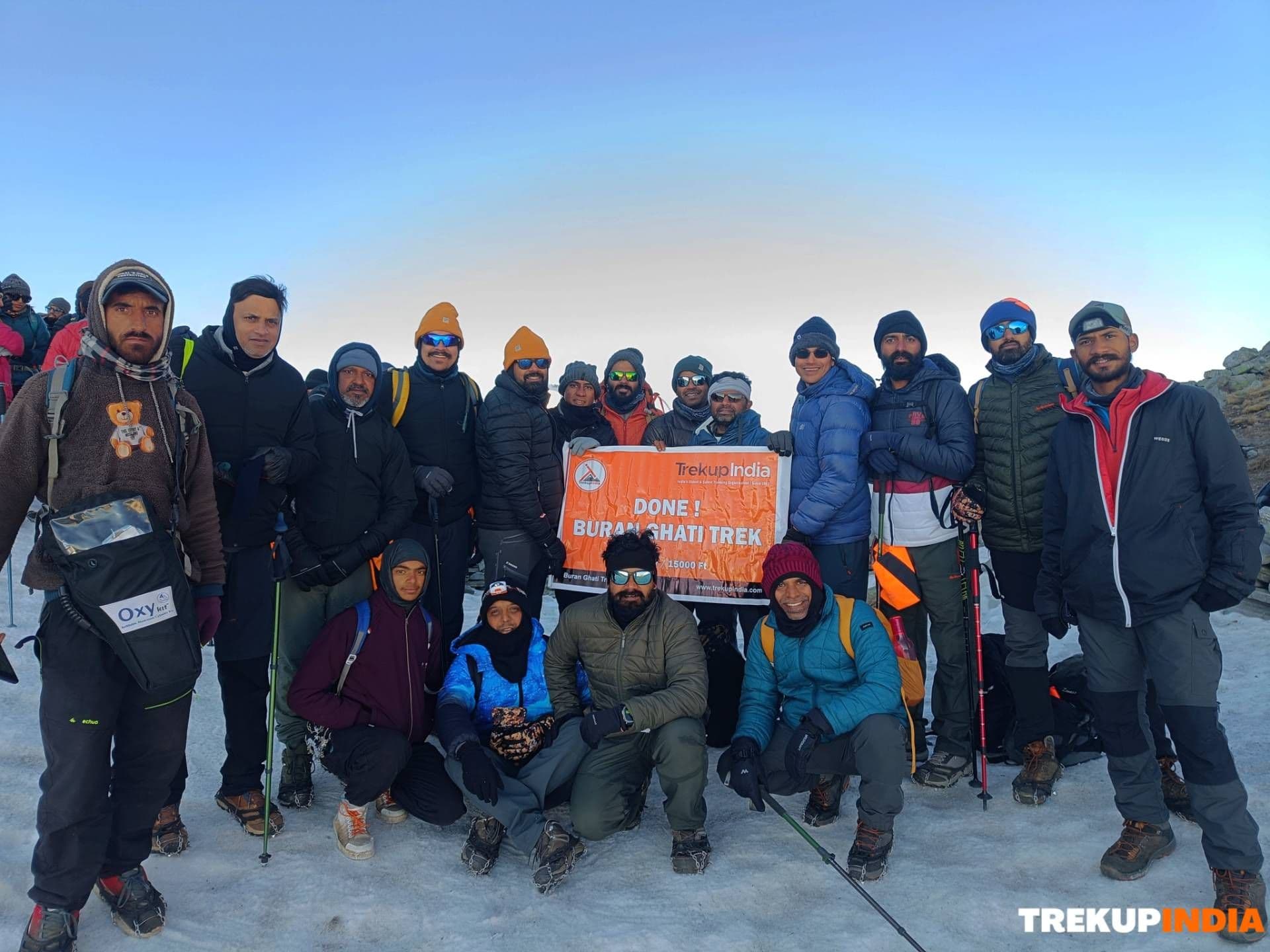
The Buran Ghati Trek is the ultimate crossover masterpiece of the Himalayas which takes you on a high-speed, adrenaline-pumping excursion from the lush greenery of Pabbar Valley to the rocky and wind-swept heights of Sangla Valley. You begin this 38 km trekking at 9,200 feet in the heritage village of Janglik and continue to a maximum elevation of 15,000 feet throughout the course of your trek. It is often considered as the most beautiful alpine meadow in India, along with the seven sacred glacial lakes that make up Chandranahan Lake. The highlight of the trek will be the actual pass crossing which is a vertical 70-degree snow face that creates an epic sequence of extreme technical rappels and sliding over ice which will drop you almost 3,000 feet in one afternoon. The trek is classified as moderate-difficult level and is a 7 day trek that requires peak cardiovascular fitness to complete more than 6,000 feet of vertical gain. You can choose to do the trek in June when large snow bridges make for easier crossings or in September and October for clearer views of the Kinnaur-Kailash Mountain Range. This trek will provide an unparalleled and mind-blowing 360-degree sensory overload and unparalleled trekking experience.
Why is the Buran Ghati Trek so special?
The Buran Ghati Trek usually refers to it as being the Giant Buffet of Himalayan trekking due to how much different topography it covers over seven days, making it seem like a lifetime's worth of geography condensed into one trek. Below is a detailed overview of all the reasons why this trail is viewed by many as - The Apex Adventure Trail.
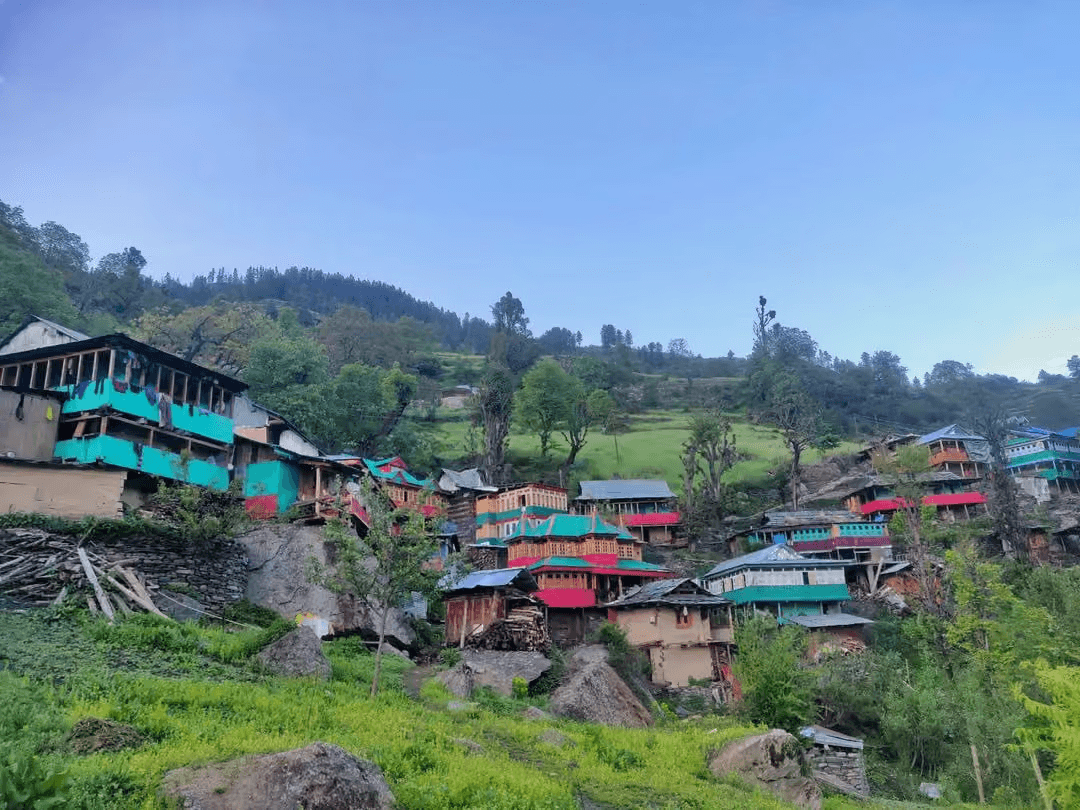
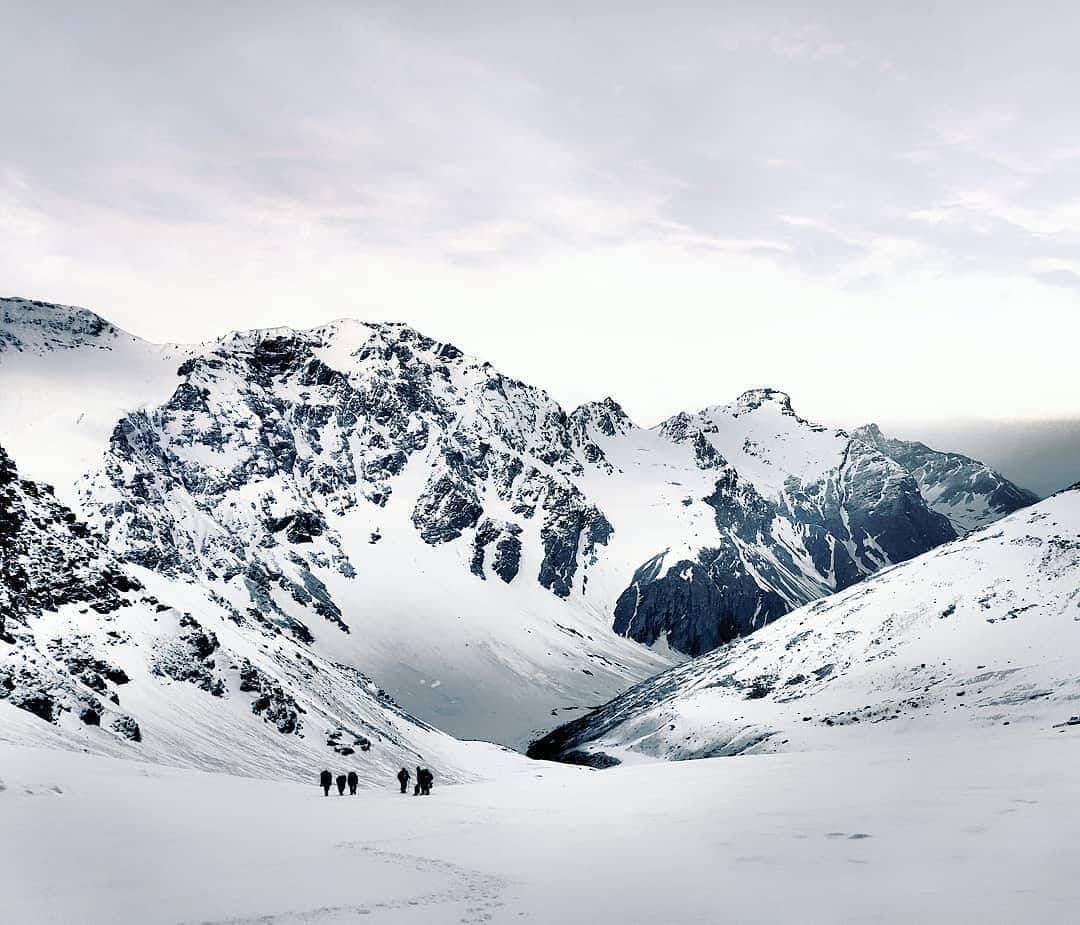
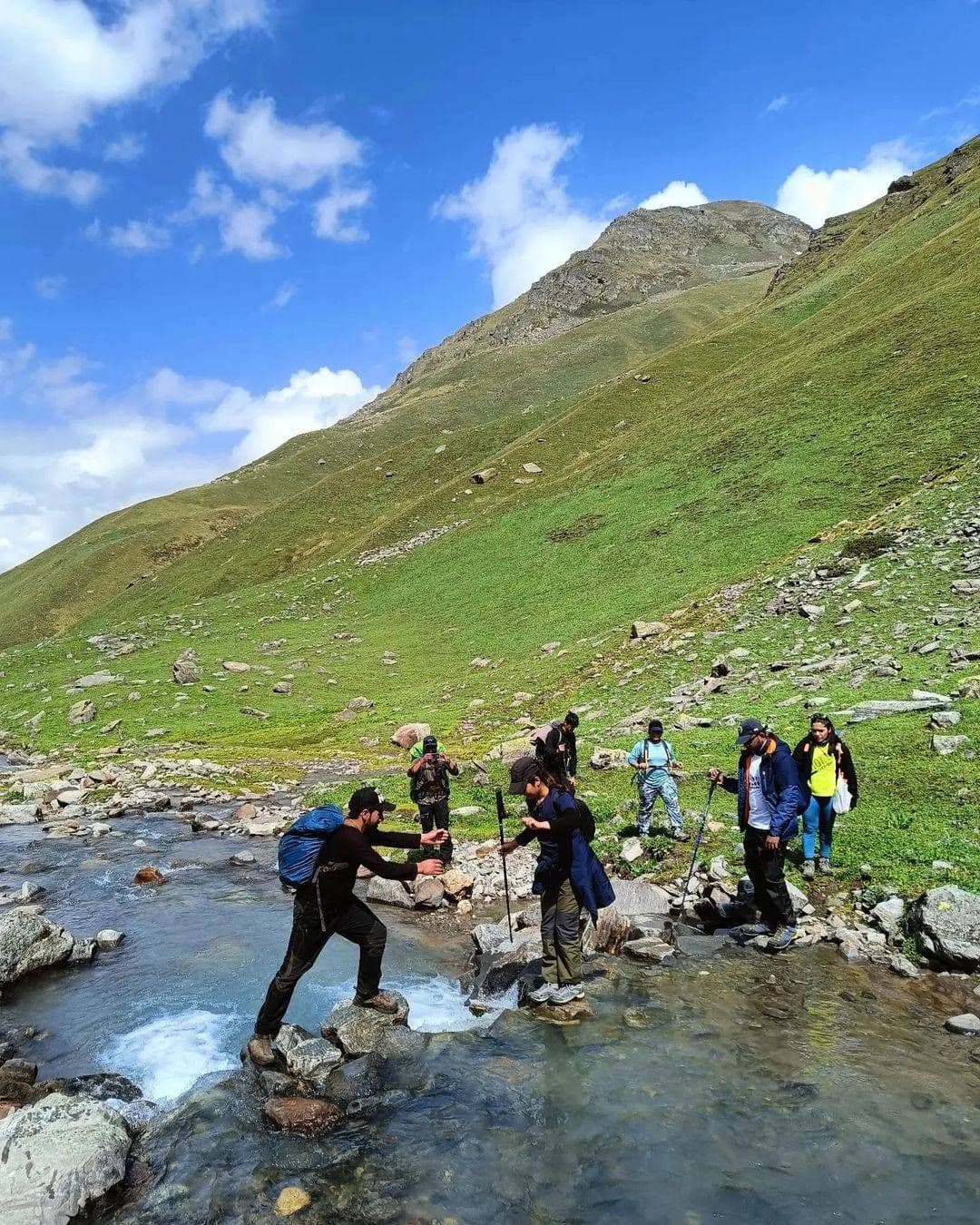
1. A Masterclass on Landscape Variety: Most treks only show one side of the view (e.g. in a wooded area versus at the top of a ridge); however, the Buran Ghati trek is known for showing you the different faces of itself every day. For example, you start the trek in Janglik (an old style town with its wooden homes) before going into a forest made up of thick moss-covered oak and pine trees. Shortly thereafter, though, the trees are gone, and you arrive at the Dayara Meadows—known by many as the most picturesque high-altitude meadows found anywhere in India—vast and green rolling meadows that look to have been finished by a gardener. By the time you get to the Dhunda campsite, the greenery has disappeared completely; you find yourself in a world of only black rocks and white snow.
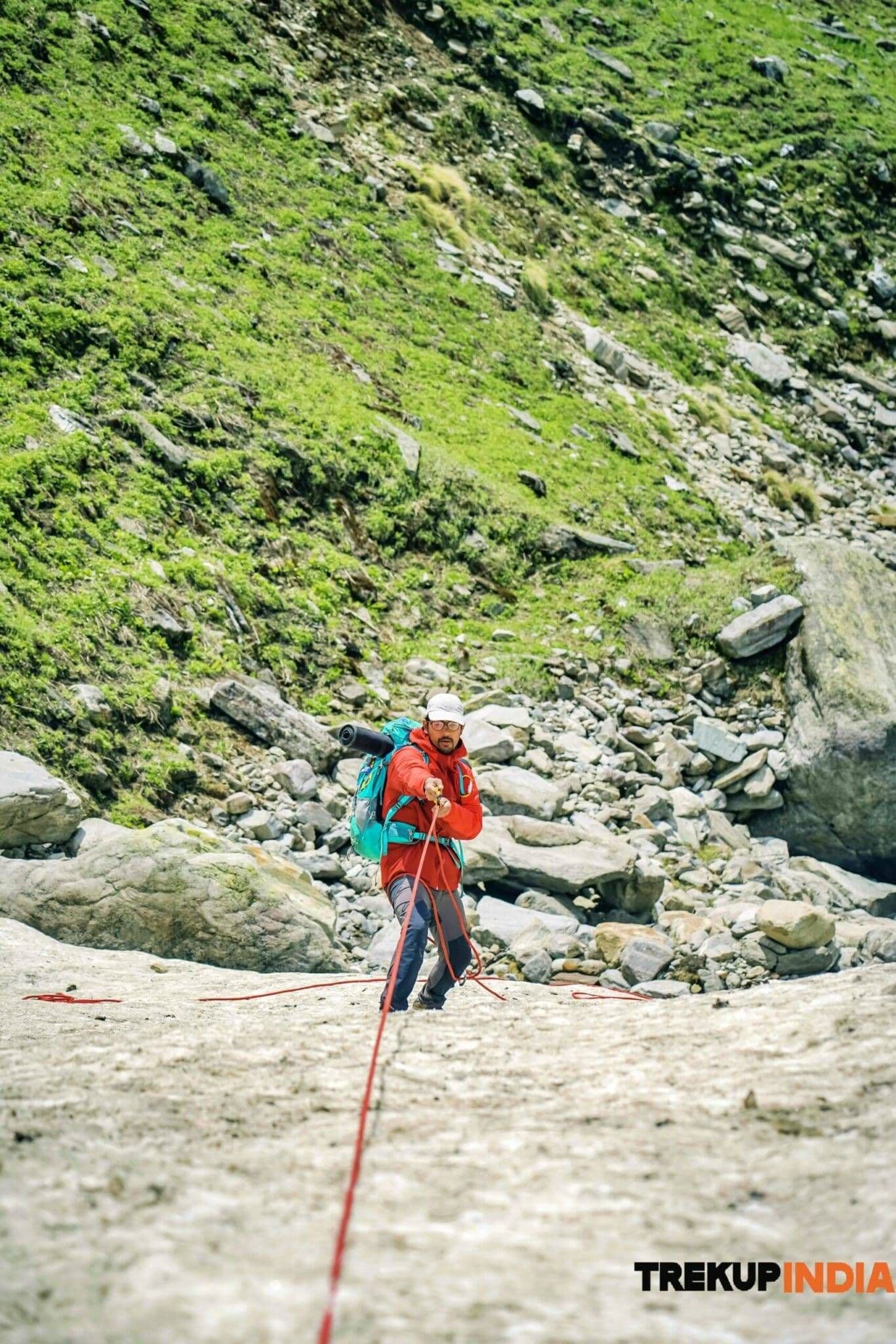
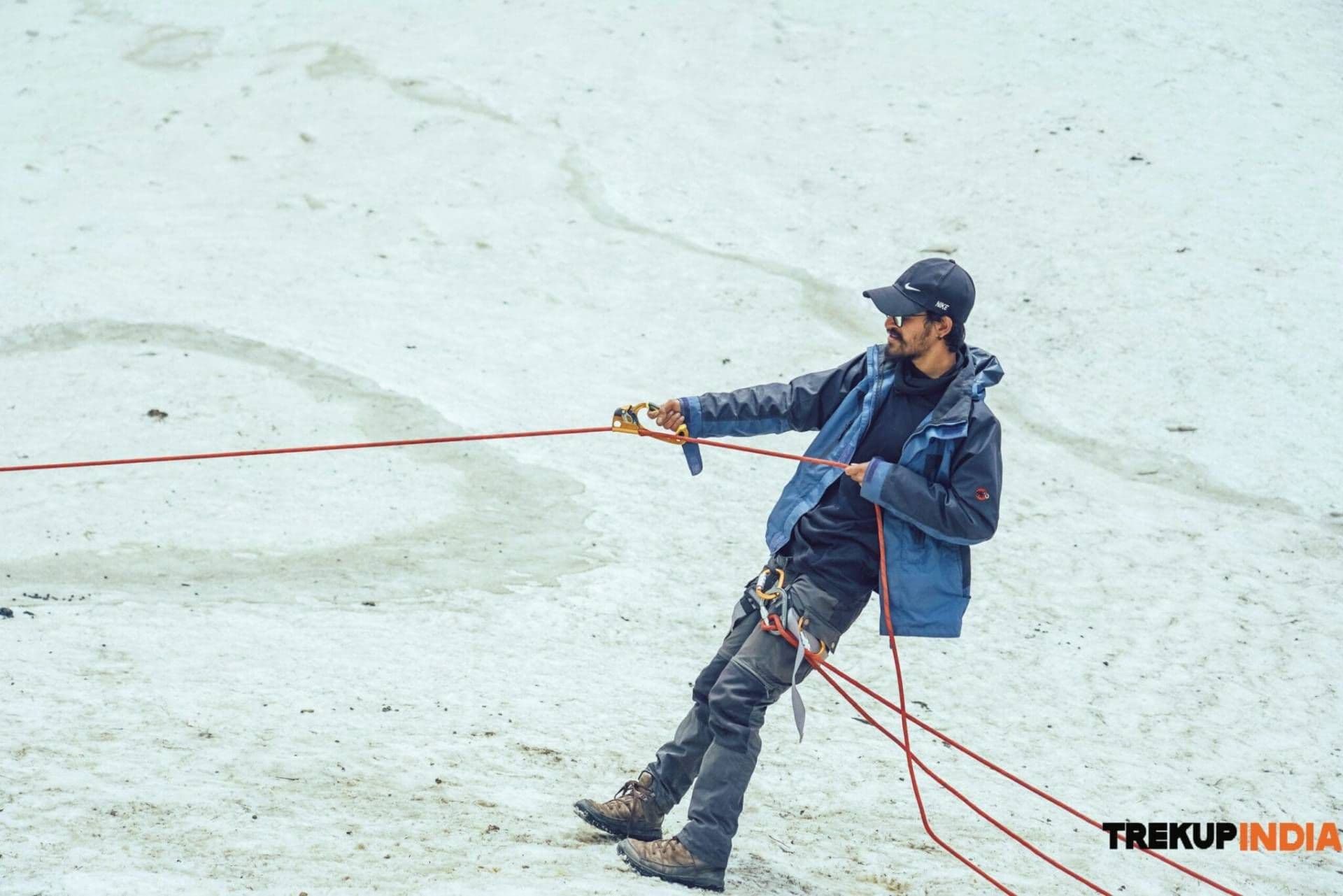
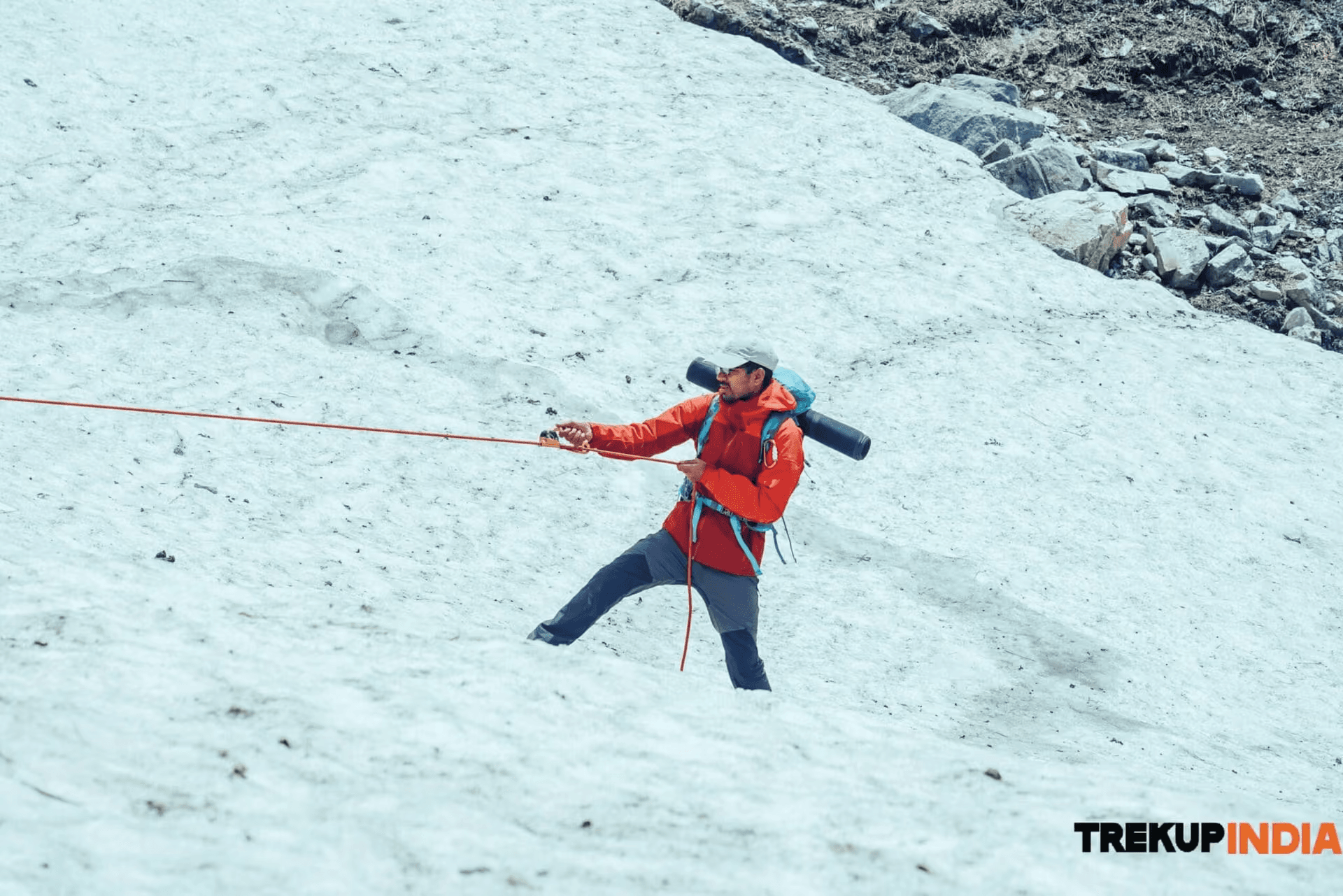
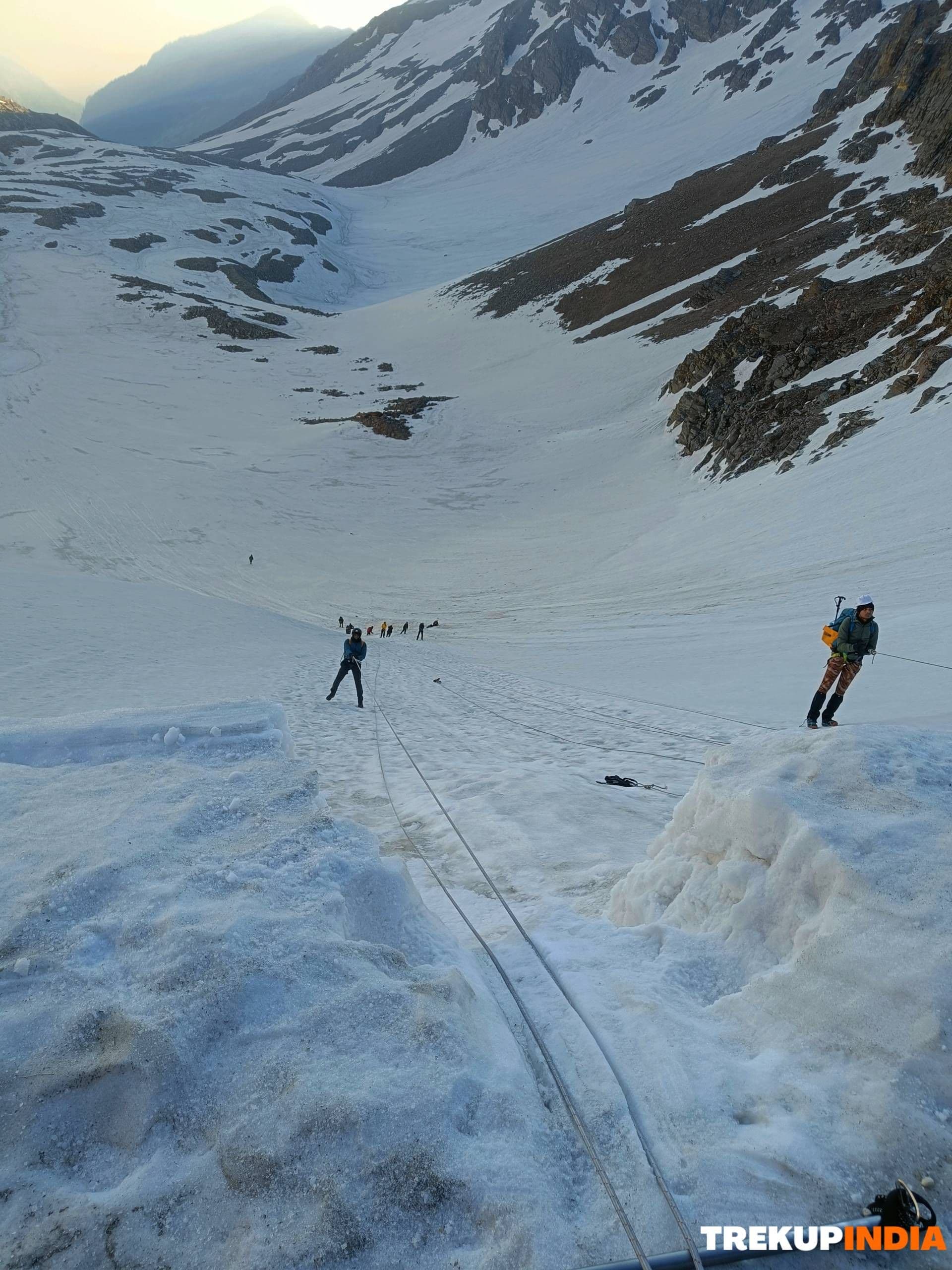
2. The Adrenaline Fueled Pass Crossing: The Ghati Pass is about 15,000 ft and provides an exhilarating experience that no traditional trek could deliver. You'll experience the trek up to the summit as a true test of strength as you ascend a sharply steep grade (over snow and boulders) and get to experience panoramic views (360 degrees) of the Kinnaur Kailash mountain range. However, you’ll find out that the wall descent is what truly exemplifies the character of the trek. The descent on the other side is almost a vertical drop, and therefore, you will not be trekking down the slope, instead you will be rappelling down via ropes and/or doing a series of long, fun-filled slides down the steep snow slopes. This takes the trek from being a typical trek to a mini-mountaineering adventure.
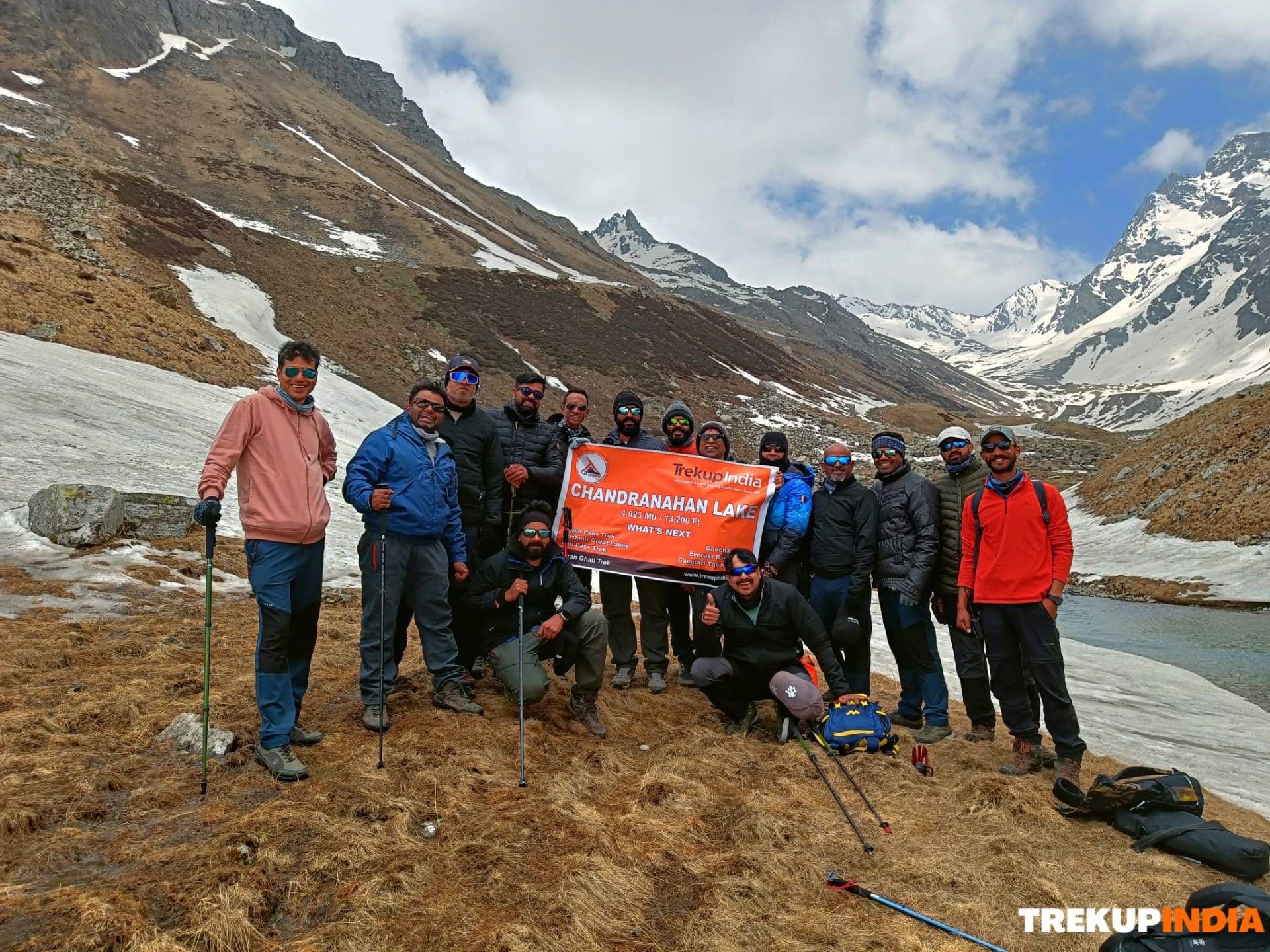
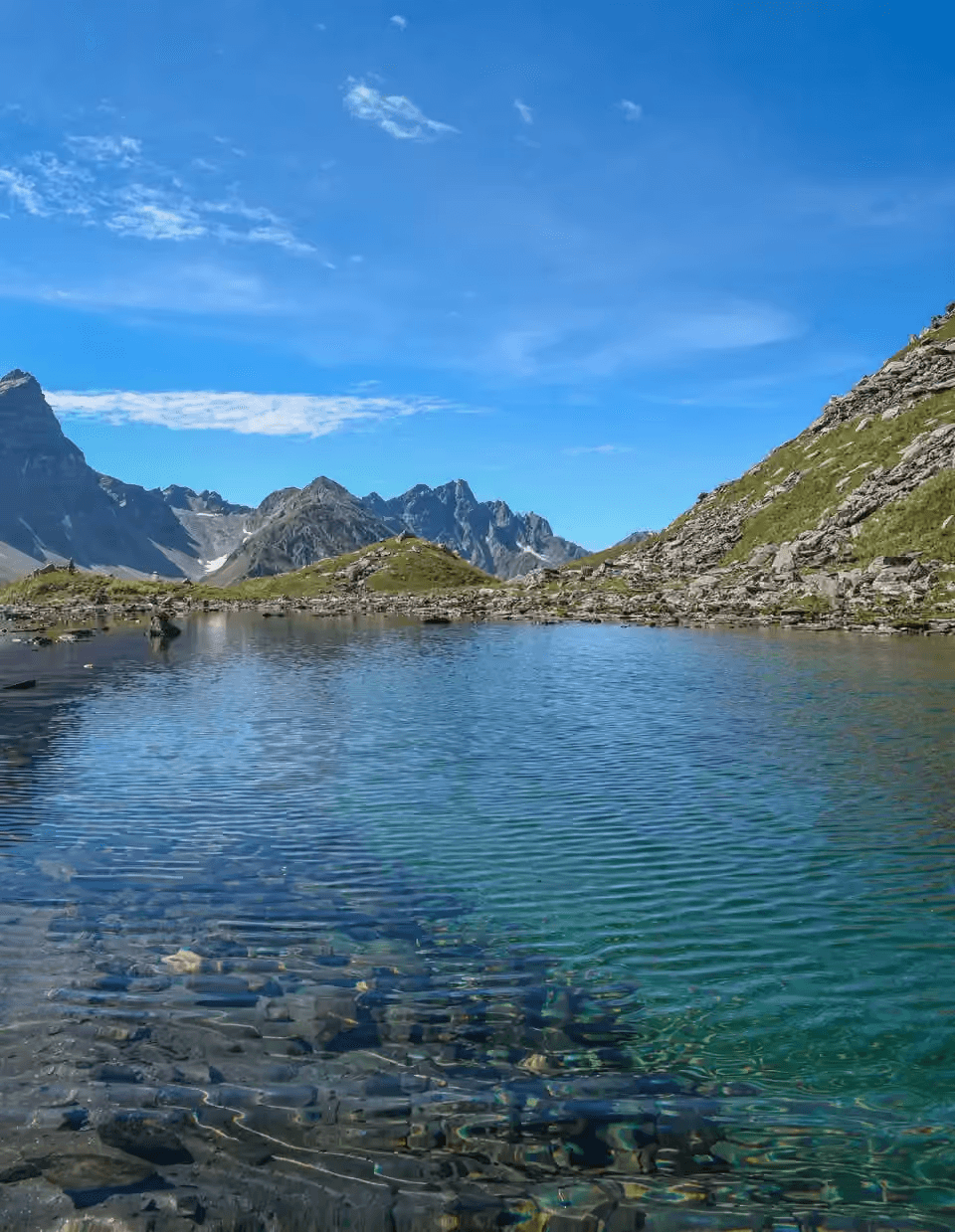
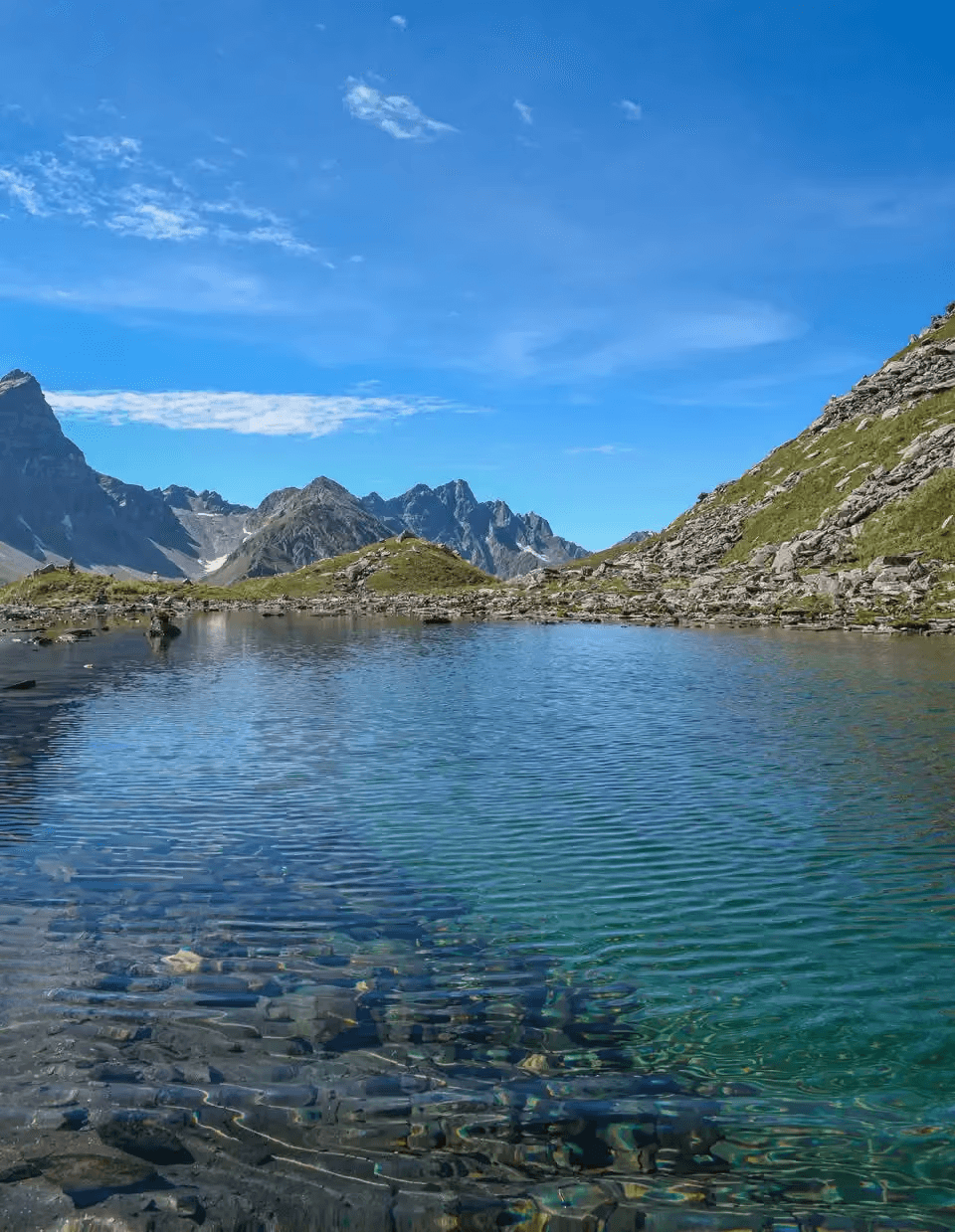
3. The Seven Lakes (Chandranahan): Among the greatest highlights of this trek is the diversion to the Chandranahan Lake circuit which is really considered a geographic marvel as opposed to just a small body of water. Nestled in a high alpine bowl below the summit of Chandranahan, there are five glacial tarns fed by a large waterfall that crashes from the cliffs above. As the water sits in perfect stillness it reflects the surrounding peaks like a dark mirror. This area is an important pilgrimage site for the local villagers, as it is where they come to carry their lord and deity, Shikru, to be deified before bathing, and thus carries a heavy, dense, spiritual energy that is apparent to all who trek to it.
4. The Most Beautiful Finish to a Trek in the Himalayas: Treks typically end with a knee jarring descent down a dusty, boring road, but not so in the Buran Ghati trek; In fact, Buran Ghati saves its most beautiful scenery for this part of the treks exit. After coming down from the high pass, you will descend into the Barua Valley which is filled with colourful wildflowers and lots of birds. As you approach Barua Village the trail will start with the darkly shaded apple, apricot ,and peach orchards. The change from the freezing, thin air of the pass to the warm, sweet-smelling, fruit filled air of the valley is an incredible sensory reward for all your hard work and makes the final couple of miles seem like a big celebration.
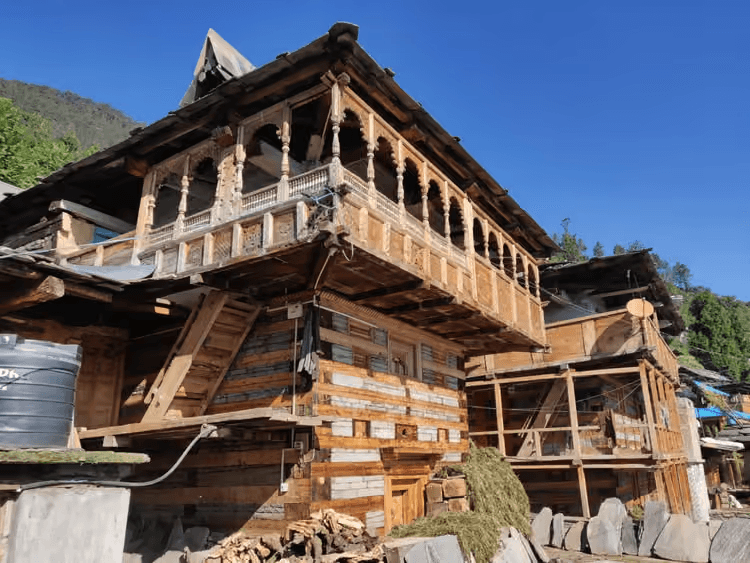
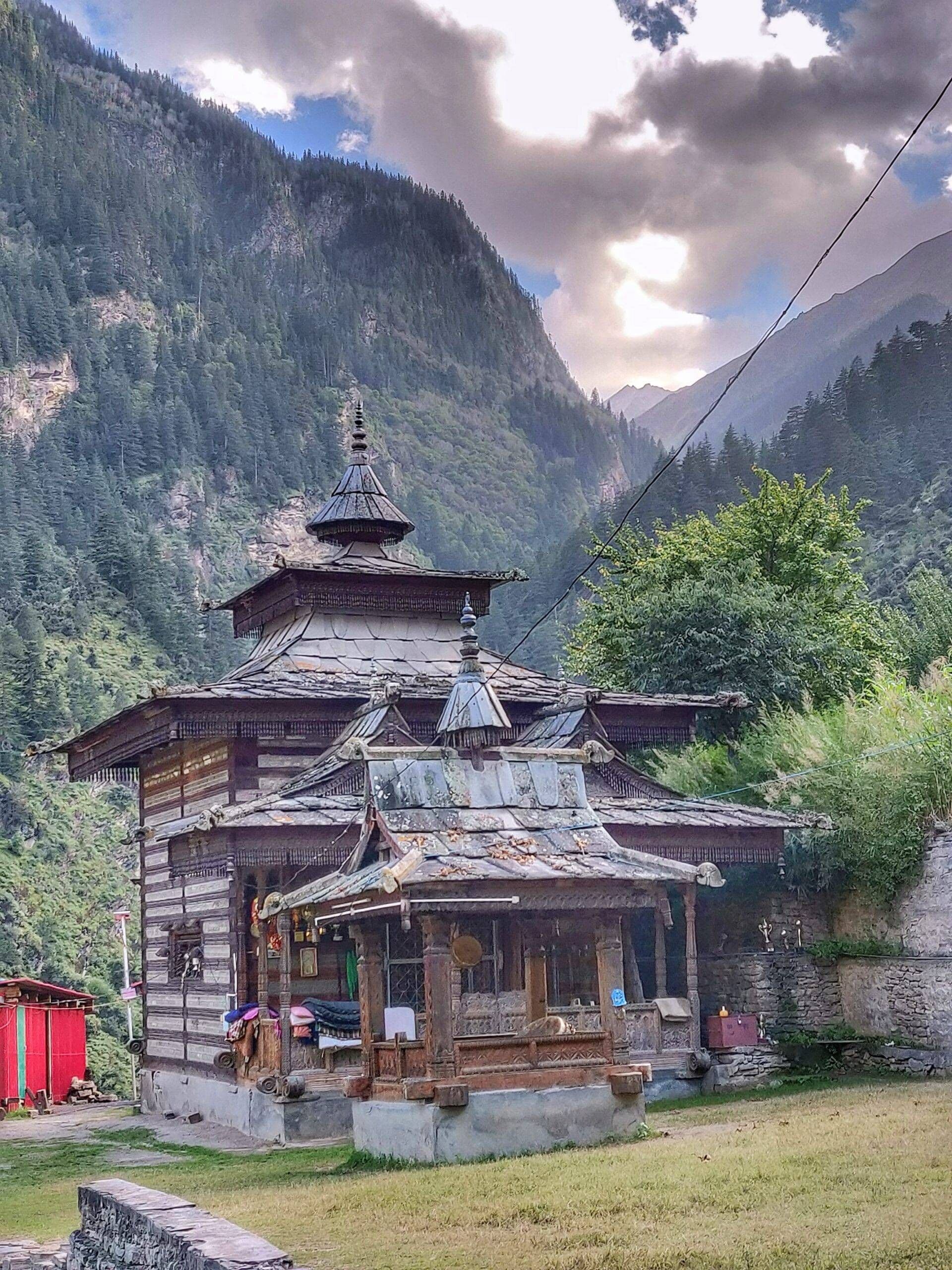
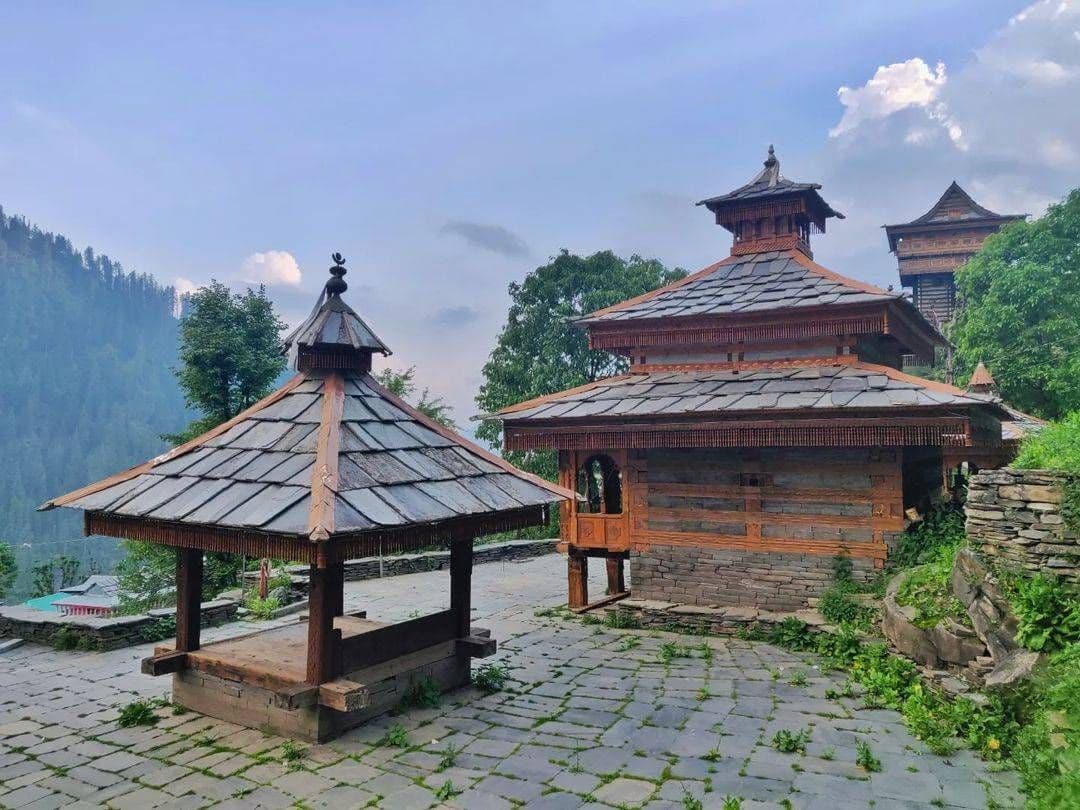
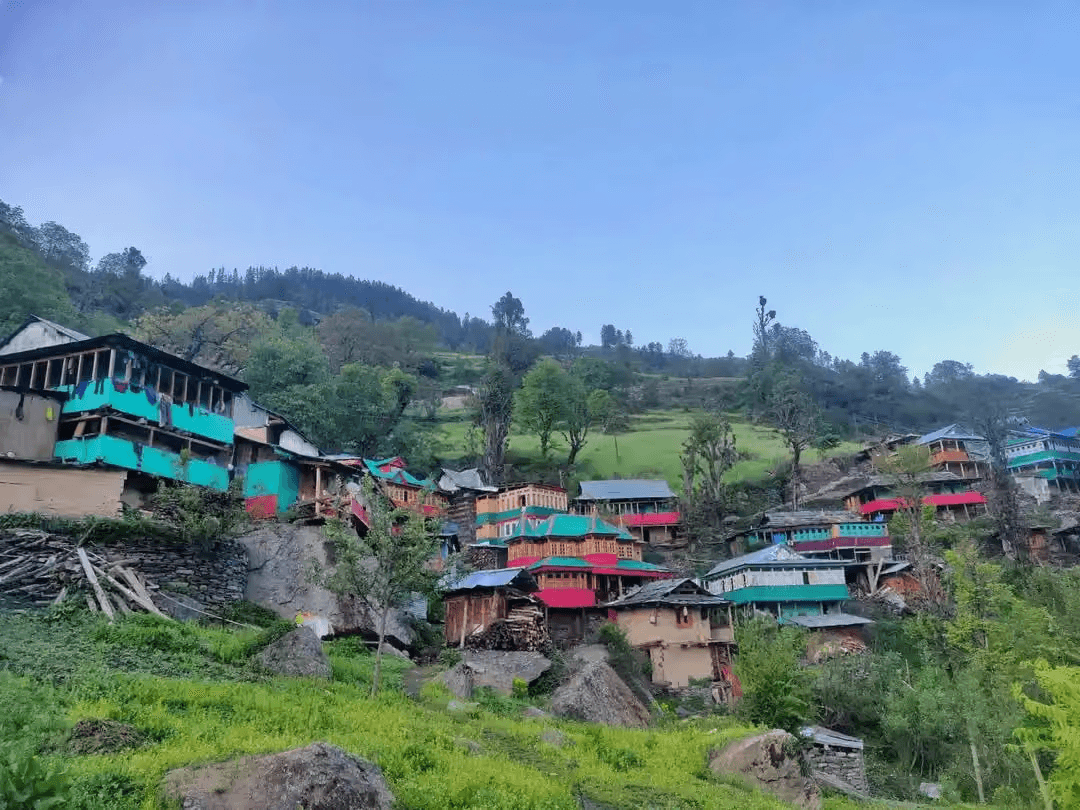
5. Exploring Kath-Kuni Culture: Many trekking routes are solely focused on wilderness areas; however, Buran Ghati begins and ends in active cultural museums. The villages of Janglik and Barua have Kath-Kuni architecture, which is an ancient building technique using interlocking wood and stone to create buildings that will remain standing after an earthquake and that doesn't use mortar. Trekking through these villages allows trekkers to experience the traditional way of life for local shepherds and farmers. Understanding the culture of the area brings additional meaning or soul to trekking in this region because these mountains have stood as a place of sacredness for a strong culture for thousands of years, rather than just as an opportunity for physical challenge.
Trek Highlights
Unique Experiences
The most unique part of this trek is the trail around Chandranahan Lake, which is located near where you will experience your last descent. The side trail to the seven holy glacial pools, created by a large waterfall, is a place of remarkable spiritual tranquillity. Moreover, rather than concluding the trek on a dry, dusty road, you will trek directly through an area of lush fruit trees including apple and peach trees in Barua. The trek from freezing, thin-air conditions on the pass to fragrant, sun-filled orchards is an experience that is completely unique to Buran Ghati.
Adventure and Difficulty Level
The Buran Ghati Trek is considered to be Moderate - Difficult (grade 3) and is ideal for those who are ready to take the next step up in difficulty from beginner treks. While your overall fitness level plays an important role, one great physical challenge will be trekking the steep ascent to the pass; however, the greatest adventure will come during the technical descent. Your descent will require you to navigate an almost perpendicular ice wall (snow wall) with the help of ropes and other safety gear, and you will experience adrenaline that cannot be matched in any ordinary trekking trails.
Flora & Fauna
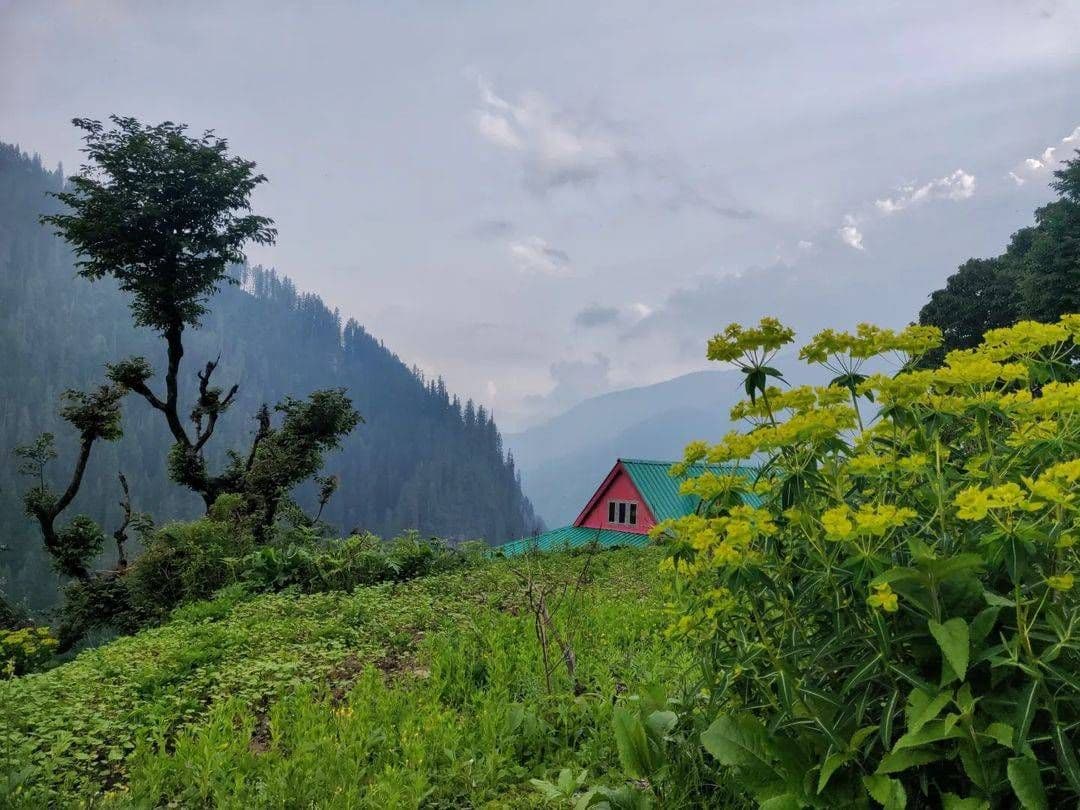
The trek has abundant plant and animal life. As you descend from higher elevations, you will pass through dense forests of Silver Oak, Blue Pine, and many varieties of Rhododendron. When you reach areas of lower elevation, flowering alpine plants and some rare species such as Brahma Kamal will be found near glaciers at much higher elevations. If you are fortunate, you may also be able to find Himalayan Monals (the state bird of Himachal Pradesh) or Himalayan griffons flying above the ridges, while valleys below you are filled with the fragrance of wild strawberries and apricot blossoms.
Cultural & Village Life
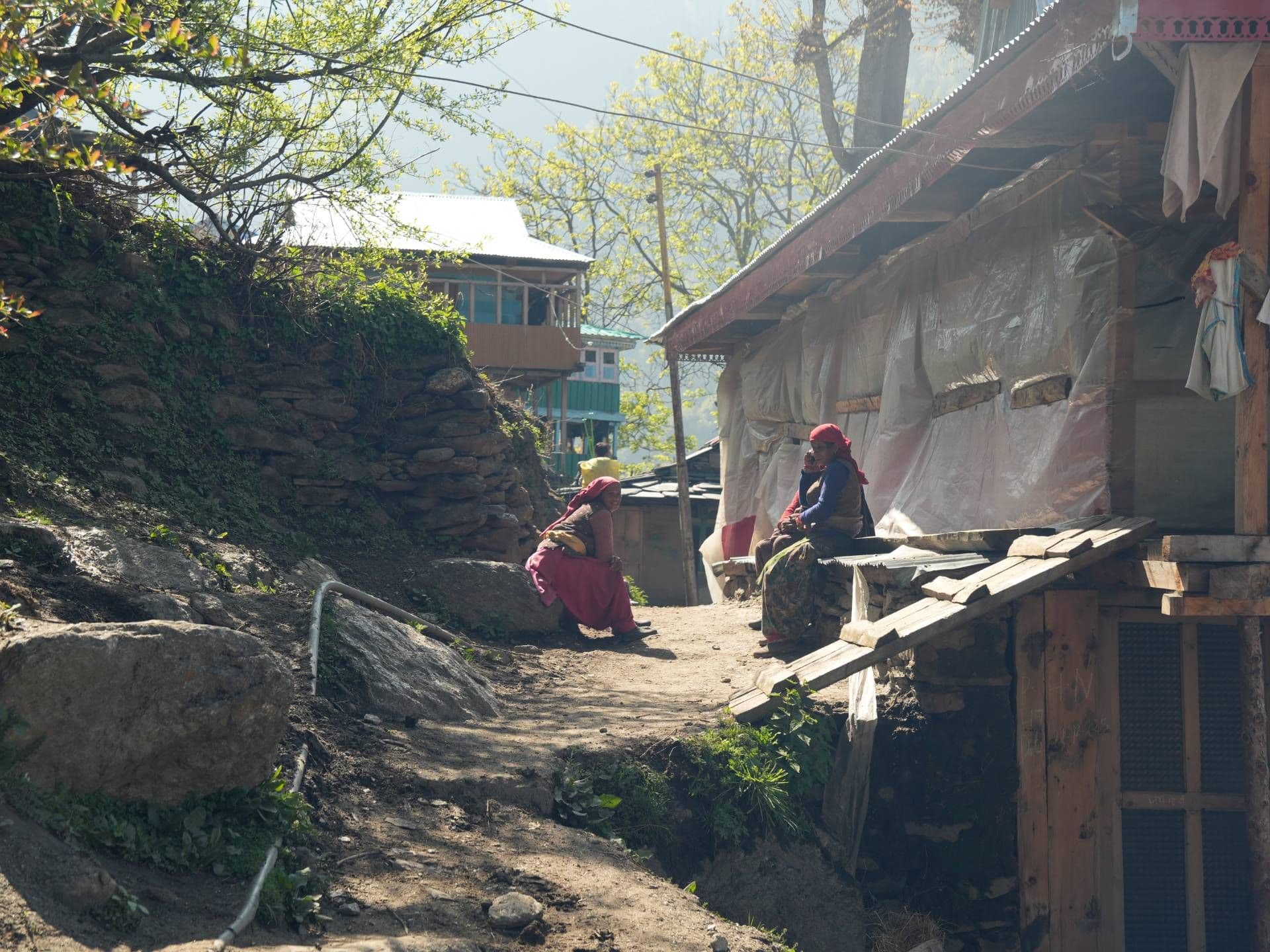
Unlike most remote wilderness experiences, Buran Ghati has a long history dating back thousands of years of culture through human interactions - which have continued over many generations. The area begins with the village of Janglik and ends in Barua which are both known for their highly specialized architecture called Kath-Kuni, or very old structures made from the interlocking of timber & stone; this style of architecture provides strength against the forces of nature, such as earthquakes. By trekking through the area, one has the opportunity to meet local shepherds and see first-hand the traditional way of life of Himachal Pradesh that has not changed in hundreds of years — providing you with another soul of the wilderness.
Best Season & Seasonal Beauty
Buran Ghati is distinctively two-faced depending on when one treks the area.
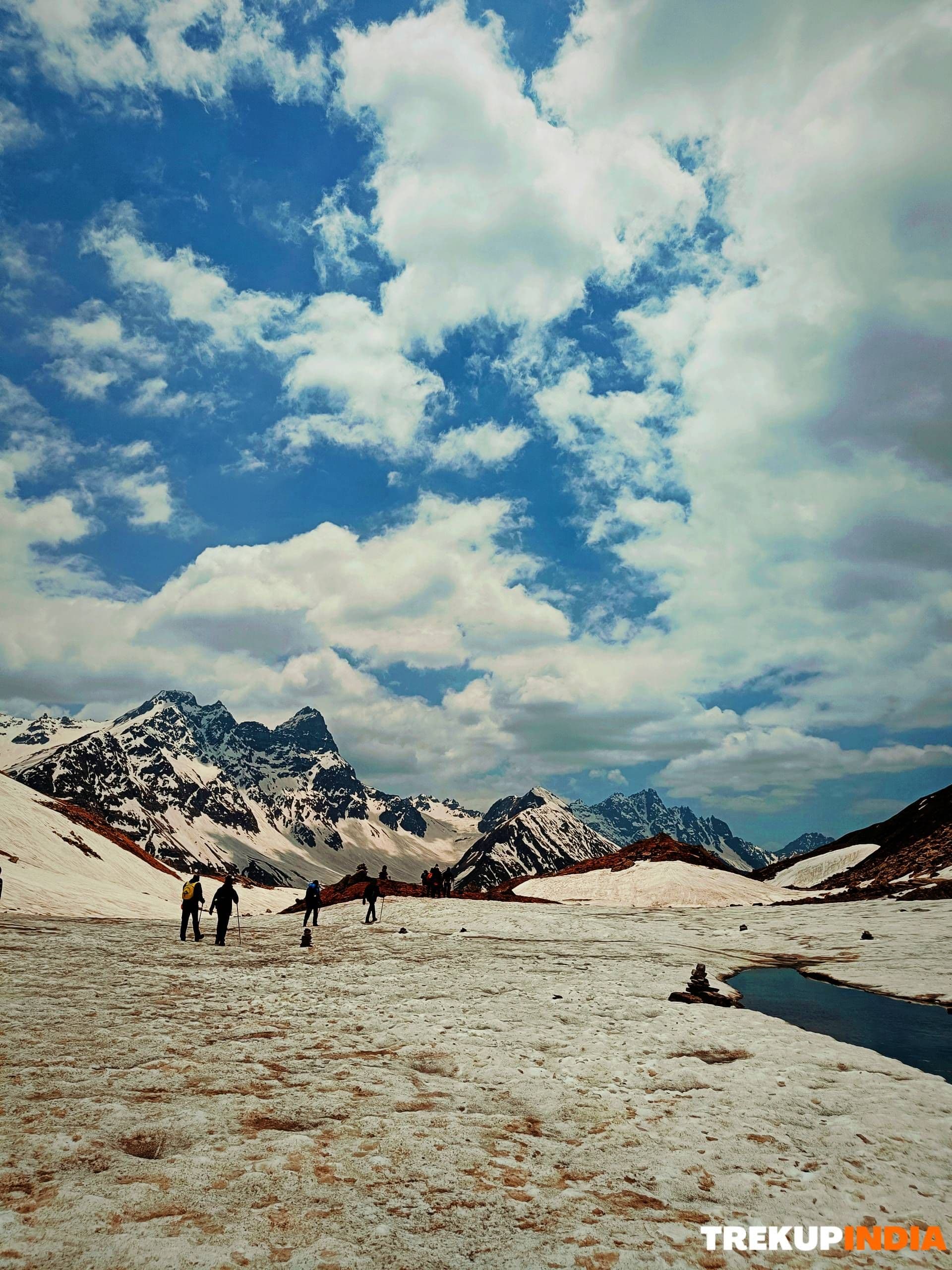
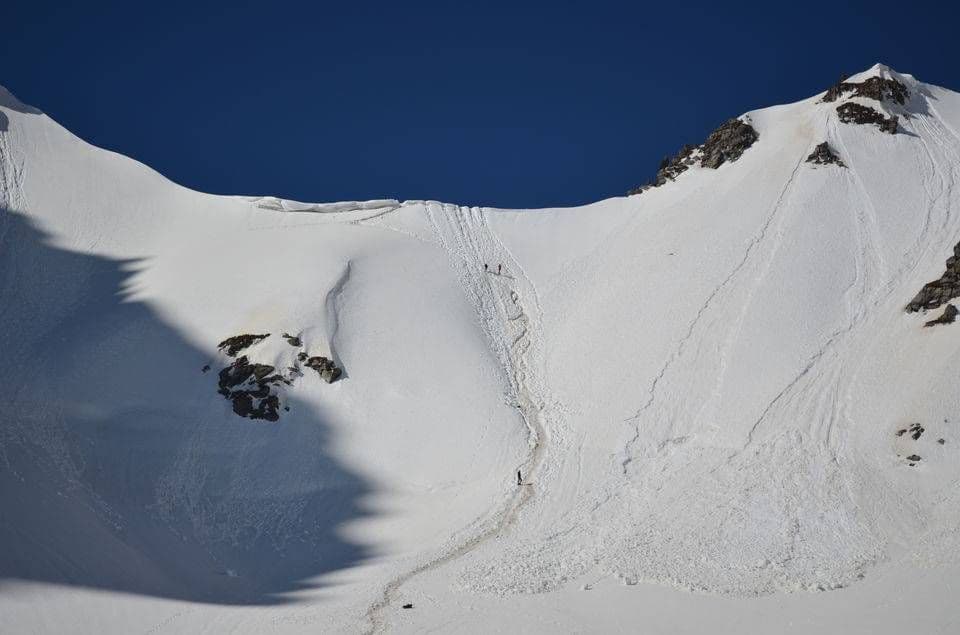
When spring/summer arrives (June), the trail is blanketed in snow, providing many opportunities for musical play on the mountainside. The wall descent will propel you forward as you slide rapidly on snow or descend rapidly with ropes — and everyone will love it.
Autumn (Sept/Oct) - Once again, this area is so beautiful because of the clear, crisp blue-colored sky and the stunning mountains. As the snow melts away there will also be exciting sights through the changing colour of the beautiful vegetation. Many apple trees are heavier with fruit at the lower elevations during autumn.
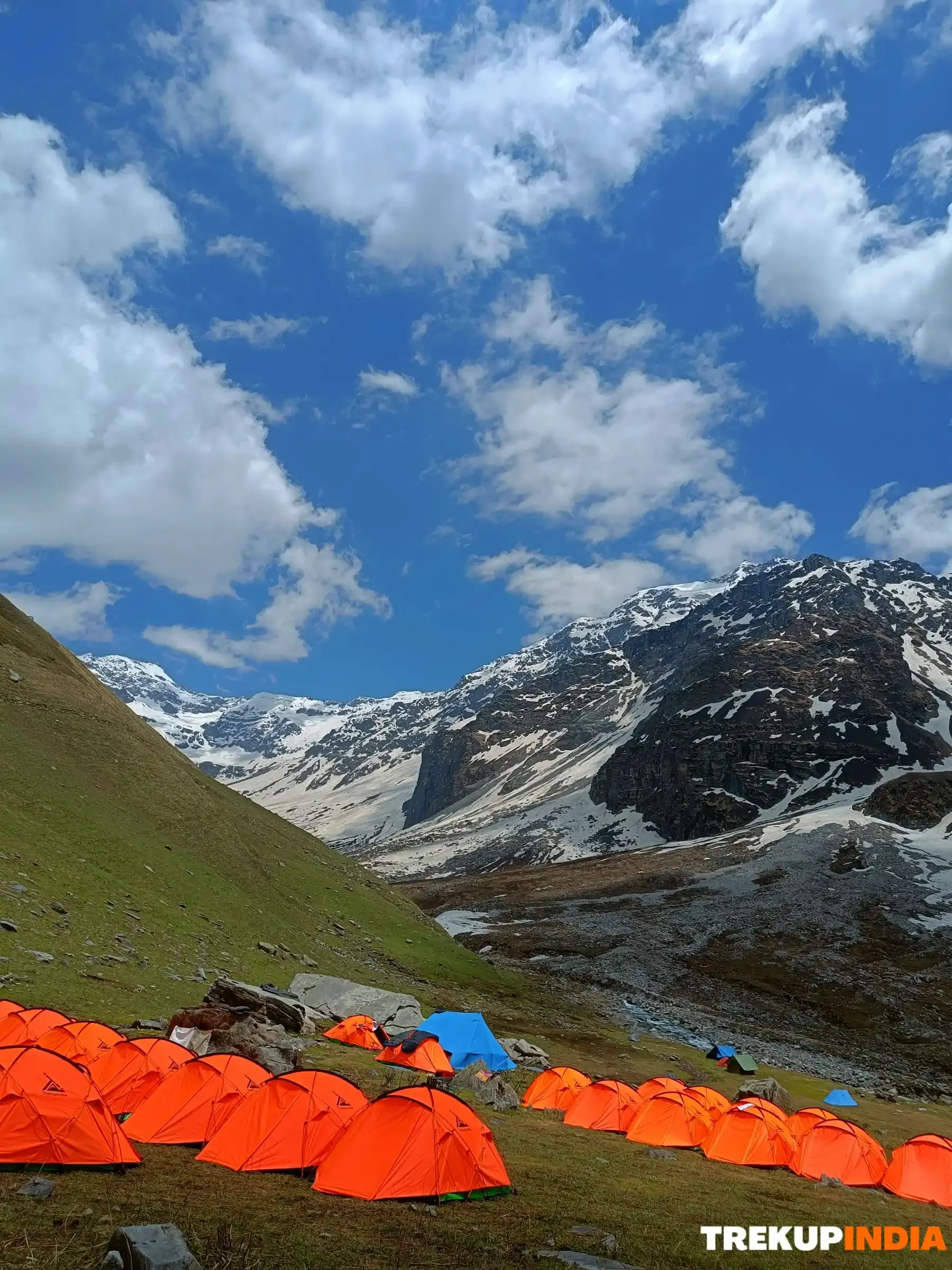
Summit Experience
Being able to reach Buran Ghati Pass at 15,000 feet is both physically and emotionally the culmination of the trek journey. The summit isn't a peak like other mountain summits but a narrow ridge area making up the interface between two different worlds. Standing on this very narrow extremely sharp ridge area rewards the trekker with a complete panoramic view of all three sides of the magnificent Kinnaur kailash mountain range, with a tremendous feeling of accomplishment when you look back at the Pabbar Valley that you just accomplished trekking out of and then look down into the lush Sangla Valley that is awaiting on the opposite side.
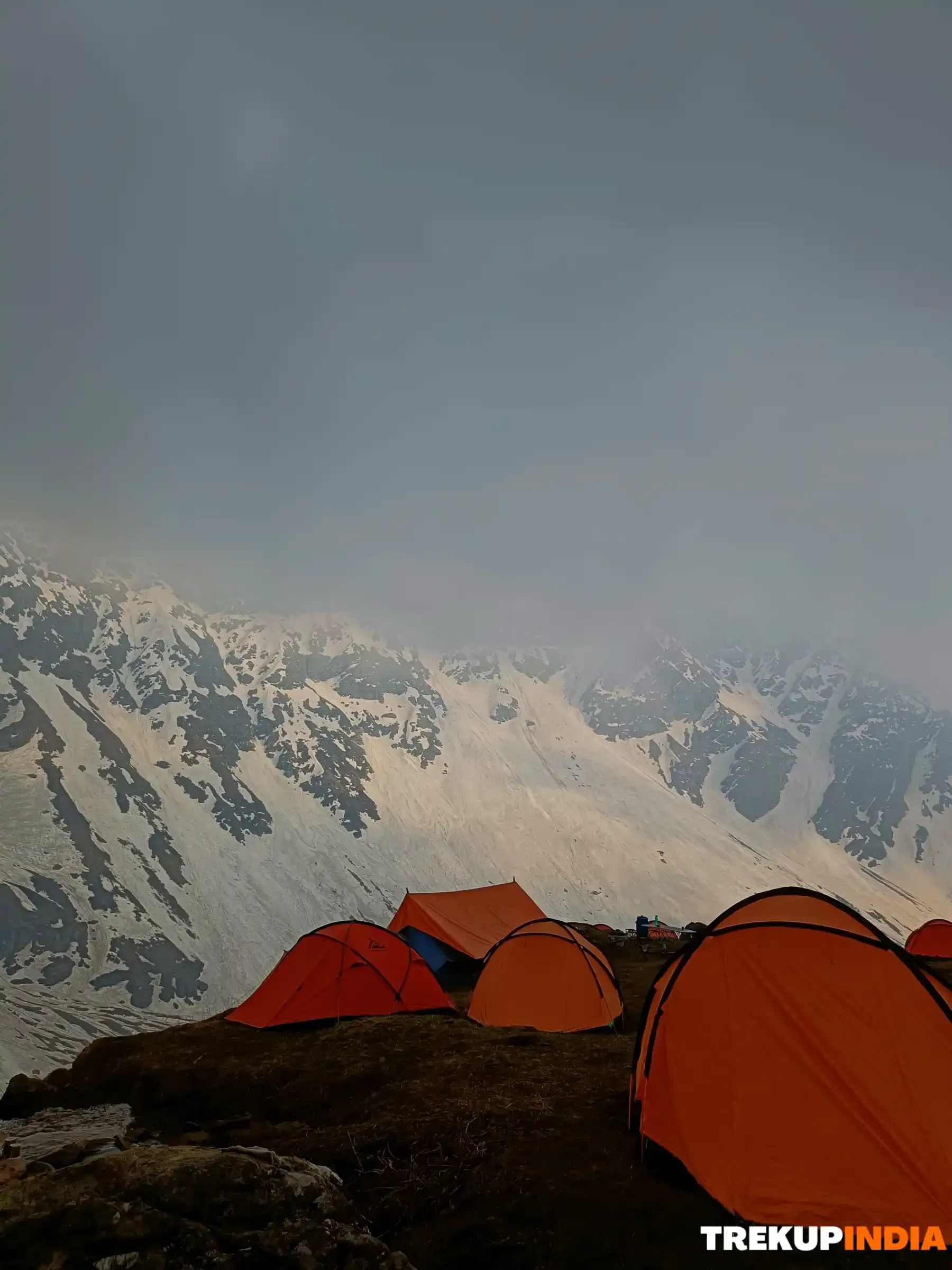
Scenic Beauty & Landscapes
The trek can be referred to as the Grand Buffet Of Scenery because every day presents new scenes to admire. Starting in the lush moss-covered forests of Janglik that are similar to fairy tales, the trek then enters into the Dayara Meadows where rolling hills of green cover the landscape with high altitude grasslands believed by many to be among the most beautiful of their kind throughout India. Finally after traversing through the green hills of Dayara you cross over into the stark black mineral world of Dhunda with jagged black rock and large glacier covered peaks that create an otherworldly moon like landscape.
Short and Detailed Itinerary, Trek Map and Altitude Chart of Buran Ghati Trek
This section provides a comprehensive, simple explanation of the Buran Ghati Trek, including general day-to-day routing, elevation gain, etc. The basic itinerary is designed to give an overview of the trek; all-inclusive itinerary allows for a more in-depth understanding of the various distances between campsites, the nature/type of terrain that trekkers will be traversing, and the locations of the campsite relative to one another.
In addition to the above, the trek map indicates the specific route of the trekking path, village locations, forest locations, and campsite locations within the trek area enabling trekkers to imagine their trek through snow-covered coniferous forests and alpine meadows. The elevation chart clearly indicates the total elevation gained and lost each day of the trek ensuring that trekkers can prepare adequately before arriving at the basecamp, acclimatize safely to altitude, and have a positive experience on their overall trek.
Best time for Buran Ghati Trek: Season by season guide
If you want to have an exhilarating experience of trekking during high adrenaline activities such as snow and/or ice experiences, May and June would be the best months. However, if you would prefer a video/photo experience of the mountains, then September would be the ideal month due to the stable weather conditions. When comparing the two months, May and June differ greatly from September because the Buran Ghati Pass, with its elevation of 15,000 feet, undergoes a complete structural change. During the early summer, the pass is essentially a vertical ice structure that requires technical skills like rope down a 70-degree ice steep and allowing for extreme speed at the bottom with an exhilarating sliding distance of 500 meters. On the other hand, by late September, the pass's icy skin melted away revealing a rugged high elevation mountain crossing of only rocky terrain. The decision between the two months will directly affect the technical and visual nature of the trek as, May and June offer an experience of having a high contrast between mountains and meadows with glacial water and lush green meadows, while late September gives the most stable weather for photography or videography and creates the sharpest crystal clear view of the Kinnaur Kailash Mountain Range with the deep yellow meadows as the backdrop.
Buran Ghati Trek: Month by Month Breakdown
The Buran Ghati is a beautiful trek in Himachal Pradesh, India with an all in one experience of beautiful meadows, forests, a sacred glacial lake, and crossing a 15,000 ft. pass. However, due to the altitude and technical nature of the pass (which may require ropes), the timing of your trek will drastically alter the experience you have.
Advice by our Expert Team-
Our Expert trek leaders and trek guides are well known about the trekking trails with the adverse weather conditions at higher altitudes and they know how to deal if any uncertainty arises. They have years of experience in trekking adventure so on this, they will suggest or guide you with some advice.
1. Prioritize Acclimatization: Stable weather in the spring and autumn makes it easier but never rush to the trek. There is a chance of AMS problems occurring due to dry cold so be prepared, take precautionary measures with yourself.
2. Proper Layering: Temperature fluctuates instantly, especially on the higher altitude, so layering should be proper (base, mid and outer) is critical for managing sweat and preventing the cold.
3. Premium Boots: Make sure your boots are long lasting and well broken or used before your trek starts. The risk of foot injury and blister from the new boot can end your trek journey
4. Hydration: It's advisable to drink 3 to 4LT/day. Because of high elevation and exertion, you need constant intake of fluids to overcome the effects from AMS.
5. Pace Yourself: Walk at a comfortable pace using what is called the mountaineers shuffle. This will conserve your energy and help you manage your breathing.
6. Protect Against UV Rays: Use High-Quality UV Sunglasses (Cat 3 or Cat 4) to protect your eyes from snow blindness, and use high SPF Sunscreen on your skin to protect it from sun damage.
7. Healthy Consumption: Food should consist of small amounts consumed frequently and contain a lot of nutritious ingredients and minerals. This will provide you with the sustained energy needed for trekking at high altitudes.
8. Safety: Pay attention to what your body is telling you when you are feeling AMS Symptoms. Should you believe you might be suffering from AMS, report it immediately and prepare to descend. Descending is the quickest treatment you can receive.
How to Plan Your Travel for Buran Ghati Trek
Are you excited to start your adventure for Buran Ghati Trek? The travel journey starts from Shimla where all the trekkers reach & move towards Janglik. In this section we will guide you how to plan & proceed your travel journey for Buran Ghati Trek. From your home town to pickup point Shimla, we guide you with all the necessary means of transport for a smooth and adventurous journey. You can opt various means of transport like flight, train & bus to reach your pickup point at Shimla.
Modes of transport To Reach Shimla (The base pickup City)
There are various means of transport to reach at your pickup point via flight, train & bus with variation in timings. All the flights, trains & buses have different arrival & departure times. So plan your travel journey accordingly. We have mentioned all the information regarding the travel perspective for your convenience.
1. By Flight (Fastest Means)
The Chandigarh International Airport is located 118 km away from the pickup point. There are scheduled, nonstop flights from all the major metro cities such as Delhi (DEL), Mumbai (BOM), and Bangalore (BLR) etc. Below mentioned flights directly depart from Delhi to Chandigarh with the respective time. These airlines offer direct flights from multiple cities.The timings are subject to change and will vary day by day. You can book your flight one day prior to your travel journey.
| Flight Name | Departure Time | Arrival Time | Duration |
|---|---|---|---|
IndiGo 2316 | 07:30 AM | 08:35 AM | 1 hour 5 minutes |
Alliance Air 831 | 08:20 AM | 09:25 AM | 1 hour 5 minutes |
SpiceJet 9044 | 08:50 AM | 09:50 AM | 1 hour |
Suggestions: Please make sure to arrive one day prior your drive starts from Shimla to Janglik, as your drive will take 9 - 10 hrs to reach Shimla.
2. By Train (Dependable Means)
The railway station of Kalka is 86 Km from the pickup point- Shimla. After reaching the Kalka Railways Station you can either book a bus, private taxi or toy train to reach your final pickup point - Old Bus Stand, Shimla. The best train services for overnight travel from Delhi to Kalka. Below mentioned time is in 24 hrs format.
| Train | Train Code | Departure Time | Arrival Time |
|---|---|---|---|
Kalka Shatabdi | 12011 / 12005 | 07:40 | 11:40 |
Delhi - Kalka Express | 14331 | 16:15 | 21:40 |
Himalayan Queen | 14095 | 05:40 | 11:15 |
SNSI Kalka Express | 22455 | 01:25 | 07:25 |
Suggestions: Ensure to book AC's or Sleeper seats in advance of your travel during winter season.
3. By Bus (Affordable Option)
The ISBT Shimla is the major and easiest way to directly reach the pickup point. Buses are well air-conditioned like Volvo, Sleeper, and Non-AC buses with departures mainly from Delhi, Jaipur, Mumbai, Bangalore and other cities. The timings are subject to change and will vary day by day.
Buses from ISBT Kashmiri gate Delhi to Shimla runs on a frequent basis starting from early midnight 12:00 and taking (10 - 11 hrs) to reach Shimla. You can book your seat through Redbus, MakeMyTrip, Goibibo and other UTC buses. After reaching the ISBT Shimla, our Trekup India taxi will pick you from the Bus Stand at 6:00 AM.
Suggestions: Consider using an overnight air-conditioned Volvo/ac sleeper bus service to reach early morning (5.00 am to 6:00 am).
How to reach trek base Janglik from pickup point Shimla
Traveling to the remote village of Janglik from Shimla requires 8 -10 hours of drive covering approximately 150 km. Most trekkers plan ahead to book a taxi or a pickup from the Old Bus Stand, Shimla and then take the route via the Hindustan-Tibet Road (NH5) to Theog and Narkanda, continuing downhill toward Pabbar Valley. Their last major stops for ATM and supplies will be in Rohru (the last substantial stop before Janglik) and then Chirgaon. From Chirgaon onward, the road becomes a narrow, winding dirt road (frequently rough or unpaved) that ascends steeply up Pabbar River until reaching the traditional wooden homes of Janglik, the starting point of Buran Ghati trek.
Means of transport from Base city Shimla to Campsite Janglik
1. Trekup India Vehicle: If you book with the Trekup India, transportation depends on the number of trekkers according to their size, vehicles will differ like tempo traveler, bolero, innova or mini bus. Our cab picks you from Old Bus Stand, Shimla & drops you at Basecamp Janglik safely. Our vehicles are well maintained & hygienic for your travel journey.
Here are the pickup details from the base city Shimla (If you opt our transport facility):
- Pickup Point: Near Old Bus Stand, Shimla
- Pickup Time: 6:30 AM
- Drop Location on Last Day: Near Old Bus Stand, Shimla
- Drop Time for Last Day: 10:00 PM - 11:00 PM (expected)
2. Public Transport Bus: You can opt for a public transport bus early in the morning to reach base camp Janglik on time for the next day's trek. But make sure you are particular with the bus time in the morning as there are very limited buses between 5:30 AM to 7:30 AM. There is no bus after this so try to pick a bus early from Shimla.
3. Private Taxi/Cab: If you miss your bus from Shimla, another way to reach Janglik is by taxi/cab. You can book a taxi/cab on a sharing basis with a shared price. But make sure that your timing is matched with the taxi timing as the number of taxis are very limited in the morning and generally operated early in the early morning from 5:00 AM onwards.
Tips for Mountain Drive
Whenever you are planning to trek on the mountains, health plays a crucial role. Your main motive on any trek is to be physically and mentally healthy. Here are all the important travel suggestions that you are going to face on your travel journey.
- Motion Sickness: Take medication Dimenhydrinate (prescribed by doctor) - 30 minutes before your journey starts and make sure to sit in the front seat of the taxi.
- Punctuality: Being a wise person, always be on the time whether you are on the camp site or on the trek.
- Inhand Case: Have an adequate amount of cash because you never find any ATM at a nearby location.
- Proper Hydration: Always take the water and fruits throughout your travel to avoid dehydration & other health related issues.
- Charge: Make sure that all electronics / power banks are fully charged before being stuck in a long taxi ride, as there are not many charging stations available on the route.
- Check luggage: always make sure to check your luggage when you are on the trek or during the trek.
Day 2 - Day 6 (The Trek Days)
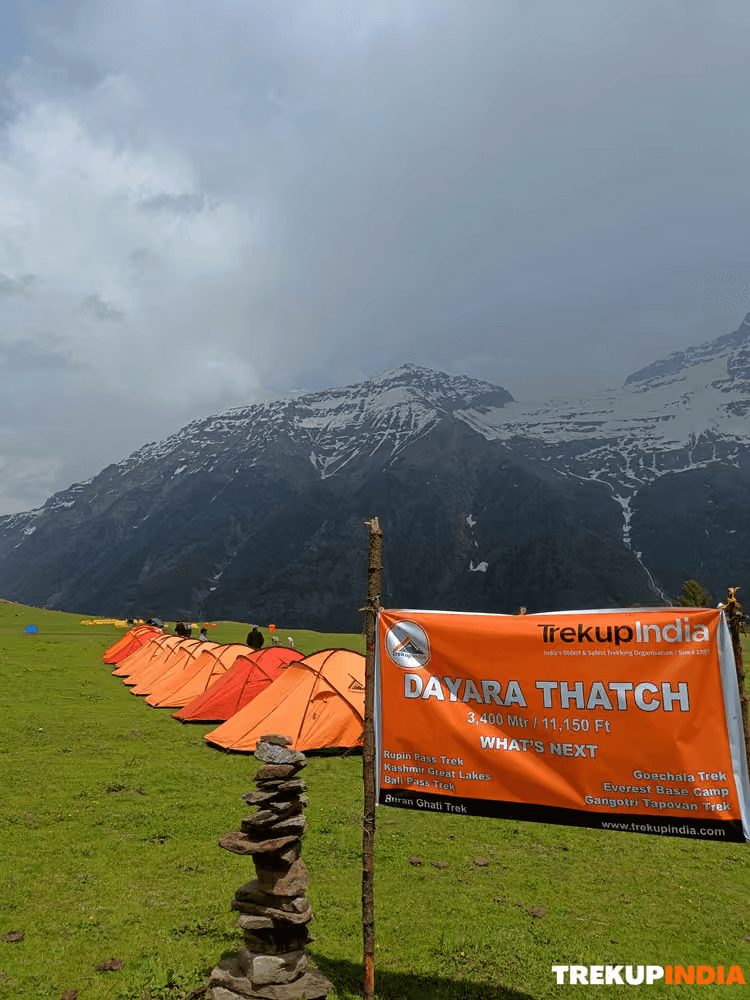
After reaching the basecamp Janglik on Day 1, it's time to start your trek journey from Day 2, base camp Janglik to Dayara Thatch by covering a distance of 7Km completed in 5 - 6 hrs and from Dayara Thatch to Litham a trek of 5Km takes place after reaching the campsite there are some activities & hot meal for all the trekkers. On Day 4 from Litham campsite to visit Chandranahan lake a distance of 7 km covers in 5 - 6 hrs, then back to the same campsite Litham. On Day 5, Litham to Dhunda distance of 4 km covered in 5 - 6 hrs. On Day 6, trek from Dhunda to Munirang by covering a distance of total 7.9 km in 10 -11 hrs by having all the meals completely at the designated campsite. On Day 7, after having breakfast our trek from Munirang to Barua village starts with a distance of 7 Km in 4 - 5 hrs after reaching the Barua village you have a buffer time for the lunch at your own cost there, after having lunch, our trekup India taxi will pick you from Barua Village and leave you at the Old Bus Stand, Shimla safely by 10 - 11 Pm.
Planning Your Return Journey from Barua Village to Shimla
Once you have completed the Buran Ghati Trek, returning should be overwhelming with good memories, pictures and new friends on the trek. Our Trekup India vehicle will pick you from the Barua Villlage and leave you at the dropping point Old Bus Stand, Shimla. If you have already opted for transport with us.
| Element | Timing | Proactive planning |
|---|---|---|
Breakfast | 6:30 AM - 7:30 AM | 6:30 AM- 7:30 AM - This is the ideal time to get some breakfast at Munirang campsite. |
Departure | 02:00 PM onwards | Departing on time means you have no delays to reach Shimla. Your guide must confirm the taxi departure time in the morning or a night before. |
Arrival in Shimla | 10:00 PM – 11:00 PM (Expected) | After covering the beautiful trek, it's time to go back with good memories. Our taxi is going to leave you at the dropping location Old Bus Stand, Shimla. |
Suggestions: Book your return transport after 11.00 PM & for security you should also keep a buffer of 1-2 hours for your return journey in case there might be delayed due to traffic, land slides or vehicle breakdown.
Return From Shimla to your Hometown
We have mentioned details of various means of transport like flight, train and bus with the estimated timings, so book accordingly with your preferred time. Below mentioned information helps you to choose and book for your return journey.
Note: The timings are subject to change and will vary day by day. Also the mentioned timing is written in 24 hours format.
By Flight / By Train
There are a number of flights and trains departing from Chandigarh and Kalka to various designated cities on time. On the whole, you can book your flight or train from Chandigarh and Kalka as there are many availability of flights and trains directly to your hometown.
Suggestion: Try to travel by bus to reach Kalka and Chandigarh you can further book your train/ flight to your hometown.
By Bus
There are a number of buses departing directly from Shimla to Delhi with variation in departure and estimated arrival time. Makesure you book your travel according to the time that suits you after reaching Shimla.
Safety Aspects and Emergency Exit for Buran Ghati Trek
1. Understanding Trek Safety
Your trek leaders and trek guide have years of experience in getting you to the summit but most importantly back to safety. Trekking at high-altitude requires a huge amount of respect for the mountains and therefore there is a correct, safe way of doing things throughout, especially on a challenging trek like Buran Ghati. This responsibility starts with full understanding of Acute Mountain Sickness (AMS) prevention, a strict adherence to the gradual ascent plan, and absolute understanding of emergency procedures. Your ability to follow safety procedures will determine the success and enjoyment of the trek.
2. Acute Mountain Sickness (AMS)
Altitude sickness (Acute Mountain Sickness or AMS) is the result of the body being unable to adapt lower levels of oxygen pressure (*hypoxia*) at high altitudes (usually over 8,000 feet). The risk is that untreated AMS will progress to High Altitude Encephalopathy (HACE) or High Altitude Pulmonary Edema (HAPE) if the person keeps trekking higher in a state of unequipped acclimatization.
Important Symptoms of the Acute Mountain Sickness (AMS):
Mild AMS:
- Headaches are the most significant and common sign.
- Nauseous feeling, lack of desire to eat, and general tiredness.
- Poor sleep (insomnia).
Severe AMS (HACE warnings):
- Difficulty balancing and trekking straight (unable to walk a straight line - "heel-to-toe" test).
- On-going severe headache that can't be helped with medication.
- Confusion or some alteration in understanding.
Severe AMS (HAPE warnings):
- Unable to breathe without feeling short of breath.
- Persistent cough with wet/sputum or sometimes pinkish-tinted frothy mucus.
- Excessive tiredness and feeling of heavy pressure in the chest area.
Precautionary Measures of AMS
1. Ascent Gradual
- The 7-day itinerary from Shimla to Barua Village has been set up to allow for acclimatisation. You are advised not to skip camps and rush up the mountain.
- The principle of Trekking High and Staying Low at the Base Camp helps you get acclimatised.
2. Hydration and Nutrition
- You need to drink 3-4 litres of water every day. If you become dehydrated, it will only make any AMS (Acute Mountain Sickness) symptoms worse.
- You should continue to drink a lot of water, even when you don't feel thirsty. At the campsite, you will also be provided with a high-carbohydrate diet which will give you the energy to acclimatise.
- Do not drink alcohol or caffeine.
3. Pacing and Movement
- Use the Trekker's Shuffle to keep a slow and consistent pace. Do not waste energy on speed and frequent stops.
- Use trekking poles to maintain your balance and to absorb some of the pressure on your joints when doing the long descent on day six.
- Always try to remain in sight of your friends and the guide when out trekking.
4. Medication
- Talk to your Doctor regarding the use of Diamox (Acetazolamide) to help alleviate AMS.
- Discuss starting this medication one or two days before reaching altitude if it is prescribed over a prescription.
- Remember to carry any personal prescription medications and basic pain relief (for example Ibuprofen) in your day pack.
3. Emergency Response and Evacuation
Emergency response and evacuation on the high-altitude Buran Ghati Trek is dictated by the cold, harsh reality of being completely isolated and by the mountaineering Golden Rule of doing what's necessary to safely retreat and descend as quickly as possible. The trek reaches elevations of up to 15,000 ft. Therefore, acute mountain sickness (AMS) and high-altitude pulmonary edema (HAPE) are treated quickly retreating to a lower campsite, such as Litham or Dhunda, to relieve life-threatening pressure from AMS and/or HAPE on the trekker's body. Getting trekkers evacuated down in the rugged mountains of Buran Ghati is seldom done via mechanized means. Trekkers are usually carried manually down to the nearest road head (e.g., Janglik or Barua) by the trek guides or pony down a long, grueling, hard-to-navigate trail. Moreover, with a 400-meter vertical ice wall on the Barua side of the ridge, there is considerable technical risk involved with evacuating a trekker from such a treacherous area. Therefore, when a robust response plan is developed, it must include the use of fixed-rope rescue techniques and pre-identified safe zones where a trekker can use portable oxygen while waiting for an 8-hour rescue to the first medical facility in Rohru.
Action Plans: High Altitude Emergency
In the event of an emergency at high altitude on the Buran Ghati trek, the procedure follows a six-step assess stabilise descend protocol to manage all the associated risks to an individual at 4500 m (15,000 ft):
1. Medical response: Immediate delivery of supplemental oxygen and altitude specific medications (eg. Diamox for altitude sickness), followed by a mandatory 1,000 m (3,000 ft) descent to the nearest lower camping areas (Litham).
2. Technical rescue: Installation of fixed line anchors and hauling systems for emergency slips on the (1,300 ft) vertical ice wall on Barua Glacier, and ensure that the injured individuals are moved to a flat, general safe zone until rescue is completed.
3. Weather Protocol: All teams will follow a strict 10:00 AM turn around time at the pass; if the team has not reached the summit after being at the top of the pass for 30 minutes or more, they will return to High Camp to avoid any possible afternoon blizzards.
4. Evacuation logistics: Rapid transportation is arranged for all injured persons from the incident site to the road heads at either Janglik or Barua by either a pack pony or manually carried; from there they will be taken to the hospital in Rohru by a pre-coordinated 4x4 vehicle transfer.
5. Communication: Send status updates via satellite phone or radio to the base camp coordinator in Shimla to coordinate transportation from the trailhead to the hospital.
4. Trekkers Responsibility for the Trek
1. Personal Health and Honesty:
- Report Symptoms: You must report any illness symptoms to your trek leader or guide as soon as they occur. Symptoms include headache, nausea or any other uncharacteristically extreme fatigue. Do not attempt to conceal these symptoms so that the group will not be held up due to your illness symptoms.
- Fitness: You are responsible for preparing yourself physically for the trek and ensuring that you have consulted with your physician regarding the effects of altitude, vaccinations you may require, and the proper medications you may require as a result of altitude treks.
- Hydration: You are responsible for consuming your daily requirements of water (3-4 litres). Expect and do not wait for your guide to remind you to hydrate, as you are responsible for doing so.
2. Gear & Equipment:
- Mandate kit: Ensure you have the appropriate gear and equipment for the trek; this includes wearing clothes that are appropriate for the weather; layers for cold; and using well broken-in boots.
- Headlamp Readiness: You should carry an operational head lamp, and charge it before the trek. You should also carry extra batteries and keep sensitive electronic equipment and batteries warm to prevent them from draining due to cold conditions.
- Personal First Aid Kit: It's a good idea for you to carry a small personal first aid kit with you. Basic supplies should include band-aids, blister treatment, antiseptic, and any prescription medications.
3. Conduct on the Trek:
- Follow Instructions: Follow the trek leaders instructions regarding pace, route, camp protocols and the use of safety equipment such as microspikes or trekking poles.
- Maintain group integrity: To maintain group integrity, do not trek solo on any trail or trek; always stay in sight of the group and be with the designated guide.
- Leave no trace: To reduce environmental impact, you must properly dispose of any non-biodegradable items (plastic packaging, drink bottles, etc.) and not pollute local water sources. Remember to respect the natural environment by respecting the plants and animals found in the area.
4. Teamwork & Respect
- Respect Local Cultures: Be conscious of the customs, way of life, and religious sites of the people who live near the trails and do not interfere with their lives.
- Support Other Trek Participants: Encourage other trekkers by giving them advice when necessary. Notify a guide if you think a teammate is in distress or danger. A team that cares for each other is a safer team.
5. Emergency Exit of the Buran Ghati Trek
The Buran Ghati Trek is an essential part of the navigation system for trekkers who need an alternative to continue their trekking through the unpredictable high-altitude weather conditions of Pabbar Valley. Unlike other regular routes, where you can make a U-turn when you realize you cannot proceed, the crossing at 15,000 feet over the Buran Ghati presents a point of no return with geographical significance, demanding separate evacuation strategies. On the Janglik (West) side, the primary exit for emergencies is to make a fast exit through the large open meadows of Litham until you reach the road head; however, on the Barua (East) side, the only exit after you cross the pass is to make a very steep technical descent to get to find the Sangla Valley. An emergency exit plan is not merely a thought; it is part of a proper safety plan that has been established to identify the unusual risks of trekking over the extreme vertical ice wall, which rises 400 meters, and the absence of any means of communication in the remote and mountainous high northern parts of the Himalayas.
1. Primary Evacuation Points
- West Roadhead (Janglik or Litham): If the emergency occurs before crossing the pass (as at Dayara, Litham, or Dhunda), Janglik Village will be the Emergency Extraction Point. A descent of about 12-14 km (Pabbar Valley) from the High Camp (Dhunda) would allow for Emergencs Assistance in a timely manner.
- East Roadhead (Barua/River Camp): The Barua Village (Sangla Valley) will be the extraction point after the ice wall is trekked (400m); approximately 5-7 km will be necessary to reach the extraction point from River Camp (steep downhill trek through blue pine forest).
2. Medical Facilities/Exit Plan
The following list shows the levels of medical care available based on severity of altitude sickness or injury:
- Tier 1 (INSTANT STABILIZATION): Trekkers will be able to receive Oxygen/Diamox medication from the Trek Leader at Camp. There is a basic medical facility at Chirgaon, Janglik Side.
- Tier 2 (SECONDARY CARE/ICU): The Civil Hospital in Rohru is the first stop for medical care in trauma; this will be the first medically operated facility for a Janglik evacuation; there are also other medically accepted options (Community Health Centre in Sangla or the District Hospital in Reckong Peo) for Barua evacuation trekkers.
- Tier 3 (TERTIARY CARE): In case of Life-Threatening emergencies, the patient will have to be transported to a facility outside of the area.
3. Police Station and Emergency Protocols
Trekkers on the Buran Ghati trek must register at forest check-posts before starting their trek due to the division of emergency response protocols between Chirgaon Police Post (Janglik side) and Sangla Police Station (Barua side). If a major incident occurs, the protocol calls for sending a runner to a nearby village to notify either the SDM of Rohru or Sangla. One of these SDMs will be able to legally authorise any state level search & rescue operations including helicopter evacuations. The authorities require a documented record of all medical evacuations to be completed through the Police Daily Diary (DD) at the nearest police station for both legal and insurance purposes. The RFO must also be notified of any obstructions or hazards on the trail.
Emergency Contact Details
- Integrated Emergency Help: 108 / 112
- Civil Hospital Rohru: 01781-240009
- Police Station Sangla: 01786-242617
The Essential Buran Ghati Trek Packing List: Pack for Adventure & Safety
- Extremity Protection: Must have UV blocked sunglasses (the only way to protect against snow blindness), waterproof gloves, and a warm balaclava/cap to protect your most exposed areas.
- Layering System: Utilize multiple layers of synthetic or wool insulation clothing (acceptable, no cotton) to manage body temperature and moisture to prevent chilling.
- Waterproof Footwear: Durable waterproof trekking boots at least mid-calf are required so your feet and ankles remain protected on snow and ice.
1.Major gears: The frontline of protection
| Item | Characteristic Feature | Pro-tip |
|---|---|---|
Waterproof, Ankle-Height Trekking Boots | These are high quality boots with stiff rubber soles that prevent water entry. | Must be fully broken in. Good with a deep aggressive grip to avoid injury in toe or fingers. |
Trekking Poles (Pair) | Provide 2 additional points of contact for stability on snow / ice and reduce impact on knees while descending. | Use them together to distribute the weight of your pack, this can reduce stress on your knees and ankles. |
Waterproof Gloves (2 pair) | Protects against cold injury. Having two pairs that allows warmth while protecting your hands. | Keep the shell of gloves dry for a waterproof layer for handling snow and keep the inner liner for warmth. |
Gaiters (required) | Create a seal between your boots and trousers to prevent snow from entering your boots / sock. | Put your gaiters on as soon as you reach the snowline; avoiding snow wetting your socks / boots minimizes risk for cold injury. |
High-Grade SPF Sunscreen and Lip Balm | Protects against severe sun / wind burn. It is important for exposed skin at high altitude due to reflection from snow. | Reapply sunscreen to face, neck, and ears every 2 hours spent on the snow. |
Sunglasses (Category 4) | Highest level of protection required to protect against temporary blindness (photokeratitis) | Do not remove sunglasses when you are on the snow because snow can reflect 80% of UV light back into your eyes. |
2.Clothing: The layering system
| Category | Item | Specification & Reason |
|---|---|---|
Headwear | Warm Beanie / Balaclava | Must be thick wool or fleece; cover the ears completely. Important in retaining body heat, as a large percentage of body heat is lost from the head. |
Wide-Brim Sun Hat or Buff | Light material (hat) or synthetic tube (buff). Protects face, neck, and scalp from high-altitude UV radiation from the sun. | |
Upper Body | Moisture-Wicking T-Shirts (2) | Choose Synthetic (polyester) or thin Merino wool; short or long sleeve because cotton actively makes you cold and uncomfortable when you sweat. |
Thermal Base Layer (1) | Mid-weight Merino wool or synthetic long-sleeve top. Provides immediate insulation; it will lock in body heat as the starting point of your heat-trapping system. | |
Fleece Jacket (1) | Mid-to-heavy weight (200-300 GSM) fleece or softshell jacket full of insulation. This layer provides the best warmth-to-weight ratio It can be worn alone or under your shell. | |
Insulated Puffed Jacket (1) | Down or synthetic insulation; rated for 0∘C and below. Your main source of heat protection for cold night camping, evening, and the summit push when below freezing conditions are anticipated. | |
Waterproof & Windproof Jacket (1) | Shell material (e.g. Gore-Tex equivalent) with taped seams. Your outer barrier (shell layer) keeps the rain, snow and penetrating wind out from the mountains. | |
Lower Body | Quick-Dry Trekking Pants (2) | Synthetic, lightweight, and preferably stretchable or convertible. Durable for comfortable walking, fast drying after getting wet from rain or snow. |
Thermal Base Layer (1) | Mid-weight thermal bottoms (wool or synthetic). Vital layer of insulation under your trekking pants in cold walking conditions at camp. | |
Waterproof Rain Pants (1) | Lightweight, packable shell pants. These will protect your trekking pants and base layers from getting wet when it's snowing or raining heavily. | |
For Feets | Create a seal between your boots and trousers to prevent snow from entering your boots / sock. | Put your gaiters on as soon as you reach the snowline; avoiding snow wetting your socks / boots minimizes risk for cold injury. |
Trekking Socks (4-5 pairs) | Wool or some kind of synthetic blend (not cotton). 1-2 pairs should be extraordinarily thick for nights. These will manage moisture in your foot to reduce blisters and provide warmth at night sleeping in a bag or in boots! | |
Camp Shoes | Lightweight sneakers, sandals, or slippers. You'll want these to dry out your trekking boots and let your feet rest when at the campsite. |
3.Equipment & Essentials
| Category | Item | Important Notes |
|---|---|---|
Backpacks | Main Rucksack (50-60 L) | For Porter. Good frame of posture and hip belt required. |
Daypack (20-30 L) | Daily carry. Must have water, layers, snacks, camera, and gloves in your daily essentials. | |
Sleeping bag & liner | Sleeping Bag (Rated to −10∘C / 14∘F) | Confirm if Trekup India provides a sleeping bag; if you're renting your bag, make sure it is a reputable outfit. |
Sleeping Bag Liner | A liner adds additional warmth and keeps your bag clean. | |
Hydration | Insulated Water Bottles (2x 1L) | CRUCIAL: No hydration bladders (the tube will freeze). Insulated bottles will keep your water from freezing. |
Hydration Tablets/ORS | Make sure you have enough hydration tablets and/or Oral Rehydration Solution (ORS) which are important for replacing electrolytes lost at high altitude. | |
Safety & Navigation | Headlamp with extra batteries | Essential for crossing the pass started early in the morning. |
Basic First-aid kit | With plasters (Compeed!), Band-Aids, antiseptic, pain medication, and then any of your personal medications you might need. | |
Personal | Personal toiletries | Toothbrush, tooth paste, biodegradable soap, toilet paper (pack out!), and hand sanitizer. |
Quick Dry Towel | Material should be water absorbent with light in weight and small in size. | |
Power bank | There will be no place to charge devices on the trek. |
4.Essential Documents
- Government-issued Photo ID
- Indians: Aadhar Card, Voter ID, or Driving License.
- Foreigners: Passport and Indian Visa.
- Must Have: Necessary for verification at the Basecamp and Forest Department checkpoints.
- ID Copies (2 copies): Also submitted for the forest authorities for required trekking permits, etc.
- Medical Certificate & Undertaking Form: a form (usually provided by your operator- Trekup India) signed by an MBBS registered doctor confirming that you are fit for high altitude trekking.
5.Important tips by the trek leader (from their experience)
- Three Second Rule: If you can’t immediately think of a reason to pack an item, simply don’t pack it.
- Layer Duplication Rule: You cannot pack more than two of the same, heavy layer (e.g., two heavy fleece jackets). A proper layering system will give one item a temperature range.
- Multi-Use Only: Every item should have a minimum of two functions (e.g., balaclava can be a sweat rag, shade your face from the sun, or act as a neck gaiter).
- Boot Break-In Rule: Don’t take new boots on a hike unless they have over 50 miles already walked in them. Boots need proper break-in time before using them outside.
- Base System Check: Set up your sleeping system (sleeping bag, liner, pad) in your house, on the day before the trek.
- Pack System Test: Wear your complete layering and set it up in similar cold/wet conditions to find any cold spots and distributed moisture.
- Comfort Item: Allow yourself one small item which is not a necessity. (ex. good book, tiny bottle of whiskey, small pillow).
- Ear Plugs: These are essential to block noise from the other trekker/ trek activities at the camp site ensuring you get your sleep without interruption.
- Camp Footwear: Lightweight flip-flops, Crocs, or just down booties that you can wear inside the tea house tent. Getting your feet out of your boots is total bliss.
- Carry Everything Out: This is the most important. Nothing goes under the ground or in a fire pit—especially plastic, tin foil, or batteries.
- Human Waste: If there are no bathroom facilities, you need to bury human waste to a minimum of inches deep at least away from any water source or trail. Be sure to pack out toilet paper.
6.Final Verdict:
- Extremity Protection: Must have UV blocked sunglasses (the only way to protect against snow blindness), waterproof gloves, and a warm balaclava/cap to protect your most exposed areas.
- Layering System: Utilize multiple layers of synthetic or wool insulation clothing (acceptable, no cotton) to manage body temperature and moisture to prevent chilling.
- Waterproof Footwear: Durable waterproof trekking boots at least mid-calf are required so your feet and ankles remain protected on snow and ice.
7.Major gears: The frontline of protection
| Item | Characteristic Feature | Pro-tip |
|---|---|---|
Waterproof, Ankle-Height Trekking Boots | These are high quality boots with stiff rubber soles that prevent water entry. | Must be fully broken in. Good with a deep aggressive grip to avoid injury in toe or fingers. |
Trekking Poles (Pair) | Provide 2 additional points of contact for stability on snow / ice and reduce impact on knees while descending. | Use them together to distribute the weight of your pack, this can reduce stress on your knees and ankles. |
Waterproof Gloves (2 pair) | Protects against cold injury. Having two pairs that allows warmth while protecting your hands. | Keep the shell of gloves dry for a waterproof layer for handling snow and keep the inner liner for warmth. |
Gaiters (required) | Create a seal between your boots and trousers to prevent snow from entering your boots / sock. | Put your gaiters on as soon as you reach the snowline; avoiding snow wetting your socks / boots minimizes risk for cold injury. |
High-Grade SPF Sunscreen and Lip Balm | Protects against severe sun / wind burn. It is important for exposed skin at high altitude due to reflection from snow. | Reapply sunscreen to face, neck, and ears every 2 hours spent on the snow. |
Sunglasses (Category 4) | Highest level of protection required to protect against temporary blindness (photokeratitis) | Do not remove sunglasses when you are on the snow because snow can reflect 80% of UV light back into your eyes. |
8.Clothing: The layering system
| Category | Item | Specification & Reason |
|---|---|---|
Headwear | Warm Beanie / Balaclava | Must be thick wool or fleece; cover the ears completely. Important in retaining body heat, as a large percentage of body heat is lost from the head. |
Wide-Brim Sun Hat or Buff | Light material (hat) or synthetic tube (buff). Protects face, neck, and scalp from high-altitude UV radiation from the sun. | |
Upper Body | Moisture-Wicking T-Shirts (2) | Choose Synthetic (polyester) or thin Merino wool; short or long sleeve because cotton actively makes you cold and uncomfortable when you sweat. |
Thermal Base Layer (1) | Mid-weight Merino wool or synthetic long-sleeve top. Provides immediate insulation; it will lock in body heat as the starting point of your heat-trapping system. | |
Fleece Jacket (1) | Mid-to-heavy weight (200-300 GSM) fleece or softshell jacket full of insulation. This layer provides the best warmth-to-weight ratio It can be worn alone or under your shell. | |
Insulated Puffed Jacket (1) | Down or synthetic insulation; rated for 0∘C and below. Your main source of heat protection for cold night camping, evening, and the summit push when below freezing conditions are anticipated. | |
Waterproof & Windproof Jacket (1) | Shell material (e.g. Gore-Tex equivalent) with taped seams. Your outer barrier (shell layer) keeps the rain, snow and penetrating wind out from the mountains. | |
Lower Body | Quick-Dry Trekking Pants (2) | Synthetic, lightweight, and preferably stretchable or convertible. Durable for comfortable walking, fast drying after getting wet from rain or snow. |
Thermal Base Layer (1) | Mid-weight thermal bottoms (wool or synthetic). Vital layer of insulation under your trekking pants in cold walking conditions at camp. | |
Waterproof Rain Pants (1) | Lightweight, packable shell pants. These will protect your trekking pants and base layers from getting wet when it's snowing or raining heavily. | |
For Feets | Create a seal between your boots and trousers to prevent snow from entering your boots / sock. | Put your gaiters on as soon as you reach the snowline; avoiding snow wetting your socks / boots minimizes risk for cold injury. |
Trekking Socks (4-5 pairs) | Wool or some kind of synthetic blend (not cotton). 1-2 pairs should be extraordinarily thick for nights. These will manage moisture in your foot to reduce blisters and provide warmth at night sleeping in a bag or in boots! | |
Camp Shoes | Lightweight sneakers, sandals, or slippers. You'll want these to dry out your trekking boots and let your feet rest when at the campsite. |
9.Equipment & Essentials
| Category | Item | Important Notes |
|---|---|---|
Backpacks | Main Rucksack (50-60 L) | For Porter. Good frame of posture and hip belt required. |
Daypack (20-30 L) | Daily carry. Must have water, layers, snacks, camera, and gloves in your daily essentials. | |
Sleeping bag & liner | Sleeping Bag (Rated to −10∘C / 14∘F) | Confirm if Trekup India provides a sleeping bag; if you're renting your bag, make sure it is a reputable outfit. |
Sleeping Bag Liner | A liner adds additional warmth and keeps your bag clean. | |
Hydration | Insulated Water Bottles (2x 1L) | CRUCIAL: No hydration bladders (the tube will freeze). Insulated bottles will keep your water from freezing. |
Hydration Tablets/ORS | Make sure you have enough hydration tablets and/or Oral Rehydration Solution (ORS) which are important for replacing electrolytes lost at high altitude. | |
Safety & Navigation | Headlamp with extra batteries | Essential for crossing the pass started early in the morning. |
Basic First-aid kit | With plasters (Compeed!), Band-Aids, antiseptic, pain medication, and then any of your personal medications you might need. | |
Personal | Personal toiletries | Toothbrush, tooth paste, biodegradable soap, toilet paper (pack out!), and hand sanitizer. |
Quick Dry Towel | Material should be water absorbent with light in weight and small in size. | |
Power bank | There will be no place to charge devices on the trek. |
10.Essential Documents
- Government-issued Photo ID
- Indians: Aadhar Card, Voter ID, or Driving License.
- Foreigners: Passport and Indian Visa.
- Must Have: Necessary for verification at the Basecamp and Forest Department checkpoints.
- ID Copies (2 copies): Also submitted for the forest authorities for required trekking permits, etc.
- Medical Certificate & Undertaking Form: a form (usually provided by your operator- Trekup India) signed by an MBBS registered doctor confirming that you are fit for high altitude trekking.
11.Important tips by the trek leader (from their experience)
- Three Second Rule: If you can’t immediately think of a reason to pack an item, simply don’t pack it.
- Layer Duplication Rule: You cannot pack more than two of the same, heavy layer (e.g., two heavy fleece jackets). A proper layering system will give one item a temperature range.
- Multi-Use Only: Every item should have a minimum of two functions (e.g., balaclava can be a sweat rag, shade your face from the sun, or act as a neck gaiter).
- Boot Break-In Rule: Don’t take new boots on a hike unless they have over 50 miles already walked in them. Boots need proper break-in time before using them outside.
- Base System Check: Set up your sleeping system (sleeping bag, liner, pad) in your house, on the day before the trek.
- Pack System Test: Wear your complete layering and set it up in similar cold/wet conditions to find any cold spots and distributed moisture.
- Ear Plugs: These are essential to block noise from the other trekker/ trek activities at the camp site ensuring you get your sleep without interruption.
- Camp Footwear: Lightweight flip-flops, Crocs, or just down booties that you can wear inside the tea house tent. Getting your feet out of your boots is total bliss.
- Carry Everything Out: This is the most important. Nothing goes under the ground or in a fire pit—especially plastic, tin foil, or batteries.
- Human Waste: If there are no bathroom facilities, you need to bury human waste to a minimum of inches deep at least away from any water source or trail. Be sure to pack out toilet paper.
12.Final Verdict:
Buran Ghati Trek Cost Inclusions and Exclusions
The concept of pricing is the key part of your trekking journey. It defines the value and experience you receive for the price you pay for your trek. For a structured high altitude trek, like Buran Ghati operated by Trekup India provides transparency with the cost & amenities provided to our trekker. Inclusions provide clarity in respect to operator's responsibility; essentially every necessary service, logistical support, group equipment, and permit to have a safe and fully supported trek from start to finish while exclusions provide clarity in respect to individual's responsibility, for all expenses related to personal choice (like a porter), necessary contingency items (like insurance), or mandated fees examined outside the package price (like GST).
Total Trek Cost: ₹16,750 / person + 5% GST (Mandatory)
Included in the trek cost
All the items that are included in the trek cost customised by Trekup India are mentioned below with pre, during and post trek support.
1 - Pre-Trek Support by Experienced Trek Coordinators
This is a special component of Trekup India, where a personalized trek coordinator is assigned to each trekker and who makes your preparation easy before coming on a trek, all your doubts, queries, myths are clarified, and you are mentally and physically guided to ensure that you come fully fit for your adventure. Every aspect from what to carry, what exercises need to be done, and how to prepare yourself for the trek, all will be guided by Trekup India’s Experienced Trek Coordinators.
2 - What is included during the trek
The offered cost covers all major essentials that are mandatory for a successful Adventure, such as accomodation, meal, permit, team of experts, trek equipment, safety gears and mules / potters support. We provide you all the services that are involved in the trek. Below find specifics.
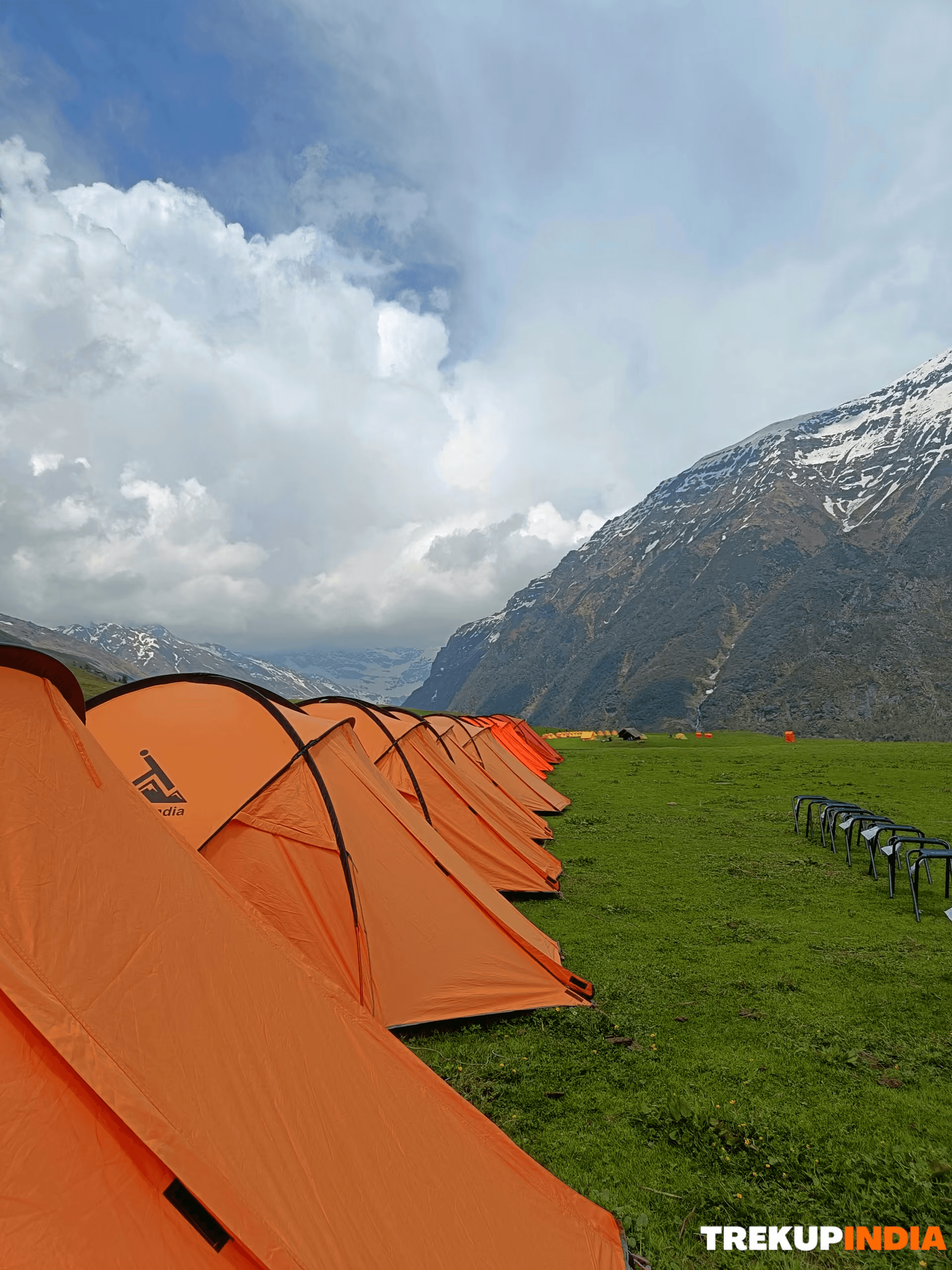
Accommodation: 1 Night accommodation at the Janglik guesthouse and 5 Nights accommodation in Dome style customised tents of Trekup India on Triple sharing basis. You will find the best tent accommodation with proper hygiene and reliability for both water and wind proof perspective.
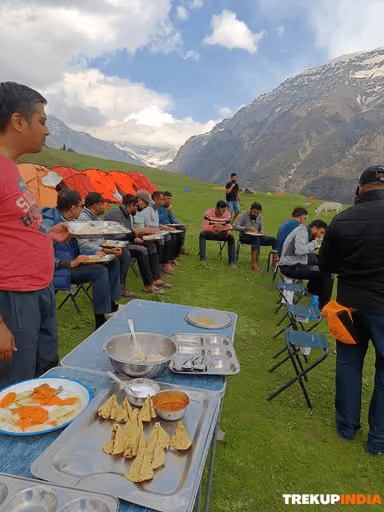
Meal: Your meals with Trekup India starts with evening tea & snacks on day 01 in Janglik and ends with breakfast on Day 07 at Munirang. All meals provided by Trekup India involve pure vegetarian and nutritious meals. We offer you breakfast, lunch, tea, snacks and dinners. The meals are freshly cooked and non repeated with delicious sweet dishes each night.
Food Preferences for Jains
A large percentage of our trekkers belong to the Jain community, therefore we understand their concern very well. When we have Jain trekkers on our treks, we will create special, custom-made meals without garlic and onion. We cook these separately from other foods prepared by us, maintaining the same great quality, taste, and hygiene.
Special Occasions Celebration
Whether it is a birthday, anniversary, group summit, or another event, we enjoy celebrating all these occasions with you by presenting you with a cake that is freshly prepared for your special moment. Trekup India will ensure that every special moment you have here is never forgotten; in fact, it will become an extra special moment.
Permit: All camping and Trekking Permits from Forest Department, full assistance in documentation and formalities will be given by the team Trekup India.
Team of Experts & Professionals:
- Trek Leaders: Qualified and Experienced Trek Leaders to lead your group when on Trek. Trekup India Trek Leaders are AMC, BMC certified and trained for immediate First Aid with search & rescue Course.
- Assistant Trek Leaders: They are superwise under the Trek Leader guidance focussing on the safety, logistics and trekkers engagement.
- Local Guides: Experienced local guide familiar with region & routes. They understand the way of conduct better, especially being locals.
- Support Staff: A team of high altitude including mountain chefs and Helpers to prepare and provide you healthy and freshly cooked meals on your trek.
Trek Equipment: Trekup India provided high quality of trekking equipments for your adventure, all equipments provided on the trek is 100% customised by Trekup India, any equipments provided is tested on high altitude by our mountain experts and thereafter qualified for use of our trekkers, each fabric and designed are carefully chosen.
- Dome Stye Trekking Tents: The sleeping tent we provide is 6/6 ft. in size giving extra comfort for your sleep in the high altitude.
- Sleeping Bags: To provide you warmth, comfort and cozy sleeping.
- Sleeping Mattresses: Warm Form mattresses are provided inside your dome tents.
- Kitchen tent: A designated area at the campsite where all the cooking staff prepare all the meals.
- Dining tents: A large common area where all the meals are ready to be served. It is the social space for enjoying meals together.
- Toilet tents: These are the private space away from the main campsite area to avoid smell and maintain hygiene. We have two separate toilets for male and female.
- Camp Chair/ Table: Portable stools and tables are provided at your campsite.
- Cooking & Service Utensils: All the necessary cooking and serving utensils.
Safety Gears: Trekup India stands proud itself that all our Treks and adventures operated since 1993 are without any single casualty as we take safety of our trekkers and staff on high priority, following are some of the gears that are included in your trek cost.
- Oxygen Cylinders
- First Aid and Medicine
- Stretchers
- BP Machine to regulate your blood pressure
- Oximeters to regulate your oxygen flow
- Health cards to measure your daily BP and Oxygen reading
- Walkies Talkies for Immediate communication
- Micro Spikes
- Gaiters
- Other Safety Equipment such as Helmets, Rops, Ice Axe, Carabiners much more as per technicality of a Trek.
- Porters / Mules Support: Porters / Mules are provided to carry your common trekking gear, rations, trekking equipment and other supplies.
3 - Post-trek Assistance
This section implies with the following -
- Trek Feedback and improvement advice call from your Trek Coordinators.
- How to overcome Trek injuries and settle to normal life.
- Advice and suggestions for Next Adventure Trek.
Completion Certificate:
It is the best way to recognize someone’s adventure journey with a certificate. A well recognized certificate (IMF, ATOAI & Uttarakhand tourism development board) approved is provided to the trekker by two ways:
- Reached at Summit: we are giving certificates of summiteer to those trekkers who have completed their trek at the Summit.
- Incomplete Summit: we also provide our certificate for those who have not reached the final summit due to medical reasons but they are part of the trek.
Buran Ghati Trek Difficulty: An Honest & Detailed Guide
The experience and views you will find in Buran Ghati makes this high altitude trek a classic experience and rank this trek moderate to difficult due to the elevation changes and the technical nature of the summit. This trekking route has an impressive maximum altitude of 15,000 ft. It also connects two very different areas of India, the lush and virtually orchard filled Pabbar Valley on one side and the higher desert-like region of Kinnaur on the other. The big challenge of this trek will be the technical pass crossing where there is a 400-metre near vertical descent down an ice wall that has snow covering it, requiring rappelling and fixed ropes. The first few days in the Dayara meadows will appear to be easy, but the last day of your trek will provide some difficult moraine to negotiate and the effects of less oxygen are a great way for fit trekkers to continue their transition from moderate trails to the more advanced himalayan treks.
Buran Ghati Trek Difficulty: A Factor-by-Factor Analysis
1. Terrain: Geology at High Altitude
- The Trail: The path from Janglik to Dhunda will change as it goes from soft mulch and alpine meadows in Dayara to chaotic boulders and shifting glacial moraine near Dhunda and then ends at a steep 400m vertical ice wall on the Barua side.
- The Challenge: The high ankle stability needed to traverse the scree (loosely connected rocks) and talus (larger boulders). To descend the ice wall, you will often be forced to rappel or use fixed ropes and this can also be mentally tiring if you have a fear of heights.
- Honest Take: The terrain will be difficult to traverse. If you have a lack of balance, or weak knees, then your biggest problem will be going down into the Barua Valley.
2. Altitude: Manageable, Not Neglected
- The Stats: You will start trekking at a lower elevation 9,200 ft. then continue to trek vertically to reach the highest elevation of 15,000 ft. You are going to gain about 6,000 ft. in elevation in only a few days.
- The Challenge: The relative amount of oxygen in the air at 15,000 ft. is approximately 40% less than that found at sea level. This translates into increased ventilation per minute even at rest and hence increases the chance of developing Acute Mountain Sickness (AMS) if one is not properly hydrated and careful about their pace.
- Honest Take: If you take your time, you will be able to acclimatize to the altitude. However, the increase in elevation from Litham to 15,000 ft. is the largest change in elevation on this route.
3. The Weather: Unpredictably Beautiful
- The Conditions: The sun can shine bright and warm your soul in the Pabbar Valley in the mornings—but when you reach the top of the pass, it could be 5 -10 degrees below Zero Celsius.
- The Challenge: The high-velocity winds at the Buran Ghati Pass can create rapid conditions for hypothermia. Rain in the lower meadows creates a mud-slide on the trail—making it much harder to get up to the top of the pass.
- Honest Take: Weather is the number one Gatekeeper of the Buran Ghati Pass. If the clouds come in when you're on the technical descent, it will be twice as dangerous for you. So always keep a buffer at the end of each day of your itinerary.
4. Duration and Remoteness: The Mental Aspect
- The Stats: A 7 day trek covering about 38 kilometers with no wireless coverage after Chirgaon.
- The Challenge: The disconnection from the real world for a week in an isolated wilderness could cause trail fatigue. Summit day consists of a 10-hour challenge starting at 2:00 AM, which will test mental stamina when your body is saying—give up.
- Honest Take: The beauty of the isolation is great until you hit the wall. You must be prepared to rough it and stay focused during the long, cold hours before sunrise on summit day.
So, is the Buran Ghati Trek Difficult? The Honest Verdict
It is obvious that you have experienced an awesome and intense adventure that combines trekking and simple mountaineering. A lot of treks in the Himalayas are straight incline trails, but Buran Ghati has the two distinct sections (the beginning is the pretty, rolling hills of Dayara, but the end entails), a very hard and technically challenging ascent over a 15,000 ft. pass. The tough part of the trek doesn’t only depend on the altitude and the long days, it is because of the extreme verticality of the 400m ice wall on the Barua side which makes a regular trek turn into a technical descent. For those who are prepared, you can expect rewards; however, if you are not prepared, be prepared to be humbled by the technical challenges of the trek and the rapid changes in elevation.
The Beginner: Friendly Myth
The concept that Buran Ghati is a beginner’s trek is a misleading myth based on how beautiful and gentle its first meadows appear. While the first two days of the trek are fairly easy, it becomes a high-stakes trek very quickly, requiring previous trekking experience at altitude and on steep slopes. Buran Ghati is unlike beginner trails in that there are no easy options to exit the trail once you reach the high camps; as a result, it requires a level of physical stamina and mental toughness that beginner trekkers typically do not possess. Consequently, Buran Ghati should only be attempted by those with at least two moderate high-altitude treks prior to completing this challenge.
The Summit Push: The Real Test
The final push to the top of Buran Ghati will require a sustained effort for 10 - 12 hours; it begins at 2 am in freezing temperatures with two hours of snowing while you are trekking before your final ascent to the top at 15,000 feet; this long ascent over frozen glacial moraines and steep snow faces can feel intense on your lungs because they will not have much oxygen when you reach this height. The next climax will be when you have to descend from the summit; the most difficult part of the descent is the last 400 meters on the Barua side of the mountain. Whether you are rappelling down a fixed rope or using a series of high-speed snow slides, the final push for the finish line will require maximum focus and effort to complete your task.
Who is this Trek Really for?
Buran Ghati is an amazing trek which is specially designed for the trekking person who has exceeded entry-level trails. They want to take a more technical step up from traditional trekking without committing to full style mountaineering. This trek is also perfect for the experienced trekker looking to try something new, with lots of technical, rope-dependent uphills and steep snow.
1. An Experienced Trekker: This is also an excellent trek for those who have done a number of easier treks or hikes (such as Roopkund, Hampta Pass, or Kedarkantha) and are looking for a technical challenge that will require them to work with ropes and ascent steep glaciers as part of their new adventure. An experienced trekker has also completed these types of treks with confidence and is prepared for a very physical and technical experience over the course of this trek.
2. A Fitness enthusiast: Trekkers who trek on an average of 1 mile per hour while maintaining a very rigorous cardio and strength training regimen (such as running 5 km in less than 30 min.) will need to be able to supply their bodies with enough energy to sustain their bodies over a 15,000 ft. ascent and descent on top of a mountain with extremely low oxygen levels.
3. A Diversity Pioneer: If you're looking for a trek that changes scenery daily, the last place for your trek will be a place to enjoy the beautiful scenery of old oak trees, beautiful alpine wildflowers, glacial rocks, and incredible ice walls every day.
4. A Mental Resilient: To be sure of your mental agility, you must be able to maintain your focus when the sun is rising at 2 AM, you are suffering from freezing temperatures in the Himalayas, and you are experiencing adrenaline in your descending 400 metres in a vertical ice wall without losing focus.
Honest Comparison with other treks
Buran Ghati Vs. Rupin Pass
Rupin Pass is a tremendous endurance test with a vertical elevation gain. It is also known for its three uphill waterfalls. Buran Ghati, though technically sharper, provides a greater degree of difficulty on the crossing from Rupin Pass (a steep watercolor needle through a narrow gorge) than does its counterpart at the base of Barua Peak, for example, usually requires ropes for ascent. If Rupin Pass represents a marathon of trekking, Buran Ghati represents an all-out sprint followed by a techie rappel.
Buran Ghati Vs. Bali Pass
In this case, most would consider Bali Pass to be the hardest trek of them all. Although Buran Ghati reaches a maximum altitude of over 15,000 feet, Bali Pass is approximately 16,100 feet and traverses an extremely dangerous knife-edge ridge. Additionally, although Buran Ghati is easily accessible and has fun snow slides, the Bali Pass is both more mentally and physically challenging because of the inherent altitude and extreme deterioration of the descent to Yamunotri (i.e., the knees will be torn up from the constant exfoliation).
Buran Ghati Vs. Pangarchulla Peak
The difference between the two treks is primarily that Buran Ghati is considered more of an adventure due to the cross-valley trekking experience compared to the summit oriented Pangarchulla; Buran Ghati also encompasses two valleys (the Pabbar and Sangla valleys), while Pangarchulla is simply making a stand on one point to take in the great peaks. Pangarchulla has less cultural stimulation than Buran Ghati even though it can be physically grueling with the continuous bouldering on the way up to the peak.
Verdict: Buran Ghati is the best all-rounder trail, which provides both the perfect transition from trekking to technical level of trekking. This is a more varied trek than Rupin Pass, and an easier trek than the hazardous Bali Pass, so this is the new gold standard for adventure for those who are in good physical condition. If you can handle a 12 hour summit day, and can cope with a 400m vertical drop, it could be considered the most rewarding mountain crossing at 15,000 feet through the Himalayas.
Final Advice: Prepare to succeed
The success you will achieve on the Buran Ghati Trek will depend much more on your previous preparation than the actual trek itself at a maximum elevation of 15,000 feet. To complete the trek successfully, there are many months of mental and physical preparation that must occur prior to making the actual summit attempt. The combination of quick altitude gain and a technical vertical descent will not allow for you to wing it and be successful. You will need the physical strength to handle the thin air at elevation and the mental fortitude to safely navigate a 400-meter vertical glacier wall while on the trek.
1. Physical Preparation: Engine Building
To reach the summit at around 15,000 feet, you'll need to train your body to function properly under low oxygen conditions while maintaining enough force (torque) to pull your body up and support yourself while descending from the top after you've reached the peak.
- Cardiovascular Endurance: Develop an adequate level of cardio vascular endurance (running a 5km course in 30 minutes) so you can complete the grueling 10-hour trek to the summit (during which you'll be under extreme cardiovascular stress).
- Lower Body Strength: You should work on doing weighted squats, step-ups, explosive squats and braking squats. You will need a lot of strength in your quads to control your descent down the very steep part of the Barua side.
- The Incline Factor: One last training tip is to train on stairs or steep incline hills (while carrying a pack weighing 5-7kg). This will help develop the specific muscles needed to help you to maintain your balance when you're trekking (and balancing) while moving around on the unstable surface of a glacial moraine.
2. Gear Preparation: Your Lifeline
Your gear is your only protection from nature. It must not only be properly packed; it must also be thoroughly tested prior to going on the trek.
- Footwear Core: You will need to wear high-ankle trekking shoes with good rubber to protect your feet from blisters during the long trek to Litham. Your shoes should be broken in no later than 3 weeks prior to departing for the trek to avoid suffering from blisters during the long trek to Litham.
- Technical Essentials: Because Buran Ghati is a steep ice wall, it is important to have good quality microspikes and gaiters that fit your boots well. Gaiters are essential in not letting snow into your boots during the 400m slide.
- Layering System: You will need to follow the three layering system rule (moisture wicking base layer, insulative fleece layer, wind and water-proof shell layer). Temperatures at the pass can fall to -10°C, and your gear should trap heat in addition to being used at high-velocity winds.
Fitness Required & Preparation Guide For The Buran Ghati Trek
- Training Plan (8- 12 Weeks)
- Cardiovascular Training
- Strength Training
- Breathing Exercises
- Meditation
- Weekly based workout activity
- Gear Preparation for the trek
- Physiological adjustments on the trek
1. Training Plan: 8 - 12 Weeks
A structured 8–12 week training plan designed to build stamina, strength, and endurance for a safe and successful trek.
- To build your cardiovascular stamina
- To strengthen your muscle group
- To prevent from the injury
- To cope up with the breathing problems
- To keep you focus with calm during the trek
2. Cardiovascular Training
Exercises focused on improving stamina, heart health, and endurance to prepare your body for long trekking days.
- Goal: Walk regularly at least 2-3 km per day, gradually increase your distance day by day.
- Specification: There are many things that you can do to prepare for trekking, and walking with a backpack on the trail represents the most direct stimulation of the different types of actions (movement) that will occur on a trek.
- Focus Shift: While the primary focus of the walking must be the distance (km), the focus should actually shift to Time on Feet (walking). Once you reach a point of comfortably walking continuously for 2-3 km you must move into a mode of challenge and attempt to walk continuously for 60-90 minutes.
- Benefits: Consistent walking allows your ligaments, tendons and joints to withstand the cumulative stresses of walking for 5-8 hours at a time, thereby reducing your chances of developing overuse injuries when trekking.
- Goal: Jogging and running are another form of endurance exercise, so start slowly building up your tolerance by gradually increasing the number of steps you take each time you jog/run, as well as building up a morning routine.
- Trek Elaboration: Running/jogging is an effective way to quickly increase your body's ability to take in oxygen; the Higher Rate of Oxygen Consumption (VO2 Max).
- Specificity: Include increments of grades on your routes, as running/hiking up a hill assists in developing your climbing muscles and running down a hill develops the eccentric strength of the knee and quad muscles to minimise the impact when descending.
- Goal: Cycling is an excellent low-impact method that develops strength and builds leg endurance, while producing minimal impact on the joints.
- Specification: Cycling is a great way to develop strength as you can pedal in high-resistance (high tension) for short segments of time that will replicate the power you will require in your legs when trekking up steep hills.
- Trek Focus: Cycling can also serve as a form of active recovery (increased circulation through light pedalling to reduce lactic acid build-up) after heavy strength training and / or hiking days.
- Goal: Walking with a weighted backpack (made of heavy material such as sand, rocks or concrete blocks) is critical to simulate a proper load and endurance preparation.
- Trek Specification: You should begin this method of training with a light bag (5-10% of your bodyweight) for 1-2 months before adding additional weight until you reach a maximum of 15% of your bodyweight by the end of your training period.
- Integration: Integrate these walking workouts into hilly or uneven terrain with your hiking boots and hiking poles. Training your core and stabilizer muscles (agility) about the changes in your centre of gravity allows your heart to adapt to the increased demands placed on it from an elevated level of circulatory demand. It allows your body to maintain balance.
- Main Benefit: The Burpee significantly increases your heart rate in a short period of time, which is an important component of building anaerobic capacity, as well as developing explosive power in the lower legs for steep, difficult hills during long-distance trekking.
- Muscles Used: The Burpee exercises nearly all of the major muscle groups, including: quads, hamstrings, glutes, chest, shoulders, triceps, and core.
- Key Tip: To avoid hip sagging and to help with protecting your lower back, maintain a flat back and engage your core when kicking back into the plank position.
3. Strength Training
Exercises aimed at building leg, core, and upper-body strength to handle steep climbs, descents, and carrying a backpack during the trek.
- Begin standing with feet shoulder-width apart, with toes pointed slightly outward.
- Lower down with your body by bending your knees and bending at the hips by pushing your hips back, all while keeping your back as straight as you can.
- Lower down as far as you can, ideally until your thighs are even with the ground, then to a height that is comfortable for you.
- Push through your heels, and back to the standing position.
- Begin standing upright, with feet hip-width apart, and hands at your sides or on your hips.
- Step forward with one foot, lowering your body until there is a 90-degree angle between your front thigh and your lower leg, and a 90-degree angle between your back leg and lower back thigh.
- Push through the heel of your front foot to elevate your body back to standing position while lowering your back knee closer to the forms as much as possible.
- Start on your elbows and toes, making a straight line from head to heels
- Tighten your core and hold
- Continue to breathe, while not sagging/arching your back.
- Sit on the ground with your knees bent, and feet flat.
- Lean back just a little so your core is engaged.
- With hands together, twist your torso to one arm's side, and then to the opposite side.
- Repeat to the desired rep scheme.
4. Breathing Exercises
Techniques to improve lung capacity, oxygen intake, and breath control for better performance at high altitudes.
5. Meditation
Practices to enhance mental focus, calmness, and resilience, helping you stay relaxed and positive throughout the trek.
- Focusing: The practice of focusing your attention on one specific object (e.g. a mantra, a candle, the breath) For example, when the mind wanders, you gently guide it back to the focus.
- Open Monitor Meditation (Mindfulness): The act of being non-judgmental toward whatever comes into your awareness, whether it is internal (thoughts, emotions, sensations) or external (images, sounds).
- Lower Stress Levels: Meditation helps reduce cortisol, the stress hormone, and can help alleviate anxiety symptoms.
- Stronger Focus Ability: By practicing meditation, we strengthen the neural pathways that allow us to remain focused and flexible cognitively.
- Greater Emotional Regulation: Through practicing meditation, people develop the ability to become aware of and recognize their emotions before acting on them, providing greater emotional stability.
- Better Physical Health: Practicing meditation helps decrease or increase blood pressure, heart rate, and improve quality of sleep.
6. Week Based Workout Activity
A structured, week-by-week workout routine designed to gradually improve fitness, strength, and endurance in preparation for the trek.
| Day | Workout Focus | Week 1 Target | Week 2 Target | Week 3 Target | Week 4 Target |
|---|---|---|---|---|---|
| Long Endurance | Sustained hiking or walking with a good grip of boots. | 90 minutes | 100 minutes | 110 minutes | 120 minutes |
| Moderate Cardio | Walking, light jogging and cycling by maintaining steady pace where walking is possible | 30 minutes | 35 minutes | 40 minutes | 45 minutes |
| Intensity | Stairs, treadmill on incline or hill repeat | 20 minutes | 25 minutes | 30 minutes | 35 minutes |
| Day | Workout Focus | Week 5 Target | Week 6 Target | Week 7 Target | Week 8 Target |
|---|---|---|---|---|---|
| Long Endurance | Start carrying ¼ target pack weight | 2.5 hours | 3 hours | 3.5 hours | 4 hours |
| Moderate Cardio | Performing exercise at higher speed than before | 50 minutes | 55 minutes | 60 minutes | 60 minutes |
| Intensity | Increase the intensity of your repeats or steepness of incline | 40 minutes | 45 minutes | 50 minutes | 60 minutes |
| Day | Workout Focus | Week 9 Target | Week 10 Target | Week 11 Target | Week 12 Target |
|---|---|---|---|---|---|
| Long Endurance | Carry ½ target pack weight. Target daily trek duration | 4.5 hours | 5 hours | 6 hours | 5 hours |
| Long Endurance | Back to back sessions. This session is done on day 2 of fatigue. | 3 hours | 3.5 hours | 4 hours | 5 hours |
| Intensity | Maintain intensity but reduce volume slightly to allow recovery | 45 minutes | 45 minutes | 40 minutes | Rest or 20 minutes light walk |
7. Gear Preparation for the trek
Planning and organizing all essential gear in advance to ensure comfort, safety, and readiness throughout the trek.
- Trekking Boots: Good-quality trekking boots (mid- or high-cut) not only protect the feet from the environment but also provide stability to the ankle and prevent rolling when walking on uneven terrain. Good-quality trekking boots are made with waterproof membranes (Gore-Tex, for example) to keep feet dry if they come into contact with moisture from the environment.
- Trekking Socks: Trekking socks serve a dual purpose as insulation and the intermediary between your foot and the boot. Synthetics and Merino wool are the preferred materials because they wick moisture away from the skin and keep your feet dry.
- Fit: A frequent mistake is loading the weight on the shoulders. Correctly fitted backpacks are designed so that most (70-80%) of the weight is carried on the hips with a hip belt and this helps to distribute the load and stress to the larger, stronger muscles of the legs and hips. You will need to learn how to adjust the sternum strap (for shoulder stabilization) and load lifters (straps on top of the shoulder straps) as you train to achieve the most efficient balance while walking.
- Packing: Heavier items should be placed as close to the back as possible, centred between the two shoulder blades to maintain your natural centre of gravity while carrying the backpack. Bulky, lighter weight items that will not be used during the day should be stored in the bottom storage (sleeping bag compartment). Strategic packing increases stability when walking, reducing the chance of muscle strain and unstable gait, especially on steep terrain.
- Base Layer: A base layer is used primarily to transport moisture. When you sweat, a base layer moves sweat away from your body and into the air for evaporation. If you wear cotton, your cotton base will absorb moisture, which rapidly decreases your core temperature when you stop exercising because it traps the moisture against your body and creates a "chill factor."
- Mid Layer: The mid-layer forms an insulating air gap around your core. This layer can be made of lightweight and quick-drying fleece, or synthetic or down-filled puffy jackets. When you stop for a short break, you can easily add or remove this layer to help maintain core temperature without stopping for an extended time.
- Outer Layer: The protective outer layer is essential. It should be made of a high-quality, breathable waterproof and windproof shell. The key feature of the outer layer is the ability to let internal vapour (sweat) out of the shell while preventing external moisture (rain or wind) from entering.
- Height Adjustment: When using trekking poles and adjusting them for height, the elbows should be up at a right angle (90 degrees) when the tip of the pole is on the ground next to the foot. When climbing uphill, the trekking poles should be slightly shorter to provide a better uphill climbing position. When going downhill, the trekking poles should be slightly longer to give you more reach and to provide additional braking ability. Mastering the skill of getting the height adjustment correct is essential for any activity.
- Head and Neck: Approximately 30% of body heat is expelled through the head; thus, the best (and quickest) way to warm the entire body is with a beanie or hat. A neck gaiter or Buff (which can be pulled over the nose and mouth, thereby warming cold air before being inhaled and provides a compact storage size) has a better fit than a traditional scarf.
- Gloves and Hand Warmers: It is often observed that your hands and feet are the first to be affected by exposure to cold temperatures; therefore, wearing waterproof gloves on the outside will help protect your hands from the cold.
- Medical Check: Consult your doctor especially when you are going on a trek at high altitudes. Discuss medication like Diamox for altitude sickness prevention.
- Dental Check-up: Get any necessary dental work done, a toothache on the trail is miserable.
- Vaccination: Ensure all the standard vaccinations are up to date.
- First Aid Kit: Prepare a medical kit on your personal behalf which includes all the important medication that is required in the trek.
- Blister Treatment: Compeer, moleskin and medical tape.
- Pain Relief: Anti-inflammatory or paracetamol.
- Stomach/Bowel: Anti-diarrhoea medication and broad spectrum antibiotic (prescribed by doctor).
8. Physiological Adjustment on the trek
The body’s gradual adaptation to altitude, terrain, and physical exertion to maintain health and performance during the trek.
- Actionable Insight: Be aware of any early warning signs/symptoms that you may be experiencing, such as a constant headache, nausea, general fatigue, or appetite suppression. These are the first indicators of AMS.
- Rule for Descent: If symptoms are worsening while resting, then you must descend immediately! Do not ascend when your symptoms decline.
- Actionable Insight: Aim to drink 3 to 5 litres of fluids/day (i.e., water, soup, tea). Keeping well-hydrated in keeping the blood fluid, which facilitates efficient circulation for transporting of the limited amount of oxygen available for use during times of extreme exertion/motion (i.e., physical activity).
- Hydration Reminder: Check the colour of your urine. If it is very dark yellow; or orange, then you know you are dehydrated! If the colour of your urine is light yellow or clear, then you are well-hydrated.
- The Reason It Works: If you start off trekking too hard your body will enter into an anaerobic state or doesn't have enough oxygen to perform aerobic work. As a result, limited amounts of energy glycogen stores quickly, and fatigue sets very quickly. Trekking at a slow and steady rhythm allows your body to conserve oxygen and continue to burn fat for fuel, therefore giving you eight hours of walking ease rather than collapsing after two hours.
- The Reason It Works: By focusing on the external rewards of beautiful views along with the unique culture of your surroundings, you redirect your brain away from focusing on the discomfort of physical exertion. The physical challenge is just one small part of your whole experience; the real reward is the memory that you are creating and taking with you.
Frequently Asked Questions About Buran Ghati Trek
The offload price for the whole trek is ₹2,940 per bag with a limit of 10 Kg per bag.
It is a moderate to difficult level trek accessible for fit beginners and families yet challenging enough to feel like a true strength.
The best time to trek is May - June & Sept - Oct. provides optimal stability and moderate temperature avoiding the extreme monsoon rains and dangerous sub zero nights of mild winter.
The recommended trek duration is 6 Night & 7 Days for proper acclimatization throughout the trek.
It is located in the Himachal Pradesh state of Northern India and the trek starts from the Shimla district of Janglik village.
Local Culture & Attractions on the Buran Ghati Trek
The Buran Ghati Trek offers a significant cultural experience, linking two unique regions—the verdant, mythological Pabbar Valley, and the rugged, spiritually rich Baspa Valley. In addition to being challenging physically, it is a culturally significant trek since you will be going through living museums at both ends of your trek: Janglik and Barua villages (one at each end) that still have extremely traditional Himachali architecture (timber frame with wooden carvings and slate roofs) and have not changed over the centuries. The trek crosses not only the mountain pass but many beautiful glacial lakes (both sacred and recreational), large orchards of apples and apricots, and a very rich history of where local deities still play a role in shaping everyday life for the Changpas.
Nearby Villages and Communities
The Buran Ghati Trek connects two contrasting Himalayan areas culturally, with the trail running from the traditional Pabbar Valley (known for its apples) in Shimla to the rough, orchard-filled Baspa Valley (home to Kinnauri's famous Timber & Stone Houses) in Kinnaur.
- Janglik - The Entrance: The entrance to the trek is Janglik, a centuries-old village built using the traditional Kaflu-Kuni building style. The village has a well-preserved collection of timber and stone homes constructed using post-and-beam methods without mortar, allowing them to stand through earthquakes. There are a number of sheep herders and apple growers in Janglik, and they have maintained their pace of life for hundreds of years.
- Barua - The Orchard: The exit point of the trek, Barua is a thriving Kinnauri village with a nickname, the Orchard of the Baspa Valley. The village has large numbers of apple, apricot, and peach orchards. At Barua, two very different cultures converge; you may see Kinnauri's famous green hat worn by many people in the village and witness the mixing of both Indian (Hindu) and Buddhist cultures in the Baspa Valley.
- Shepherd Communities: are shepherds who roam the meadows at high altitudes around Dayara and Litham. These groups have migrated through Buran Ghati with their sheep for generations, living in semi-permanent structures known as dogris.
- Spiritual Hub: The area comprises spiritual locations called Gram Devtas, or village gods, and features such as Chandranahan Lake (the source of the Pabbar River), as well as Hanol Mahasu Temple, which has become the focal point of pilgrimage by trekkers from throughout the surrounding valleys.
Temple, Monasteries & Sacred Sites
The Buran Ghati trek is an exceptional blessing of the land blessed by the two cultures of the Home Of God - Dev bhoomi, Shimla that has rooted itself in Shenalu, Kinnaur - which has had an incredible influence of the Tibetan culture of Buddhist, which is evident throughout the entire trek.
- Chandranahan lake (13,900 ft ams): is the primary sacred site of the trek and consists of a cluster of 7 glacial pools. It is also the birth source of the Pabbar river and is the holy abode of Shikru Devi, who is known as the Goddess of Water. It is said that local people will take their own deities to these sacred waters to perform ritualistic bathing.
- The Pass Shrine: Like most high Himalayan passes, the summit of Buran Ghati is marked with a small stone shrine and prayer flags. It is customary for local people to make a small offering of either a stone or something made of cloth as a means of expressing gratitude to the mountain spirit for safe passage over such a high Pass.
- Barua Village Temples: Upon descending into the Kinnaur region of India you shall find temples to the Nages Devta (Snake God), who is an important deity to the Kinnauri people. The architecture of these temples is incredible as they have used extremely heavy wood and carved on them scenes from the Ramayana and Mahabharata interspersed with local folklore.
- Kinnaur Monasteries: Although the monasteries are not directly on the trail, the closest two are Sangla and Kalpa. Therefore, the influence of Vajrayana Buddhism is felt everywhere along the trek and often you shall see spinning prayer wheels and white stupas (chortens).
Festivals and Traditions
The Buran Ghati area is rich in ancient traditions. Both of the changing seasons and the journey across the pass are observed with solemn religious significance.
- The Deity Processions: One of the more significant customs within your area includes the journeys of your local (Gram Devtas, or village) deities. Idols of deities are usually carried in covered palanquins from Janglik across to the sacred Chandranahan (moon pond) for special ritual bathing. Experiencing deities being transported in this way, and the accompanying sounds of trumpets and drums, is an event which will inspire you for a lifetime.
- Fagli Festival: Fagli occurs at the end of winter, or the beginning of spring, and represents the triumph of good over evil. People of the village wear masks, traditional woolen garments, and dance on the beat to remove the demons from the village life. This event celebrates the end of being closed because of snow and also the time when the high-altitude grazing routes have re-opened.
- Phulaich (Flower Festival): If you are trekking in September you may be able to join in the Kinnauri Flower Festival at Barua or nearby villages. The local men will ascend to the tops of their local ridges to gather the rare, alpine flowers that they will offer as gifts to their deities. The entire village will join together to participate in a large night of community dancing, consuming local Chulli (apricot wine), and feasting.
Local Folklore and Stories
- The Moon’s Ritual: The local communities consider the Ghati to not only be a physical boundary but also represent a frontier of spirituality under the control of supernatural beings. Moreover, there is a belief that Chandra Dev (the moon) evokes in the locals that the seven lakes are of great importance in terms of spirituality because it is said that Chandra Dev comes down to the lakes to urinate (the moon’s ritual bath), and a person who approaches the water while wearing leather or shoes is likely to awaken the anger of Chandra Dev and result in a storm.
- The Oracle of Jakh Devta: There is a powerful deity in the form of Jakh Devta (Lord Jakh) in charge of ruling over the village (Janglik), and the villagers will consult him through the Gur (the human oracle) prior to sending their shepherds or trekkers to cross this mountain pass. If the Guru believes that the mood of the mountain is foul, then the villagers will delay their travel until the weather improves because it is believed that harsh weather conditions will block entry to the pass and keep the villagers from reaching their destination.
- The Story of the Shepherd's Flute: The Gaddi shepherds of Dayara Thatch share tales about the Van-Devtas (forest deities) in the expansive meadows. According to these shepherds, on still nights under a full moon, the distant sound of a flute can be heard reverberating off the nearby cliffs. These deities also watch over the herds of sheep. In order to avoid having their herds led astray by mountain illusions, the shepherds leave small offerings of wool from sheep on top of the mountain pass.
- The Story of Snake God Tail (Barua): Once the area of Kinnaur was known for its legends about Nages Devta (the serpent god). According to local lore, Barua was once a desolate, dusty hill. Upon hearing the prayers of the inhabitants, the god struck the ground at a point above the village with his tail, causing the permanent spring that now supports the region's world-renowned apple and apricot orchards to emerge.
Cultural Awareness and Travel Responsibility
When you trek in the Indian Himalayas, you have a responsibility to take care of the environment as well as the culture of the people who live there.
- Treat Sacred Places with Respect: You should treat all temples, shrines, and sacred sites (like Yamunotri Temple) with respect. If you wish to take photographs of the local people, please ask first. Also, don't take photographs in a place of worship unless you have been granted permission.
- Follow the Leave No Trace (LNT) Principles: You must adhere strictly to the LNT principles. Carry all non-bio-degradable waste (i.e., plastic, wrappers) with you when you leave. You should camp in designated areas, and you should not disturb natural (freshwater) sources of water.
- Support the Local Economy: When trekking in the Himalayas, it's important to stay in local homestays in Sankri, hire local guides and porters, and purchase local crafts and food, to help support the local mountain communities and to encourage the continuation of their traditional lifestyle.
- Dress Appropriately: When visiting a village or place of worship, it's a good idea to dress modestly in order to show respect for their culture.
- Interaction with the Local People: You should engage with the local people respectfully, try to learn a few phrases in their language (Hindi or Garhwali), and don't impose on them any customs or ideas from urban life.
Why Trek with Trekup India?
Our Unique Promise to Trekkers
Trekup India has the expertise and flexibility to tailor your adventure based trekking experience. Whether you are with your friends, family, colleague or being a solo we will provide you customised trekking experience according to your style and fitness level. Trekup India has completed 30 years above with the Adventure Tourism Industry for its commitments and trust. We have been delivering outstanding treks, expeditions, and outdoor programs in the Himalayas since day one. We operate in Uttarakhand, Himachal Pradesh, Jammu Kashmir, Ladakh, West Bengal, Sikkim, Nepal, Bhutan and South Africa with over 75 documented treks in the higher altitude of Himalayas. We are known for our professionalism, safety, and endless passion for the mountains. Below we have mentioned why to choose us, so have a look and be our next trekker for high altitude treks.
- Unmatched safety and medical preparedness.
- Deep local knowledge and experience longevity.
- Superior trek quality and trekker comfort.
- Commitments to responsible tourism.
1. Unmatched safety and medical preparedness
- Certified Leader: The organization provides complete safety and medical response capacity through its specific performance standard which requires all trek leaders to complete Wilderness First Aid and CPR training together with High-Altitude Emergency Management courses from NIM and IMF.
- Proactive health monitoring: The organization developed health tracking methods through their development of Pulse Oximeter systems which enable daily tracking of oxygen saturation and pulse rates through Health Card distribution to trekkers who must wear safety equipment during their activities.
- Emergency Infrastructure: The organization demonstrates its capacity to handle emergencies through its provision of first aid kits, oxygen cylinders and stretchers which they carry during high-altitude treks as evidence of their emergency response plans.
2. Deep local knowledge and experience longevity
- Durability: The business has operated for more than 30 years because its operations began in 1993 and it now serves as one of the Himalayan region's oldest trekking companies.
- Local Team: Many of the trek leaders and staff have been born and raised in the high-altitude, remote villages (e.g. Sankri), who have a unique, personal experience of the trails, weather patterns and mountain survival capabilities.
- Proven Credibility: The company has established its credibility through recognition from both Uttarakhand Tourism Board government agencies and Indian Mountaineering Foundation association memberships.
3. Superior trek quality and trekker comfort
- High-quality equipment: The organization delivers superior trek experiences which maximize both trek quality and trekker comfort. The organization delivers advanced seasonal equipment which includes 4 season tents and sleeping bags that protect trekkers from temperatures down to 14°F.
- Delicious healthy food: Our main motive is to provide you with good vegetarian food that is cooked at high altitude and freshly provided to trekkers, with an experienced chef able to cater to individual requests and prepare celebration stuff, like cakes, at altitude.
- Small group sizes: They always aim for smaller, well-disciplined groups, which enable the leader to focus on every trekker icon that is monitored acclimatization.
4. Commitments to responsible tourism
- Community support: They encourage local guides and support staff, benefiting from the community they guide and the culture that it enables.
- Environmental responsibility: They promote "Leave No Trace" principles and initiatives like "Save The Trail" for strict waste management, including recycling and composting, for the purpose of preserving the fragile Himalayan environment.
When you choose Trekup India, you select a company which provides safety endorsement through its experienced staff who deliver high-quality trekking services in accordance with their mountain expertise. The entire trek experience at Trekup India begins with our dedication to delivering high-quality services which maintain your safety throughout the entire trekking.
Why You Can Trust Us
Selecting a reputable company is one of the most important steps to ensure a successful, enjoyable, and safe trekking experience. To build your total trust in us, we have developed a comprehensive understanding of the four fundamental components of trust in the trekking industry that is: legally accountable, operationally excellent, satisfied customers and financially ethical. Our registered and recognized standing, our proven history of successful treks, and our excellent ratings are all factors of trust you can depend on so that you may enjoy your trek with complete peace of mind, while we take care of your safety and satisfaction every step of the way.
1. Registered and Recognized: A registration and recognition serve to show that we are a stable and trustworthy organisation and we operate under the legal guidelines and safety standards of our respective domains. In addition, you will have legal safeguards against unlicensed or unsafe tour operators.
2. Successful Treks: You can be confident we are competent operators with a proven track record of success. We have been operating since 1993, and our extensive experience has resulted in becoming one of the world's leading logistical, risk management and emergency response specialists in extreme mountain environments.
3. Good Ratings: The organization uses external assessments together with superior client evaluations to measure its performance because these two assessment methods function as its performance measurement system. The documented materials confirm our guides' professional proficiency together with our ability to deliver exceptional trekking services throughout different periods.
4. Transparent Pricing: Our cost breakdown system enables us to provide complete pricing information which prevents any possibility of hidden charges while we establish financial responsibility for our expenditures. All administrative shortcuts have been eliminated from your trek experience because we use your funds to implement essential safety measures and deliver our top-tier services.
Meet the Expert Behind the Above Insights
Preetam Singh Rawat
Director & Founder
How We Created This Guide?
1. Medical Safety Protocols: We worked with high-altitude medicine specialists to create a comprehensive system of medical safety protocols, including emergency response plans and acclimatization schedules for our high-altitude treks.
2. Testing Logistics & Gear: The success of a high-altitude trek is dependent on the quality of gear used. When we created this planning guide, we included only tested, reliable gear, such as weather resistant tents and calorie-rich nutrition meals.
3. Environmental Responsibility & Planning: The trail uses strict Leave No Trace environmental policies and waste management practices. The environmental impact assessment which we conduct before our trek will help us protect the untouched natural landscape for upcoming trekkers.
4. Transparent Costing: Our transparent costing works as a complete solution which demonstrates our commitment to transparent cost information because it shows all of our expenses in detailed form. We include all expenses which consist of permits and insurance costs and fair wages for our local employees.
Why This Content Exists?
1. To Mitigate Risks and Provide Safety: Trekking is a physically risky event, and this guide is meant to assure you that your safety is not left up to chance. By providing details of our on-the-ground research and medical protocols, we can demonstrate that all routes have been stress-tested.
2. To Create Total Financial Transparency: Many times within the trekking industry there are extreme cases of sticker shock from things like hidden permits, equipment charges, or unanticipated tipping. This guide creates price integrity.
3. Verified by Global Trekker’s: This content was created to demonstrate we have external validation of our performance and move the discussion from we say that we are good to our clients and our independent trekkers say we are good, making an important differentiation for those selecting a trekking partner.
4. Ethical and Environmental Concern: Today’s voices of modern trekkers are being heard more loudly than ever and they are aware of their footprint. By outlining our Leave No Trace principles and our partnership with local communities, we provide a moral compass for the trekker, ensuring your trek contributes to the conservation of wilderness instead of its degradation.