Article Published On - 01-01-2026
This beautiful day trek, known as the Thousand Lakes Trek, provides trekkers with an experience unlike any other. Along the route are breathtaking vistas of iconic Himalayan peaks like Mount Everest in Nepal, as well as Jumolhari, Masanggang, Jichu Drake, and Tiger Mountain in Bhutan – not forgetting birds of prey, colourful alpine flowers, charming meadows, and authentic Bhutanese villages.
Start the day right by driving for approximately 45 minutes to Genekha Village, famous for producing matsutake and chanterelle mushrooms, before beginning your trek along a mule path through terraced fields, dense coniferous forests teeming with alpine plants and various bird species, terraced fields, riverbanks dotted with trees laden with alpine plants, gradual uphill climbs for two hours leading to vast rock platforms at 3350m with breathtaking valley views; two more hours will bring you to Gur (3290m), where campsite is waiting with an abundance of vibrant wildflowers!
As you trek along mountain ridges, alpine flora’s unruly beauty unfolds before your eyes. As the trail winds its way past colourful wildflowers such as asparagus in springtime and vast meadows that revitalize your senses, an unparalleled sense of discovery arises. The path winds its way along gentle streams, passing by stands of birch and rhododendron trees until reaching Pagalabtsa Pass (4250m), marked by towering cairns. From here, you’ll enjoy stunning views of Kanchenjunga in Sikkim and the Bhutanese Himalayas spread out before you. As you begin your descent, the rolling meadows of the Dagala range come into view, punctuated by herder camps of yak herders. After having lunch at one of these camps, gradually descend into the Labatama valley. The trail then continues through a scenic valley, passing traditional yak herder huts before reaching Utsho Lake (4300m), known for its prolific golden trout population and boasting an idyllic campsite situated lakeside, offering tranquil and picturesque surroundings.
Your day begins by exploring and appreciating the stunning lakes of Relitsho, Hentsho, Setsho, and Jagetsho Lakes – home to abundant trout species! Your guide will share fascinating tales about their mystique; after lunch, you may even try ascending Jomo Peak (an elevation of 5,050m!). By evening, it’s back to camp and time for more adventures tomorrow!
Your trek begins on the western side of Dalatsho to an elevation of 4520 meters, where you’ll enjoy stunning views of Himalayan peaks like Everest (Nepal), Kanchenjunga (Sikkim), Masangang Tiger Mountain, Tsendagang Jichu Drake in Bhutan, and more. From here, descend down past Yak Herder Huts towards Doccha Chuu River until reaching Panka, an area frequented by Himalayan monal peasants’ yaks, horses, where we will camp – 4000 meters up.
Today’s journey will lead you across a series of breathtaking mountain passes, each one more breathtaking than the last. Along the trail, you may spot various Blue Poppies blooming between June and July, as well as various mountain birds. Take a break for lunch where the trail divides, one path leading towards Talakha and Wangduephodrang respectively. Following lunch, a gentle hour-long climb will bring you to Tale La, offering stunning views of the Dagala Range and Thimphu. Explore a forest filled with spruce, birch, juniper, and rhododendron trees before reaching Talakha Goempa. From there, trek through diverse vegetation such as apple orchards and feeder roads before arriving in Chamgang village, where your car awaits to transport you back to Thimphu.
Beginning your adventure from Genekha Village, which is just a 1.5-hour drive from Thimphu Capital City. Your destination, Chamgang, is conveniently situated near Thimphu. To reach Bhutan by plane from Kathmandu, Delhi, Bangkok, or Dhaka, take an Druk Air or Bhutan Airlines flight into Paro International Airport; once at Paro enjoy an idyllic 1.5-hour scenic drive towards Thimphu from Paro International Airport.
Spring (April to June) transforms the landscape into an exquisite green tapestry, filled with blooming rhododendrons and filled with clear air. Autumn season (September to October) ushers in brilliant blue skies, refreshing air, and breathtaking vistas of nearby mountains.
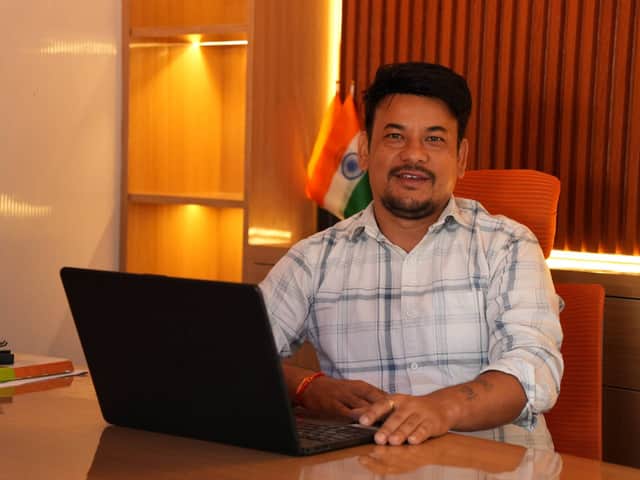
Operations Manager
Nanda Rawat holds a Master’s degree in Tourism & Hospitality and brings over 16 years of experience in adventure and leisure travel. He has led multiple Himalayan expeditions, contributed to ATOAI, and is trained in first aid by the Indian Mountaineering Foundation. A strong supporter of sustainable and ethical tourism, he plays a key role at Trekup India. Write to him at: nanda@trekupindia.com