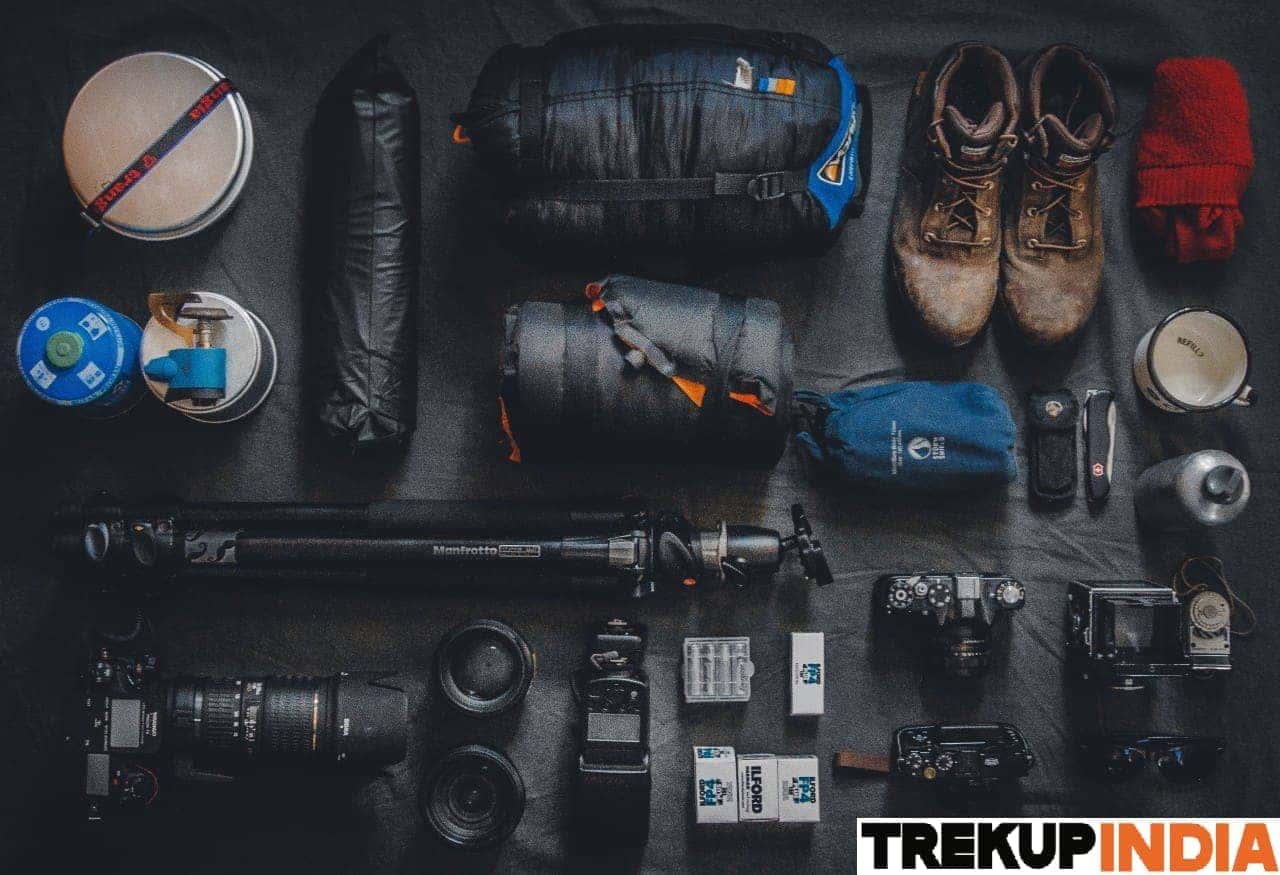
It’s not only about putting a few items in a backpack. It’s about making smart decisions, preparing correctly, and packing properly. If you’re headed to the icy peaks of Kedarkantha, the gorgeous trails of Tarsar Marsar, or the rocky mountain terrain in Pin Bhaba Pass, the key to having a safe and pleasurable trip is.
We at Trekup India believe that a prepared person for a trek is a comfortable one. This is why we have compiled a complete checklist for pre-departure for all participants who are joining a Trekup India expedition.
Non-Negotiable Items of Gear: These essential pieces of gear cannot be compromised
Ankle Support + Waterproof trekking shoes should always be on the list of must-have items for trekking adventures.
Why? India’s rugged treks – from Himalayan slopes of scree to Western Ghats’ slippery rocks–require robust shoes.
Knee support helps prevent sprains and strains; Vibram rubber soles offer maximum traction and security, while Gore-Tex waterproofing technology keeps feet dry when crossing streams or when raindrops fall.
Note: For optimal trekking success, break in your shoes for at least two weeks prior to embarking on your adventure, in order to prevent blisters.
Layer Clothing (Moisture Wicking + Insulation)
The temperature can vary widely during an Indian trek. Layering up can help regulate temperatures by keeping moisture at bay while providing insulation against cold nights.
Base Layer (Synthetic/Marino Wool): Best for moisture wicking and fast drying times.
Mid-Layer (Fleece/Down Jacket): Traps the body heat.
Exterior Shell (Waterproof jacket): Protects from wind and rain.
Cotton should be avoided as it retains moisture, leading to chills in high altitudes.
Backpack (40-60L with Hip Belt)
A properly fitting backpack will distribute weight evenly between your hips and shoulders without straining or overburdening either one of you. An option that offers this distribution of weight across both hips is best, while 40-60L capacity backpacks provide sufficient room for gear without being excessive.
Raincovers should always be carried along just in case unexpected rain hits!
Trekking Poles (Adjustable & Collapsible)
Why? Trekking poles reduce knee injuries by 25-30% when descending.
Enhances Balance on Rocks & River Crossings.
Helps maintain rhythm, conserving energy.
Essential Equipment (Often Overlooked)
Headlamp (With Red Light Mode)
Why? To facilitate pre-dawn summit pushes.
Red light protects night vision while deterring insects.
As batteries discharge energy rapidly, backups are essential.
Hydration System (Bottles/Bladder and Electrolytes)
Insufficient water at altitude can lead to fatigue and headaches. Providing yourself with enough hydration through bottles/bladder and electrolytes may help protect against this effect.
Water bladders of 2-3L capacity make for easier transport when walking.
Electrolyte-containing tablets may help prevent cramps on humid walks.
Sun Protection (Sunglasses, SPF 50+ Sunblock, and Lip Balm)
Why? At altitude, UV rays increase, increasing the chances of snow blindness unless sunglasses are worn to block them out.
SPF 50+ sunblock should not be required in any weather condition, even on cloudy days.
Chapped lips often worsen in dry environments; to protect your lips further, use sunscreen-based balms as soon as you feel symptoms.
First Aid and Blister Care
Blister tape (Leukotape) should be an indispensable item on longer treks.
Diamox may help alleviate high altitude sickness (please consult your physician).
Basic medicines to treat diarrhea, headaches, and muscle pain include Imodium(r).
Gear That Appears Non-Obligatory
Sleeping Bag Rated for Sub-Zero Temperatures
Even during summer, Himalayan nights can drop below freezing, so having a sleeping bag that is rated between -5 °C and -10 °C can provide much-needed warmth.
Note: Use a liner to add insulation and ensure hygiene.
Why Use Quick-Dry Towel & Wet Wipes?
Showers may not be common, so moist wipes make a great companion when taking a bath or shower.
Tissues made of microfiber dry quickly and do not add weight.
Ziplock Bags as Multi-Purpose Heroes, why?
Keep electronics dry. Teatrul Store trash (Leave No Trace!).
Sort small items (meds or snacks).
Avoid These Common Overpacking Mistakes
High-end Denim Jeans can take an eternity to dry.
Multiple cotton T-shirts become damp and could potentially lead to hypothermia.
In terms of cameras, one simple phone or camera is often enough.
Over-the-top toiletries: Limit yourself to essentials (toothbrush, small soap bar, and small sunscreen).
TrekUp India’s Professional Packing Philosophy
Single-use gear that can serve multiple functions (for instance, a buff can also serve as a bandana and scarf).
Test Before Trek: It’s always wise to bring gear or footwear that has not been put through rigorous use prior to heading out on an outdoor excursion.
Conclusion
The gear selection of TrekUp India is tested and proven in battle throughout Indian terrain–from the frozen Ladakh pass to Kerala’s monsoon trek. Stay with the basic gear, make sure you don’t overpack, and you’ll be able to move more quickly, you’ll feel better, and enjoy the trip to the fullest.
About the Author: Trekking Expertise You Can Trust

Operations Manager
Nanda Rawat holds a Master’s degree in Tourism & Hospitality and brings over 16 years of experience in adventure and leisure travel. He has led multiple Himalayan expeditions, contributed to ATOAI, and is trained in first aid by the Indian Mountaineering Foundation. A strong supporter of sustainable and ethical tourism, he plays a key role at Trekup India. Write to him at: nanda@trekupindia.com