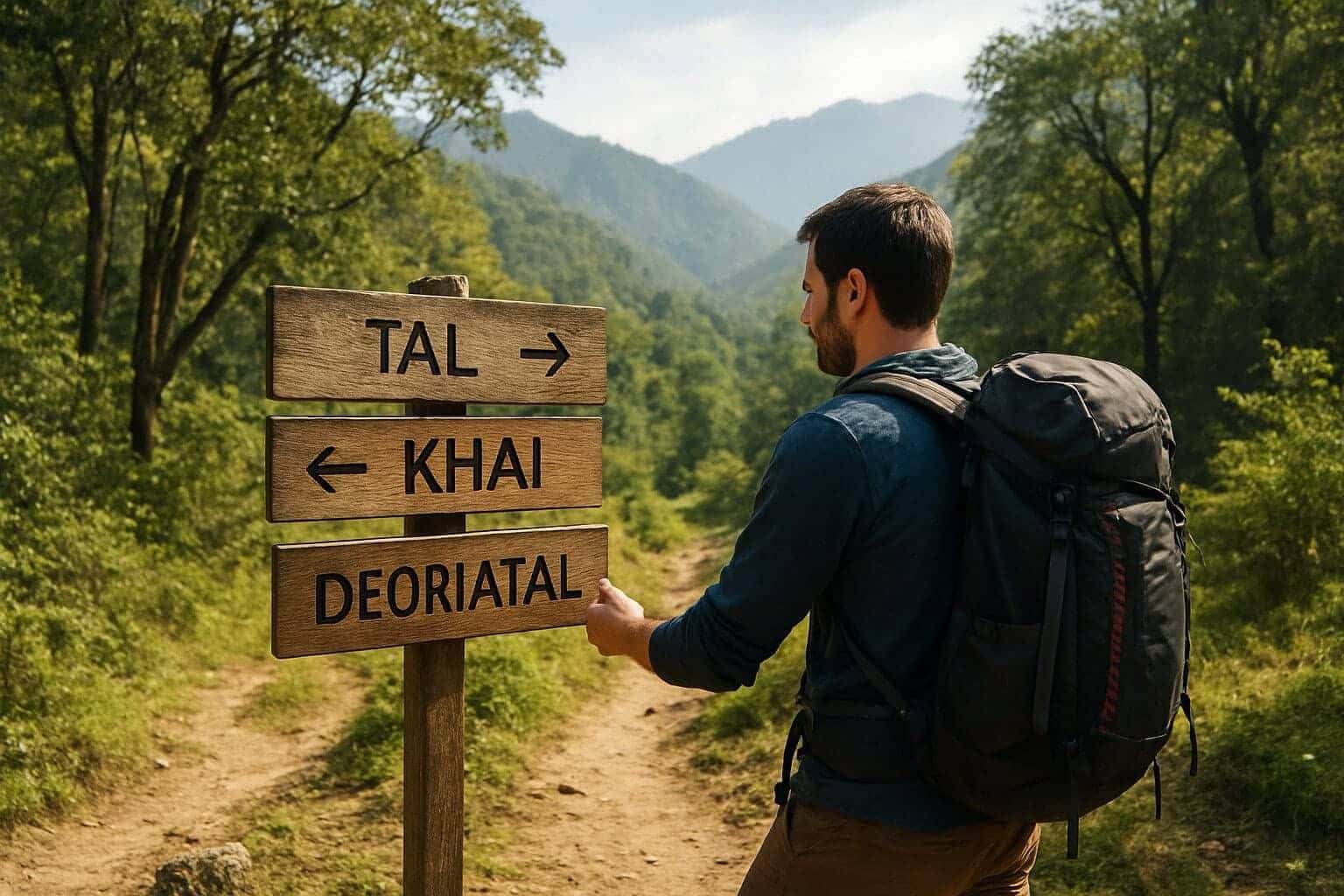
On TrekUp India, a consistent pattern has emerged from many years of leading treks: trekkers who are trained with a packed backpack prior to their trek improve their performance and more efficiently and enjoy the mountains better that those who are relying on routine fitness exercises.
It's not only about endurance for the heart and leg muscle strength. It's about learning to be agile and balance properly, as well as control your energy when carrying weight--often for a number of hours per day, on rough terrains, climbs and descents. Training with a backpack loaded with weights helps prepare your body and brain for the exact requirements.
Why a backpack for training Is Vital
Transporting 8-12 kilograms in your backpack fundamentally alters how your body reacts and moves. Training without a backpack will not prepare you fully for actual trekking conditions.
Important modifications are:
- Conditioning of muscles: It strengthens the shoulders, back, hips and stabilizes the muscles.
- joint adaptation Preparing ankles, knees and the knees to handle a heavy load for ascents and descents
- Balance and coordination Enhances the stability of uneven terrain
- Energie management Learns to pace and breathe during the pressure of
- Mental preparedness: Removes the shock of carrying a heavy load for long periods
For trekkers who don't train their pack, they typically struggle the most in the beginning and the last two days of the trek.
Step-by-Step Loaded Backpack Training Plan
1. Start Light and Build Gradually
Start with 5 to 4-5 kilograms inside your pack. You can increase the weight up to 1 kg every week until you've reached the expected trek weight.
Weight-bearing speed increases the chance of back strain and ankle injuries.
2. Train on Realistic Terrain
When you can, practice:
- Declines and increases
- Hill trails or paths that are uneven
- Staircases (excellent alternatives for urban areas)
Stairs are a close representation of climbs and descends on mountains and are extremely effective.
3. Use the Same Gear You Will Trek With
Train using:
- This is the exact same bag
- Trekking shoes
- Socks and clothes
This allows your body to adapt to:
- Fitting the backpack and pressure points
- The hip belt and shoulder strap load distribution
- Cushioning and grip for the foot.
It can also aid in identifying problems with fit or chafing early.
4. Practice Both Uphill and Downhill Walking
Method of uphill
- Short, steady steps
- Breathing controlled
- A straight posture with a slightly forward lean
Downhill method
- Knees slightly bent
- Core engaged
- Foot placement controlled
- Utilize trekking poles when you can to lessen knee strain
The majority of trek-related injuries happen during the descent, not during the climbs.
5. Schedule Long Pack Walks
Every week, set aside for a longer hike (10-15 miles) with your pack.These sessions help you:
- Endurance
- Mental resilience
- Confidence in the face of a sustained load
They also let you test the fueling and hydration strategies.
Strength and Mobility Work (Highly Recommended)
Complementary training pack with:
- Leg strength: Squats, lunges, step-ups
- Core and the back Back extensions, planks
- Mobility Flex hamstrings and calves, hips, and ankles
Mobile joints that are strong and mobile can reduce the risk of injury significantly when carrying a heavy load.
Hydration and Nutrition During Training
Your body will be trained the way you'll trek:
- Drink plenty of water
- Eat small, frequent snacks
- Be sure to avoid training for a long time.
This prepares your digestive system for trekking days.
Common Mistakes to Avoid
- Increasing weight too quickly
- Neglecting rest days and recovery
- With a backpack that is not properly fitting
- Training is limited to flat terrain
- Training downhill without skis
It is more important to be consistent than intense.
TrekUp India Training Recommendation
Train with a full pack for at minimum 6-8 weeks prior to you begin your trek. Even 30 to 45 minutes of walking around the pack three times per week will result in remarkable gains in confidence, comfort in performance and comfort on mountain.
Trek Leader Review
Reviewed by Arpit Ramola - Trek Leader, TrekUp India
This article was read by Arpit Ramola who has extensive experience in leading Himalayan treks that involve loads that are carried for multiple days over a variety of terrain. The method of training described in this article has been proven by actual trekking performance and injury prevention results, and field observations gathered from TrekUp India trips.
Conclusion
The practice of carrying a weighted backpack is among the most effective and real methods to prepare yourself for the trek. It helps bridge the gap between basic fitness and actual mountain demands, teaching your body to move, maintain balance and withstand the rigors of a mountain.
In TrekUp India, we have observed that trekkers who choose to packing training do better, but they also are more comfortable on the trip with less fatigue, less injuries and more confidence.
Be prepared. Work out with a sense of reality.Let the mountains be familiar to you before you take the first step.
About the Author: Trekking Expertise You Can Trust

Operations Manager
Nanda Rawat holds a Master’s degree in Tourism & Hospitality and brings over 16 years of experience in adventure and leisure travel. He has led multiple Himalayan expeditions, contributed to ATOAI, and is trained in first aid by the Indian Mountaineering Foundation. A strong supporter of sustainable and ethical tourism, he plays a key role at Trekup India. Write to him at: nanda@trekupindia.com