Many trekkers find that perhaps the toughest portion of an mountain trek isn't the difficult upward climb, but the long steep, unending descent. Trails in Himachal Pradesh, Ladakh, and Uttarakhand frequently involve long descents over rough uneven terrain. If not properly prepared and mastered these downhills can put an immense strain on knees making a trek to a painful and uncomfortable experience.
In the TrekUp India We have noticed knee pain slowing down, or even stop treks for those who are otherwise fit. The positive side is that knee pain on downhills is generally prevented. With the proper training, equipment and the right movement technique Trekkers can secure their knees, and enjoy ascends and downs with equal ease.
Why Downhill Trekking Is Hard on the Knees
Increased Impact Forces
The descent of a hill puts more than three times the entire body's weight on your knee joint with each step. Repetition of impact during long inclines can significantly increase the stress on your knee joint.
Eccentric Muscle Load
When you descend, your quadriceps are working in an eccentric way to regulate movements. The constant braking force puts an unending tension upon the joint of knee as well as the surrounding tissues.
Uneven Terrain
Loose gravel, wet stones and uneven steps create uncomfortable foot positions, which increase the strain on ligaments and tendons.
Fatigue Factor
As muscles get older and weaken, shock absorption decreases which makes joints more susceptible to injury and pain, especially towards the end of the day.
Preparing Your Knees Before the Trek
Strengthen Supporting Muscles
Strong muscles absorb impacts and help protect joints.
The focus should be on:
- Squats and lunges
- Step-ups and step-downs
- Calf raises
- Exercises to strengthen the glute
The stronger quadriceps, hamstrings glutes, and calves decrease strain on the knee joint.
Improve Flexibility
Regular stretching aids in maintaining flexibility in joints and decreases stiffness.
Stretch:
- Quadriceps
- Hamstrings
- Calves
Flexible muscles facilitate more smooth movement and improved shock absorption.
Build Endurance
Training in cardio helps prepare your legs to endure a steady descent.
Options that work:
- Stair climbing
- Cycling
- Walking or hiking with a lot of energy
Endurance can reduce knee strain caused by fatigue.
Lighten Your Backpack
The extra weight causes knee stress when descending.
- Only carry the necessary items
- Weight distribution equally
- Make sure your backpack is properly fitted
A lower load means a lower joint impacts.
Knee-Friendly Techniques for Downhill Trekking
Shorten Your Stride
Make smaller, controlled steps to lessen the force of impact. Beware of long strides that can cause painful heel strikes.
Keep Knees Soft
Maintain a slight bend at the knees, not keeping them straight. This will allow muscles to take on the shock.
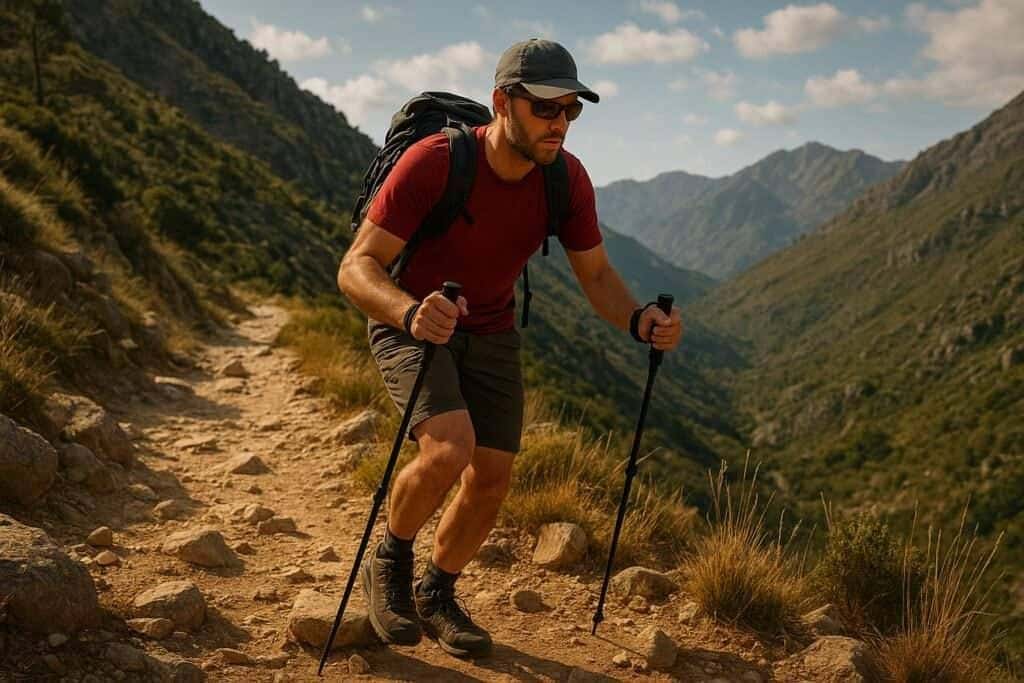
Use Trekking Poles Correctly
The trekking poles transfer some weight from your knees onto your arms.
Tips:
- Increase length of poles slightly to allow for descents
- Plant poles ahead to provide stability
- Make use of them to regulate speed
A properly used pole can dramatically lower knee stress.
Zigzag on Steep Slopes
Descending through switchbacks lessens the strain on joints and the severity of gradients when compared to straight downhill movements.
Watch Foot Placement
- Flatten your feet or use controlled heel contact
- Beware of slippy rocks and gravel that are loose.
- Move deliberately, not hurriedly
The proper footwork can stop sudden knee jolts.
TrekUp India Practical Notes
- Wear trekking shoes that have good cushioning and grip.
- Do not rush downs or try to keep pace with the speed of other trekkers.
- Utilize knee braces or compression sleeves if you're prone to discomfort.
- Take short breaks during long descents
- Drink plenty of water to help reduce the fatigue of your muscles.
The ability to listen to your body's signals is as important as executing the correct technique.
Conclusion
Downhill trekking doesn't have the pain of a sling. If you train your muscles properly and flexibility, load management and descent techniques injuries to knees can be drastically diminished or eliminated altogether.
We at TrekUp India, we believe that descents should be as fun as ascends. With careful planning, steady pace and precise movement make downhill sections from an unwelcome challenge to an easy, safe part of the trekking journey. Make sure your knees are protected, move carefully, and let each step, whether up or down, add to the enjoyment of the trek.
About the Author: Trekking Expertise You Can Trust

Director & Founder
With over 12 years of experience in the Himalayas, he has summited multiple 6000–7000 meter peaks and led more than 200 expeditions across iconic routes like Bali Pass, Buran Ghati, Rupin Pass, Pin Bhabha, Stok Kangri, and Black Peak. His deep mountain experience and leadership make him a trusted name in Himalayan trekking. Write to him at: preetam@trekupindia.com