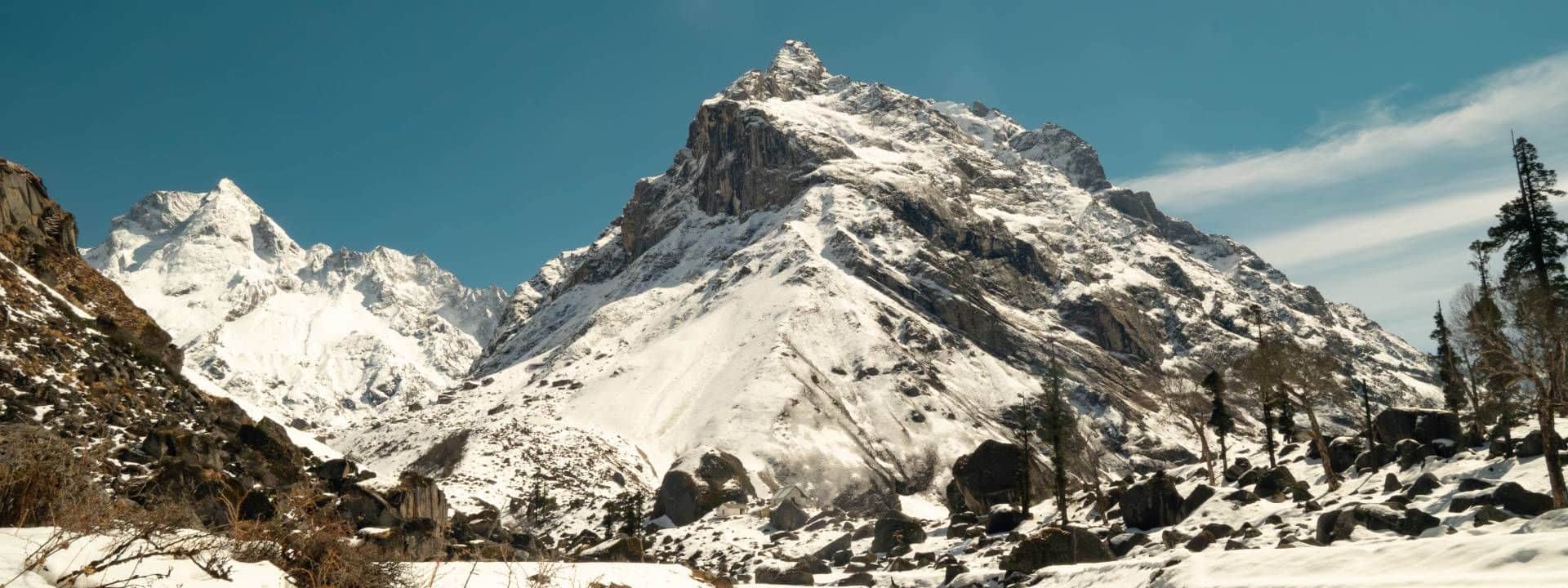
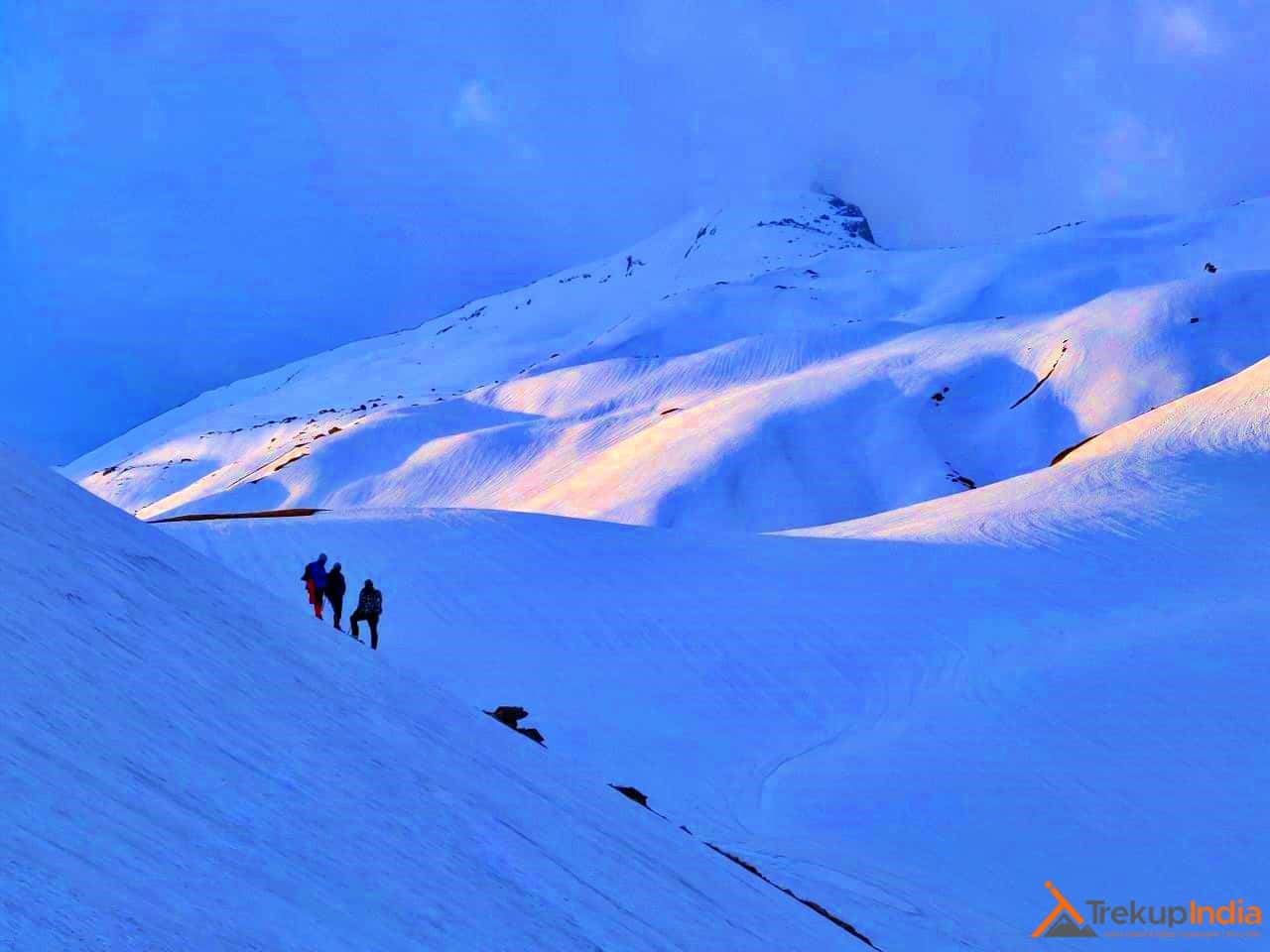
Hiking at high altitude treks in the Himalayas of India--over regions like Uttarakhand, Himachal Pradesh, Ladakh and Sikkim, often require traversing snow areas and moraines. Although these areas are stunning in their beauty but they also offer one of the more technologically demanding and risky parts of the trek.
On the TrekUp India We've observed even the most experienced trekkers struggle with moraine and snow sections, not due to a lack of fitness, but rather due to being unaware of the terrain's behavior. To be safe, crossings need knowledge of the terrain, proper technique, a patient attitude and complete respect for the instructions of guides.
This guide will help you find dangers and move safely through snowy areas and moraines.
Understanding the Terrain
Snow Patches
Snow patches are loose or compacted snow areas that are found along high-altitude trails. Their stability is influenced by:
- Time of day
- Temperature
- Seasonal melt
They may be slippery, hide gaps that are hollow, or melt to form a deep slush as the temperature rises.
Moraines
Moraines are a collection of gravel, loose rocks and debris that have been left behind by glaciers that are retreating. They are incredibly unstable and easily shift when weighed down, particularly during the warmer times of the day.
Key Hazards to Watch For
- Falling and slips The snow hardens overnight, and then softens in the afternoon which increases instability
- Undiscovered gaps Bridges of snow over the voids or streams could fall suddenly
- Rock movement Stones on moraines that are loose can be displaced and fall downhill
- Speedy fatigue Continuous balance adjustment put strain on joints and muscles.
This is why being cautious in your movements crucial.
Techniques for Crossing Snow Patches Safely
1. Assess Snow Conditions Carefully
- Morning snow can be difficult and icy. Traction devices are vital
- Afternoon snow is soft and slushy, thereby increasing the possibility of post-holing.
- Make use of Microspikes and crampons on the hard-packed snow
- Put on water-proof trekking booties to ensure warmth and ensure foot stability
Do not assume uniform snow conditions.
2. Take Short, Controlled Steps
- Change weight slowly
- Make sure to take small steps and be deliberate
- Make light stomping motions to establish solid feet on slopes
Do not rush. Balance is more important than speed.
3. Use Trekking Poles Correctly
- Poles are extended for uphill snow sections
- Shorten poles to control downhill slopes.
- Make sure poles are firmly planted prior to transferring the weight
Poles are essential for stability when skiing.
4. Be Cautious Around Snow Bridges
- Explore the future by using trekking poles
- Do not cross the line if stability is uncertain
- Follow the guidelines of your guide strictly.
If you are unsure, do not cross in a blind.
Techniques for Crossing Moraines Safely
1. Scan the Terrain Before Entering
- Find the paths of rock that are stable
- Beware of loose and fine stones
- Look out for zones of rockfall
The choice of route is crucial for moraines.
2. Prioritise Balance and Foot Placement
- Step onto more stable, larger rocks
- Keep knees slightly bent.
- Keep a calm, but relaxed posture
Avoid locking joints.
3. Follow the Three-Point Contact Rule
Always ensure that you keep 3 points of contact (two feet, and one pole or reverse) steady prior to transferring weight. This can greatly reduce the chance of falling.
4. Move Slowly and Deliberately
The risk of rushing increases when you are falling off or slipping over rocks. The controlled movement of the body ensures the balance and security.
5. Maintain Distance Between Trekkers
The proper spacing will prevent:
- Rock collisions
- Slips for chain-reaction
- Traumas resulting caused by falling debris
Do not crowd around moraines.
TrekUp India Safety Guidelines
- Use sunglasses on snow to guard against snow blindness
- You can expect swift changes in moraine and snow conditions.
- If in doubt you are not sure, stop and think it over. Never make a crossing
- Always adhere to trek instructions of the trek leader.
- Practice snow walking on less challenging terrain prior to trying difficult sections
Preparedness and patience can help save lives in high-altitude environments.
Conclusion
Moraines and snowy patches provide beauty and challenge to Himalayan treks However, they also require discipline and respect for movement. These mountains are unpredictable, dynamic, and unforgiving of careless choices.
We at TrekUp India, we believe security begins by being aware and preparing. Through understanding the behavior of terrain and using the correct techniques and relying on knowledgeable guides, trekkers can traverse areas of moraine and snow confidently and in a safe manner. If they approach them with a sense of humour and grit, these crossings are no longer obstacles but crucial moments in the Himalayan adventure.
About the Author: Trekking Expertise You Can Trust
Admin
Anoop has worked for 5 years as a Trek Leader with TrekUpIndia, leading numerous treks across the diverse and challenging terrains of Uttarakhand and Himachal Pradesh. He holds a degree in Geology with a specialization in Geographic Information Systems (GIS) from UPES Dehradun. During his academic years, he actively applied his classroom knowledge in the field—most notably by contributing to a glacier research project on the Jundar Glacier in the Har Ki Dun Valley, Uttarakhand. And now, Anoop is a trekking content writer with TrekUp India, specialising in seasonal Himalayan trekking guides, winter safety content, and trek planning resources. His work is informed by field research, trek leader inputs, and real trail conditions across Uttarakhand, Himachal Pradesh, Ladakh, and Kashmir.