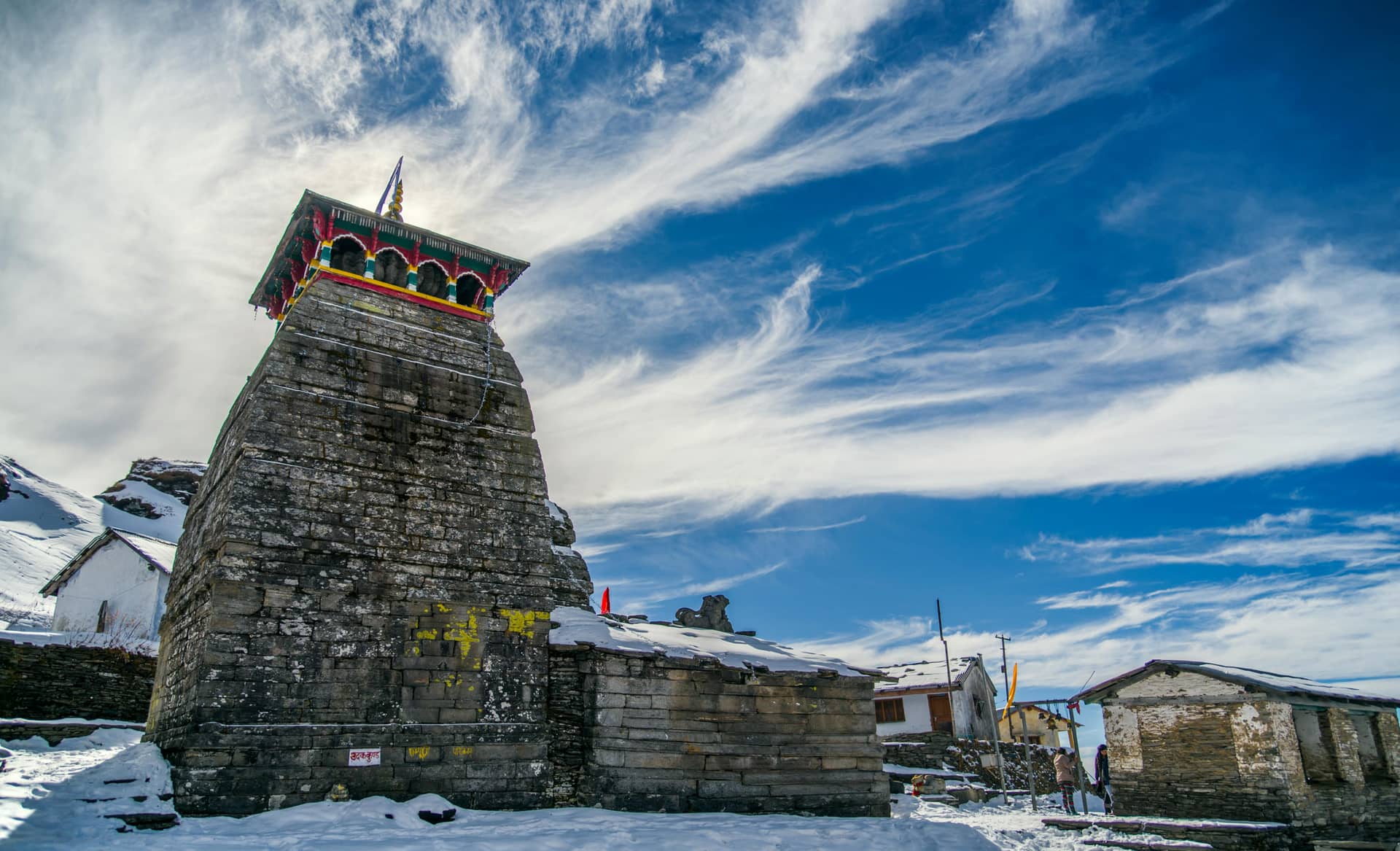
Trek to the Mountains in the presence of Lord Shiva
Maximum Altitude
12,000 ft.
Trek Duration
11 Night / 12 Days
Trek Distance
128 Km
Difficulty Level
Moderate to difficult
Start/End Point
Natraj Chowk, Rishikesh
Nearest Airport
Jollygrant Airport, Dehradun
Best Season
May to October
Accomodation
1 Day at campsite & 10 days in homestay
Meals
Breakfast, lunch & dinner
Permits
Forest Department & Trekking permit
Temperature
12°C to 20°C (day) ; - 2°C to 8°C (night)
Snow
December to March
The Panch Kedar Trek is a high-altitude, physically challenging pilgrimage in the Himalaya, passing through three river valleys of the Garhwal region, the Mandakini, Alaknanda and Kalpa Ganga. From a technical trekking perspective, this trek is a long and arduous undertaking and has a minimum total elevation gain of over 9,000 meters with a jagged saw-tooth profile of steep uphills and downhills into glacial gorges. The trek is an example of the diversity of the flora and fauna found in the Himalayan mountains, with its vegetation radically changing from humid (and leech-ridden), oak/rhododendron thickets of the Kedarnath Wildlife Sanctuary to wide open, alpine meadows of Panar and Rudranath, and ultimately to the very steep and high-altitude ridges of Tungnath. Trekkers will be rewarded throughout the journey with spectacular views of the Chaukhamba, Nanda Devi and Kedarnath mountains that surround the five sacred shrines, which are represented by the magnificent stone carved architecture of Kedarnath, the peace and serenity of Madhmaheshwar, the completely rocky face of Rudranath and the availability of Kalpeshwar year-round. This trek is not only a tremendous physical challenge, but also provides a rich experience of the myths and legends of the Pandavas and requires peak cardiovascular conditioning and mental zen.
The Panch Kedar Trek isn't just a leisurely trek, it's an extreme altitude trek in the Garhwal Himalayas of Uttarakhand and is one of the toughest endurance tests in the world. This circuit will cover approximately 128 kilometers, through terrain with dramatic saw - like elevation - going down into the deep river valleys and then back thousands of feet above sea level onto the high altitude ridges.
1. The Technical Buffer - Going Up
The 9,000 meters (30,000 feet) of trekking throughout this trek is what makes it most attractive from a trekking perspective. Many of the other traditional linear (single direction) Himalayan treks are mainly uphill. On the other hand, much of the distance on the Panch Kedar route is downhill into the Mandakini, Alaknanda and Kalpa Ganga river valleys before the uphill trek to the final shrines that are located on craggy heights. With this kind of difficulty, you need to be in excellent cardiovascular shape and have a lot of mental toughness when navigating the steep, ancient stone-paved staircases on many of the trails.
2. Biodiversity and Altitudinal Gradients
The trek provides an exceptional opportunity to observe the diversity of life in the Himalayas. The trek begins at the bottom of the Kedarnath Wildlife Sanctuary, where you will experience some of the world's most diverse ecosystems, including the Kedarnath Monal and Muskrat; we will be trekking through dense forests of Oak and Rhododendrons (the majority of which are located at lower elevations), then as we ascend towards higher elevations, treetops gradually thinned out, resulting in exposed alpine meadows (also referred to as bugyals) of Panar and Rudranath where you will find yourself at higher than 3,000 meters elevation with much thinner air and no additional vegetation (only the most extreme weather resistant shrubs and mosses).
3. Differences in Architectural Characteristics due to Altitude
The 5 Sacred Temples located between the mountain peaks exemplify this unique spectrum of both altitude and architectural features: Kedarnath (3,583m) – An outstanding piece of Architecture built using massive stone blocks & /or slabs built against the backdrop of the huge monument that is known as the Kedarnath peak and also as the Annapurna III Peak (6,948m in height), Madmaheshwar (3,497m) – This temple is located in a lush green valley that provides true peace and seclusion, or in reference to navel seedling life (the center of the universe), and it's our last stop before heading back to Kedarnath. Tungnath (3,680m) – The highest temple dedicated to Lord Shiva on earth, which is located on the jagged ridge line of the Chandrashila peak (3,939m); Rudranath (2,286m) – A rock-cut temple adorned only with wood or metal but very little other than native plants; Kalpeshwar – A cave temple that is fully accessible year round and represents the end of the pilgrimage circuit.
4. The Glacier Guardians: The Stage for the Himalayan Giants
The most beautiful way to traverse this entire route of 128 km is to feel the eyes of the big wall mountains in the Garhwal keeping a constant vigil on your every move. The reflection of the impressive Mount Chaukhamba 7,138 m, with its four well-defined pinnacles, can be seen in numerous different locations along this route, either in high-altitude glacial lakes or overlooking the green meadows of Madhmaheshwar. Glancing at these two different views as you trek along the high, windy tops of Tungnath and Rudranath, you see the entire 360° stage of the snow-capped Himalayan giants in all of their glory. In addition, you will have an up-close view of the Nanda Devi 7,816 m pyramid, the Trishul with its trident shape, and the Bandarpunch mountain range with its characteristic shape. Having the continuous opportunity to be near so many large rock formations provides you the opportunity to appreciate their magnitude and the energy exerted on the body when you're at high elevation and breathe less oxygen, to realize that the difficulty of both is minimal in exchange for the vastness of the views you will experience from elevation.
5. Trace of a Living Mythological Map: The Journey of the Pandavas
This trek is not just a geographic circle; it is a physical representation of the Mahabharata and serves as a living image of one of human beings greatest epics. In ancient mythology, after the Great War, the Pandavas trekked along these mountains looking for redemption and followed Lord Shiva on his journey through these same mountains. Lord Shiva took on the form of the sacred bull to avoid being found by the Pandavas, and when they could no longer find him, he dove into the earth and reemerged as five different parts throughout Garhwal. The five different parts include his hump being at Kedarnath; his navel being at Madhmaheshwar; his arms being at Tungnath; his face being at Rudranath; and his hair being at Kalpeshwar. For the modern trekker, the addition of these pieces to the journey gives a deeper sense of pathos and lends the journey more spiritual significance. Every boulder-strewn ridge crossed and every icy stream forded is a tangible step through a landscape that has been held sacred for thousands of years, turning a high-altitude adventure into a rich cultural and historical odyssey.
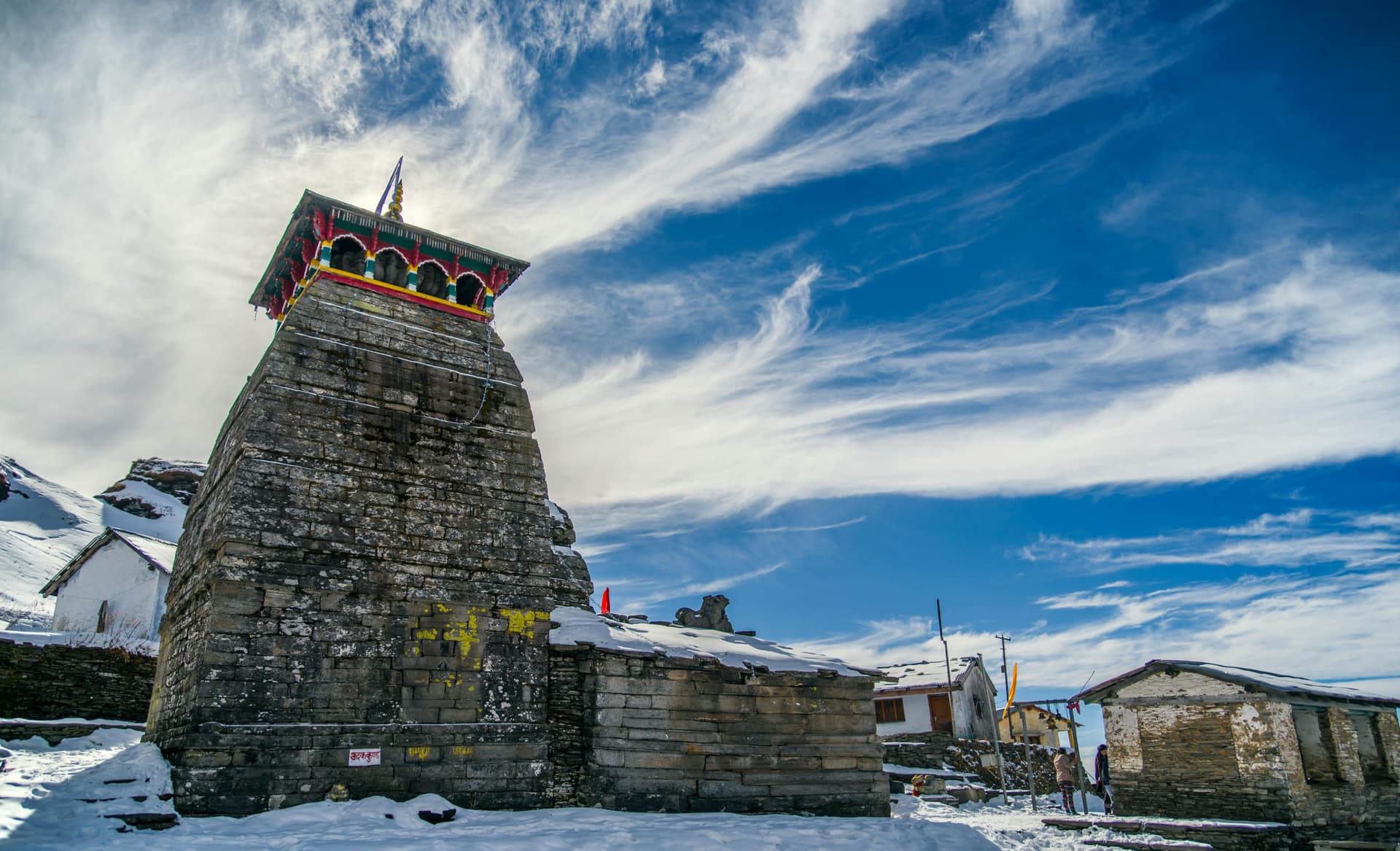
The Panch Kedar is a pilgrimage connected to the Mahabharata and the presence of Lord Shiva as a bull, and therefore offers a unique trekking experience. The five locations throughout the trek represent the five parts of Shiva’s body that he shared with the world and provided nourishment through his powers to his devotees. The five locations are as follows: Kedarnath where the Hump of the bull is located; Madhmaheshwar where the Navel is; Tungnath where the Arms can be found; Rudranath where the Face exists and Kalpeshwar where the Hair is flowing from his head. There are many different types of temples along the way including Kedarnath, which is very busy and large, and Kalpeshwar, which is small and primitive. In addition to their exterior features, each temple has a unique spiritual experience. At Kalpeshwar, for example, the only person present may be the priest, while at Kedarnath there could be thousands of people gathered for worship. After completing your trek, the combination of physical challenge and deep connecting to spirituality will remain with you.
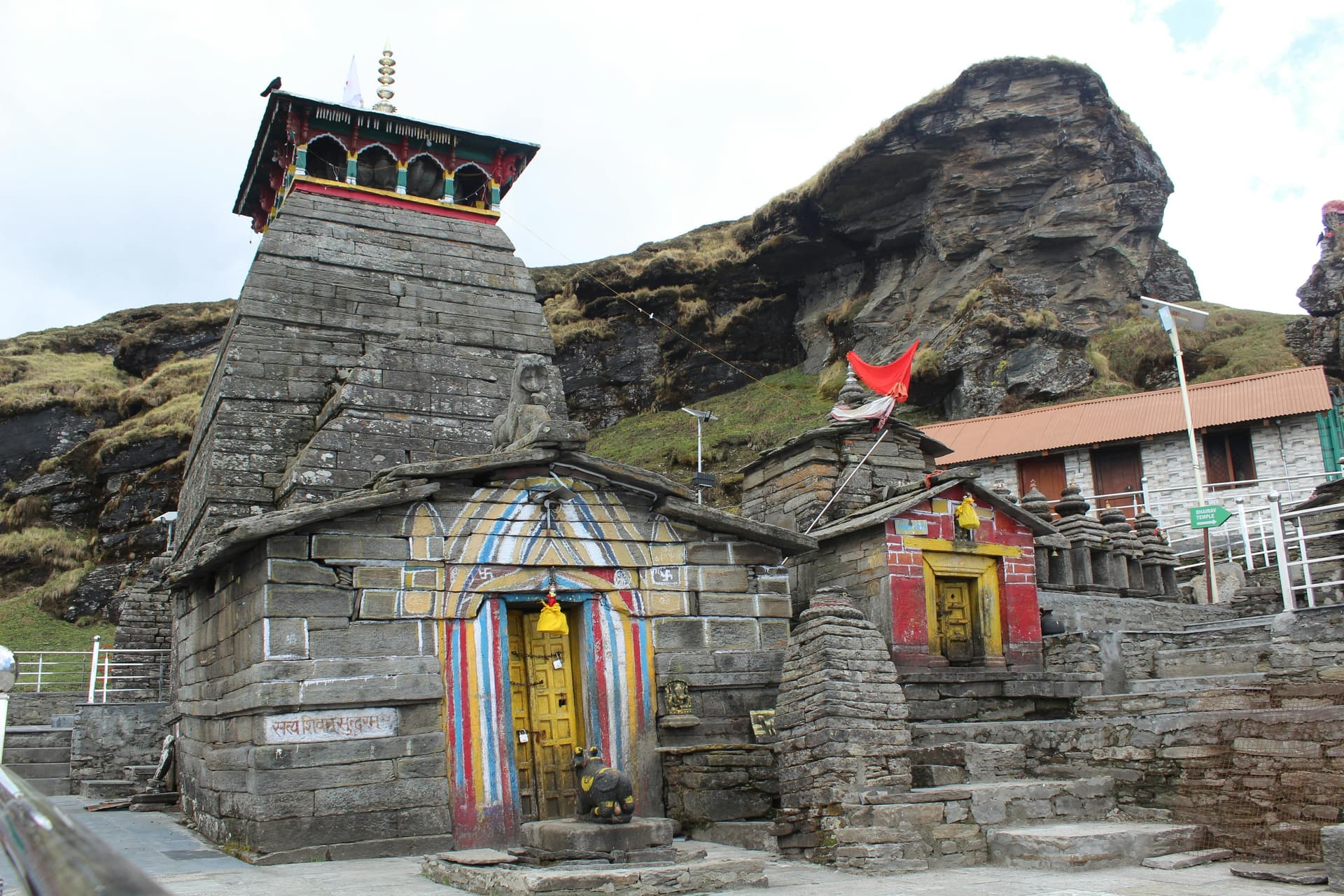
Panch Kedar is classified as a Hard/High-Endurance trek, meaning it is best suited for those individuals who are physically fit enough or mentally capable of facing a real challenge.
The Kedarnath Wildlife Sanctuary is a vast area of biodiversity in the Himalayas, and as you trek through it, you will see some very interesting plants and animals.
One of the most valuable pieces of this circuit is the cultural experience in Garhwali. As you trek from valley to valley, you will go through small remote villages, such as Gondar, Ransi, and Kalpeshwar, that have remained the same for thousands of years.
The Panch Kedar is completely different depending on the season in which you trek its paths.
When you reach the top of Chandrashila Summit (3,690 meters), after a very steep pre-dawn ascent, you are at one of the best views in all of the Himalayas. From the summits in this area you have sweeping views of the Great Himalayan mountain range including Nanda Devi, Trishul, Kedar Dome and Bandarpunch; all are viewable in one smooth, unbroken panorama of snow and ice in a full circle. Standing at Tungnath, which is considered to contain the highest Shiva temple in the world or at Rudranath, which is the least visited of the great temples of the Panch Kedar, gives you a unique emotional experience and an incredible height of spirit. Because the silence of high altitude is only pierced by centuries old bells from ancient temples, you can reach a place that is the bridge between physical fatigue and meditative peace.
The Panch Kedar landscape is characterised by a dramatic, Sawtooth topography. This means that trekkers are constantly going up and down, with the journey through the humid, green valleys of the Mandakini, Alaknanda, and Kalpa Ganga rivers.